
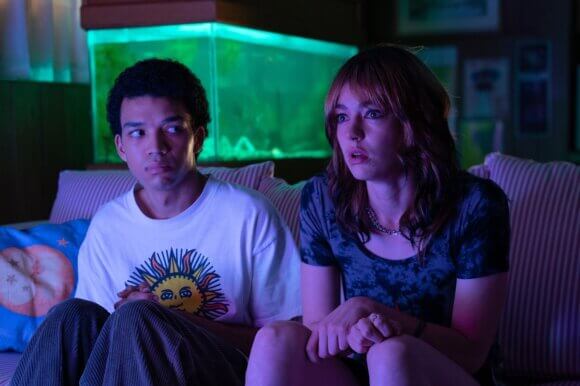
California designated August as Transgender History Month. Since it chose to highlight the idea of history, here is a list of films that trace the history of transgender representation on film (emphasis on U.S. films). Representation is always a journey, especially when you are looking to mainstream media like Hollywood movies, and even when exploring indie and documentary films. Marginalized and underrepresented communities have to overcome stereotypes and often negative representation before gaining access to creating their own stories.
No list like this can be complete. I am sure there are films I have missed or left out. And some people may object to including early and awkward works that are problematic from our vantage point today. But those films are important for context and to show how far we have come, and how far we still have to go.
In addition, representation means different things to different people at different times in history and in their lives. I have trans horror fan friends who embrace genre films that present less than stellar representation because that might have been the first time they saw a trans character on screen or because the horror genre was a place where they sought and found refuge because it celebrated the other or felt transgressive and rebellious.
So read this list as a historical overview of transgender representation on film with the content of the films improving as trans actors and filmmakers gain more power in telling their stories. I will also give a general shoutout to filmmakers such as John Waters, Rainer Werner Fassbinder, and Pedro Almodóvar, who may have never featured a trans character in a lead role but who have all built careers on films that are accepting of all sexual orientations and of people in marginalized communities.
Content warning: I will be discussing some films that by today’s standards contain content offensive to the trans or LGBTQIA+ communities or that include physical and psychological violence towards and by transgender people.
The History of Transgender Representation on Film
1. Glen or Glenda (1953)
Ed Wood’s film, in which he played Glen/Glenda, has been derided as one of the worst films ever made. Wood, who wrote, directed, and starred in the film, was a cross-dresser, and his film is somewhat autobiographical. It is also an early bid for tolerance toward people who may not conform to mainstream notions of “normalcy.”
In addition to the cross-dressing character Wood plays, the film also tells us of Alan, a World War II veteran who underwent sex reassignment surgery to become “a lovely young lady” called Anne. Wood attempts to “explain” the process through a doctor who describes Alan as “a pseudo-hermaphrodite” and that Anne was “created almost as a Frankenstein monster.” Although Wood’s intent was to be sympathetic to both characters, the language he used is hurtful and offensive, and reflects how ill-prepared society was at that time to discuss the issue. But Glen or Glenda needs to be considered in the context of its time when there was no mainstream representation of the trans community. So, Wood’s awkward attempt to present a case for Glen/Glenda and Alan/Anne might have been the only time a trans person could see themselves on the screen.
The film was probably prompted by the real-life gender-affirming surgery of Christine Jorgensen that took place in 1951 and was sensationally announced in a December 1952 New York Daily News headline that read: “Ex-GI Becomes Blonde Beauty; Operations Transform Bronx Youth.”
As you might expect, trans representation on film had a very problematic birth.
2. The Christine Jorgensen Story (1970)
It would take almost two decades for Christine Jorgensen’s true (well as true as Hollywood is capable) story to make it to the screen. Her sex reassignment surgery became a very public event in 1952, and she became an early transgender activist. The Christine Jorgensen Story attempts to tell her real story within the parameters of a Hollywood melodrama and woman’s picture.
Jorgensen was involved with the production but had no real control and was apparently not happy with the sensational ad campaign that included such copy as “Did the surgeon’s knife make me a woman or a freak?” and “Sex with a woman was strange and impossible.” There is a lot about this film – but specifically its ad campaign – that is outdated and offensive by today’s standards in how it represents transitioning, but the fact that Hollywood chose to put her story on screen was a clumsy first step toward making mainstream America aware that a trans community existed.
3. Myra Breckinridge (1970)
Also released in 1970 but tonally very different from The Christine Jorgensen Story were Myra Breckinridge and Beyond the Valley of the Dolls. Beyond the Valley of the Dolls was essentially a parody of Hollywood melodramas. The Russ Meyer exploitation flick had a supporting character named Z-Man, who is probably more a drag character than trans one, and who ends up going on a murder spree. So, by no means a positive representation. Nothing in the film approximates reality, and Meyer designed it to shock and offend middle-class morality.
The film’s anti-establishment stance, combined with its camp factor, made it a cult hit. I mention it because it is one of three highly visible films released in the same year with some kind of trans references.
Myra Breckinridge also took a more satirical tone as it told the story of Rachel Welch’s Myra, a transgender woman who has undergone sex reassignment surgery. The film was based on Gore Vidal’s book and tapped more into the novel’s camp sensibilities than its discussion of feminism, machismo, patriarchy, and sexual practices. As with Wood’s Glen or Glenda, it has been labeled one of the worst films of all time.
Again, the film is on the list not because it offers great representation but because it is part of a history of trans characters on screen. Myra is played by a Hollywood star, the character has agency in her own story, and her transness is just one aspect of her character. Myra Breckinridge is trash cinema and gleefully exploitative (hence John Waters’ love for it). Again, this is still an early example of trans representation that needs to be viewed in that context.

4. The World According to Garp (1982)
The World According to Garp is a bit like one step forward and two steps back. The step forward is that the character of Roberta Muldoon, a transgender woman who had been a football player, is a character not defined solely by being trans and proves to be one of the most positive characters in the film. The role won actor John Lithgow a Best Supporting Actor Oscar nomination, which, as far as I can tell, is the first nomination for a character that is openly trans. But the role was played by a cisgender male performer and the category for the nomination was picked based on his gender not the character’s, and that has been criticized by some in the trans community.
For context: back in 1982, Hollywood was not actively seeking trans actors to cast in a mainstream film, so there was not a pool of performers to choose from as Roberta as a character represents some progress.
5. Sleepaway Camp (1983)
Yes, Sleepaway Camp (and I am only referencing the first film NOT any sequels) is absolutely problematic. But it is also a queer horror story that explores gender identity, bullying, and trauma, which is why my trans friends who grew up in the ‘80s love it.
Sleepaway Camp tells the story of Angela (Felissa Rose), a shy and quiet girl, who is terrorized by campers and staff alike at Camp Arawak. The film opens with a scene from Angela’s past involving a horrific accident that kills her father and her sibling. Jump to the summer of 1983, Angela is being sent to camp with her cousin. While at camp, Angela is bullied and then her tormentors start turning up dead.
SPOILER ALERT: The plot twist comes when Angela, carrying the severed head of a camper, is shown to be the killer, and then the camera pulls back from her naked body to reveal a penis. A counselor then exclaims, “My god, she’s a boy!” The film ends on a freeze frame of Angela’s screaming face and the credits roll.
In the real world, there exists a negative stereotype labeling trans people as somehow dangerous. So, a film that presents a character often perceived as trans going on a murderous rampage at summer camp is definitely problematic and could feed into the transphobia and panic that exists in the public consciousness. The twist was obviously meant as a shocker ending to elicit a gasp out of a mainstream audience with no thought beyond that. And it is probably unreasonable to expect a low-budget ‘80s horror film to present a three-dimensional, authentic portrait of a trans character that addresses issues of growing up trans, facing transphobia, and analyzing societal views of being transgender.
Yet the film does display a queer sensibility that some in the LGBTQ+ community latched onto. A flashback reveals that Angela’s true identity is that of her dead brother Peter (it was the daughter not the son who died in the opening accident) and Peter was forced to live as a girl by their crazy Aunt Martha who had always wanted a daughter. Plus, Angela/Peter’s father is revealed to be living as a closeted gay man. Peter was seemingly happy living as a boy and would not have chosen to transition into Angela had it not been for Aunt Martha.
So, while Angela is the killer in the story, she is not necessarily the villain. There are circumstances out of Angela/Peter’s control that damaged them psychologically – Aunt Martha forced a gender onto Paul without his consent, and then the kids treated Angela horribly, forcing her more into isolation. That does not excuse Angela’s murder spree, but it does give it context and reveals trauma in her background.
In many ways the audience is sympathetic to Angela because she dispenses extreme justice – all her victims sort of deserved what they got because they were bullies or tormentors. Rose, a cisgender actress, has defined the character as “trans” in interviews, although that is not entirely accurate since the character in this first film is a cisgender boy who is forced to present as female. Rose plays Angela as someone who has been made to feel uncomfortable about her sexual identity – something trans people have said they identify with. So, some may identify with being forced to present as the gender they don’t feel comfortable with.
The film has a definite queerness, whether it is intended or not. It shows how society forces gender roles on people – Angela’s father is forced to live a closeted gay life, Aunt Martha forces a gender on Paul, and then there are all those men in teeny-tiny shorts and midriff shirts prancing around. It alludes to, but never addresses, issues about the way society views gender as defined strictly by genitals and chromosomes. Sleepaway Camp is at best a messy and confused exploration of gender, but it merits mention in a discussion of the history of trans representation on screen.
6. Paris is Burning (1990)
This documentary by Jennie Livingston offered an early portrait of queer and transgender people of color who participated in New York City’s ball culture in the mid-to-late 1980s. It won critical acclaim when released and allowed its subjects to address issues of AIDS, racism, poverty, and homophobia. It has a tragic element in that Venus Xtravaganza, who turned to sex work to support themselves, is found strangled to death, possibly killed by a client. But outside of that tragedy, the film allows its queer subjects to shine and dazzle as they allow us a window into their world.
More recently, the film has suffered some criticism for exploitation and appropriation, and for the story not being told by someone from inside the community. But from a historical context, it is a step toward positive representation.
7. The Crying Game (1992)
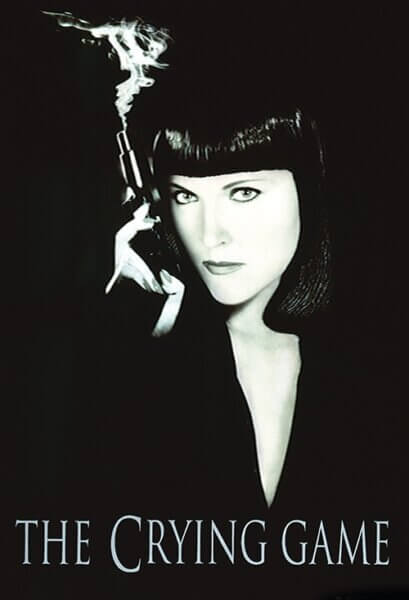
Although The Crying Game is arthouse and Sleepaway Camp is more grindhouse, they both employ a plot twist meant to shock with the reveal of a key character’s penis. In The Crying Game, Dil is a transgender character played by gay actor Jaye Davidson. The character of Dil is presented with compassion and the movie accurately suggests that men who fall for trans women can be straight and not gay. But Dil’s transgender identity is played for shock value and was made the focus of the promotional campaign.
The role did get Davidson a Best Supporting Actor Oscar nomination, but as with Lithgow’s nomination it raises questions about which category is appropriate for a transgender role. But to his credit, director Neil Jordan treats Dil and the love story with tender compassion that is positive.
8. Orlando (1992)
Sally Potter’s arthouse adaptation of Virginia Woolf’s 1928 novel Orlando: A Biography transcends both gender and genre. Similarly, Tilda Swinton seems to defy classification. She has defined herself as “queer” in terms of her sensibility, and she presents as androgynous yet she is also otherworldly and even strikes one as perhaps the only existing member of a rare extraterrestrial species – a kindred soul to David Bowie’s character in The Man Who Fell To Earth.
In Orlando, she spends half the movie as a male and then in an overnight transformation becomes female. It’s a role particularly well-suited to Swinton who brings a queerness to even her most conventional roles. She has a way of defying expectations and conventions, and slyly challenging us to ask why we feel the need for labels in the first place.
Woolf says of her character: “The change of sex, though it altered [Orlando’s] future, did nothing whatsoever to alter [Orlando’s] identity.” In the film, Swinton’s Orlando says: “Same person, no difference at all. Just a different sex.” It’s a role that challenges ideas like gender, and makes sexual binaries seem meaningless. Orlando is simply Orlando no matter what with art being the only defining characteristic worth considering. The film and Swinton display a queerness that seems to reject labels altogether, so while that is an exciting dynamic, it does not directly address trans representation.
Consider pairing this with the documentary Orlando My Political Biography (2023) that does tackle transphobia and trans rights directly while using Woolf’s novel as a starting point.
9. The Adventures of Priscilla, Queen of the Desert (1994)
The trans community has been vocal about having trans actors playing trans roles, and rightfully so. But back in the 1990s, Terence Stamp was stunning as Bernadette, an aging trans woman, in Priscilla, Queen of the Desert. The film became a cult hit, and it reflects a step forward in representation.
Although Stamp is not a trans performer, his tender, funny, and compassionate performance was a rare positive portrait of a trans character. Some may also object to the fact that Bernadette is sort of lumped in with the drag queens, making her sexual identity as a trans woman not differentiated from the gay men. But there is so much joy in this film, both onscreen and in terms of its crossover appeal, that it deserves to be embraced as a positive move forward. It is also refreshing to see a straight man fall for Bernadette and enjoy a loving relationship that they are not punished for.
10. Ma Vie En Rose (1997, France)
There are a number of films that deal with children and young people struggling with their sexual identity. Ma Vie En Rose is a particularly beautiful and bittersweet example. A couple, Pierre and Hanna Fabre, move into their dream house. Their youngest child, Ludovic (Georges Du Fresne), was born male but identifies as a girl and wants to live as one.
The film explores the challenges both the parents and Ludo face, such as negative reactions from neighbors, ideas about “curing” Ludo, and bullying and physical abuse Ludo suffers at school. Ultimately, the film expresses deep empathy for Ludo and allows them to find acceptance from their parents. Another French film in this vein is Tomboy.
11. Boys Don’t Cry (1999)
Kimberly Pierce’s Boys Don’t Cry is based on the real story of Brandon Teena. NPR described the film’s legacy at 25 as “the first mainstream film centered around a transgender man.” But the NPR story also acknowledged that it set a precedent for trans characters being played by cisgender actors (as in TransAmerica, Dallas Buyers Club, Normal, Soldier’s Girl). While Pierce (who has identified as genderqueer and trans butch) is sympathetic to Teena, she does choose to tell a story that ends with Teena being raped and murdered and depicts that violence onscreen in a way that some trans people have described as traumatic.
Pierce’s choice to depict that graphically contrasts with how the movie Till avoided showing the horrific real-life murder of Black teenager Emmett Till on screen precisely because the filmmakers felt it was exploitative. Teena identified as a trans man but was still legally Teena Brandon who had not undergone any sex reassignment surgery. Some have complained about Swank, a cisgender woman, playing the role. But there is no denying that the film opened discussion over both trans representation and trans rights.
The year before Boys Don’t Cry was released there was a documentary about Teena called The Brandon Teena Story (1998), which makes for good companion viewing.
12. The Matrix (1999)
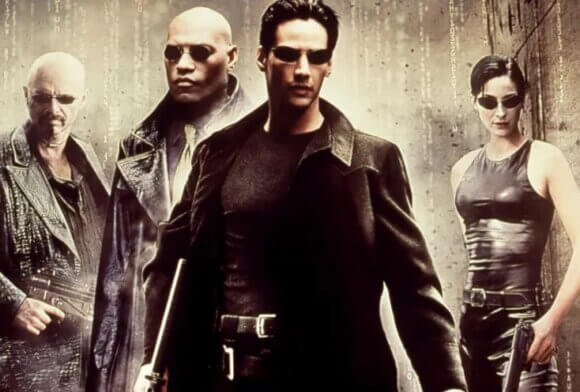
You could say The Matrix is the most widely seen and highest-grossing transgender film ever made. But when it was made in 1999, no one viewed it as a trans allegory and filmmakers Lana and Lilly Wachowski were at the time still the Wachowski Brothers (who might not have yet realized they were transgender). The film can be read strictly as a futuristic sci-fi action film, but looking back on it knowing that the filmmakers transitioned a decade or so later, does make it open to new interpretations.
The fundamental imagery and idea of breaking through binary code to find something new seems almost too on point. The film taps into the idea of being an “egg,” a slang term for someone who is trans but may not be aware of it yet and so they are like the embryo of the trans person they will eventually become.
In the film, Thomas Anderson (Keanu Reeves) is soon to crack the shell of his egg to become Neo and eventually the Chosen One. The imagery of his being unplugged from the Matrix looks like a futuristic birth. The film arrived in 1999 on the eve of what people feared would be the Y2K disaster of computers crashing as they turned over into a new millennium.
Interestingly, the movie gives us characters who escape their real lives via the Internet. They create online identities that become more real and more representative of who they are than their physical ones. Wardrobes become increasingly androgynous, and the film suggests your physical form is less important and defining than what your mind is capable of. This trans metaphor might have been more explicit if the Wachowskis had been allowed to let the character of Switch present as male in the real world but female in the Matrix (which was how the character apparently was written), thus playing with the idea that gender is merely a construct that can be shattered.
If you loved The Matrix when it first came out, it is worth re-watching through a trans lens to see what you discover.
13. The Iron Ladies (2000, Thailand)
As with Boys Don’t Cry, Iron Ladies is inspired by true events. But this film takes a much lighter tone with an upbeat ending. The film follows Thailand’s 1996 men’s volleyball team that’s made up of mainly gay and “kathoey” or transgender athletes who competed in and won the national championships. The film takes a decidedly comic tone as it depicts the team’s struggles and shows how Thailand’s LGBTQ team dealt with prejudice within the sports world.
Because of the team’s appearance, they were dubbed “The Iron Ladies,” but the film shows how they won the crowds over with their fierce gameplay. The end credits pay tribute to the real Iron Ladies. The film spawned a follow-up film and was a box office hit in Thailand.
Also consider Thailand’s Beautiful Boxer another real-life sports film, this one about Parinya Charoenphol, a kathoey Muay Thai fighter.
14. Hedwig and the Angry Inch (2001)
John Cameron Mitchell first co-created Hedwig and the Angry Inch on stage and then adapted, directed, and starred in the film. The film draws some ire from the trans community over Mitchell being a gay man playing and writing about a trans woman.
The story centers on an East German singer who goes through what is described as “a botched sex change operation” that leaves her with an “angry inch.” On a certain level, it is not really about a trans woman because Hedwig was coerced into changing sex by an older man thus leaving Hedwig stuck living as a gender not of her choosing (you could say Peter/Angela in Sleepaway Camp suffer the same circumstance but without the surgery). With that in mind, it is less a film about a transgender person and more about the trauma related to not living a gender of your own choosing.
Hedwig is not a role model by any means. But she behaves badly in part because she has been treated badly, is caught in a cycle of abuse, and is not happy with her situation. Perhaps part of the evolution of representation is to have enough representation that characters can be allowed to be flawed.
On stage, Hedwig has enticed a diversity of people to play her: gay men like Mitchell and Neil Patrick Harris; cisgender Black actor Taye Diggs; “not all the way heterosexual” (his words) white actor Michael C. Hall; cisgender actress Ally Sheedy; non-binary actor Mason Alexander Park; and RuPaul’s Drag Race winner Jinkx Monsoon. Probably because Hedwig is a very entertaining character to play.

15. Gun Hill Road (2011)
Gun Hill Road stars Esai Morales as Enrique, an ex-con who returns home to the Bronx to find his wife Angela has had an affair and his son Michael is exploring a gender transformation. The film is notable for having transgender actor Harmony Santana playing Michael who has transitioned into Vanessa. Santana was the first openly transgender actress to be nominated for a major award (specifically an Independent Spirit Award).
The film addresses the harassment Vanessa experiences at school and the difficulty her father – with his traditional idea about machismo — has accepting her. In some ways, Vanessa and Enrique are both going through challenging transitions: one involving gender and one involving returning to a family and society he no longer knows. But the film shows that Enrique can change and can embrace the fact that he now has a daughter.
16. Boy Meets Girl (2014)
Although I am not a fan of rom-coms, Boy Meets Girl delivers a sweet comedy about Ricky, a transgender woman living in a small town in Kentucky and dreaming of a career in fashion in New York City. The steps forward here are that Ricky is played by transgender actress Michelle Hendley, the character is a positive portrait, and the film is an engaging and easily accessible comedy with the ability to crossover to a wider audience. But in its rom-com plot machinations, it does resort to stereotypes and tropes regarding sexual experimentation and lesbians.

17. Tangerine (2015)
Tangerine was shot on iPhones and follows a pair of transgender sex workers played by trans women Kitana Kiki Rodriguez and Mya Taylor who director Sean Baker found hanging out at the donut shop where he planned to shoot key scenes of his movie. He also drew on their real lives and their friends to fuel the narrative.
The film arrived a couple years after Jared Leto played a trans character in Dallas Buyers Club and the same year as Eddie Redmayne played a trans woman in The Danish Girl, neither actor was transgender. So, Tangerine felt fresh and authentic casting Rodriguez and Taylor. While the film looks at the trans community in LA, it never makes an issue of the characters being transgender. They are just real people that we meet in LA and spend Christmas Eve with.
The film premiered at Sundance and won immediate critical acclaim for offering a new kind of trans representation on screen.
18. A Fantastic Woman (2017, Chile)
Chile’s A Fantastic Woman won the Academy Award for Best Foreign Film and actress Daniela Vega became the first openly transgender presenter at the Oscars. In the film, Vega plays Marina, a trans woman dealing with the sudden death of her partner. The film follows Marina as she tries to process her grief as her lover’s former family attempts to cut her out of the funeral. It also addresses larger issues about the transgender community in Chile.
Films may not be able to change the world, but they can shine a spotlight on issues and encourage greater understanding by simply depicting a point of view that we do not often get to see.
19. Chasing Chasing Amy (2023)
Twelve-year-old Sav Rodgers watched Kevin Smith’s 1997 film Chasing Amy and fell in love with it because it offered comfort to a queer kid who did not know there were any other gay films to see. In the film, comic book artist Holden (Ben Affleck) falls for fellow comics creator Alyssa (Joey Lauren Adams), whom he discovers is gay. He imagines he can “cure” her of her gayness (a harmful stereotype that still persists today) and freaks out when he discovers that she has had sex with men. Rodgers liked the fact that the film presented a female lead who was smart, funny, sexy, attractive, and although labeled as lesbian really is better defined as pansexual.
The film was naïve on some points (Alyssa even dismisses Holden’s ideas on sexuality as “completely naïve and infantile”) but progressive on others (especially if you consider Alyssa as pansexual). But progressiveness can become dated and for many in the LGBTQ+ community Chasing Amy is not only problematic from today’s perspective, but it always has been. The chief criticism being it’s a film about a queer female character as conceived by a straight man.
The resulting documentary is about a number of things. It begins with Rodgers’ fandom for Smith’s film, develops into a thoughtful exploration gender and why many in the LGBTQ+ community don’t like the film, and ultimately is a very personal and sweet coming-of-age story for Rodgers who transitions during the course of the film, coming to terms with his queerness.
20. I Saw the TV Glow (2024)
I Saw the TV Glow, much like The Matrix, can be watched without a trans lens. But if you do watch it as a trans allegory, it reveals new layers and becomes a much richer experience.
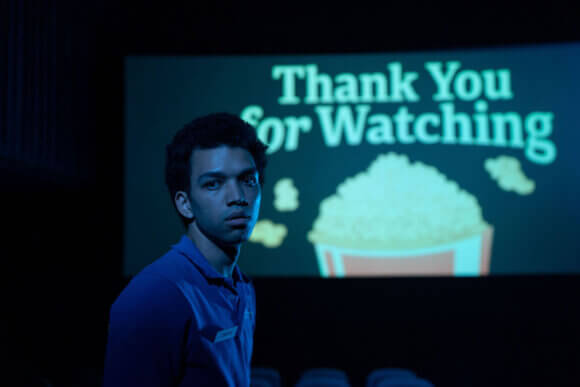
Owen (Justice Smith) and Maddy (Brigette Lundy-Paine) are teenagers who bond over their obsession with a TV show called The Pink Opaque (filmmaker Jane Schoenbrun has noted it reflects their teenage obsession with the Buffy the Vampire Slayer show). But when The Pink Opaque is abruptly canceled, the boundaries between TV and reality start to blur.
Writer-director Schoenbrun made her debut feature with We’re All Going to the World’s Fair in 2021, before coming out as trans and then wrote I Saw the TV Glow after. Superficially, the film begins with Owen and Maddy seeming to be typical angsty teens struggling to fit in and figure out who they are. But the film develops a surreal visual style that is equal parts seductive and ominous.
At one point Schoenbrun employs imagery of being buried alive, a horror trope that taps into a fear everyone can identify with. But here it is not just the fear of physically being buried alive; it is also the fear of burying/hiding/suffocating/killing a version of oneself. Maddie sees a way to escape that fate, but cannot convince Owen to join her. The film’s imagery suggests that Owen now must live a daily existence with the weight of that dirt on him making them struggle to breathe and just exist. That’s terrifying.
Loss of identity is something that I always find terrifying. In horror films, we see the loss of identity when a loved one becomes a zombie and ceases to be themselves, or someone becomes possessed and loses their soul or suffers some sort of psychological break that makes them lose their mind. But in I Saw the TV Glow, the loss of identity is more tragic and horrific because it stems from Owen suppressing their true identity out of fear of how society or those around them will react.
I Saw the TV Glow ends on a heartrending note, but there are also hints that maybe there is still time for Owen to escape his suffocating existence to be free like Maddy. But whether you read the end as tragic or with a glimmer of hope, the film absolutely reflects an exciting step forward for transgender artists being able to tell their own stories in ways that feel fresh, honest, and authentic.