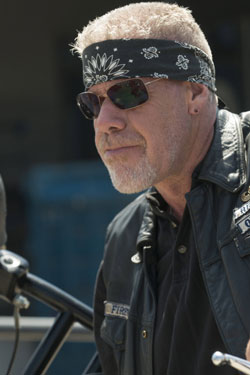
Ron Perlman as Clarence 'Clay' Morrow in 'Sons of Anarchy' - Photo Credit: Prashant Gupta/FX
Love the actor, wish the character would die a thousand painful deaths for all his evil deeds. That’s how many Sons of Anarchy fans feel about Ron Perlman and his SoA character Clay Morrow. And in speaking to Perlman at the 2013 San Diego Comic-Con, he said we pick up Clay in season six at a place in his life where he’s both alive and dead, which is Clay’s “biggest nightmare.”
Ron Perlman Sons of Anarchy Interview
The end of last season wasn’t a good deal for Clay. What’s happening to him next season that you can tease us with?
Ron Perlman: “As long as he had life, he had choices. The end of season five when Gemma [played by Katey Sagal] does what she does, even he couldn’t have foreseen that. Even he couldn’t process it, and that was the one final thing he was ready to stand for and fight for and rebuild everything around and it was no longer on the table. And then of course he’s being shuffled off to a place where there is a $5 million bounty on his head and a whole bunch of dangerous dudes who don’t give a shit about Clay Morrow. They want the money. He knows that every moment, every breath could be his last. His trajectory in season six is a man who is looking completely in the rearview mirror.”
Is this going to be the most interesting season for you to play because of that shift?
Ron Perlman: “I don’t know. I’m not there yet.”
Is he in survivalist mode or is he going back to strategizing about it?
Ron Perlman: “You have to watch because that’s what the whole season is going to be about. If you’re interested at all in watching the show to see what happens to Clay, that’s what it is. Is he fighting at all or is he done?”
What would you like it to be?
Ron Perlman: “I always played him as a guy who’s never done until he is done. This thing of being alive and yet being dead at the same time is his biggest nightmare.”
Is the break between him and Juice going to be irreparable?
Ron Perlman: “Don’t know yet. We haven’t gotten to that.”
This year marks the 20th anniversary of Cronos. What are your thoughts on that and your career, along with working with Guillermo del Toro?
Ron Perlman: “Well, I met him 22 years ago when we were making Cronos and I’ve said this a million times before, but he’s had the biggest impact on the second half of my life as any human being on the planet. Cronos was a truly independent movie, as far away from studios and executives and Hollywood as you could possibly get. In San Angel, Mexico City, surrounded by nothing but his closest friends, put together a little budget for him and protected him so he could make his movie. I just went, ‘Holy Shit! This is the way it’s supposed to be.’
So from that moment on, not only have I done close to 50 low-budget independent films looking for the next del Toro, but I’ve become obsessed with launching my own independent film company. It really changed my entire point of view. Then of course he kept coming to me with these gifts, Blade II, two Hellboy movies and now Pacific Rim, so he really has affected my standing in the community, how I’m viewed as an actor, my bankability. He revealed if you have me in a movie, this is what it looks like. He’s changed my entire life. Of course, his wife and my wife are best friends. He is the godfather of my kids and I’m like the godfather of his. It’s very deep and it’s very beautiful.”
And Hellboy III?
Ron Perlman: “I’m fighting for it. I might be the only one.”
Doug Jones is too.
Ron Perlman: “Well, then it’s a done deal.”
* * * * * * *
Season six of Sons of Anarchy premieres on FX on September 10, 2013.
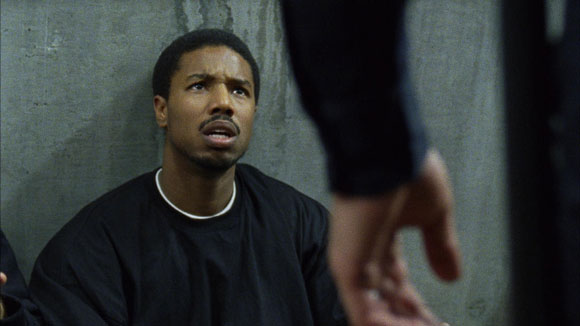
MICHAEL B. JORDAN stars in FRUITVALE STATION - Photo Courtesy of The Weinstein Company
Those who pay attention to news stories undoubtedly know of the incident that occurred at the Fruitvale transit station on New Year’s Day of 2009. It was at that place and on that day when 22-year-old Oscar Grant was shot by a Bay Area Rapid Transit (BART) police officer in front of dozens of witnesses with cell phones and cameras. This isn’t a spoiler, it’s derived from very well-publicized events which sparked protests (both peaceful and not) in the Bay Area of California and the movie opens with actual footage of what happened, caught by a bystander on the platform.
With the narrative portions of the film Fruitvale Station, writer/director Ryan Coogler attempts to paint a more detailed picture of who Grant was and who he had become within the year before the shooting. We learn about his girlfriend, daughter, mother, and troubled past, and in watching his relationship evolve with each of them, the attempt is to connect audiences to him.
Attempting to delve into this story is a weighty thing to do. It’s recent enough that many of the wounds felt in the community and worldwide likely have not fully healed, and coming out so close to the Zimmerman verdict, audiences will have that much more floating around in their heads prior to watching this film. What I will give Coogler credit for is showing the flaws within Grant and those around him. Like any real-life situation, there are shades of gray, and while the taking of a life is never to be taken lightly, providing a modicum of personal accountability is something the 5-second news byte cycle can lose sight of depending on the viewpoint of the particular network.
Obviously, there’s a lot of discussion that one can have about race, justifiable use of force by police, and so many other hot-button social issues. That’s what makes something like Fruitvale Station worth watching merely on the merits of creating a dialogue one might avoid otherwise because of its unpleasantness. That’s not to say, though, that the film is some paragon of objectivity.
There are plenty of examples of some textbook emotional manipulation done by Coogler, most evident in the last fifteen or twenty minutes and centered on Grant’s little girl. Such obvious attempts to tug on people’s heartstrings rather than letting the actual drama of the events play out hurts my overall assessment. Some of the interactions between whites and blacks in the film end up feeling like required script elements more than organic or factual events, but considering just how thin a tightrope Coogler is walking, many of these reservations I had during and after the movie are less important than the overriding attempt to create awareness.
Also, to the film’s credit, the performances from its actors are all quite good. Michael B. Jordan delivers a sincere take on Grant, buoyed by Octavia Spencer as his mother and Melonie Diaz as his girlfriend, Sophina. Young Ariana Neal plays Grant and Sophina’s daughter, Tatiana, and is the ultimate magnet for the audience’s sympathy as it continues to sink in that this little girl no longer has a father.
Of course, that all being said, I’m not entirely certain making a narrative adaptation of events, no matter how accurate they may or may not be, is the right way to go. This is the kind of material best presented via the documentary, which would also allow for an examination of the after-effects of the shooting. There’s some archival footage of people peacefully protesting in the credits and some text thrown onto the screen prior to that which elaborate on what happened to the involved parties, but it doesn’t allow for the kind of examination and analysis those already familiar with the shooting may prefer.
Fruitvale Station has gotten a lot of buzz, starting with its success at Cannes and Sundance, but I don’t see it standing somewhere in the 2013 Top 10 once all is said and done. While I applaud the guts and ambition of Coogler to bring such a highly charged story to screen, it’s just too hard to avoid shading a narrative film with the writer/director’s perspective. If you had been interested in seeing the movie, by all means, go right ahead. If you only go to the movies to escape such tragic news as this in the first place, I suggest moving on down the line at the multiplex.
GRADE: B-
MPAA Rating: R for some violence, language throughout and some drug use.
For anyone who has been reading my reviews for the past few years, you know I’m protective of the X-Men franchise when it comes to their cinematic adaptations. As a kid, it was my favorite comic book, and as an adult, the opportunity to use their stories to mimic current real-life situations is uncannily obvious (X-fans will know what I just did there).
In any case, the X-Men movies to this point have been a mixture of half-decent (X2) and obscenely awful (X-Men: The Last Stand, X-Men: First Class, X-Men Origins: Wolverine). The first X-Men gets somewhat of a pass considering it was treading fairly new ground in the current cycle of comic book movies, though plenty of its needless changes to characters and storylines still incur my ire.
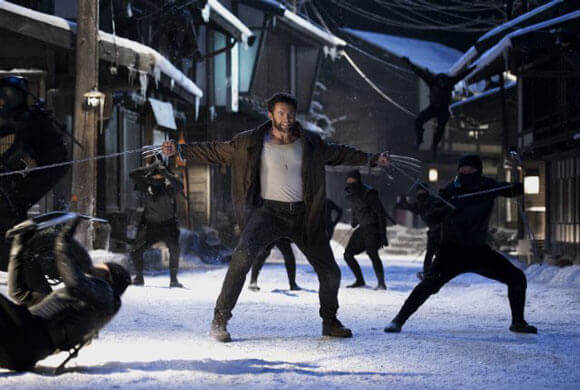
The next wave of X-films are on the horizon now and hoping to make amends for just how terrible the first stab at Wolverine’s back story ended up, here comes … well … The Wolverine. (I’m 1,000% down with dropping the “X-Men Origins” nonsense.) This time around, the story centers on the titular anti-hero (also known as Logan and played again by Hugh Jackman) going to Japan at the request of an acquaintance made nearly 60 years ago. In the comics, this phase of Logan’s life is remarkably significant as his relationship with Mariko Yashida (Tao Okamoto) is a manner in which he confronts the animal side of his psyche, and the matter of being an honorable warrior is tantamount.
In the film, there are shades of this, and I think Okamoto did a wonderful job of playing Mariko. However, the script got a bit too excited about making sure there was some way to include a fight between Wolvie and a giant adamantium samurai which would result in some of the dumbest and most needless alterations to Wolverine that the final twenty minutes undo a rather decent job of adapting the source material. Now don’t get me wrong, I’m annoyed as hell about other elements as well (most notably revolving around the characters of Yukio and the Silver Samurai which I can’t get into due to spoiler territory) but I understand that adapting items for the screen can require change so I’m going to take a deep breath and let that stuff go (mostly).
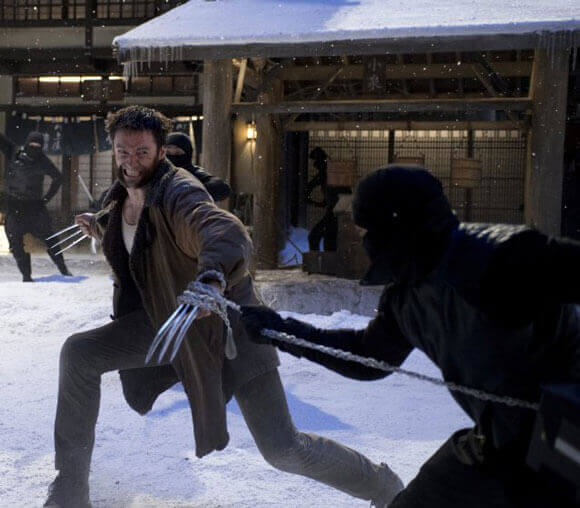
The fight scenes are rather generic for the most part, which is sort of sad considering this film has loads of ninjas. I repeat: NINJAS. (That they call them the Black Clan rather than The Hand is puzzling but don’t mind me, I’m an X-Men nerd). There’s one interesting and moderately original fight on top of a bullet train but other than that, it’s pretty standard stuff, and often director James Mangold gets a little too happy with the idea of shaky-cam that it makes following things more work than fun. And I doubt I need to mention how useless the 3D is, right? As is the case with far too many attempts at the third dimension, I found more than a few spots where taking off the glasses for whole scenes really didn’t do much but make me wish the whole thing was presented in 2D.
I still don’t quite understand why every scene involving Jean Grey (Famke Janssen) required she be in lingerie, but that’s even less concerning than bothering with that plot element in the first place as Marvel should be distancing itself from The Last Stand, not reminding people of it. And as happy as I am to let Janssen walk around in whatever skimpy outfit she wants, it’s so blatantly handled that it began to feel exploitative and I had to keep reminding myself that this wasn’t Zack Snyder continuing with his Sucker Punch fantasy.
Still, boiling it all down, I’m somewhat surprised that I spent good portions of the film simply following along and not being too irate about one thing or another. It still baffles me why the ending has to be so anti-climactic, predictable, and over the top but that’s big-budget Hollywood for you. The Wolverine is a significant step up from its predecessor but far from must-see material. Fans of the X-franchise will likely be satiated for the most part and for those who enjoy a bulked-up Jackman, you can thank the costume department for how often he sports a wife beater shirt (seriously awful name for a piece of clothing). And of course, since this is a Marvel movie, wait for a scene in the credits which will kick off the fanboys salivating at what’s to come in the X-Men universe.
SPOILER ALERT: Considering how much I loathed First Class if they get the upcoming storyline wrong (which in the entire run of the X-Men is one of the best), that review may be very NSFW. You might want to start hiding your wife and/or kids now.
GRADE: C
The Wolverine opens in theaters on July 26, 2013 and is rated PG-13 for sequences of intense sci-fi action and violence, some sexuality and language.
Hugh Jackman returns as the steely-clawed mutant in The Wolverine, an action thriller set in Japan and directed by James Mangold (3:10 to Yuma). The Wolverine catches up with Logan at a low point in his life, missing those he’s left behind and still in mourning over the death of Jean Grey. However, given that this is an X-Men film, Logan’s grief soon takes a backseat as he gets caught up in protecting the granddaughter of a Japanese business tycoon who Logan met decades earlier.
Teaming up with director Mangold, Jackman talked about this new Wolverine film and his take on the character during a press conference at the 2013 San Diego Comic Con:
How was your experience shooting in Japan? Hugh Jackman: “One thing that was really important to Jim and I was that, of course, this film is based on a famous comic book set in Japan. But as we made this film, we were constantly thinking about how this film would feel to the Japanese people. We wanted them to be proud of how we show their country and customs and culture.”
The trailers show Wolverine seemingly choosing to lose his healing powers. Is that really part of the storyline? Hugh Jackman: “That’s a good question about trailers in general, I think. It’s not that he chooses. I don’t want to give too much away, but you’ve inferred something that might not actually be true. And of course that would make a big difference to you and I understand that might be upsetting.”
James Mangold: “I think you might be spending too much anxiety before seeing movie. You should see it and then get really pissed or not. [Laughing] I think that you may be more satisfied with what you experience in the film when it’s not up-cut to two minutes and ten seconds.”
Hugh Jackman: “What is in the film, and I don’t mind saying, and you can feel that from the trailers is imagine being 200 or 300 years old and living with the fact that everyone you’ve known or loved has passed or died, and in the case of Jean Grey, the love of his life, he killed her as she’d become the Dark Phoenix. At the end of X-Men 3, he kills her and then roll credits. So finally in this movie we get a chance to live with what haunts Wolverine and what it’s like having that sort of immortality, being who he is and knowing that his strengths bring destruction, pain and loneliness as well. He questions the burden that is his life, but I’m not going to say he chooses it.”
What’s your proudest moment working on The Wolverine? James Mangold: “Well, there’s a couple of things. One proudest moment would be my long-term association with this guy right here, just realizing about halfway through that I was really proud of what we were making and just on a simple friendship basis and an emotional basis you can go back 12 years and I can remember working with him and being very proud of where we have come to…just on a simple gut level. But on a movie level, I think that what I’m really proud of on the film and that we worked very hard to do is that we deliver intense action to the fans with Wolverine, but also deliver a drama, deliver character work, deliver an actual movie in which between the set pieces of action, there weren’t set pieces of action but actual scenes with characters dealing with the ramifications of actions and where they’re headed. I think that was really a big goal for all of us when we got involved in this, was to somehow figure out if we could both let the reins go and even go further with intensity, and at the same time carry an audience through scenes that are dramatic in nature and not feature an explosion.”
What has it felt like to have Wolverine expand outside of the X-Men films into his own movies? What’s your impression of the character and can you ever see leaving him because he is so perfect for you?
Hugh Jackman: “Thank you, but I think you’re slightly exaggerating and round about Memorial Day next year you’ll see that you’re slightly exaggerating because the X-Men movies are beloved all around the world. Actually, if you get back to the comic book series the Wolverine sort of spin-offs are very, very popular. But The X-Men series has always been kind of the foundation.
I think what X-Men did – and Wolverine is a great example of it – was invent a way to make superheroes human: complex, flawed, interesting. That’s why they’re played by so many interesting and different actors, that’s why so many great directors take them on because there’s an opportunity for something very, very human as well as something spectacular. When I grew up, I loved Mad Max, I loved Dirty Harry, I couldn’t get enough of them, right, because that’s who I thought was cool, that’s who I wished I was like. In a way, I think Wolverine fills that kind of archetype. He’s a bit of an anti-hero. Deep down he’s a good guy, but he’s never a nice guy. He’s conflicted and he is, in a way, flawed, but at the same time, he’s just the last person you want to piss off. There’s something really cool about that.”
Documentaries are almost two films in one. First, you have the story that is being told via the medium of film. It can be a biography, an event, an exposé, or any number of things really. That’s the primary goal of a documentary – to crystallize the story so audiences can understand or learn about something in greater detail or for posterity. Second, you have the quality of the filmmaking itself. Is the story told in a concise manner, how much objectivity was attempted, is it paced well, is it well edited, is the non-archived footage shot well, is it more than just some talking heads? To be a great documentary, one must both consider the quality/interest/importance of the subject material and compile it all in an effective and well-crafted manner.
After watching Blackfish, it’s easy to say that the subject material is compelling and the footage obtained by director Gabriela Cowperthwaite is at times quite graphic and hard to watch. However, the actual filmmaking elements are where this documentary fails to achieve its potential as a film. Time will tell if the emotion generated by this will outweigh the lack of cinematic prowess, but that’s a discussion for critics and awards organizations much later in the year.
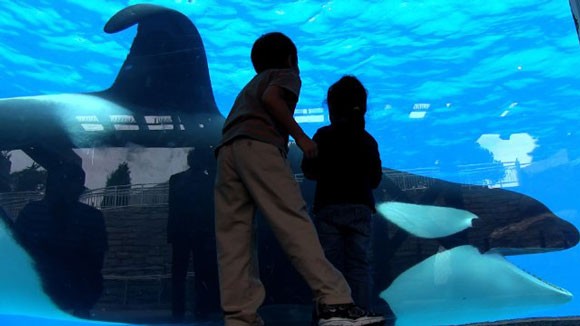
Cowperthwaite’s film is about the treatment of orcas by theme parks, especially Sea World. She presents interviews with some observers and a number of former trainers, which is the norm for docs such as this. Likewise, she’s also compiled transcripts from court cases and amassed a vast array of archival footage from the parks and the news. There’s no doubt her assertion is that the animals are treated cruelly, from the moment of their capture through their life as a performer for packed stadiums. And it’s not just the method by which they are caught or the conditions of their man-made pools, but the in-fighting amongst the killer whales themselves which is often hard to watch.
As a child growing up in San Diego, I was a frequent SeaWorld visitor and was fascinated by the animals on display. I even found immense pleasure in being doused during the different shows and would often only sit in the splash zone; probably much to the chagrin of my parents who were the ones who had to drive home with a kid that smelled like seawater and everything the animals had put into it. Watching this documentary makes the idea of supporting SeaWorld and other parks like it, a much harder thing to do. I’ve kept myself blissfully ignorant to the realities of obtaining and housing these animals.
Throwing it all in the audiences’ faces is the accomplishment of the film and I give Cowperthwaite credit for doing that. However, she missed the opportunity here (which may be fixed by any notoriety this sparks on release but it wasn’t handled on-screen as it could have been). This should have been more of an activist film, with suggestions and ideas of how people could help the animals (and the trainers). None of that is mentioned, and the film is poorly balanced. By the end of the movie, it’s a bit puzzling whether the focus ended up on the animals or the trainers. An odd shot of them sitting on the bow of a ship headed out to sea makes no sense when the point of this is to stop people from forcibly removing killer whales from their families, then sticking them in small pools and taught to perform for their food and approval from trainers much like the ones now sitting on the bow of the boat.
There’s also the issue of trying to present both sides. SeaWorld, unsurprisingly considering the angle of the documentary, declined to be interviewed. One former trainer did provide a modicum of defense for the actions of the park but, by and large, this is 83 minutes of one side to the argument. Now, I’m not sure what the flip side is, as the only counterpoint I see is dollar signs – but still, it feels at times purely like an attack film, and at others, like a snuff film (when some truly powerful footage of orcas attacking trainers is allowed to play out and one can’t help but wonder if they’re actually going to show a real person die on-screen).
Still, it would have been nice to have animal experts and biologists present at least something positive about the existence of parks like SeaWorld – as there are some successes that happen as the result of many people working there truly on behalf of the animals, and not just to see the stock price of some corporation go up two cents.
So from a societal standpoint, I think there’s value in seeing Blackfish. The issues at hand are well worth discussion and action. From a film critique standpoint, it’s a bit of a mess. The pacing is slow, not enough perspective is provided (it’s almost all former trainers), and the opportunity to give audiences a direction to focus their emotions was squandered. All I came away with as a person was an inner struggle on whether I’d ever visit SeaWorld or a zoo again (and living in San Diego that’s saying something). As a film critic, this is middle-of-the-road stuff and I won’t be spending much time considering this one of the better documentaries of the year – even if I didn’t see any others.
GRADE: C
Blackfish is rated PG-13 for mature thematic elements including disturbing and violent images.
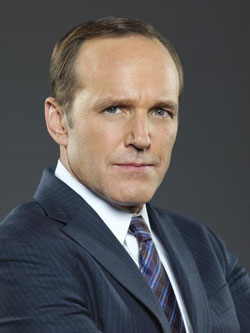
He’s alive…but we still don’t know exactly how Agent Coulson survived what audiences believed was a fatal injury in The Avengers. Clark Gregg reprises his role in Marvel’s Agents of S.H.I.E.L.D. which brings the world in which The Avengers and other big screen superheroes exist to the small screen in a dramatic action series on ABC. And after showing off the pilot episode to an appreciative crowd at the 2013 San Diego Comic-Con, Gregg sat down with journalists to – sort of – talk about Agent Coulson’s resurrection.
Welcome back now that Agent Coulson’s alive again.
Clark Gregg: “He is, or else he’s a ghost or a zombie. I don’t know yet. That’s probably in episode three.”
What’s it like to be making the jump to the television portion of the Marvel universe?
Clark Gregg: “I’m not going to lie, it feels bad-ass. I thought I was dead and I was not happy about it. Although what Joss [Whedon] did with that character was so spectacular, I was completely at peace. But the day I had to act that scene, I was surprisingly emotional. I had been playing the guy for five or six years, in four movies, and it broke my heart. I loved playing him. And yet, I was at peace about it. So when Joss called and said, ‘Listen, here’s what we’re thinking. You might not be dead,’ I had questions. I didn’t want to undo that part of The Avengers or do anything to cheapen it.
So, when I got the spin on the direction they were thinking of going with it and it was really deep and interesting and Whedon-esque, I was signed on and thrilled.”
What’s it like to be the leader of a team versus having to wrangle uncooperative superheroes together?
Clark Gregg: “He’s very much like the poor bastard wrangling all the rock stars at Coachella in the movies. But the funny thing is, I feel like Coulson – with the exception of Director Fury – I feel like he thinks he’s been ordering these people around. You know, he really views them as divas who are one notch below him. They’re not Level 7. So, in a way, it’s a little bit of a jump and a change because now he’s got a team of S.H.I.E.L.D. agents working for him.
And, I don’t know. He’s a different guy. I don’t think you get to have happen to you what happens to him in The Avengers and come back the same.”
Will we ever get to meet the cellist he was dating?
Clark Gregg: “God, I hope so! One of the things I find assuring as a fan of the Marvel universe is that they’ve done such an amazing job of taking every opportunity that I spot, as a fan, and root for them to go there. They’ve always used every piece of that. So, I have a feeling some Avengers and Pepper Potts are going to be quite unhappy when they find out that they’ve been messed with. I just wonder what the full story is going to be.
I also think that Coulson is not going to be happy when he finds out that his mint cards have been messed with. I’ve got a feeling he’s going to want to know what’s happening with the cellist. I don’t know.”
How much could they divulge to you about how Coulson could come back, or are you going to have to wait to find out?
Clark Gregg: “More than you, less than Jeph Loeb. I’m not trying to be glib. It’s kind of the game with Marvel, I get the script a couple of days in advance. With the new series scripts, every episode I read, I think, ‘Oh, of course, he is! I didn’t know he could do that!’ Instead of having to wait eight months or a year for a new film script to find out more levels to Coulson, about every week, I get another one and I get to find out more.”
How exciting is it to explore all of these other facets of Coulson that there isn’t time for in the theatrical films?
Clark Gregg: “You know, it’s amazing. I’ve gotten little bits of it meted out to me. Joss took it and really expanded the guy in all the ways I imagined and more. So to get the chance to go in, in this different context, which has got all the spectacle of the movies but is a much more human version of S.H.I.E.L.D., it’s much more people like Coulson who can die out there trying to protect the world after The Avengers.
One of the things that frankly is exciting to me about it is that I think we have to find out more about where he came from and who he is and what it’s like to have gone through what he’s gone through.”
With the 2014 version of Godzilla, Warner Bros Pictures is hoping to resurrect the gigantic creature and capture a new generation of monster fans. They’ve also got to be hoping that it’s been long enough now since Hollywood’s last major Godzilla film that older audiences – and Godzilla fans – will be willing to take a chance on the new creature feature.
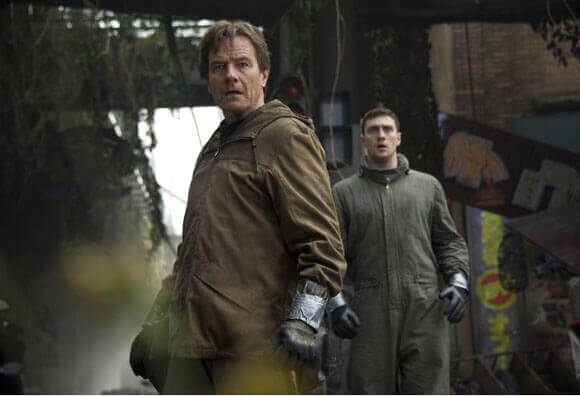
Directed by Gareth Edwards (Monsters) and starring Aaron Taylor-Johnson, Bryan Cranston, and Elizabeth Olsen, Godzilla won’t be stomping his way into theaters until next May, however the Godzilla director and cast showed up in San Diego for the 2013 Comic Con to answer a few questions about the new film, why we still love Godzilla, and life on the set of the big-budget action film.
Godzilla Cast and Director Interview
Why are we still fascinated with Godzilla?
Gareth Edwards: “I think it’s the fact that you can’t answer that question. You can’t just define it in a sentence When we first tried to figure out the film, we thought, ‘What is it that makes Godzilla, Godzilla?’ You go through all these different things and you actually find, after lots and lots of conversation, that it’s undefinable to an extent. There have been so many movies that it’s evolved and changed over the years and I think that’s why it’s stood the test of time. We felt when we were doing this film we found that, apart from having Godzilla in the movie, you’ve got an infinite canvas and it’s such a rich universe. Once you kind of accept the fact that there’s giant creatures, you can kind of do then anything you want. I think that’s why it’s stood the test of time. It’s so ripe for reinventing and revisiting. It’s not a single story. It can be any story you want.”
How challenging is it to keep from revealing the creature too early?
Gareth Edwards: “With these films, you’re going to sit in the cinema for two hours and you want to see Godzilla and you want to see him fight something else. If you just do it straight away and everything is all the way up to 11 the whole time, it might as well be at zero because it has no effect. And so it’s all about contrast. We tried to build the structure and rhythm of the movie we tried to create in such a way that the climax is more and more and more and more. By the end of the film, hopefully it’s as powerful as it can be, when you get all of those moments, which come throughout the movie. In classic movies like Jaws and Jurassic Park, they don’t actually show the monster [early].”
What was the first time you discovered Godzilla and what was your reaction?
Bryan Cranston: “My discovery of Godzilla was back in the ’50s when the Raymond Burr movie in ’56, I think, came out the year I was born. Watching that on TV as a kid, it was astonishing, even for its time. It was amazing to see those special effects that were state-of-the-art at the time. I just loved it. For a boy to watch that, it was great destruction and a wonderful use of miniatures. But, our tastes have become more sophisticated since then and certainly now. That’s what’s so great about this version of Godzilla is that there was careful concern to develop the plotlines and intricacies, and the character development. Without us, as actors and performers, getting into our roles, the audiences wouldn’t be invested either. That’s what makes it more interesting for me is that I believe audiences will truly be invested in these characters, and riding with them through the tensions and fears and anxieties that the characters are going through. You’ll feel it more, and it will ultimately be a better experience for you.”
What was it like to have to work with the effects for this film?
Gareth Edwards: “I think the trick is not to view them as effects. You just go, ‘Okay, this really happened. There really are giant monsters. What would be the most story that we can think of to tell?’ It always involves humans, so you come up with those characters and you try to create that story. I don’t separate the two in my mind. You just picture the movie. What was so refreshing was that we would shoot scenes that sometimes had the creature elements in and sometimes didn’t. We desperately tried to make it work from an emotional point of view on its own, and then you have the advantage of this creature. And then you start reviewing stuff with the visual effects companies, as they start putting the special effects in, and you’re like, ‘Oh, my god, I completely forgot that there’s this whole other layer going on this.’ We painstakingly worried about characters and their journey, and then suddenly you think about this spectacle that’s going to be embedded in the whole film and it makes you feel really good. We really want to get it right with the whole character side of things.”
Aaron Taylor-Johnson: “The thing that I found really interesting about a film that’s a special effects movie, my idea was that you’re going to be in a studio filming these green screen monsters. There was, maybe, a couple of days of that, but the majority of time we would go film on location. It gave it just a whole other depth, and you forget about it. We’d be on location with destruction everywhere and people were injured, and it came to life. It felt natural and realistic. The way we shot it, it’s just kind of with you on this journey, from our perspective point of view. When you do get a glimpse of Godzilla, you’re looking up from a car window or from a military helicopter, so you really feel, as an audience, that you’re totally involved in it. That you’re on this mad roller coaster journey with us.”
Elizabeth Olsen: “It’s kind of funny to go, ‘Okay, so in that corner up there is this thing. Is it like a unicorn or like a spider?’ So, you know, it’s kind of a weird. It’s fun. It’s like you’re playing hot lava as a kid or something. You’re trying to go deep into your imagination, like, ‘Yeah, that’s a monster! It’s going to kill me unless I run fast!’ So, it’s fun.”
Aaron Taylor-Johnson: “There were times as well that it’s hard to get the imagination of something, but it is a frightening prospect. It was really helpful [because] Gareth would – without knowing – we’d have a scene where we’d see something happen from one of the creatures and Gareth would play something on the microphone so we’d get the sound of Godzilla, or somebody playing around with the special effects. That was really great, to kind of hear something. You’re envisioning it through your consciousness and then you’re hearing something through the giant speakers around you. Sometimes he would do it without you knowing it and it would give a totally different layer.”
Gareth Edwards: “It was on my iPhone. I would desperately try to get to this clip with this sound and go, ‘That’s not it. That’s not it. That’s not it,’ and they’d go, ‘You’re wasting camera time.’ And I’d go, ‘I gotta find that noise!'”
Aaron Taylor-Johnson: “There was one time where it was like a walrus meets a tiger meets a hippo farting. [Laughing] It was so bizarre.”
Gareth Edwards: “You just gave it away…that sound effect.”
Bryan Cranston: “And also the other monster in the movie.”
Elizabeth, can you tell us about the character you play and whether she is suited or unsuited to face what she is facing?
Elizabeth Olsen: “I feel like my character’s role serves a purpose in the hands-on interaction of chaos in the city and how you deal with that, as well as having a child who needs to not be part of the chaos. I think that’s the perspective you get, and what ends up happening after these things occur, and there’s an overflowing hospital and people have to get from point A to point B, so it’s just kind of the practical part of it. It references any time some sort of natural disaster happens in a city. There’s a real truth to it, as opposed to a fantastical thing.”
Elizabeth, what is it like being in a big budget film because we are used to seeing you in low-budget, indie films?
Elizabeth Olsen: “I was really expecting to wait in a fancy trailer for three hours until they were ready for a lighting setup or something, but what ends up happening was on set until lunchtime, then until we wrapped. The crew felt really intimate. I think Legendary [Pictures] does a really good job of creating this incubator of creativity. They pick people that they trust, put them in an incubator, and then they put their heads together and figure out what they want to do to get done what they said they were going to do, and they allow you to do it. They’re not controlling things. It was just as creative of a process as anything else, honestly.”
Gareth, are you already set to direct a sequel, if that were to happen?
Gareth Edwards: “I had a blast and it’s not over yet, obviously. What’s so fantastic about Godzilla is that we’ve created a playground that I would love to play in again. If I was lucky enough to be invited back to the party, I would jump at it. I think it’s such an honor to do one of these movies with this character and to work with this cast. I would definitely be interested in doing another film.”
What were some of the biggest challenges during the shoot?
Bryan Cranston: “Getting Godzilla to come out of his trailer. He was an ass.. He was a real assh*le. He really was.”
Gareth Edwards: “He never came out. We’re going to have to CGI the whole thing.”
Bryan Cranston: “And when he came out, he would eat all the food at craft service and he would wreck everything. But boy when the cameras rolled, he’s good. That’s why they keep making Godzilla movies. He’s really good.”
What was it like to be able to spend so much money?
Gareth Edwards: “On day one, you drive along to the set and you’re like, ‘Oh, no! We’ve picked a really bad time to go to the location. There’s some kind of convention going on.’ There are 400 cars and all these trucks and you’re like, ‘Oh, no! Did no one check this?’ And then, they’re like, ‘Gareth, it’s your crew. There are 400 of them.’ And there really were 400. And you go, ‘Okay. All right.’ What was so amazing, and I’m not proud of this, but we wrapped and if you did a test with me to name my crew and tell you what they did, I would fail miserably. You never actually deal with these people. You’re kept in this little bubble. You get dropped off in a car and you’re next to the cameraman and the actors, and then, at the end of the day, you get picked off and driven off again.
You’re kind of just protected, or whatever the word would be, and so it felt to me like a small, intimate movie. I was only ever talking to about six people, throughout the whole experience. You see trees move and lights move, and things that are requested just arrive. You get quite addicted in a way. It’s a power trip.”
What sort of tone does this film have?
Bryan Cranston: “I think it’s cautionary, actually. You look at the tale and you see the scope of it, and it’s relevant to today’s times. It’s about harnessing power, messing around with Mother Nature. Can you actually do that and get away with that? How long can you get away with that? Disbursement of waste…that sort of thing. I think living in that milieu is this creature that emerges from the muck and mire. It’s very exciting.”
Executive producers Matthew Miller and Jason Rothenberg promise lots of twists and surprises in the new The CW series The 100, which meant when we asked for specific details on the first season both Miller and Rothenberg were as vague as possible. The series is based on a book that Rothenberg read before it was published.
“I’ve been wanting to do a movie or a show on another planet, a colonial situation, so this really put everything together for me and I jumped at it,” explained Rothenberg during our interview at the 2013 San Diego Comic-Con.
Miller and Rothenberg describe The 100 as Battlestar Galactica meets Lost, with two very distinct worlds – one on the planet, one in the ship – featured in the series. “It’s all going to feel very, very interconnected in the series. In terms of a percentage, I would say it’s probably about 70% on the ground and maybe 30% up in space,” offered Miller.
“The pilot’s a good model. It’s roughly three storylines happening: one is on the ship and two are on the ground. It could switch, depending on the importance of the episode and the storyline,” added Rothenberg.
97 years ago, Earth was devastated by a nuclear apocalypse, and mankind was nearly destroyed. The only survivors were the inhabitants of 12 international space stations that were in orbit at the time. The stations came together to form the Ark, but with resources dwindling and population growth soaring, the decision is made to send The 100, a group of juvenile delinquents, to the surface to test whether Earth is once again habitable.
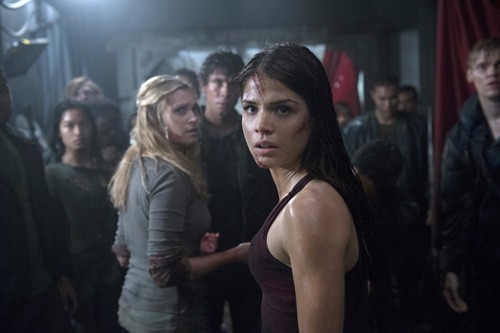
The 100 stars Eliza Taylor, Thomas McDonell, Marie Avgeropoulos, Isaiah Washington, and Henry Ian Cusick.
Every time I watch a clip from Warner Bros Pictures’ Gravity I find myself gripping the armrests of my chair, and I can just imagine how tired my fingers are going to be after sitting through an actual screening of the entire movie. Set in space and directed by Alfonso Cuaron, the sci-fi thriller teams up Academy Award winners Sandra Bullock and George Clooney for what could be the studio’s big Oscar push.
Gravity opens in theaters on October 4, 2013.
The Plot:
Sandra Bullock plays Dr. Ryan Stone, a brilliant medical engineer on her first shuttle mission, with veteran astronaut Matt Kowalsky (Clooney). But on a seemingly routine spacewalk, disaster strikes. The shuttle is destroyed, leaving Stone and Kowalsky completely alone – tethered to nothing but each other and spiraling out into the blackness. The deafening silence tells them they have lost any link to Earth and any chance for rescue. As fear turns to panic, every gulp of air eats away at what little oxygen is left. But the only way home may be to go further out into the terrifying expanse of space.
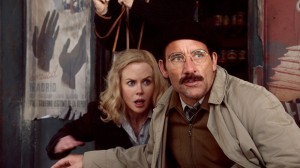
Announcing the series, HBO Programming President Michael Lombardo said, “We are thrilled that Steven and Clive have chosen to bring this unique and exciting series to Cinemax.”
Filming will take place this September in New York.
The Plot:
Set in downtown New York in 1900, The Knick centers on Knickerbocker Hospital and the groundbreaking surgeons, nurses and staff, who push the bounds of medicine in a time of astonishingly high mortality rates and zero antibiotics.

 Stumble It!