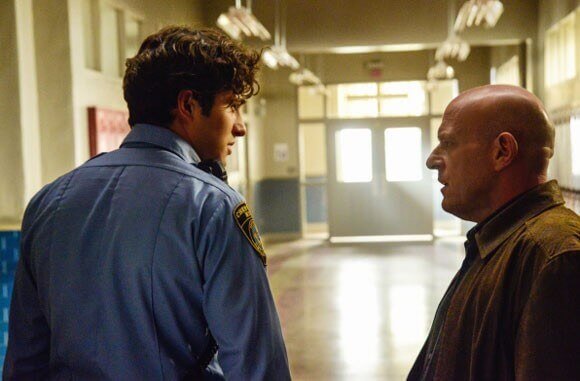
A&E announced a three-hour special American Haunting event to be aired on Saturday, July 27, 2013 at 8pm. Three back-to-back-to-back episodes will focus on three different families who all live in houses they suspect to be haunted. Surveillance cameras will try to capture unearthly goings-on as the families attempt to go about their business of living in homes alongside unhappy spirits.
Episode 1: The American Haunting premiere episode introduces the McGlone family of Grayson, Kentucky. Their dream home is becoming a nightmare as the family experiences frightening paranormal activity on a daily basis. In addition to moving objects, strange voices, and inexplicable smells, members of the family report being physically attacked during the night.
Episode 2: The members of the Rudis family of Irving, Illinois, suffer mysterious growls and footsteps, inexplicable scratches, and multiple demonic apparitions. Afraid to sleep alone in her own bedroom, the family’s teenage daughter has spent years on the living room couch, rarely sleeping through the night.
Episode 3: The Schuman family of Quincy, Massachusetts, believes their haunting began when their dad Jack purchased a 1966 Mustang with a violent past. With tensions running high in the Schuman home, Jack must decide between his beloved car and saving his family.
This new video from Warner Bros Pictures’ Pacific Rim features more details on the human characters rather than the film’s robots and monsters. Charlie Hunnam and Idris Elba talk about the story – something we haven’t really heard much about up to this point (it’s all been about the robots vs. creatures battle) – while Guillermo del Toro provides some insight into what the audience can expect.
Pacific Rim is rated PG-13 and opens in theaters on July 12, 2013.
The Plot:
When legions of monstrous creatures, known as Kaiju, started rising from the sea, a war began that would take millions of lives and consume humanity’s resources for years on end. To combat the giant Kaiju, a special type of weapon was devised: massive robots, called Jaegers, which are controlled simultaneously by two pilots whose minds are locked in a neural bridge. But even the Jaegers are proving nearly defenseless in the face of the relentless Kaiju. On the verge of defeat, the forces defending mankind have no choice but to turn to two unlikely heroes—a washed up former pilot (Charlie Hunnam) and an untested trainee (Rinko Kikuchi)—who are teamed to drive a legendary but seemingly obsolete Jaeger from the past. Together, they stand as mankind’s last hope against the mounting apocalypse.
It appears from the premiere that characters have been altered in ways that have King’s ‘constant readers’ scratching their heads. However, King is actively involved in the CBS television series and is fully aware of the changes that have/will be taking place. He’s also fully aware that fans of his book may not be happy with all of the changes. And to that point he’s addressed his fans via email and his official site, sending out a message that basically reminds everyone the book still exists exactly as it was written. The TV series has not changed a single word in his printed work, and the television version is just that – a version of his Under the Dome. [Note: I’m a King fan and I loved all but the conclusion of his Under the Dome book. However, if they don’t have a Corgi named Horace in the TV series, I’ll be tuning out.]
Says King:
For those of you out there in Constant Reader Land who are feeling miffed because the TV version of Under the Dome varies considerably from the book version, here’s a little story.
Near the end of his life, and long after his greatest novels were written, James M. Cain agreed to be interviewed by a student reporter who covered culture and the arts for his college newspaper. This young man began his time with Cain by bemoaning how Hollywood had changed books such as The Postman Always Rings Twice and Double Indemnity. Before he could properly get into his rant, the old man interrupted him by pointing to a shelf of books behind his desk. “The movies didn’t change them a bit, son,” he said. “They’re all right up there. Every word is the same as when I wrote them.”
I feel the same way about Under the Dome. If you loved the book when you first read it, it’s still there for your perusal. But that doesn’t mean the TV series is bad, because it’s not. In fact, it’s very good. And, if you look closely, you’ll see that most of my characters are still there, although some have been combined and others have changed jobs. That’s also true of the big stuff, like the supermarket riot, the reason for all that propane storage, and the book’s thematic concerns with diminishing resources.
Many of the changes wrought by Brian K. Vaughan and his team of writers have been of necessity, and I approved of them wholeheartedly. Some have been occasioned by their plan to keep the Dome in place over Chester’s Mill for months instead of little more than a week, as is the case in the book. Other story modifications are slotting into place because the writers have completely re-imagined the source of the Dome.
That such a re-imagining had to take place was my only serious concern when the series was still in the planning stages, and that concern was purely practical. If the solution to the mystery were the same on TV as in the book, everyone would know it in short order, which would spoil a lot of the fun (besides, plenty of readers didn’t like my solution, anyway). By the same token, it would spoil things if you guys knew the arcs of the characters in advance. Some who die in the book—Angie, for instance—live in the TV version of Chester’s Mill…at least for a while. And some who live in the book may not be as lucky during the run of the show. Just sayin’.
Listen, I’ve always been a situational writer. My idea of what to do with a plot is to shoot it before it can breed. It’s true that when I start a story, I usually have a general idea of where it’s going to finish up, but in many cases I end up in a different place entirely (for instance, I fully expected Ben Mears to die at the end of ‘Salem’s Lot, and Susannah Dean was supposed to pop off at the end of Song of Susannah). “The book is the boss,” Alfred Bester used to say, and what that means to me is the situation is the boss. If you play fair with the characters—and let them play their parts according to their strengths and weaknesses—you can never go wrong. It’s impossible.
There’s only one element of my novel that absolutely had to be the same in the novel and the show, and that’s the Dome itself. It’s best to think of that novel and what you’re seeing week-to-week on CBS as a case of fraternal twins. Both started in the same creative womb, but you will be able to tell them apart. Or, if you’re of a sci-fi bent, think of them as alternate versions of the same reality.
As for me, I’m enjoying the chance to watch that alternate reality play out; I still think there’s no place like Dome.
As for you, Constant Reader, feel free to take the original down from your bookshelf anytime you want. Nothing between the covers has changed a bit.
Stephen King
June 27th, 2013″
So, there you have it from the writer’s mouth. The series is different than the book and if you’re not prepared to accept the changes, then you may not need to keep it on your weekly watch list. And a heads up for those of you who haven’t caught onto the series yet, Amazon Prime members are now able to watch each of the Under the Dome episodes on an unlimited basis four days after their initial broadcast.
'Transformers 4' Argosy Truck - Photo Courtesy of Paramount Pictures
Paramount Pictures and Michael Bay are showing off yet another photo of one of the vehicles to be featured in the upcoming Transformers 4 film. This new pic is a 2014 Argosy cab-over truck by Freightliner from Daimler Trucks North America. However, there’s no word on how this particular truck plays into the new Transformers movie.
The Plot:
After an epic battle, a great city lies in ruins, but the Earth itself is saved. As humanity begins to pick up the pieces, a shadowy group emerges to try to take control of history. Meanwhile, an ancient and powerful new menace sets its sights on Earth. A new group of humans, led by Cade Yeager (Mark Wahlberg), helps Optimus Prime (Peter Cullen) and the Autobots rise up to meet their most fearsome challenge yet: a worldwide war of good versus evil.
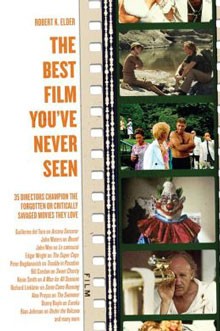
Did you know that Guillermo Del Toro’s grandmother performed two exorcisms on him because of his love for scary stories? Discussing films that range from guilty pleasures to outright flops, The Best Film You’ve Never Seen is a collection of interviews with 35 top filmmakers. Del Toro, Danny Boyle, Edgar Wright, John Waters and 31 other directors talk to author Robert Elder about their favorite films that have been overlooked, criticized, or just plain forgotten by viewers and critics alike.
What I thought was most interesting about the book wasn’t necessarily the information about the chosen movies, but the thought processes and insight into the directors themselves that we learn reading their interviews. Anyone who reads this book will learn as much about the filmmaker as the films they have directed or their favorite overlooked film. That being said, after reading the book, I now have a new list of movies to watch with perhaps a more appreciative eye for the movies as a whole and what went into making them, and not just the story the movie is telling.
One of the discussions Elder had with Del Toro was regarding the question of why we like scary movies, why we seek out things that scare us? He opined that unlike other mammals, we do not experience fight-or-flight and territorial battles, so we do it through movies. The movie he chose was Arcane Sorcerer, which he found a DVD copy of online. It is very interesting to read his praises for this movie based upon his profession as a filmmaker. I chose this book to mention because although this type of movie is definitely not my cup of tea, seeing the art of it through Del Toro’s eyes makes me want to see it. His comments regarding the crafting of the movie; the art direction, staging, design, etc., definitely gives one a new appreciation or greater appreciation for the craft of film making.
The book took eight years for Elder to write, and the research, time, and attention to detail he put into it shows he made very good use of those eight years. His knowledge of filmmakers and the movies being discussed is detailed, and the book is well-written.
With reviews of movies ranging from Killer Klowns from Outer Space to the Oscar-winner Breaking Away, I guarantee you will add some movies to your must-see movie list, and at the same time learn about what 35 incredibly talented filmmakers look for in a movie, what influences them, and what movies have greatly influenced their own productions. You might start out like I did, skipping around and reading about movies you’ve heard of or your favorite directors, but you will more than likely end up reading all 35 interviews. Whether you are really into movies or a casual film watcher, this book is for you. Oh, and Mr. Del Toro’s two exorcisms? Well, he says they definitely didn’t take!
Jon Stewart checked up on John Oliver and The Daily Show via Skype, telling Oliver he’s doing a “phenomenal” job. But, Stewart also admitted he doesn’t actually watch it all the time because it’s just too weird. “It’s like watching someone have sex with your wife’s desk,” said Stewart. He went on to say he misses the show and was checking in to say he’s thinking about everyone.
Director Neil Jordan is no stranger to supernatural creatures on film. While his 1984 The Company of Wolves may not ring a bell with a large portion of the populace, 94’s Interview with the Vampire might; though perhaps mostly due to the casting of Tom Cruise and Brad Pitt, along with being based on an Anne Rice novel.
Well now comes another vampire tale from the auteur who has also brought forth critically acclaimed works like The Crying Game, The End of the Affair, The Butcher Boy, and Ondine. This one’s called Byzantium and have no fear, it was originally conceived prior to sparkly vampires becoming all the rage (thankfully that franchise is now as lifeless as its actors’ performances). However, that doesn’t mean this is your traditional vampire tale.
These vampires can walk around in the daylight (without looking like they were cheaply bedazzled), puncture veins in an alternate manner than the fangs Goths like to sport at a Cure concert, and creating one of these creatures is a bit different from the romanticized, pseudo-sexual act of biting someone’s neck. But don’t worry, I won’t spoil the differences, as that’s something for audiences to discover on their own.
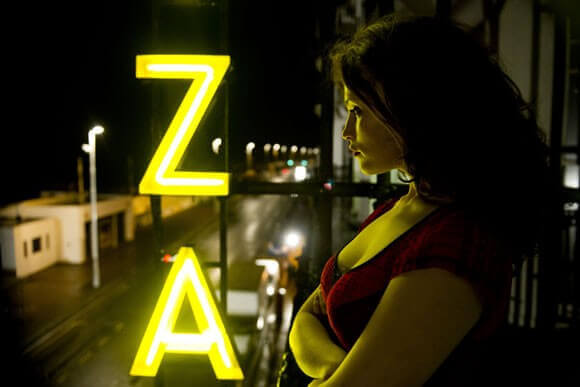
The story centers on two mysterious women (Gemma Arterton and Saoirse Ronan), who are forced out on the run after an equally mysterious man is able to find them. Answers to who he is, what he represents, and why the women are being sought, come along the way, but the true heart of the matter is the relationship between Arterton and Ronan and Ronan’s increasing desire to make a change to the repeating pattern of their very long lives. The introduction of a boy (Caleb Landry Jones) who falls instantly for Ronan and the revealing of Arterton’s long-held secrets provide the catalyst for that change.
Performance-wise, while some of the supporting characters didn’t leave much of a mark, Arterton and Ronan really sell their characters and the result is a rather fascinating tale. While I expect wonderful acting from Ronan at this point (which is remarkable considering she was born in 1994, a year before I graduated high school), the surprise of the bunch is Arterton. She hasn’t become a household name, though one might recognize her from being a Bond girl (in the awful Quantum of Solace), the love interest in the awful remake of Clash of the Titans, or as Gretel in Hansel & Gretel: Witch Hunters (which was sort of awful but there was some fun to be had in all the ridiculousness). In Byzantium, Arterton delivers the goods. Had this been an acting contest, Ronan is clearly the superior of the two but they mesh well with each other, and there are a number of sacrifices Arterton must make to provide for the pair of them and the emotional drain and steely nerve necessary for those actions come through excellently.
Though there’s not much to write home about when it comes to the other elements of the production, Jordan’s direction is good and working with the crew, there are a few very interesting shots. However, little beyond the Arterton/Ronan relationship truly registers at the level I’ve come to expect from a Jordan production and a key effect related to the manner in which new immortals are created looks a bit too much like something you’d see on the SyFy channel; which is a shame because the idea of it is very cool (sorry for the vagueness but it’s better to be surprised by it).
So while Byzantium isn’t going to find itself among the very best of Jordan’s work, this is still quite an interesting film. It’s easily the best vampire movie since Let the Right One In and ranks high on my personal favorites when it comes to the blood-suckers. Much of that is due to this not really being about vampirism. Like Let the Right One In, there’s an emotional core and story that is the true engine of the film. Both are compelling dramas that just happen to have vampires as the main characters. The inclusion of the mythology adds a wonderful extra layer to the overall production, but it doesn’t work if the central themes aren’t handled as well as it is.
So if you’re looking for the average gore fest, Byzantium isn’t for you. Yes, there is a good deal of blood, and a few people may lose their heads and perhaps even be set on fire. However, that’s all red-stained window dressing for the story and its central actresses’ performances. My enjoyment may just be because of how much I enjoy Jordan’s films, it might just be because of how much I enjoy Saoirse Ronan’s acting, it could even just be because I’m a sucker for stories so full of angst, but the bottom line is that this is one of my favorite films of 2013 so far. It’s a welcome departure from all of the brainless big-budget bonanzas of the summer, and if you’re the type of person who appreciates the work of any of those involved in its creation, this isn’t something you should miss.
GRADE: B+
Byzantium is rated R for bloody violence, sexual content and language.
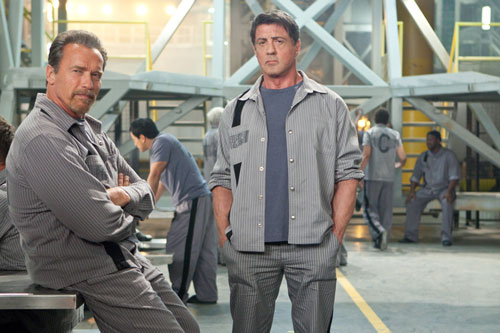
Ray Breslin (Stallone), the world’s foremost authority on structural security, agrees to take on one last job: breaking out of an ultra-secret, high-tech facility called “The Tomb.” But when he is wrongly imprisoned, he must recruit fellow inmate Emil Rottmayer (Schwarzenegger) to help devise a daring, nearly impossible plan to escape from the most protected and fortified prison ever built.
Earlier this year, the President of the United States found himself under siege within his own residence at 1600 Pennsylvania Lane. A small child was thrown into the mix to further tug on the heartstrings and eventually a lone man with something to prove and a certain set of military skills swoops in to save the day, eliminating a cadre of highly trained terrorists along the way.
That movie was Olympus Has Fallen, which was a derivative of Die Hard but stuck to the formula and delivered one of the best action films of 2013. Now, there’s White House Down. For a synopsis, re-read the first paragraph.
And since Hollywood is dead set on testing the short-term memories of audiences this year, I figure why not take my approach to reviewing the year’s first film about terrorism at the White House and apply it to the newest iteration. And so, here’s a little game of This versus That versus Die Hard (because we might as well keep acknowledging the blueprint for these formula-driven action movies).
White House Down: Terrorists take over the White House on some random weekday, hold people hostage, and attempt to hack into a secure government system.
Olympus Has Fallen: Terrorists take over a building the day after July 4th, hold people hostage, and attempt to hack into a secure government system.
Die Hard: Terrorists take over a building during a Christmas party, hold people hostage, and attempt to crack a giant vault.
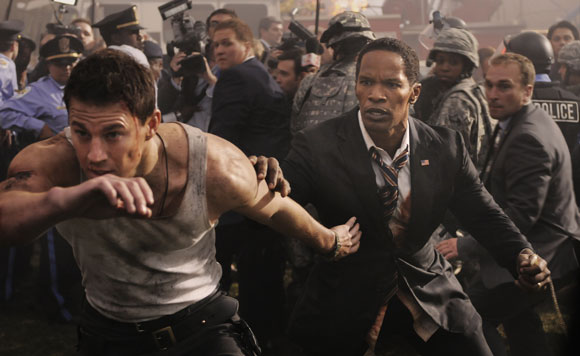
White House Down: A Secret Service agent (Channing Tatum), who wants to be selected to the Presidential detail, finds himself alone in the White House attempting to defeat the bad guys and save his daughter (Joey King) and the President (Jamie Foxx).
Olympus Has Fallen: A Secret Service agent (Gerard Butler), previously kicked off Presidential detail, finds himself alone in the White House attempting to defeat the bad guys and save the President (Aaron Eckhart).
Die Hard: A New York City Cop (Bruce Willis) finds himself alone in Nakatomi Plaza attempting to defeat the bad guys and save his wife (Bonnie Bedelia).
White House Down: Jamie Foxx is the President of the United States being marshaled through the White House by Tatum so staying in contact with one of the only two black characters in the movie with any appreciable dialogue isn’t hard.
Olympus Has Fallen: Butler uses a Bluetooth headpiece and satellite phone to stay in contact with the only black characters in the movie, the Speaker of the House (Morgan Freeman) and the Director of the Secret Service (Angela Bassett).
Die Hard: Willis uses a radio and a car phone to stay in contact with the only black characters in the movie, a LAPD cop (Reginald VelJohnson) and a limo driver (De’voreaux White).
White House Down: Tatum and Foxx use the elevator shaft and underground tunnels to avoid detection (to varying degrees of success). Their sojourn topside in an armored limo with live coverage by the news is not so subtle.
Olympus Has Fallen: Butler and the President’s son use the inner tunnels and secret passageways of the White House to avoid detection (to varying degrees of success).
Die Hard: Willis uses the ventilation ducts of Nakatomi Plaza to avoid detection (to varying degrees of success).
Well … that was … fun? There’s actually very little point in providing thoughtful criticism about White House Down. Director Roland Emmerich used the film to continue his obsession with destroying famous landmarks (Independence Day, The Day After Tomorrow, 2012). The action is about as well thought out as a snack choice at three in the morning and the script shows even less imagination. The acting is generally poor, Tatum and Foxx look to have done as much character study as I did in a web design course at college where the only project was to create a web page and I had already made one before the semester so I just presented it at the end and got my A. However, Jason Clarke comes off looking like Brando next to everyone else and I have a hopeful theory that Richard Jenkins uses the occasional big budget film like this to keep himself available for the independent features in which he’s proven himself to be so very good.
Also going along with a classic Emmerich cinematic tradition, a number of obvious but seemingly useless bits of information in the first few scenes comes back to rear their predictable and ridiculous heads in the final act. And don’t expect military realism. This is the kind of movie where the highly trained pilot of an advanced fighter jet waits until he’s practically on top of his ordered target to start begging for final clearance to launch a missile that could, and should, have been fired miles away.
When it comes to more decent acting performances, more believable military tactics, more intense fight choreography, and a more realistic body count, Olympus Has Fallen simply has more of just about everything than Emmerich’s cliché fest, except for the number of minutes it takes for the whole affair to be over. But by virtue of the fact that I was laughing at White House Down for huge chunks of its two-and-a-half hours, the film escapes a truly horrific rating.
However, don’t mistake that kindness for an indication of the filmmaking quality … of which there isn’t much. Only by the unintended ability to be so terrible that it can be enjoyed on some perverse level did this not sink to the depths so many other films in the multiplexes find themselves floating. There’s no way I’d recommend spending money to see this in theaters. There’s no way I’d recommend spending money to see this at home. However, if you find yourself on the back end of a adult beverage drinking session, you might be able to reach the right mindset not to change the channel when this hits free cable.
GRADE: C-
White House Down opens in theaters on June 28, 2013, and is rated PG-13 for prolonged sequences of action and violence, including intense gunfire and explosions, some language, and a brief sexual image.
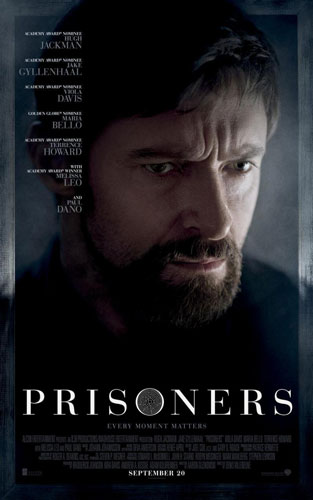
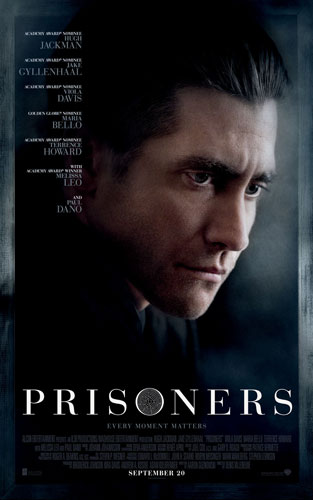
The more I see of Prisoners, the more I’m interested in the film. This latest trailer for the Warner Bros Pictures release features Hugh Jackman as a frantic dad desperately searching for his missing daughter.
Directed by Denis Villeneuve, the thriller also features Jake Gyllenhaal, Terrence Howard, Maria Bello, Viola Davis, Melissa Leo and Paul Dano. Warner Bros is releasing Prisoners in theaters on September 20, 2013.
The Plot:
Keller Dover is facing every parent’s worst nightmare. His 6-year-old daughter and her young friend are missing, and as minutes turn to hours, panic sets in. The only lead is a dilapidated RV that had been parked on their street. Heading the investigation, Detective Loki arrests its driver, but a lack of evidence forces the only suspect’s release. Knowing his child’s life is at stake, the frantic Dover decides he has no choice but to take matters into his own hands. The desperate father will do whatever it takes to find the girls, but in doing so, may lose himself, begging the question: When do you cross the line between seeking justice and becoming a vigilante?