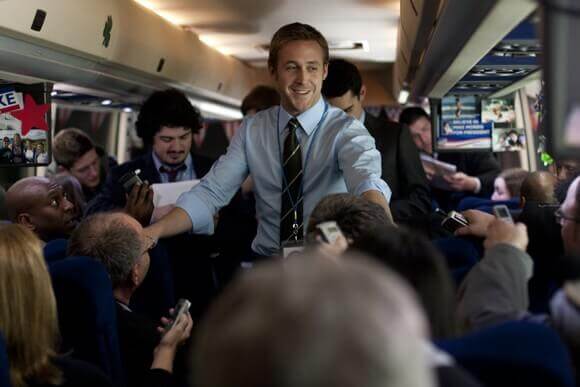
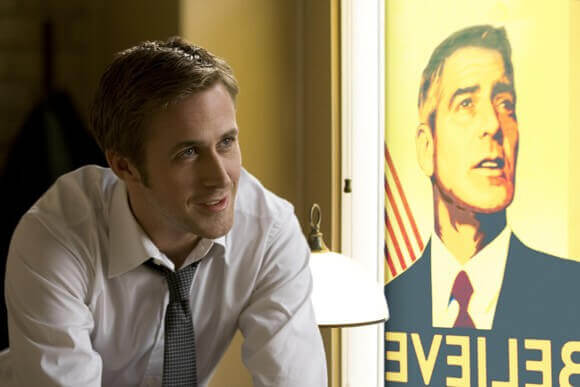
George Clooney pulls double duty as director and star of the political drama The Ides of March. The R-rated thriller is based on the play by Beau Willimon and opens in theaters on October 7, 2011.
Ryan Gosling stars as Stephen Meyers, George Clooney plays Governor Mike Morris, Philip Seymour Hoffman is Paul Zara, Paul Giamatti is Tom Duffy, and Marisa Tomei is Ida Horowicz. The cast also includes Jeffrey Wright as Senator Thompson, Evan Rachel Wood as Molly Stearns, Gregory Itzin as Jack Stearns, Michael Mantell as Senator Pullman, and Yuriy Sardarov as Mike.
The Plot:The Ides of March takes place during the frantic last days before a heavily contested Ohio presidential primary, when an up-and-coming campaign press secretary (Ryan Gosling) finds himself involved in a political scandal that threatens to upend his candidate’s shot at the presidency.
Look, I’ll be honest. Crazy, Stupid, Love looked Kinda, Freaking, Meh. Yet another tale of a broken marriage in need of some saving while a host of supporting characters undergoes similar epiphanies in their own lives (*puke*).
It’s a plot we’ve all seen before, most of us could write the outline of the script down before the opening credits finish, and anyone who doesn’t know how it’s going to end should schedule an appointment with a medical professional. But no matter how good one may be at setting the appropriate expectation level, there’s a reason critics have to see all of a film in order to review it: because they just might be wrong.
And in the case of Crazy, Stupid, Love, I couldn’t have been more surprised to find out how funny, charming, and poignant the whole affair turned out.
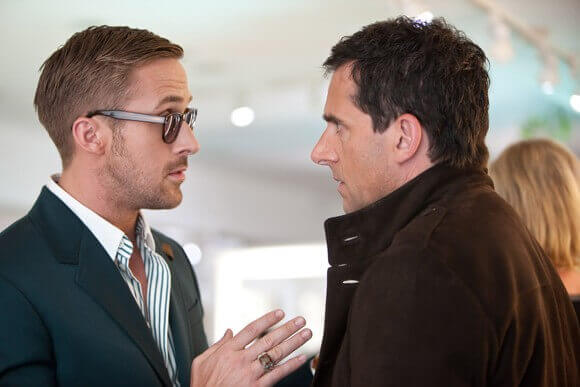
As the film starts, Cal (Steve Carell) and Emily (Julianne Moore) are at a crossroads, having let routine and complacency infect their marriage. Their split leads to Cal meeting Jacob (Ryan Gosling), a womanizer whose good looks and smooth style match his flashy threads and washboard abs (a great actor and a male model, like I didn’t have enough insecurities already). Together, Cal and Jacob teach each other how to tap into the elements of themselves that have kept them from finding real happiness.
It sounds super cheesy … and it is … but the ride is so much fun. Carell and Gosling share remarkable chemistry and their scenes together work exactly how an odd couple pairing should. Playing Hannah, the girl who puts a stop to Jacob’s wild ways, Emma Stone is in top form and her off-beat humor and disarming beauty play off Gosling’s shiny facade wonderfully. Moore isn’t breaking new ground here, playing yet again the unfulfilled wife (it feels like she’s got that niche cornered), but Carell is so endearing and earnest that their partnership feels sincere, despite the formulaic arc to their characters.
Two young actors worth a special mention are Analeigh Tipton and Jonah Bobo. Tipton plays the babysitter with a crush on Cal, making his son Robbie’s (Bobo) crush on her all the more awkward. There’s a huge risk to this angle, as lesser performances would have sunk a major element of the film, but both play things just right and quickly steal the audience’s heart.
Now, I fully realize that a look at the trailer, and my apparent gushing, may not quite paint this as a must-see Summer movie. However, and I say this without any of my usual sarcasm, Crazy, Stupid, Love is one of my five favorite films of 2011, and anyone who deems themselves a fan of sublimely sweet and romantic comedies should make every effort to see this. It’s perhaps the biggest surprise of the year and reminds me that every new film is an opportunity for something special … even if my usually low expectations tend to be right more often than not.
It’s so nice to be wrong sometimes.
GRADE: A-
Crazy, Stupid, Love hits theaters on July 29, 2011 and is rated PG-13 for coarse humor, sexual content and language.
There’s a big switch-up going on at AMC’s The Walking Dead. Frank Darabont, the creative mastermind behind the show’s successful transition from Robert Kirkman’s comic to the small screen, will no longer be the showrunner for the series. AMC announced that in his place they’ve expanded the duties of writer and executive producer Glen Mazzara.
In the official statement, AMC said they were “grateful to executive producer, writer and pilot director Frank Darabont whose contributions to the success of The Walking Dead are innumerable. We continue to discuss his ongoing role with the series.”
The official announcement also confirmed The Walking Dead creator Robert Kirkman will remain on board as executive producer and writer on the series and will – according to AMC – “continue to steward the brand.” Gale Anne Hurd is also remaining in place for the second season as executive producer.
AMC plans a October 16, 2011 premiere of the second season of The Walking Dead.
Crime Scene Pictures says filming’s has just finished up on the comedy Gambit starring Colin Firth, Cameron Diaz, Alan Rickman, Sir Tom Courtenay, Stanley Tucci and Cloris Leachman. The Oscar-winning Coen Brothers, Joel and Ethan, wrote the screenplay and Michael Hoffman (The Last Station) directed the film.
The Plot: Gambit centers on British art curator Harry Deane (Firth) who devises a finely-crafted scheme to con England’s richest man and avid art collector, Lionel Shabandar, (Rickman) into purchasing a fake Monet painting. In order to bait his buyer, he recruits a Texas rodeo queen (Diaz) to cross the pond and pose as a woman whose grandfather liberated the painting at the end of WWII.
Mike Lobell (The Freshman, Honeymoon in Vegas) produces along with Crime Scene Pictures partners Adam Ripp and Rob Paris. Rizal Risjad and Philip Elway executive produce.
Tribeca Film has acquired distribution rights to The Last Rites of Joe May starring Dennis Farina and Jamie Anne Allman (The Killing), and written and directed by Joe Maggio. The film had its world premiere at the 2011 Tribeca Film Festival and is set for an October release on Video on Demand as well as a theatrical run.
“I’m thrilled to have Tribeca handling the release of The Last Rites of Joe May,” said Maggio, commenting on the acquisition. “It’s a really personal film and Tribeca was so passionate about it, right from the beginning. I couldn’t have asked for a better fit.”
“Joe Maggio has imagined a character that resonates with subtlety and truth in addressing the realities of the final denouement of one’s life in The Last Rites of Joe May,” said Geoffrey Gilmore, Chief Creative Officer of Tribeca Enterprises. “Dennis Farina delivers the performance of his lifetime with a realism and vulnerability that we haven’t seen before.”
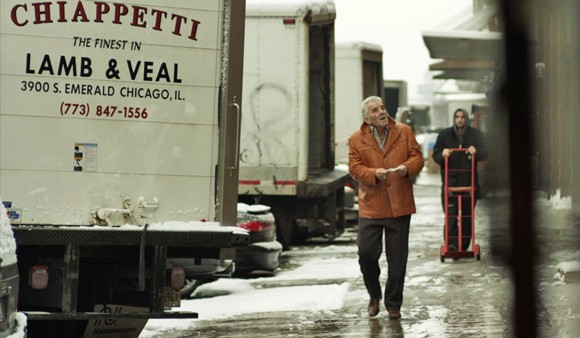
The Plot: In the spirit of classic 1970s filmmaking, Joe May is the story of a sixty-something Chicagoan named Joe May, a short-money hustler of Rolex knockoffs and bootleg DVDs. Joe returns home from a lengthy hospital stay only to find that his landlord thought he was dead and rented out his apartment to Jenny (Allman), a single mom with a young daughter.
Begrudgingly, Joe accepts Jenny’s offer to share the apartment. Joe attempts to plot his comeback scheme with help from an old contact (Gary Cole), but instead, a domino effect gets everything going against him. With his health failing and resources dwindling, Joe is presented with one last shot at redemption in the eyes of a community that’s all but left him for dead.
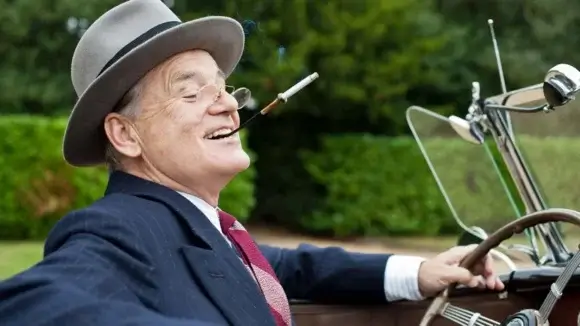
Focus Features announced filming is now underway on the historical tale Hyde Park on Hudson starring Bill Murray and Laura Linney. Roger Michell (Morning Glory) is directing the film from a screenplay by Richard Nelson, with Focus Features aiming for a 2012 release.
Hyde Park on Hudson is being shot in the U.K.
In addition to Murray and Linney, the cast also includes Olivia Williams, Elizabeth Wilson, Elizabeth Marvel, and Eleanor Bron.
Focus CEO James Schamus said, “Filmgoers will be intrigued by this unique exploration of the all-too-human side of one of history’s great men. Roger is an actor’s director who will guide Bill and Laura through their playing of Richard’s script, which beautifully encompasses satire and drama.”
Film4’s Tessa Ross added, “This promises to be an extraordinary film; we have our dream cast and a great crew on board, we’re partnering anew with our friends at Focus, and we’re working once again with the exceptional Roger Michell. What a privilege for Film4 to be on this journey with them all.”
The Plot: In June 1939, President Franklin Delano Roosevelt (played by Murray) and his wife Eleanor (Williams) host the King and Queen of England (Samuel West) for a weekend at the Roosevelt home at Hyde Park on Hudson, in upstate New York – the first-ever visit of a reigning English monarch to America. With Britain facing imminent war with Germany, the Royals are desperately looking to FDR for support. But international affairs must be juggled with the complexities of FDR’s domestic establishment, as wife, mother, and mistresses all conspire to make the royal weekend an unforgettable one.
Seen through the eyes of Daisy (Linney), Franklin’s distant cousin, neighbor, and intimate, the weekend will produce not only a special relationship between two great nations but, for Daisy – and through her, for us all – a deeper understanding of the mysteries of love and friendship.
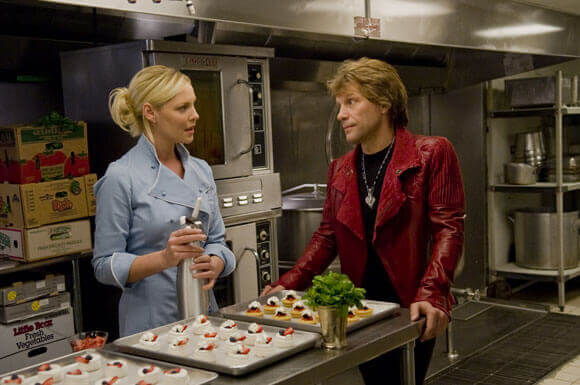
Katherine Heigl and Jon Bon Jovi in ‘New Year’s Eve.’
Just as he did with Valentine’s Day, director Garry Marshall has packed his New Year’s Eve cast with more stars than you’d normally see in six months-worth of films in theaters. Among the stars participating in Marshall’s latest romantic comedy are – in alphabetical order – Halle Berry, Jessica Biel, Jon Bon Jovi, Abigail Breslin, Chris “Ludacris” Bridges, Robert De Niro, Josh Duhamel, Zac Efron, Hector Elizondo, Katherine Heigl, Ashton Kutcher, Seth Meyers, Lea Michele, Sarah Jessica Parker, Michelle Pfeiffer, Til Schweiger, Hilary Swank, and Sofia Vergara. New Year’s Eve hits theaters on December 9, 2011.
The Plot:New Year’s Eve celebrates love, hope, forgiveness, second chances and fresh starts, in the intertwining stories told amidst the pulse and promise of New York City on the most dazzling night of the year.
Gerard Butler tackles a character-driven drama with Machine Gun Preacher, based on true events. Directed by Marc Forster from a script by Jason Keller, the R-rated action film will open in theaters on September 23, 2011.
Gerard Butler stars as Sam Childers, Michelle Monaghan plays Lynn, and Kathy Baker is Daisy. The cast also includes Madeline Carroll as Paige, Michael Shannon as Donnie, and Souleymane Sy Savane as Deng.
The Plot: In this inspirational true story, Machine Gun Preacher is about Sam Childers, a former drug-dealing criminal who undergoes an astonishing transformation and finds an unexpected calling as the savior of hundreds of kidnapped and orphaned children. Gerard Butler (300) delivers a searing performance as Childers, the impassioned founder of the Angels of East Africa rescue organization in Golden Globe-nominated director Marc Forster’s (Monster’s Ball, Finding Neverland) moving story of violence and redemption.
When ex-biker-gang member Sam Childers (Butler) makes the life-changing decision to go to East Africa to help repair homes destroyed by civil war, he is outraged by the unspeakable horrors faced by the region’s vulnerable populace, especially the children. Ignoring the warnings of more experienced aide workers, Sam breaks ground for an orphanage where it’s most needed—in the middle of territory controlled by the brutal Lord’s Resistance Army (LRA), a renegade militia that forces youngsters to become soldiers before they even reach their teens.
But for Sam, it is not enough to shelter the LRA’s intended victims. Determined to save as many as possible, he leads armed missions deep into enemy territory to retrieve kidnapped children, restoring peace to their lives—and eventually his own.
Columbia Pictures has revealed the first trailer for The Ides of March, the political thriller directed by George Clooney and starring Ryan Gosling. The Ides of March is set to debut in theaters on October 7, 2011 and marks Clooney’s fourth time occupying the director’s chair.
And because directing the film just wasn’t enough work, Clooney co-wrote the screenplay (based on the play Farragut North by Beau Willimon), produced and co-starred in The Ides of March.
The Plot:The Ides of March takes place during the frantic last days before a heavily contested Ohio presidential primary, when an up-and-coming campaign press secretary (Ryan Gosling) finds himself involved in a political scandal that threatens to upend his candidate’s shot at the presidency.
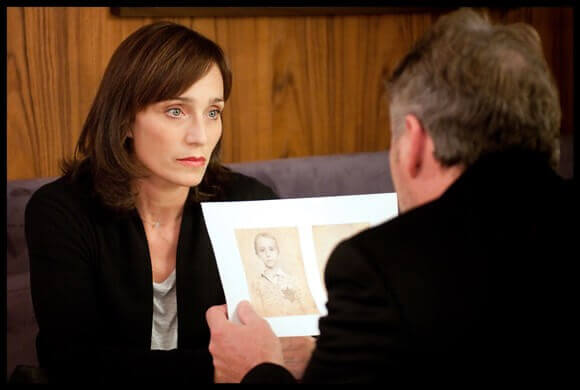
Kristin Scott Thomas in ‘Sarah’s Key’ (Photo by Julien Bonet/ The Weinstein Company)
“We’re all a product of history,” says one of the key characters who helps journalist Julia Jarmond on her investigative report on the events of the notorious Vel’d’Hiv roundup on July 16, 1942, in the dramatic film Sarah’s Key. Julia (Kristin Scott Thomas), while working on a special anniversary piece of the Vel’d’Hiv roundup of Jewish families in Paris during World War 2, begins to become obsessed with finding out the fate of one of the children, Sarah, who never ended up on the deportation list.
During Julia’s search, the film goes back in time to 10-year-old Sarah Starzynski (Melusine Mayance) on the day she and her parents are about to be taken away by the French police. Desperate to protect her younger brother, she locks him in a bedroom cupboard – their secret hiding place – and promises to come back for him soon.
Sarah, not really understanding at first where she and her parents are headed and for how long, begins to become desperate to find a way to get back to her little brother and free him from his closet prison. As Julia continues her research on the fate of Sarah and her brother, she stumbles onto a trail of secrets that link Sarah to her and her husband.
Intriguing and moving, Sarah’s Key tells half of a compelling story of a girl and her struggle to save her young brother which gives her the determination to never give up. Perhaps the best thing about the movie is young Melusine Mayance’s performance as Sarah. She captures wonderfully the innocence of childhood games and the true horrors of what her character must endure surviving. This is hands-down a remarkable breakout performance and it should be seen and remembered during Oscar season.
Kristin Scott Thomas is very effective as Julia, the journalist who becomes obsessed and eventually consumed by her search for the truth about Sarah and her fate. It’s unfortunate that the other half of the story regarding the journalist and her ideas of love and family slow and clutter the film, as well as making it overly melodramatic. The constant transitioning back and forth from the present Paris to 1942 Paris at first is a convenient tact to connect the two stories, but ultimately detracts and interrupts from the film’s most interesting story. It also makes the pacing of the movie uneven and slow.
Showing an engaging and at times horrific story of the French’s not so long ago past with interesting, sympathetic characters and strong performances Sarah’s Key is a film that shouldn’t be missed.
GRADE: C+
Sarah’s Key was released on July 22, 2011 and is rated PG-13 for thematic material including disturbing situations involving the Holocaust.