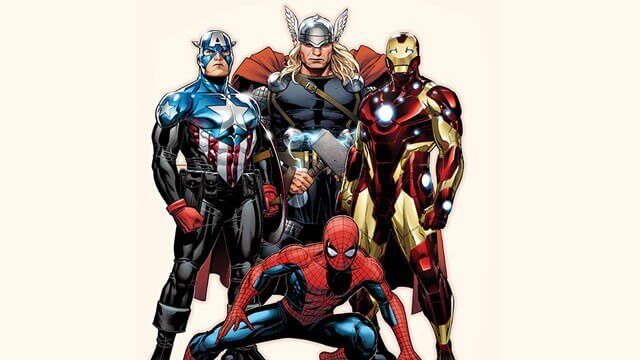
A dream Spider-Man fans have had for years has now finally, officially, come true: Spider-Man will be appearing in future Marvel films. The Spider-Man films are currently set up at Sony Pictures, and Sony will continue to release Spider-Man films including the next entry in the franchise which is scheduled for a July 28, 2017 theatrical release. But before that film arrives, Spidey will be seen in a Marvel film.
The new Spider-Man movies will be co-produced by Marvel President Kevin Feige and Amy Pascal and according to Marvel’s official announcement, the team will take the upcoming Spider-Man films in a “new creative direction.” And, the pairing of Marvel and Sony could also result in characters from the Marvel Cinematic Universe appearing in Spider-Man films.
“Spider-Man is one of Marvel’s great characters, beloved around the world. We’re thrilled to work with Sony Pictures to bring the iconic web-slinger into the Marvel Cinematic Universe, which opens up fantastic new opportunities for storytelling and franchise building,” said Bob Iger, Chairman and CEO, The Walt Disney Company.
“We always want to collaborate with the best and most successful filmmakers to grow our franchises and develop our characters. Marvel, Kevin Feige and Amy, who helped orchestrate this deal, are the perfect team to help produce the next chapter of Spider-Man,” said Michael Lynton, Chairman and CEO of Sony Pictures Entertainment. “This is the right decision for the franchise, for our business, for Marvel, and for the fans.”
“I am thrilled to team with my friends at Sony Pictures along with Amy Pascal to produce the next Spider-Man movie,” stated Marvel Studios President Kevin Feige. “Amy has been deeply involved in the realization on film of one of the world’s most beloved characters. Marvel’s involvement will hopefully deliver the creative continuity and authenticity that fans demand from the MCU. I am equally excited for the opportunity to have Spider-Man appear in the MCU, something which both we at Marvel, and fans alike, have been looking forward to for years.”
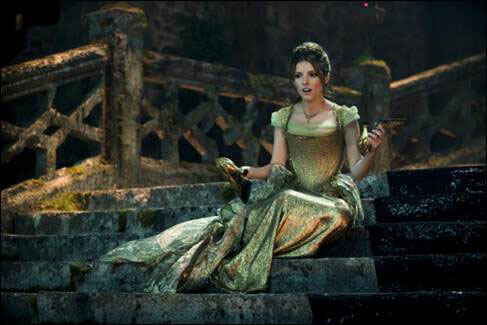
Oscar producers Craig Zadan and Neil Meron announced Anna Kendrick will be performing on the 2015 Oscars. However, the producers are keeping a lid on what exactly Kendrick will be doing when she takes the stage during the 87th Academy Awards.
Kendrick was most recently seen in the indie comedy/horror film The Voices and Disney’s big budget musical Into the Woods. She has The Hollars (directed by John Krasinski), Get a Job, Pitch Perfect 2, and Mr. Right heading to theaters this year.
“Out of the woods and on to the Oscar stage, Anna will be performing something special that is sure to be an ‘Only on the Oscars’ moment,” said Zadan and Meron.
The Oscars will air on Sunday, February 22nd on ABC at 7pm ET/4pm PT with Neil Patrick Harris as host.
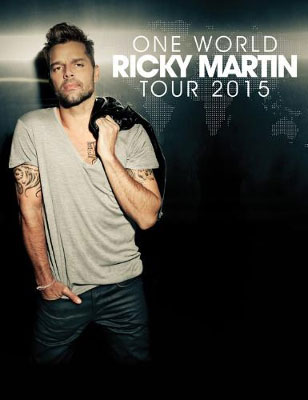
Ricky Martin has just announced the dates of his 20-city North American “One World Tour” in support of his new album, A Quien Quiera Escuchar. Grammy winner Martin will kick the tour off on September 15, 2015 in Vegas, with the tour stopping in cities including Houston, Chicago, and Atlanta before finishing up in Orlando on October 25th.
A Quien Quiera Escuchar, Martin’s 10th album, arrives in stores on February 10th.
One World Tour Dates
Tues, Sept. 15 Las Vegas, NV Axis At Planet Hollywood
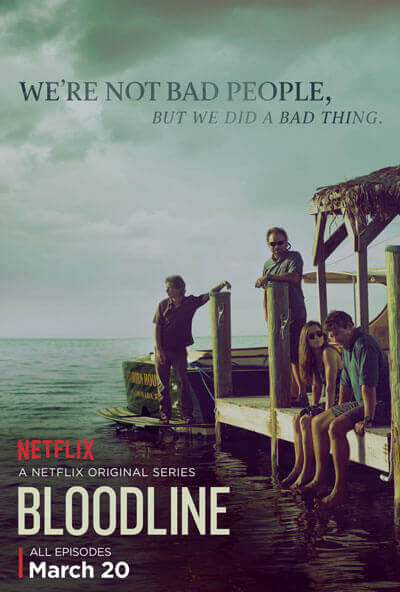
Netflix has released a new poster and trailer for the drama series Bloodline starring Kyle Chandler, Ben Mendelsohn, Linda Cardellini, Sam Shepard, Sissy Spacek, Norbert Leo Butz, Jamie McShane, Jacinda Barrett, and Enrique Murciano. Created by Todd A. Kessler, Daniel Zelman, and Glenn Kessler, all 13 episodes of Bloodline will be available for binge-watching beginning on March 20, 2015.
The Plot:
On March 20th, Netflix audiences around the world will meet the Rayburns, a contemporary American family who are hard-working pillars of their Florida community. But when the black sheep and eldest son, Danny (Ben Mendelsohn) comes home for the 45th anniversary of his parents’ hotel, he threatens to expose the Rayburns dark secrets and shameful past, pushing his siblings to the limits of family loyalty.
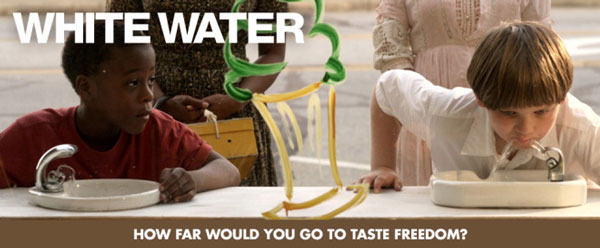
TV One premiered the movie White Water this weekend from director Rusty Cundieff. Cundieff made one of my favorite movies of the ‘90s, the rap mockumentary Fear of a Black Hat, and we became friends when the film hit DVD in 2003. So when I saw he had a movie at the Television Critics Association winter press tour, I had to catch up with him.
White Water is seen through the eyes of Michael (twins Amir and Amari O’Neil), a young boy in the South in the ‘60s who dreams of drinking from the Whites Only water fountain because he believes it will taste better. Segregation seen through Michael’s eyes includes other childlike fantasies, such as a painting of Jesus that changes expressions depending on what trouble Michael gets into. Check TV One to see White Water again and learn about the making of it in my interview with Rusty Cundieff.
The first three movies you did, you were a writer/director. Do you still write?
Rusty Cundieff: “I do still write. Just more directing stuff comes my way than writing stuff. When I was working on Wanda Sykes’ show, I wrote some sketches over there. Yeah, I do still write. I actually did a lot of work with the writers on this, I’ll put it that way.”
Did you have some influence on the tone, balancing childlike whimsy with what was really happening in the ‘60s?
Rusty Cundieff: “Yeah, I met Michael [S. Bandy] and Eric [Stein] in a class that I was teaching. They had this really interesting script. I liked the fact that even their first iteration that I read of the script was very much seen through Michael’s eyes. When I started to work with them, I tried to add some of that stuff in. A big example were the Jesus pictures. I had them put all of that stuff in there because that’s totally how a kid sees the world as he’s dealing with whatever he’s dealing with and he gets spanked. Some of the journey through downtown, just trying to make sure it stayed through Michael’s eyes and not through the adult point of view so much.”
Did someone have to paint those Jesus paintings or did they already exist?
Rusty Cundieff: “No, no, somebody had to paint those paintings. I actually had a guy in Alabama who was working as our locations guy. He also owned one of the buildings that we put our production office in. I had him model and then we had Michael Bandy’s cousin or sister, she’s an artist. So we actually hired her to make the paintings based off of this guy’s expressions. We had him do a whole bunch of different Jesus expressions. That was kind of fun.”
How did you hook up with TVOne?
Rusty Cundieff: “I hooked up with TVOne through [producer] Dwayne [Johnson-Cochran] I had given the White Water script. You know how it is. You get a script, especially something like this, it’s not an obvious choice. So I had been pushing this thing for years and one of the people that I gave it to was Dwayne. Dwayne had a relationship with D’Angela Proctor who’s at TVOne. Ultimately the script got to her and she decided that she liked it enough to put some money behind it.”
When you saw the script, did the idea of a child in the ‘60s imagining that white water tasted better seem like a good way in to inform this generation about what it was like during the ‘60s?
Rusty Cundieff: “You know what I really like about the film, and having screened it a couple times for a person here and there, not a large group, is that for people who are not totally informed on the period, stuff kind of sneaks up on them in kind of a cool way. When Michael goes to the bus and the whole thing of getting on the bus and off the bus and where they have to sit and stand and everything. They kind of go, ‘Wow, we didn’t quite know that it was like that.’
So I did think, because I have kids now. I’ve got a 14-year-old, 11 and five, so I figured this is a great way for them to see in a nonthreatening, not so angry version of what happened. That’s the other thing that I really find unique about this, that I like about the film is that despite all the stuff that’s going on, people still had lives and they still found fun and love.
That’s not to say that bad things weren’t happening, but the context of it I think is perhaps more accurate than some films that only focus on the drama, because as you live your life, bad things happen but you still live your life. You still fall in love. You still find humor. You still have all these other things that go on in your world. I think that really that’s one of the things that White Water has and what really appealed to me about the project.”
With all the Civil Rights movies being made in the last few years – Selma, 42, The Butler, even 12 Years a Slave – did you notice some heat building in the industry that helped get White Water made?
Rusty Cundieff: “We definitely did but the curious thing is that that didn’t make it any easier. All of those films that you mentioned I loved. They were all great but they were all driven with these incredible casts, big directors, big producers so we’re coming at it with me, Dwayne, not to say I don’t think we’re talented, but our name doesn’t carry the same weight as when you walk in the room and say we’ve got Oprah and Brad’s involved and all of that stuff. Yes, there have been more of those films.
I think what you’re seeing is the people that push those great projects were folks that grew up aware of that period and are now at a place where they go, ‘Yeah, this is something I want to explore.’ It’s still hard to do if you’re not those folks.
We’re dealing with these issues that these other films have dealt with, and oddly enough with issues that are resurfacing. We shot in this little town called Waverly. The week before we were supposed to shoot, the mayor said we’ve got some problems. They had a big town hall. This is a town of hundreds of people maybe.
I had to go speak to this town hall with the city councilman. We had heard that there were a couple of people that were really against us, but one of the guys that was against us gave $5,000 a year, which was a lot, to the town of Waverly. I had to give a speech and presentation on what the movie was, why we were doing it. I took the kids book that it’s based on, White Water, a picture book, did my whole song and dance.
After the meeting was over, the mayor says, ‘Anybody have anything they’d like to say?’ One hand went up, he said, ‘I just want to say, I grew up in Waverly and I had a black friend. We were fine until all these marches and protests started. He would say, ‘Why are they coming down here messing with you white people.’ And, I want to say this. The Klan did a lot of good.
They did a lot of good. If a man was beating his wife, the Klan would come and say, ‘You need to stop that.’’ Me and other people couldn’t believe he just said this. I talked to him afterwards and his whole angle was this stirs up a lot of stuff, I like black people and I think we should all come together. We got the votes on the council, by the way, to shoot there.
We go to shoot, one of our locations falls out, ironically by a very progressive hippy. We can get this other spot that would work for the general store. It’s owned by one of the ladies who was on the council and she voted for us so that’s great. But when we called her to get it, she said, ‘I do own it, but I’m leasing it to the other guy and I’ve really got to check with him’ – the guy who said the Klan did a lot of good things. One of our team talked to him and he let us use it.
When we shot there the first night, I saw him there and I said, ‘I really want to thank you for letting us use your place.’ He said, ‘I just hope this is something that brings people together and doesn’t pull them apart.’ All that is to say you never know with people. That’s not to say I don’t believe he had some very incorrect views about the value of the KKK, but his words to me the night of that meeting, that he really does want good, he probably does really want good and for whatever reason doesn’t see how revisiting this is a positive thing.
That was one of the things we ran across not a lot, but here and there, from some of the older people in these communities. It’s almost like they want to pretend it didn’t happen and they’re afraid to confront it. I told him I would send him a copy of this at some point and I hope he sees the value of what we’ve done.”
The twins who play Michael, it’s their first movie. How did you find them?
Rusty Cundieff: “God, we got so lucky with those two boys. We were very, very low budget, Fred. With the rules of how you can use children in film without getting into trouble, I didn’t know how we would do this film in 18 days with one kid. It would practically be impossible unless you went completely non union and hid yourself in some place where Child Labor couldn’t find you. So we knew we wanted to find twins. We didn’t look at a lot of twins. Most of the actors we looked at for the role were just kids. Our casting director, Aisha Coley, brought in this tape of these two little kids. I asked them what they had done.
One said, ‘Oh yeah, we’ve done some work. I was on a cup at Raging Waters. I got cast to be on a cup.’ But you could just see. Some people are born to do certain things and I think these kids were just born to do this. In fact, since we had so many kids in the cast, I would always act why are you acting? Do you want to do this? Just to make sure they weren’t being pushed by an overzealous parent, which could get really ugly. All of them were really self-motivated to be involved which was good. The little boy who played Red, Zhane [Hall], I asked him and he said, ‘Yeah, at about five or six years old, I realized this was my calling.’ So you go, ‘Okay, great. I guess this is what you really want to do.’ We got lucky finding those two and they’re both talented which is even more amazing, to find two twins that both have talent.
I wouldn’t use them interchangeably. They had specific skill sets. One would tug at your heartstrings a little bit more and one was a little funnier. I don’t know that they know who’s who. We didn’t tell them who’s who.”
Would you tell us now who’s who?
Rusty Cundieff: “Yeah, Amari was more of a heartstring tugger and Amir was a little goofier, but all in a good way. They were both really, really great kids.”
The DVD of Fear of a Black Hat came out over 10 years ago. Is there any heat on it today?
Rusty Cundieff: “Every now and then someone says, ‘You guys should do a reunion.’ I’ve thought about it at different times. It still may be something that Mark, Larry and I get together and do. I kind of see it as a thing where you come back into it and Ice is in a mansion someplace that he bought when he had a lot of money but now he’s holding onto it. In the kitchen where there used to be a big Sub Zero, there’s a small Amana. That whole thing.”
There must be all sorts of crazy music from the last 20 years you could spoof.
Rusty Cundieff: “There is so much stuff. Rap or hip-hop, whatever you want to call it now, has gotten very interesting. You could work your way backwards now from Iggy Azalea and slowly back through all these different characters. I was just commenting to my wife the other day, rap or hip-hop, whatever it is now, is just so different and for the most part, for the exception of maybe Kanye and a couple of other people, all the social part of it has mostly been stripped away and it’s become very much about flaunting and how I look and how I party.”
And twerking.
Rusty Cundieff: “And the whole twerking thing. It’s as if you could take folk music that was made about all these important things, if you could take Neil Young and turn that into, ‘And I’ve got a big car and I’ve got diamond rings, and I’ve got lots of women that do lots of things.’ I don’t know.”
I was surprised to learn Fear of a Black Hat premiered at Sundance. What was Sundance like in 1993?
Rusty Cundieff: “Oh God, Sundance was so different. It was a big thing for us. We were the first midnight screening. I don’t think they had one before us and they were like, ‘Okay, we’ll give you guys a midnight screening.’ I remember after the screening walking out in the snow and someone had written in the snow along the sidewalk, because it snowed while we were inside, NWH, Niggas with Hats. They added four more screenings while we were up there so it did really well. That is still probably my favorite movie premiere experience. Sundance felt big then but it wasn’t big compared to now. It was a lot smaller. It was a bit more intimate. Everything gets bigger as it rolls along.”
Do you know what you’re doing next?
Rusty Cundieff: “Actually, right now I’m working on a documentary. Why, I don’t know, but I’m from Pittsburgh. There’s a little place in Pittsburgh called Hazelwood and whenever I would go back to Pittsburgh, I would end up talking at high schools where you want to talk to the kids about what they want to do. The first 10 minutes is them asking you about what famous people you’ve met. Then they finally start talking about something important.
But while I was back there, I met this pastor who had a program where he taught jazz, hip hop and dance in his church. We literally walk into this old church and it was insanity. Dancers were dancing in the sanctuary to hip hop. Upstairs, rappers were producing tracks, really incredible tracks. In the basement, he had jazz guys playing and he would get really accomplished jazz musicians to come through and mentor. He got some great producers to come through and talk to the kids. Some of his kids had gone off to travel the world with different jazz groups and play on albums. So it was a really incredible program and he paid the kids to do all this stuff.
The whole thing was he treated you like you were an employee, so if you didn’t do something and they had a show coming up, he’d go, ‘You can’t perform and you’re not getting paid.’ So it wasn’t a warm fuzzy thing. It was more really teaching you how the world works while letting you learn any of those three skills.
His idea was learning how to do jazz correctly is the same skills you need to be a good historian. You still need to study. You still need to be on time. You still need to be focused on your work, so he was kind of teaching these skill sets. Some of these kids will go on and do this and some will go on and do something else. He had a really interesting story because he started out as an investment banker or stock broker and became a jazz musician and then became a pastor. Earth, Wind and Fire wanted him to play with them and he was too religious at the time. I always say, because I’m basically atheist, he’s the closest pastor to how I think.”
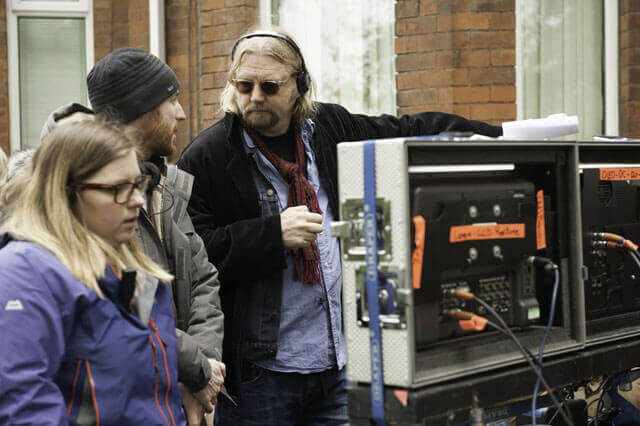
Writer/Director/Executive Producer Allan Cubitt on the set of ‘The Fall’ season 2. (Photo courtesy of Netflix)
This week, Jamie Dornan enacts women’s literary fantasies as Christian Grey in the movie version of Fifty Shades of Grey. In a way, he’s already been playing the brutal version of Christian on Netflix’s original series The Fall. Dornan plays Paul Spector, a serial killer of women. Bondage becomes part of his crimes in the second season, but it’s not sexy or tantalizing.
Netflix presented The Fall to the Television Critics Association last month, and in addition to Gillian Anderson and Jamie Dornan themselves, I got to sit down with series creator Alan Cubitt to talk about the themes of The Fall. Many revolved around Spector himself and Dornan. Season two of The Fall is now available on Netflix.
I was trying to articulate what’s so compelling about The Fall. We’ve seen so many crime shows, is it that we’re more interested in the behavior of these characters?
Alan Cubitt: “I think so. I think crimes of that complexity are always interesting. It’s not really about finding lots of evidence, building up a case in quite the conventional way either. So I think you’re right. I think for me the crime is the starting point to an exploration of lots of other things I find interesting and I’m glad that you find interesting too about the nature of human beings, human interaction, male/female relationships, aggression, violence, love, human compassion, empathy. All those things I think are bubbling around in The Fall all the time and that’s the stuff that interests me. I started out as a playwright and I think of myself as a playwright. It’s important to me that TV drama is about something.”
Is Spector aware as a grief counselor that he’s causing the sort of traumas his patients are experiencing, or does he compartmentalize those two sides of himself?
Alan Cubitt: “No, I think they’re linked in a way that Jamie perhaps doesn’t want to acknowledge. In my initial reading, it’s quite clear, with very few exceptions – Col. Russell Williams is an interesting exception to the rule – that most of the people who perpetrate crimes like this are not high achievers. They have a very, very high opinion of themselves, often thinking that they’re cleverer than anyone else, and that they should’ve been destined for great things but somehow the world has conspired against them and they have not achieved what they think they should’ve achieved. So they have a huge sense of entitlement and a huge sense of anger at the world. They are frequently, therefore, drawn to jobs where they’re able to wield a degree of control.
There’s a weird number of them who wanted to be police officers in some kind of way but have ended up either as hangers-on to police culture or performing acts where they have some kind of control they can exercise. Like Dennis Rader who was some sort of counsel. He was giving people tickets for their grass being too long or impounding dogs who were stray. What he would do when he found a dog that was stray, he’d have it put down and then he’d tell the people that he had to have it put down. He wouldn’t give them the chance to claim the dog. He was wielding a kind of cruel, sadistic power over people.
The other thing that they’re sometimes drawn to is jobs with mobility. So that’s what set me thinking about the idea of the bereavement counselor. I think he gets some perverse pleasure from their grief and he feeds off of their grief in some kind of way. And I think he’s very aware that he is the cause of that kind of grief. He finds it empowering in some fashion.”
You said Jamie would disagree. I asked him and he actually agreed that Spector was aware of both sides.
Alan Cubitt: “Oh, okay, good. I think as an actor he wanted to feel that there was love for his daughter or that there was some professional concern. For me, the thing that I decided to do with the bereavement counselor was to set myself the task that everything he says is legitimate, possibly even good advice. In season one, when Liz Tyler turns to her husband and is angry at him for not being able to articulate the way he feels, Spector says, ‘Men and women grieve differently, Liz. Try not to make comparisons.’
I think that’s true and it’s also good advice, but we know he’s manipulative. We know he’s feeding off their emotions in a way. We know when he tells her that she should not feel threatened in her own home, it’s ridiculously ironic. When he says, ‘The fault is always with the abuser, not with the abused. Stop your husband. Let’s get him in prison.’ That’s because he wants Tyler out of his life so there’s always this sense that Spector is trying to play everything and everybody. He needs to control everything. What’s interesting is that Gibson is trying to control everything too so you’ve got two people trying to control the world around them when in fact it’s probably an impossible thing to achieve anyway.”
It is good advice, better than snapping a rubber band every time you feel depressed.
Alan Cubitt: [Laughs] “But it worked for her. We have yet to find out when she did that, but yeah.”
In between seasons, when Jamie got cast in this blockbuster movie, had you plotted out season two already? Did you know that when you had Jamie Dornan tying up women, that might relate to his other role?
Alan Cubitt: “Yes, I didn’t think I had any choice but to continue to do what it is that I’d set out to do in the first place. I’ve tried to not involve myself in that other project in any way. I don’t really know what happens in it. I don’t really know what he does in it. I think inevitably when it comes out, it might have an impact on where we go beyond the second season with The Fall.”
I hope it only makes people interested in seeing his other work, and they’ll discover The Fall.
Alan Cubitt: “I hope so.”
I assume that was in his character before he was cast in Fifty Shades of Grey?
Alan Cubitt: “Completely. The Fall preceded that and it’s entirely Jamie’s decision to go for a part that has a sadomasochistic dimension to it. You’re right, I had worked out a modus operandi for Spector which included using bindings and that’s what I decided to do from reading the research. It felt coherent. It felt real. It was based on extensive research.”
The name Spector suggests a ghost, perhaps. Was that part of your design?
Alan Cubitt: “I had the notion that he was an outsider in some kind of way, that when I brought in Gibson from the outside that he would be someone who wasn’t in the bosom of an extended family that had a name that is not Northern Irish, that stood out. Obviously there’s the thing about it being a Jewish name and that’s worked through the second season as well. Fewer people picked up on Spector as a spectre than I thought would. All the names are guitars.”
That was on the internet, so it’s intentional?
Alan Cubitt: “Yes. I am a guitar player and I have a love obsession with guitars. So Gibson and Spector are both guitar makes. Spector is a guitar make but I must have felt as I was searching around in names that it suited him in some kind of way, but I’m glad to say that no one has said how convenient it is that he’s called Spector when he does hold the drama in a nighttime sense.”
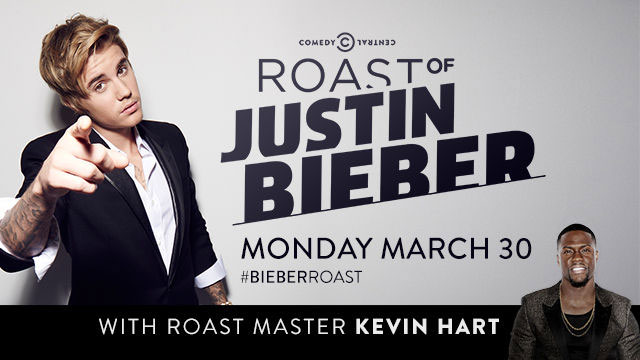
The Wedding Ringer star Kevin Hart has been tapped to host the Comedy Central Roast of Justin Bieber. The Justin Bieber Roast will air on March 30, 2015 at 10pm ET/PT on Comedy Central and will skewer Bieber in honor of his 21st birthday on March 1st.
“I don’t normally do roasts, but I had to step out for my guy Biebs…It’s his big 21. It’s about to be operation roast everyone’s ass,” said Hart.
“They say only a good friend would verbally eviscerate another good friend for all his vulnerabilities. Kevin Hart is a very good friend,” added Kent Alterman, President, Content Development and Original Programming, Comedy Central.
Joel Gallen will executive produce the Justin Bieber Roast.
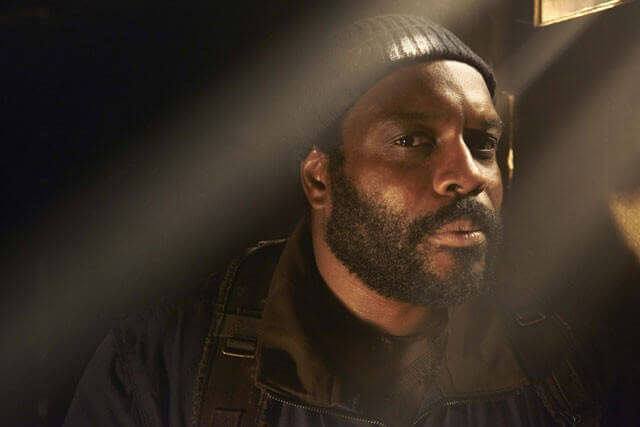
Chad Coleman as Tyreese in ‘The Walking Dead’ (Photo Credit: Frank Ockenfels 3 / AMC)
“Beth wanted to get him home, this was for her…and it could have been for us too,” says Rick (Andrew Lincoln) to Glenn (Steven Yeun) and Michonne (Danai Gurira) as they discover that Noah’s (Tyler James Williams) home in Virginia was overrun by zombies in the midseason premiere episode of season five of the horror series The Walking Dead.
*WARNING: Spoilers ahead as this is a recap and review*
Rick and his group are still in grief mode after losing Beth (Emily Kinney) when they reach what once was Noah’s home and discover it lost to walkers. Noah is too overcome with grief to deal with the situation, while Rick, Glenn, Michonne and Tyreese (Chad L. Coleman) scout to find supplies. When Noah goes sprinting away, Tyreese goes after him finally catching up to him before he’s about to enter a house. “It used to be my home. I have to take a look!” says Noah, and together he and Tyreese check out the house room by room. Noah sees what’s left of his family’s remains while Tyreese is blindsided by Noah’s younger brother who now is a flesh-hungry walker. Noah kills his zombie younger brother but not before it takes a huge bite out of Tyreese’s arm. Bleeding profusely, Tyreese tries to bind the wound and tells Noah to go get Rick and the others. Suffering from shock and continued blood loss, Tyreese begins to hallucinate seeing Bob (Lawrence Gilliard Jr.), The Governor (David Morrissey), and Beth (Emily Kinney), along with others who have long since passed away, as he begins to deal with his guilt and face his fears.
Shot and paced differently than most The Walking Dead episodes, season five’s ninth episode titled “What Happened and What’s Going On” plays out in a series of flashbacks and dream sequences similar to a Terrence Malick film. It’s a slower and emotionally deeper episode than most, with Chad L. Coleman giving his best and, yes, final performance as Tyreese – the clinging to his morals strong arm of the group.
In addition to the death of a major character, the episode also pulled off a few other surprising/shocking moments (including Noah and Tyreese’s discover that it wasn’t just walkers but also deadly vandals who overran Noah’s community). The rest of the cast delivered solid yet subdued performances, capturing the weight they all felt with the loss of Beth and any hopes that they could start over in Virginia with other survivors.
But really it’s Coleman’s performance as Tyreese, as he deals with his overwhelming issues of guilt and regrets, that’s at the very heart and the soul of this episode. The back and forth between he and David Morrissey, back as The Governor during Tyreese’s hallucinations, is one of the best scenes and the highlight of the episode – not to mention it’s great to have Morrissey back portraying the Governor, if only as a ghost in this one episode.
With great zombie effects and make-up, a stand-out performance by Coleman, and a more melancholy feel to the zombie series, it will be very interesting to see what’s next for Rick and his group in a series which is known for its shocking twists and turns.
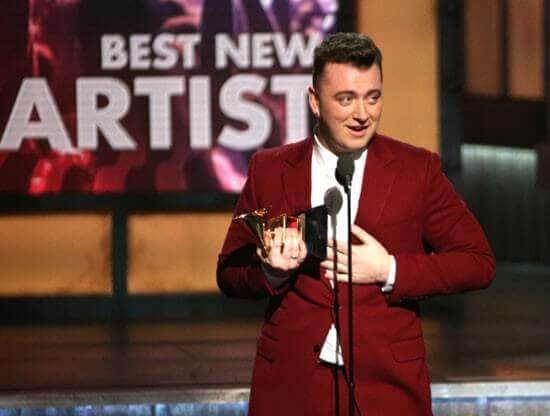
AC/DC rocked out, Sam Smith had an amazing night, Kristen Wiig danced to Sia’s “Chandelier,” and Kanye almost pulled off another spotlight-stealing moment when Beck won Album of the Year at the 2015 Grammy Awards. Held on Sunday, February 8th, the 57th Annual Grammy Awards were a surprisingly somber affair with many of the night’s performers opting to sing songs with important messages.
But the night wasn’t entirely about using the stage to get serious, as Madonna decided she would do her best impression of a matador before ascending to the arena’s roof and Miranda Lambert (in black leather) got bleeped while performing “Little Red Wagon.”
The 2015 Grammy Winners
Record Of The Year – Stay With Me (Darkchild Version), Sam Smith
Album Of The Year – Morning Phase, Beck
Song Of The Year – Stay With Me (Darkchild Version), Sam Smith
Best New Artist – Sam Smith
Best Pop Solo Performance – Happy (Live), Pharrell Williams
Best Pop Duo/Group Performance – Say Something, A Great Big World With Christina Aguilera
Best Traditional Pop Vocal Album – Cheek To Cheek, Tony Bennett & Lady Gaga
Best Pop Vocal Album – In The Lonely Hour, Sam Smith
Best Dance Recording – Rather Be, Clean Bandit Featuring Jess Glynne
Best Dance/Electronic Album – Syro, Aphex Twin
Best Contemporary Instrumental Album – Bass & Mandolin, Chris Thile & Edgar Meyer
Best Rock Performance – Lazaretto, Jack White
Best Metal Performance – The Last In Line, Tenacious D
Best Rock Song – Ain’t It Fun, Hayley Williams & Taylor York, songwriters (Paramore)
Best Rock Album – Morning Phase, Beck
Best Alternative Music Album – St. Vincent
Best R&B Performance – Drunk In Love, Beyoncé Featuring Jay Z
Best Traditional R&B Performance – Jesus Children, Robert Glasper Experiment Featuring Lalah Hathaway & Malcolm-Jamal Warner
Best R&B Song – Drunk In Love
Best Urban Contemporary Album – Girl, Pharrell Williams
Best R&B Album – Love, Marriage & Divorce, Toni Braxton & Babyface
Best Rap Performance – I, Kendrick Lamar
Best Rap/Sung Collaboration – The Monster, Eminem Featuring Rihanna
Best Rap Song – I, K. Duckworth & C. Smith, songwriters (Kendrick Lamar)
Best Rap Album – The Marshall Mathers LP2, Eminem
Best Country Solo Performance – Something In The Water, Carrie Underwood
Best Country Duo/Group Performance – Gentle On My Mind, The Band Perry
Best Country Song – I’m Not Gonna Miss You, Glen Campbell & Julian Raymond, songwriters (Glen Campbell)
Best Country Album – Platinum, Miranda Lambert
For a complete list of nominees and winners, visit Grammy.com.
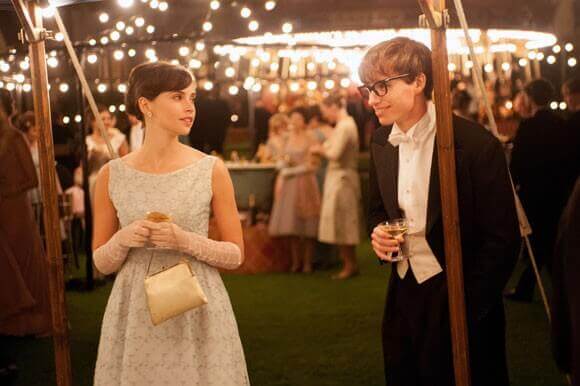
Felicity Jones stars as Jane Wilde and Eddie Redmayne stars as Stephen Hawking in THE THEORY OF EVERYTHING (Photo Credit: Liam Daniel / Focus Features)
The 2015 British Academy of Film and Television Arts announced the winners of the EE British Academy Film Awards on February 8, 2015 and it was a big night for The Grand Budapest Hotel, Boyhood, The Theory of Everything, and Whiplash. Hosted by Stephen Fry (for the 10th year), the EE British Film Awards are the British version of the Oscars, recognizing the best in feature films but with a few awards specifically acknowledging British talent.
BAFTA Awards 2015 Winners:
Best Film – Boyhood
Best Director – Richard Linklater, Boyhood
Best Supporting Actress – Patricia Arquette, Boyhood
Costume Design – The Grand Budapest Hotel
Production Design – The Grand Budapest Hotel
Make Up & Hair – The Grand Budapest Hotel
Original Music – The Grand Budapest Hotel
Original Screenplay – Wes Anderson, The Grand Budapest Hotel
Leading Actor – Eddie Redmayne, The Theory of Everything
Outstanding British Film – The Theory of Everything
Adapted Screenplay – The Theory of Everything
Supporting Actor – J.K. Simmons, Whiplash
Best Editing – Whiplash
Sound – Whiplash
Leading Actress – Julianne Moore, Still Alice
Outstanding Debut by a British Writer, Director or Producer – Writer Stephen Beresford and Producer David Livingstone, Pride
Film Not in the English Language – Pawel Pawlikowski, Ida
Cinematography – Emmanuel Lubezki, Birdman
Animated Film – The Lego Movie
Special Visual Effects – Interstellar
Documentary – Citizenfour
British Short Film – Boogaloo and Graham
British Short Animation – The Bigger Picture
EE Rising Star Award – Jack O’Connell
Outstanding British Contribution to Cinema – BBC Films
Fellowship (The highest honor the Academy awards) – Mike Leigh