AMERICAN HUSTLE
GRAVITY
NEBRASKA
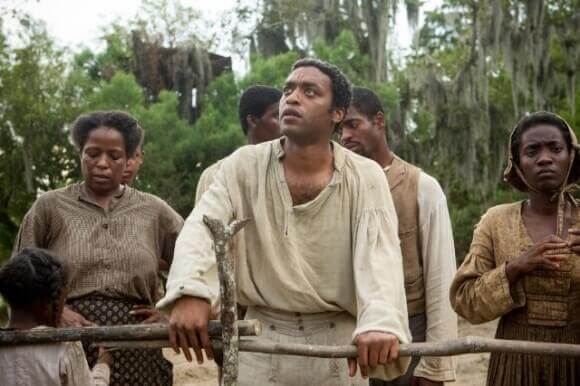
WINNER – 12 YEARS A SLAVE
THE WOLF OF WALL STREET
Best Director
WINNER – Alfonso Cuaron, GRAVITY
Spike Jonze, HER
Steve McQueen, 12 YEARS A SLAVE
David O. Russell, AMERICAN HUSTLE
Martin Scorsese, THE WOLF OF WALL STREET
Best Actor
Bruce Dern, NEBRASKA
Leonardo DiCaprio, THE WOLF OF WALL STREET
WINNER – Chiwetel Ejiofor, 12 YEARS A SLAVE
Matthew McConaughey, DALLAS BUYERS CLUB
Robert Redford, ALL IS LOST
Best Actress
WINNER – Cate Blanchett, BLUE JASMINE
Sandra Bullock, GRAVITY
Judi Dench, PHILOMENA
Adele Exarchopolous, BLUE IS THE WARMEST COLOR
Brie Larson, SHORT TERM 12
Meryl Streep, AUGUST: OSAGE COUNTY
Best Supporting Actor
Barkhad Abdi, CAPTAIN PHILLIPS
Michael Fassbender, 12 YEARS A SLAVE
Harrison Ford, 42
Will Forte, NEBRASKA
WINNER – James Franco, SPRING BREAKERS
Jared Leto, DALLAS BUYERS CLUB
Best Supporting Actress
WINNER – Jennifer Lawrence, AMERICAN HUSTLE
Lupita Nyong’o, 12 YEARS A SLAVE
Lea Seydoux, BLUE IS THE WARMEST COLOR
Octavia Spencer, FRUITVALE STATION
June Squibb, NEBRASKA
Best Screenplay, Original
WINNER – AMERICAN HUSTLE, Eric Singer and David O. Russell GRAVITY, Alfonso and Jonas Cuaron HER, Spike Jonze INSIDE LLEWYN DAVIS, Joel and Ethan Coen NEBRASKA, Bob Nelson
Best Screenplay, Adapted
BEFORE MIDNIGHT, Richard Linklater; Julie Delpy and Ethan Hawke PHILOMENA, Steve Coogan and Jeff Pope THE SPECTACULAR NOW, Scott Neustadter and Michael H. Weber
WINNER – 12 YEARS A SLAVE, John Ridley THE WOLF OF WALL STREET, Terence Winter
Best Cinematography
WINNER – GRAVITY, Emmanuel Lubezki HER, Hoyte Van Hoytema INSIDE LLEWYN DAVIS, Bruno Delbonnel NEBRASKA, Phedon Papamichael 12 YEARS A SLAVE, Sean Bobbitt
Best Production Design
AMERICAN HUSTLE, Judy Becker
WINNER – GRAVITY, Andy Nicholson HER, K. K. Barrett INSIDE LLEWYN DAVIS, Jess Gonchor 12 YEARS A SLAVE, Adam Stockhausen
Best Editing
ALL IS LOST, Pete Beaudreau AMERICAN HUSTLE, Alan Baumgarten; Jay Cassidy and Crispin Struthers CAPTAIN PHILLIPS, Christopher Rouse
WINNER – GRAVITY, Alfonso Cuaron and Mark Sanger 12 YEARS A SLAVE, Joe Walker THE WOLF OF WALL STREET, Thelma Schoonmaker
Best Animated Feature
THE CROODS
DESPICABLE ME
WINNER – FROZEN MONSTERS UNIVERSITY
THE WIND RISES
Best Foreign Language Picture
WINNER – BLUE IS THE WARMEST COLOR
A HIJACKING
THE HUNT
THE PAST
WADJDA
Best Documentary
WINNER – THE ACT OF KILLING
THE ARMSTRONG LIE
BLACKFISH
STORIES WE TELL
TWENTY FEET FROM STARDOM
The new trailer for the 2014 comedy Neighbors shows how the battle between new parents (Seth Rogen and Rose Byrne) and the fraternity that moves in next door (led by Zac Efron and Dave Franco) goes from minor skirmish to all-out war. If the trailer isn’t showing off the only funny parts of the film, then Neighbors could be a lot of fun.
Neighbors was directed by Nicholas Stoller (Forgetting Sarah Marshall, Get Him to the Greek) and enters theaters on May 9, 2014.
The Plot:
Seth Rogen, Zac Efron and Rose Byrne lead the cast of Neighbors, a comedy about a young couple suffering from arrested development who are forced to live next to a fraternity house after the birth of their newborn baby.
17-time Oscar nominee and three-time Oscar winner Meryl Streep will be awarded the Icon Award at the 25th Annual Palm Springs International Film Festival (PSIFF). Streep will receive the honor during the Awards Gala on January 4, 2014 at the Palm Springs Convention Center.
According to PSIFF, the Icon Award “honors a creative talent who, through the course of his or her career, has created a body of work which symbolizes the highest level of achievement in the motion picture art form.”
“We’re overjoyed to recognize Meryl Streep for yet another Oscar-worthy performance in August: Osage County,” said Festival Chairman Harold Matzner. “Meryl Streep’s portrayal of Violet Weston, the matriarch of a dysfunctional family reunited by a tragic incident, will be remembered in her long list of iconic character roles. The Palm Springs International Film Festival is honored to present the 2014 Icon Award to Meryl Streep.”
Other 2014 Palm Springs International Film Festival award winners include Sandra Bullock, Bruce Dern, Tom Hanks, Matthew McConaughey, Steve McQueen, Thomas Newman, Lupita Nyong’o, Julia Roberts, and the cast of American Hustle.
Streep won her first Oscar for her supporting performance in 1979’s Kramer vs Kramer. She earned her second Oscar for her lead role in 1982’s Sophie’s Choice, with her third Oscar coming for portraying former British Prime Minister Margaret Thatcher in 2011’s The Iron Lady.
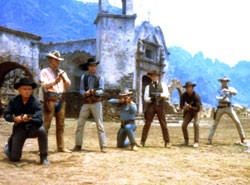
'The Magnificent Seven' (l-r) Yul Brynner, Steve McQueen, Horst Buchholz, Charles Bronson, Robert Vaughn, Brad Dexter and Charles Coburn. (Courtesy MGM Home Entertainment)25 films representing nearly every genre and ranging from Disney’s family-friendly Mary Poppins to Quentin Tarantino’s Pulp Fiction have been added to the National Film Registry of the Library of Congress as just announced by the Librarian of Congress James H. Billington. Including this new batch of inductees, the National Film Registry now stands as 625 films.
“The National Film Registry stands among the finest summations of more than a century of extraordinary American cinema,” said Billington. “This key component of American cultural history, however, is endangered, so we must protect the nation’s matchless film heritage and cinematic creativity.”
Per the Library of Congress, the official rules for being considered to be a part of the collection dictate that a film must be at least 10 years old to be nominated. Every film in consideration has to be ““culturally, historically or aesthetically significant” in order to qualify.
2013 National Film Registry
Bless Their Little Hearts (1984)
Part of the vibrant New Wave of independent African-American filmmakers to emerge in the 1970s and 1980s, Billy Woodberry became a key figure in the movement known as the L.A. Renaissance. Woodberry crafted his UCLA thesis film, “Bless Their Little Hearts,” which was theatrically released in 1984. The film features a script and cinematography by Charles Burnett. This spare, emotionally resonant portrait of family life during times of struggle blends grinding, daily-life sadness with scenes of deft humor. Jim Ridley of the “Village Voice” aptly summed up the film’s understated-but- real virtues: “Its poetry lies in the exaltation of ordinary detail.”
Brandy in the Wilderness (1969)
This introspective “contrived diary” film by Stanton Kaye features vignettes from the relationship of a real-life couple, in this case the director and his girlfriend. An evocative 1960s time capsule—reminiscent of Jim McBride’s “David Holzman’s Diary”—this simulated autobiography, as in many experimental films, often blurs the lines between reality and illusion, moving in non-linear arcs through the ever-evolving and unpredictable interactions of relationships, time and place. As Paul Schrader notes, “it is probably quite impossible (and useless) to make a distinction between the point at which the film reflects their lives, and the point at which their lives reflect the film.” “Brandy in the Wilderness” remains a little-known yet key work of American indie filmmaking.
Cicero March (1966)
During the summer of 1966, the Chicago Freedom Movement, led by Dr. Martin Luther King, Jr., targeted Chicago in a drive to end de facto segregation in northern cities and ensure better housing, education and job opportunities for African Americans. After violent rioting and a month of demonstrations, the city reached an agreement with King, in part to avoid a threatened march for open housing in the neighboring all-white town of Cicero, Ill., the scene of a riot 15 years earlier when a black couple tried to move into an apartment there. King called off further demonstrations, but other activists marched in Cicero on Sept. 4, an event preserved on film in this eight-minute, cinema-vérité-styled documentary. Using lightweight, handheld equipment, the Chicago-based Film Group, Inc. filmmakers situated themselves in the midst of confrontations and captured for posterity the viciousness of northern reactions to civil-rights reforms.
Daughter of Dawn (1920)
A fascinating example of the daringly unexpected topics and scope showcased by the best regional, independent filmmaking during the silent era, “Daughter of Dawn” features an all-Native-American cast of Comanches and Kiowas. Although it offers a fictional love-story narrative, the film presents a priceless record of Native-American customs, traditions and artifacts of the time. The Oklahoma Historical Society recently rediscovered and restored this film with a grant from the National Film Preservation Foundation.
Decasia (2002)
Errol Morris, the director of such highly acclaimed documentary features as “The Thin Blue Line,” “Fast, Cheap and Out of Control” and “Mr. Death,” is noted to have sat drop-jawed watching “Decasia” and stammering, “This may be the greatest movie ever made.” Created from scraps of decades-old decomposing “found film,” “Decasia” hypnotizes and teases with images that fade and transform themselves right before the viewer’s eyes. Culling footage from archives across the country, filmmaker Bill Morrison collected nitrate film stock on the very brink of disappearance and distilled it into a new art form capable of provoking “transports of sublime reverie amid pangs of wistful sorrow,” according to New York Times writer Lawrence Weschler. Morrison wedded images to the discordant music of composer Michael Gordon—a founding member of the Bang on a Can Collective—into a fusion of sight and sound that Weschler called “ravishingly, achingly beautiful.”
Ella Cinders (1926)
With her trendsetting Dutch bob haircut and short skirts, Colleen Moore brought insouciance and innocence to the flapper image, character and aesthetic. By 1926, however, when she appeared in “Ella Cinders,” Moore’s interpretation of the flapper had been eclipsed by the more overtly sexual version popularized by Clara Bow or Joan Crawford. In “Ella Cinders,” Ella (Colleen Moore) wins a beauty contest sponsored by a movie magazine and is awarded a studio contract. New York Times reviewer Mordaunt Hall observed that the film was “filled with those wild incidents which are seldom heard of in ordinary society,” and noted “Miss Moore is energetic and vivacious.” The film is an archetype of 1920s comedy, featuring a star whose air of emancipation inspired her generation.
Forbidden Planet (1956)
Directed by Fred M. Wilcox, MGM’s “Forbidden Planet” is one of the seminal science-fiction films of the 1950s, a genre that found itself revitalized and empowered after World War II and within America’s newly created post-nuclear age. Loosely based upon William Shakespeare’s “The Tempest,” “Forbidden Planet” is both sci-fi saga and allegory, a timely parable about the dangers of unlimited power and unrestrained technology. Since its production, the movie has proved inspirational to generations of speculative fiction visionaries, including Gene Roddenberry. Along with its literary influence, highly influential special effects and visual style, the film also pushed the boundaries of cinematic science fiction. For the first time, all action happened intergalatically (not on Earth) and humans are depicted as space travelers, regularly jetting off to the far reaches of the cosmos. Additionally, “Forbidden Planet” is remembered for its innovative score—or lack thereof. No music exists on the film’s soundtrack; instead, all ambient sounds are “electronic tonalities” created by Louis and Bebe Barren. Walter Pidgeon, Leslie Nielsen, Anne Francis and, in his debut, Robbie the Robot make up the film’s cast.
Gilda (1946)
With the end of World War II came a dark edge in the American psyche and a change in the films it produced. Film noir defined the 1940s and “Gilda” defined the Hollywood glamorization of film noir—long on sex appeal but short on substance. Director Charles Vidor capitalizes on the voyeuristic and sadomasochistic angles of film noir—and who better to fetishize than Rita Hayworth, poured into a strapless black satin evening gown and elbow-length gloves, sashaying to “Put the Blame on Mame.” George Macready and Glenn Ford round out the tempestuous triangle, but “Gilda” was and, more than 65 years later, still is all about Hayworth.
The Hole (1962)
With “The Hole,” legendary animators John and Faith Hubley created an “observation,” as the opening title credits state, a chilling Academy Award-winning meditation on the possibility of an accidental nuclear catastrophe. Jazz great Dizzy Gillespie and actor George Mathews improvised a lively dialogue that the Hubleys and their animators used as the voices of two New York construction workers laboring under Third Avenue. Earlier in his career, while he worked as an animator in the Disney studios, John Hubley viewed a highly stylized Russian animated film—brought to his attention by Frank Lloyd Wright—that radically influenced his ideas about the possibilities of animation. With his new vision realized in this film, the Hubleys ominously, yet humorously, commented on the fears of nuclear devastation ever-present in cold war American culture during the year that the Cuban Missile crisis unfolded.
Judgment at Nuremberg (1961)
Selecting as its focus the “Justices Trial” of the post-World War II Nuremberg war crimes tribunal, rather than the more publicized trials of major Nazi war criminals, “Judgment at Nuremberg” broadened its scope beyond the condemnation of German perpetrators to interrogate the concept of justice within any modern society. Conceived by screenwriter Abby Mann during the period of McCarthyism, the film argues passionately that those responsible for administering justice also have the duty to ensure that human-rights norms are preserved even if they conflict with national imperatives. Mann’s screenplay, originally produced as a Playhouse 90 teleplay, makes “the value of a single human being” the defining societal value that legal systems must respect. “Judgment at Nuremberg” startled audiences by including in the midst of its narrative seven minutes of film footage documenting concentration camp victims, thus using motion-picture evidence to make its point both in the courtroom and in movie theaters. Mann and actor Maximilian Schell received Academy Awards and the film boasted fine performances from its all-star cast.
King of Jazz (1930)
A sparkling example of a musical in the earliest days of two-color Technicolor, “The King of Jazz” is a fanciful revue of short skits, sight gags and musical numbers, all with orchestra leader Paul Whiteman—the self-proclaimed “King of Jazz” — at the center. Directed by John Murray Anderson and an uncredited Paul Fejos, it attempted to deliver “something for everyone” from a Walter Lantz cartoon for children to scantily-clad leggy dancers and contortionists for the male audience to the crooning of heartthrob Bing Crosby in his earliest screen appearance. “King of Jazz” also featured an opulent production number of George Gershwin’s “Rhapsody in Blue.”
The Lunch Date (1989)
Adam Davidson’s 10-minute Columbia University student film examines the partial erosion of haughty self-confidence when stranded outside one’s personal comfort zone. A woman has a slice-of-life, train-station chance encounter with a homeless man, and stumbles through several off-key reactions when they share a salad she believes is hers. Winner of a 1990 Student Academy Award, “The Lunch Date” stands out as a simple, yet effective, parable on the vicissitudes and pervasiveness of perception, race and stereotypes.
The Magnificent Seven (1960)
The popularity of this Western, based on Akira Kurosawa’s “Seven Samurai” (1954), has continued to grow since its release due in part to its role as a springboard for several young actors on the verge of successful careers: Steve McQueen, Charles Bronson, James Coburn, Robert Vaughn and Horst Buchholz. The film also gave a new twist to the career of Yul Brynner. Brynner bought the rights to Kurosawa’s original story and hand-picked John Sturges as its director. Sturges had earned a reputation as a solid director of Westerns such as “Bad Day at Black Rock” (1955) and “Gunfight at the O.K. Corral” (1957). Transporting the action from Japan to Mexico, where it was filmed on location, the story portrays a gang of paid gunslingers hired by farmers to rout the bandits pillaging their town. Contributing to the film’s popular appeal through the decades is Elmer Bernstein’s vibrant score, which would go on to become the theme music for Marlboro cigarette commercials from 1962 until cigarette advertising on television was banned in 1971.
Martha Graham Early Dance Films (1931-1944)
(“Heretic,” 1931; “Frontier,” 1936; “Lamentation,” 1943; “Appalachian Spring,” 1944)
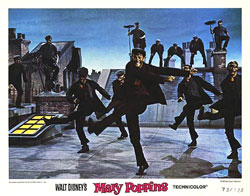
Universally acknowledged as the preeminent figure in the development of modern dance and one of the most important artists of the 20th century, Martha Graham formed her own dance company in 1926. It became the longest continuously operating school of dance in America. With her company’s creation, Graham codified her revolutionary new dance language soon to be dubbed the “Graham Technique.” Her innovations would go on to influence generations of future dancers and choreographers, including Twyla Tharp and Merce Cunningham. This quartet of films, all silent and all starring Graham herself, document four of the artist’s most important early works. They are “Heretic,” with Graham as an outcast denounced by Puritans; “Frontier,” a solo piece celebrating western expansion and the American spirit; “Lamentation,” a solo piece about death and mourning; and “Appalachian Spring,” a multi-character dance drama, the lyrical beauty of which is retained even without the aid of Aaron Copland’s famous and beloved music. 'Mary Poppins' - Bert the chimney sweep (Dick Van Dyke) and the other sweeps perform “Step in Time.” (Courtesy Walt Disney Studios)Mary Poppins (1964)
Alleged to be Walt Disney’s personal favorite from all of his many classic films, “Mary Poppins” is based upon a book by P.L. Travers. With Travers’ original tale as a framework, screenwriters Bill Walsh and Don DaGradi, with the aid of songwriters the Sherman Brothers (Richard M. and Robert B.), fashioned an original movie musical about a most unusual nanny. Weaving together a witty script, an inventive visual style and a slate of classic songs (including “A Spoonful of Sugar” and “Chim Chim Cher-ee”), “Mary Poppins” is a film that has enchanted generations. Equal parts innocent fun and savvy sophistication, the artistic and commercial success of the film solidified Disney’s knack for big-screen, non-cartoon storytelling and invention. With its seamless integration of animation with live action, the film prefigured thousands of later digital and CGI-aided effects. With its pitch-perfect cast, including Julie Andrews, Dick Van Dyke, Jane Darwell, Glynis Johns and Ed Wynn, “Mary Poppins” has remained a “supercalifragilisticexpialidocious” achievement.
Men and Dust (1940)
Produced and directed by Lee Dick—a woman pioneer in the field of documentary filmmaking—and written and shot by her husband Sheldon, this labor advocacy film is about diseases plaguing miners in Kansas, Missouri and Oklahoma. Sponsored by the Tri-State Survey Committee, “Men and Dust” is a stylistically innovative documentary and a valuable ecological record of landscapes radically transformed by extractive industry.
Midnight (1939)
Claudette Colbert, Don Ameche and John Barrymore light up the screen in this Mitchell Leisen romantic comedy. Liesen is often described as a “studio contract” director—a craftsman with no particular aesthetic vision or social agenda who is efficient, consistent, controlled, with occasional flashes of panache. Leisen’s strength lay in his timing. He claimed he established the pace of a scene by varying the tone and cadence of his voice as he called “ready…right…action!” This technique served to give the actors a proper “beat” for the individual shot. In addition to Leisen’s timing, “Midnight” also boasts a screenplay by the dynamic duo of Billy Wilder and Charles Brackett. Hilarity ensues when penniless showgirl Colbert impersonates a Hungarian countess, aided by the aristocratic Barrymore, until, despite her best efforts, she falls for a lowly taxi driver (Ameche) —all this amidst a Continental sumptuousness abundant in Paramount pictures of that era. The staggering number of exceptional films released in 1939 has caused this little gem to be overlooked. However, in its day, the New York Times called “Midnight” “one of the liveliest, gayest, wittiest and naughtiest comedies of a long hard season.” Reportedly unhappy with Leisen’s script changes, Wilder found the motivation to assert more creative control by becoming a director himself.
Notes on the Port of St. Francis (1951)
When Frank Stauffacher introduced the Art in Cinema film series at the San Francisco Museum of Art in 1947, he was on his way to becoming a significant influence on a generation of West Coast filmmakers. Through the series, he cultivated his knowledge of San Francisco surrealist films of the 1940s as well as the “city symphonies” produced by European filmmakers in the 1920s and 1930s. “Notes on the Port of St. Francis” is the natural progression of Stauffacher’s appreciation for the abstract synthesis of film and place. Impressionistic and evocative, the film is shaped by the director’s organization of iconic imagery, such as seascapes and city scenes, and by the juxtaposition of these visuals and the soundtrack comprised both of music and narration by Vincent Price of excerpts from Robert Louis Stevenson’s 1882 essay on San Francisco. Independent film scholar Scott MacDonald speculated that the “notes” in the film’s title may refer to “both the informality of his visuals and his care with sound that may have been a subtle way of connecting his film with the European city symphonies of the twenties.” Throughout the film, Macdonald observed, Stauffacher echoes Stevenson’s theme of the “City of Contrasts” by shooting from both San Francisco Bay and from the hills.
Pulp Fiction (1994)
By turns utterly derivative and audaciously original, Quentin Tarantino’s mordantly wicked Möbius strip of a movie influenced a generation of filmmakers and stands as a milestone in the evolution of independent cinema in the United States, making it one of the few films on the National Film Registry as notable for its lasting impact on the film industry as its considerable artistic merits. Directed by Tarantino from his profane and poetic script, “Pulp Fiction” is a beautifully composed tour-de-force, combining narrative elements of hardboiled crime novels and film noir with the bright widescreen visuals of Sergio Leone. The impact is profound and unforgettable.
The Quiet Man (1952)
Never one to shy away from sentiment, director John Ford used “The Quiet Man” with unadulterated adulation to pay tribute to his Irish heritage and the grandeur of the Emerald Isle. With her red hair ablaze against the enveloping lush green landscapes, Maureen O’Hara embodies the mystique of Ireland, as John Wayne personifies the indefatigable American searching for his ancestral roots, with Victor Young’s jovial score punctuating their escapades. The film and the locale are populated with characters bordering on caricature. Sly, whiskey-loving matchmaker Michaleen O’Flynn (Barry Fitzgerald), the burly town bully Will Danaher (Victor McLaglen) and the put-upon but patient Widow Tillane (Mildred Natwick) are the most vivid. Beautifully photographed in rich, saturated Technicolor by Winton C. Hoch, with picturesque art direction by Frank Hotaling, “The Quiet Man” has become a perennial St. Patrick’s Day television favorite.
The Right Stuff (1983)
At three hours and 13 minutes, Philip Kaufman’s adaptation of Tom Wolfe’s novel is an epic right out of the Golden Age of Hollywood, but thanks to its assortment of characters and human drama, it rarely drags. Director/screenwriter Kaufman ambitiously attempts to boldly go where few epics had gone before as he recounts the nascent Space Age. He takes elements of the traditional Western, mashes them up with sophisticated satire and peppers the concoction with the occasional subversive joke. As a result, Kaufman (inspired by Wolfe) creates his own history, debunking a few myths as he creates new ones. At its heart, “The Right Stuff” is a tribute to the space program’s role in generating national pride and an indictment of media-fed hero worship. Remarkable aerial sequences (created before the advent of CGI) and spot-on editing team up to deliver a movie that pushes the envelope.
Roger & Me (1989)
After decades of product ascendancy, American automakers began facing stiff commercial and design challenges in the late 1970s and 1980s from foreign automakers, especially the Japanese. Michael Moore’s controversial documentary chronicles the human toll and hemorrhaging of jobs caused by these upheavals, in this case the firing of 30,000 autoworkers by General Motors in Moore’s hometown of Flint, Michigan. As a narrative structure, Moore uses a comic device sometimes found in political campaign commercials, weaving a message around trying to find the person responsible for a wrong, in this case General Motors Chairman Roger Smith. “Roger & Me” is take-no-prisoners, advocacy documentary filmmaking, and Moore makes no apologies for his brazen, in-your-face style—he would argue the situation demands it. The themes of unfairness, inequality and the unrealized attainment of the American Dream resonate to this day, while the consequences of ferocious auto-sector competition continue, playing a key long-term role in the city of Detroit’s recent filing for bankruptcy protection.
A Virtuous Vamp (1919)
Employing a title suggested by Irving Berlin, screenwriter Anita Loos, working with husband John Emerson, crafted this charming spoof on romance in the workplace that catapulted Constance Talmadge, the object of Berlin’s unrequited affection, into stardom. During the silent era, women screenwriters, directors and producers often modified and poked fun at stereotypes of women that male filmmakers had drawn in harsher tones. The smiles of Loos’ “virtuous vamp”—as embodied by Talmadge—lead to havoc in the office, but are not life-threatening, as were the hypnotizing stares of Theda Bara’s iconic caricature that defined an earlier era. In this satire of male frailties, the knowing innocence of Loos’ character captured the imagination of poet Vachel Lindsay, who deemed the film “a gem” and called Talmadge “a new sweetheart for America.”
Who’s Afraid of Virginia Woolf? (1966)
Edward Albee’s 1962 stage triumph made a successful transfer to the screen in this adaption written by Ernest Lehman. The story of two warring couples and their alcohol-soaked evening of anger and exposed resentments stunned audiences with its frank, code-busting language and depictions of middle-class malaise-cum-rage. Elizabeth Taylor and Richard Burton—who were both Academy Award nominees for their work (with Taylor winning)—each achieved career high-points in their respective roles as Martha and George, an older couple who share their explosive evening opposite a younger husband and wife, portrayed by George Segal and Sandy Dennis. “Woolf’s” claustrophobic staging and stark black-and-white cinematography, created by Haskell Wexler, echoed its characters’ rawness and emotionalism. Mike Nichols began his auspicious screen directing career with this film, in which he was already examining the absurdities and brutality of modern life, themes that would become two of his career hallmarks.
Wild Boys of the Road (1933)
Historians estimate that more than 250,000 American teens were living on the road at the height of the Great Depression, criss-crossing the country risking life, limb and incarceration while hopping freight trains. William Wellman’s “Wild Boys of the Road” portrays these young adults as determined kids matching wits and strength in numbers with railroad detectives as they shuttle from city to city unable to find work. Wellman’s “Wild Bill” persona is most evident in the action-packed train sequences. Strong performances by the young actors, particularly Frankie Darrow, round out this exemplary model of the gritty “social conscience” dramas popularized by Warner Bros. in the early 1930s.
Showtime’s dramatic series Penny Dreadful is premiering in spring 2014, and the network’s just unveiled a teaser trailer for the original psychosexual thriller starring Josh Hartnett, Eva Green, Timothy Dalton, Reeve Carney, Rory Kinnear, Harry Treadaway, and Billie Piper. John Logan (Hugo, Gladiator) created the series and executive produces along with Sam Mendes (Skyfall) and Pippa Harris. Juan Antonio Bayona (The Orphanage, The Impossible) directed the first two episodes of the eight episode season.
The Plot:
In Penny Dreadful, some of literature’s most famously terrifying characters – including Dr. Frankenstein, Dorian Gray and iconic figures from the novel Dracula, all brilliantly reimagined in a whole new light – have become embroiled in Victorian London.
The Wedding Singer and 50 First Dates co-stars Drew Barrymore and Adam Sandler are back together in Blended, a new comedy from director Frank Coraci (Here Comes the Boom, Zookeeper). Blended‘s gone through three title changes – first Blended, then Familymoon, then back to Blended – but unfortunately it seems to have stuck with the concept of putting two single parents who dislike each other on family vacations together in Africa. Throw in obnoxious, precocious kids and Terry Crews as a singing and dancing tour guide and you’ve got Blended which, if the trailer is showing off the funniest bits, should go quietly in and out of theaters.
The cast also includes Joel McHale, Wendi McLendon-Covey, Kevin Nealon, Jessica Lowe, Bella Thorne, Emma Fuhrmann, Alyvia Alyn Lynd, Kyle Red Silverstein, and Braxton Beckham. Blended will invade theaters on May 23, 2014.
The Plot:
After a disastrous blind date, single parents Lauren (Barrymore) and Jim (Sandler) agree on only one thing: they never want to see each other again. But when they each sign up separately for a fabulous family vacation with their kids, they are all stuck sharing a suite at a luxurious African safari resort for a week.
$80 million…that’s how much Despicable Me 2 took in over its first week in release on Blu-ray, DVD, and digital formats. And according to Universal Studios Home Entertainment, that $80 million figure is enough to give Despicable Me 2 the title for the biggest first week sales of any animated Blu-ray title in history.
Four and a half million units were sold and the digital release of Despicable Me 2 is on pace to set a new record as the biggest-selling digital title of all time. During its theatrical run Despicable Me 2 rung up enough business at the box office to be the title holder for the animated film of 2013. The animated sequel featuring the voices of Steve Carell as Gru, Kristen Wiig as Lucy, Miranda Cosgrove as Margo, Benjamin Bratt as Eduardo / El Macho, and Russell Brand as Dr. Nefario made $918 million worldwide.
“Chris Meledandri and his team at Illumination have made Despicable Me 2 part of what has become one of the most beloved and inspired film franchises of our generation,” said Craig Kornblau, President, Universal Studios Home Entertainment. “Despicable Me 2’s astonishing results across both packaged media and digital underscores the resounding demand among consumers of all ages to have instant access to the film anytime, anywhere and cements it as one of the greatest must-own movies ever.”
The Despicable Me 2 Plot:
Gru, his adorable girls, and the mischievous Minions are back with a cast of unforgettable new characters in the blockbuster sequel to the worldwide phenomenon. Just as Gru has given up being super-bad to be a super-dad, the Anti-Villain League recruits him to track down a new criminal mastermind and save the world. Partnered with secret agent Lucy Wilde, Gru, along with the wildly unpredictable Minions, must figure out how to keep his cover while also keeping up with his duties as a father.
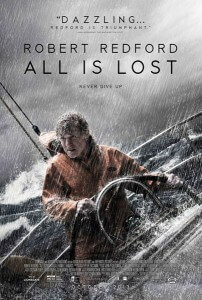
Oscar winner Robert Redford (Ordinary People) has been named as this year’s recipient of the Santa Barbara International Film Festival’s ‘American Riviera Award’ and will be presented with the honor on February 7th during the 2014 festival. Past honorees include Quentin Tarantino, Martin Scorsese, Annette Bening, Sandra Bullock, Mickey Rourke, Tommy Lee Jones, Forrest Whitaker, Philip Seymour Hoffman, Kevin Bacon, and Diane Lane.
The American Riviera Award was “established to recognize an actor who has had a strong influence on American Cinema.”
“To honor Robert Redford with the American Riviera Award is an immense privilege for SBIFF,” said the festival’s Executive Director Roger Durling. “His fifty-year career – filled with significant achievements both on and off camera – is reason enough for celebration, but his role in All is Lost – one of the best performances of the year – proves that he’s an artist that continues to evolve and inspire us.”
Profile of Robert Redford [Courtesy of SBIFF]:
Robert Redford’s career reflects a man who embodies an array of talents. He’s an actor, producer and director, as well as an ardent conservationist and environmentalist. He is a staunch supporter of uncompromised creative expression and his passion remains to make films of substance and social/cultural relevance, as well as to encourage others to express themselves through the arts. Having honed his acting skill on television as well as on stage, his early film work includes Barefoot in the Park, for which he reprised his stage role of newlywed Paul Bratter, Inside Daisy Clover, Tell Them Willie Boy is Here, among others. It was his breakthrough role in Butch Cassidy and the Sundance Kid that made Hollywood stand up and take notice. The film became an instant classic, firmly establishing Redford as one of the industry’s top leading men. He has since built a distinguished acting career, starring in such notable feature films as The Sting, Jeremiah Johnson, The Way We Were, The Great Gatsby, Three Days of the Condor, Brubaker, The Natural, Out of Africa, Indecent Proposal, Up Close and Personal, Spy Game, The Last Castle, The Clearing and An Unfinished Life.
Redford’s directorial debut, Ordinary People, won him the Academy Award® as Best Director in 1981. As director, Redford has brought to life John Nichols’ acclaimed novel The Milagro Beanfield War, A River Runs Through It and Quiz Show, which earned him yet another Best Director nomination. He earned two Golden Globe nominations (Best Picture and Best Director) for The Horse Whisperer and went on to direct and produce The Legend of Bagger Vance. He’s also produced Lions for Lambs (in which he also acted and directed), A Civil Action, How to Kill Your Neighbor’s Dog, Slums of Beverly Hills and Motorcycle Diaries, to name just a few.
Redford is perhaps best known for establishing the Sundance Institute, dedicated to the support and development of emerging screenwriters and directors of vision, and to the national and international exhibition of new independent cinema. The Sundance Film Festival is a program of the Institute and is internationally recognized as the single most important showcase of independent cinema.
The Santa Barbara International Film Festival runs Thursday, January 30 through Sunday, February 9, 2014.
The list of performers confirmed to help celebrate the last night of 2013 has now expanded to include Blondie, Icona Pop, Macklemore & Ryan Lewis and Miley Cyrus. They’ll be joining Ryan Seacrest and Jenny McCarthy in Times Square to perform in front of the live audience of one million-ish on Dick Clark’s New Year’s Rockin’ Eve with Ryan Seacrest 2014.
“New York’s Times Square is one of the most iconic places in the world to celebrate New Year’s Eve. This year we once again will have megastars in our line up including Macklemore & Ryan Lewis, Robin Thicke, Jenifer Hudson, Enrique Iglesias, Blondie, Miley Cyrus at midnight, and many more. We’re going to have the country’s biggest party,” said Ryan Seacrest.
“There’s nothing like New Year’s Eve in New York with the energy and excitement from all of the people that gather throughout Times Square,” added Jenny McCarthy. “I have such a great time with Ryan Seacrest, these amazing artists and fans across the country. You never know what’s going to happen and, as the saying goes, what happens in Times Square…is seen by millions of people around the world, so you better keep it classy. Or so they keep telling me.”
Helping ring in the New Year on the West Coast will be Capital Cities, Daughtry, Jason Derulo, Fall Out Boy, Florida Georgia Line, Ariana Grande, Jennifer Hudson, Enrique Iglesias, Robin Thicke and The Fray, joining the Black Eyed Peas’ Fergie who’s hosting the West Coast portion of the show.
20th Century Fox has released the first official trailer for Dawn of the Planet of the Apes coming to theaters on July 11, 2014. Directed by Matt Reeves, this new Apes movie is a follow-up to Rise of the Planet of the Apes and stars Andy Serkis, Jason Clarke, Gary Oldman, Keri Russell, Toby Kebbell, Kodi Smith-Mcphee, Enrique Muriciano, and Kirk Acevedo.
The Plot:
A growing nation of genetically evolved apes led by Caesar is threatened by a band of human survivors of the devastating virus unleashed a decade earlier. They reach a fragile peace, but it proves short-lived, as both sides are brought to the brink of a war that will determine who will emerge as Earth’s dominant species.

 Stumble It!
 Showtime’s dramatic series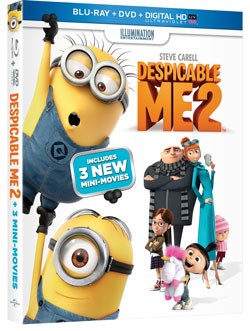
 Oscar winner Robert Redford (Ordinary People) has been named as this year’s recipient of the Santa Barbara International Film Festival’s ‘American Riviera Award’ and will be presented with the honor on February 7th during the 2014 festival. Past honorees include Quentin Tarantino, Martin Scorsese, Annette Bening, Sandra Bullock, Mickey Rourke, Tommy Lee Jones, Forrest Whitaker, Philip Seymour Hoffman, Kevin Bacon, and Diane Lane.
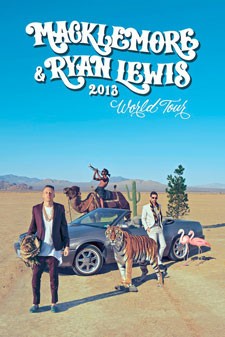 The list of performers confirmed to help celebrate the last night of 2013 has now expanded to include Blondie, Icona Pop, Macklemore & Ryan Lewis and Miley Cyrus. They’ll be joining Ryan Seacrest and Jenny McCarthy in Times Square to perform in front of the live audience of one million-ish on Dick Clark’s New Year’s Rockin’ Eve with Ryan Seacrest 2014.