Katheryn Winnick and Jessalyn Gilsig said they knew Vikings was something special from the first moment they stepped on set. According to both actresses, the cast had to just surrender to an entirely new environment. Cell phones didn’t work, Wi-Fi wasn’t available, and no one hung out in their trailers – everyone hung out together, and it made the whole experience of shooting season one incredibly memorable.
Vikings shoots in a remote area of Ireland and there aren’t any buildings in sight, and Winnick calls that experience “refreshing.” “I can’t imagine another place to shoot this,” said Winnick.
And during our interview at the 2013 San Diego Comic-Con, Winnick and Gilsig also talked about the research process and the costumes of Vikings.
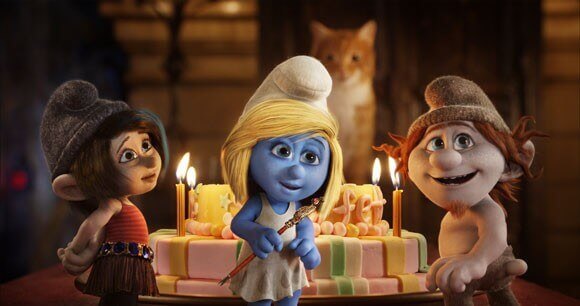
Sequels usually take a step back from the original, and end up less exciting, less fun, and simply less good. For that to happen to The Smurfs 2 after what I had seen in The Smurfs, that means this review was not going to be so Smurfy. However, this is why you play the game … or in this case, watch the movie.
The plot here is the same as the first essentially. Gargamel wants to capture Smurfs, drain them of their essence, and rule the world. That’s cool, that was the plot to pretty much every cartoon episode as well. Reminding the audience that Smurfette was originally his creation, turned good by the Smurfs’ Smurfiness, Gargamel has created two new “Naughties”: Vexy and Hackus (though the way his name is said most of the time I thought it was Haggis). He uses them to help kidnap Smurfette in search of discovering how to turn his creations into real Smurfs so he can breed an ever-lasting supply of Smurfs to fuel his magic. Got it? Good, I hate describing plots.
Replicating the worst element of the original, this is still a cross between live-action and CGI animation. Yes, Neil Patrick Harris and Jayma Mays are back, this time accompanied by their kid (who they named Blue … yuck) and NPH’s stepdad in the form of Brendan Gleeson (who’s severely out of this film’s league). I would be over the moon if these films would simply drop humans altogether from the mix. Is it so hard to just make an animated movie? This is for kids after all, and in an attempt to play on the nostalgia of us thirty-somethings who watched the series every Saturday morning growing up, sticking with the cartoon would be great. Pretty much every time the action shifted back to the people and their problems, I lost all interest and simply bided my time before Papa Smurf, and the others got back on screen.
Thankfully, the focus is much more squarely centered on the Smurfs. It’s in those scenes where the film succeeds. In fact, I actually enjoyed quite a bit of the Smurf action; and while I still see a bit of Chief Wiggum in Hank Azaria’s take on Gargamel, it wasn’t as bad as the first go around. The addition of Vexy and Hackus and their interactions with Smurfette keep the movie going, and this isn’t the blasphemous and useless adaptation I was expecting.
The children in the audience were generally enthralled and aside from The Croods, this is the best kids’ movie I’ve sat through all year. The 3D is unsurprisingly useless, and while there were scenes that took advantage of it, there weren’t enough to warrant the extra cost. Stick to 2D on this one.
And for anyone wondering if I’ve had a particularly nasty knock on the head, have no fear. Despite my kind remarks, I’m not saying this is a must-see or that you and your family would be missing some piece of your soul if you missed it. All I’m trying to convey is that this is a decent family-friendly film that will keep your young kids interested. I doubt older kids will be all too keen on it and without a strong sense of nostalgia, I don’t know why adults would go on their own.
Still, if you’ve got little ones who are able to exercise basic movie theater etiquette, this is your best choice in the theaters right now. Yes, I know Despicable Me 2 is out there as well but although The Smurfs 2 has lower lows, its overall experience lagged a bit less and aside from a few minion-centered scenes, I’d actually rather re-watch this incarnation of the Smurfs. I’m just as baffled as you are by that idea, but I can only offer my opinion and hope it helps some of you.
One word of advice though for the filmmakers when they get to The Smurfs 3. Just cut out all the humans and go to full CGI, even for Gargamel. The blending of techniques isn’t a new idea, and it’s not helping this franchise. The kids are going to want to see it anyway, and the adults won’t have a choice but to bring them and pay for overpriced tickets. Oh, and stop trying to be hip with your music choices. They were cringe-inducingly awful … and that sentence has a word that isn’t even a word in it. Don’t make me invent others.
GRADE: B-
The Smurfs 2 opens in theaters on July 31, 2013 and is rated PG for some rude humor and action.
Will Gemma be the last person standing when the dust settles and Sons of Anarchy rolls its final credits? At the 2013 San Diego Comic-Con, we asked Katey Sagal (‘Gemma Teller-Morrow’) what she thinks should happen to Gemma.
“I think she should be in charge. My pitch would be that she runs the club. No, I don’t know,” replied Sagal, laughing.
“What I love about Kurt [Sutter’s] writing is he’s never afraid to up the stakes at the time of upping the stakes. There’s never a sense of, ‘Oh, let’s save that for the end,” explained Sagal when asked if season six is going to be the best one yet.
Sagal also talked about Gemma’s relationship with Nero, being a part of the series, and what we can expect from season six of the acclaimed FX series in our interview (embedded above).
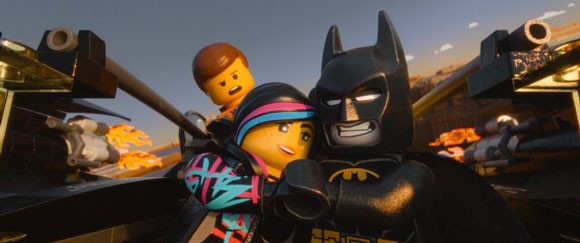
Chris Miller and Phil Lord could be going three for three at the box office with The LEGO Movie which is, just as the title suggests, a movie all about LEGOs – but not an ad for LEGOS, as they are quick to point out. Miller and Lord scored hits with Cloudy with a Chance of Meatballs which they followed up with 21 Jump Street, and now they’re back in the land of animation with Warner Bros Pictures’ The LEGO Movie coming to theaters in February 2014.
Joined by co-director Chris McKay, Miller and Lord showed up at the 2013 San Diego Comic-Con to talk about playing with LEGOs and why stop-motion animation was the way to go with this family-friendly film.
How did you come up with the idea to lead into an actual narrative that explores the LEGO world?
Phil Lord: “It’s funny. We figured out that we started with this idea that they are a machine for creativity and let’s make a movie about, can a regular construction worker learn those skills. We found out that we had to really hide the ball because the more you say the word ‘creativity,’ the less you want to hear it. It started to get tired pretty fast, so there are versions of this movie that felt like a college paper or something like that.”
Chris Miller: “So, the word creativity is actually not in the movie at all, but it’s obviously all about creativity. The idea is there are two different ways that people play with LEGOs. There are people who buy the kit, follow the instructions, and build the thing exactly how it is, and that’s awesome because then you have this really cool thing. It’s a Millennium Falcon or something. And then there are people who just dump all the bricks together and build whatever they want to do. And that’s awesome as well to learn to have the whole thing be a dialectic about the different ways there are to make things.”
Phil Lord: “That’s what’s going to be on the poster: It’s a wonderful dialectic.”
Chris McKay: I think the most fun thing about it is, these guys especially, when they opened it up to everybody on the crew to kind of access their inner child. It was a lot like play the way we set up the environment for all the different departments from when we started working on the storyboards and then going into animation and layout and everything else. It was just, ‘Play like you’re a kid. Have fun. What if the story was this?’ You just start running with ideas and that kind of thing.
It was very organic and almost improvisational throughout the entire process. It was just how crazy can we make this. The way these guys talked about it originally was like if Michael Bay had kidnapped Henry Selick and forced him to make The LEGO Movie that’s inside Michael Bay’s brain, that’s what this movie is, but it is literally those two guys coming together. It’s an explosion of creativity and that’s what makes the movie, because it is, it’s kind of like a joy ride through a 10-year-old’s imagination.”
Phil Lord: “McKay built a creativity machine that was the production and he did it in a way that was flat and allowed for a lot of dialogue in between departments without a lot of layers so that the editors could talk to the storyboard artists and request some drawings and try things out without showing us first, so that you really got everybody. Everyone’s office is right next door to one anothers. It became a very fluid and iterative creative process which was great.”
You have amazing voice talent collected for this film. Did you have anybody in particular in mind when you first started?
Phil Lord: “I’m trying to think of who the first ideas were.”
Chris Miller: “Well we thought of [Chris] Pratt pretty early on because he’s hilarious and he has this sort of regular guy-ness to him. He actually grew up about two blocks from me in this small town of Lake Stevens, Washington, and he’s a hilarious guy’s guy, but he seemed perfect for that.”
Phil Lord: “We knew him because of Anna Faris on Cloudy with a Chance of Meatballs. We had met him. He was at the time her boyfriend. We just met him as a guy and then watched him become the funniest person on television. He has a real sincerity to him that we thought was important to the character. Also, we got a lot of people that we went after. We got this idea to make Morgan Freeman into a crazy wizard.”
Chris Miller: “We thought he’ll never do it, but he did it.”
Phil Lord: “We had no other casting ideas for that part. Like, we didn’t know what we were going to do.”
Chris Miller: We saw the Life’s Too Short that Liam Neeson was on and he was hilarious. We were like, ‘We got to put this guy in the movie.’ We asked him to do it and we thought he’d never do it, and he did it too – and we couldn’t believe it. We’ve always wanted to work with Will Ferrell because he’s an amazing guy and hilarious and just a wonderful person, and this was a great opportunity to do that. We’ve been friends with Elizabeth Banks for years and we worked with Charlie Day many years ago. We tried to assemble some buddies and people that we really admired in the world.”
Warner Bros. has had terrific success with the LEGO video games. Did you talk or work with them?
Chris Miller: “We went out to Manchester and met with John and saw his whole operation and what they were doing. The stuff they’re doing is really clever and they use the LEGO-ness of the LEGO characters, and their arms pop off and that sort of thing. It really helped us think about when you’re writing it. Sometimes you think of them as people and you forget that they’re these little plastic dudes, so you want to remember to just continually use that as part of the charm of the thing and that really helped us.”
Did you approach any of their animators?
Phil Lord: “I don’t believe so, but I’m sure they all know each other.”
Chris Miller: “There’s been a lot of dialogue back and forth with a lot of sharing of digital assets. We showed John a million cuts of the movie. Every time we recut the movie, it goes over to Manchester.”
Phil Lord: “Because they’re making a video game of it. They’re doing it in this limited animation style that our movie is in.”
Chris Miller: “…which they don’t usually do.”
Phil Lord: “Normally, their characters have a lot more emotion.”
Chris Miller: “They were psyched because we went over there and we were like, ‘We’re going to try to break every rule that has been imposed on you guys.’ And so it’s a chance for them to do different stuff.”
The movie’s look is a lot more like how the toys actually are played.
Chris Miller: “I can’t believe that we got everyone to buy off on that.”
Phil Lord: “It’s fantastic.”
Chris Miller: “It’s like we’ve got a major movie studio to do that.”
What was the voice recording process like? Was there ever an opportunity to have the actors record together?
Chris Miller: “We did.”
Phil Lord: “We’ll let you know when it’s done.”
Chris Miller: “We did Chris Pratt, Elizabeth Banks and Will Arnett together a couple times because they play off each other. I don’t want to spoil it. Also, we did Liam Neeson and Will Ferrell together over the phone, which was kind of funny because Liam was in New York and Will was in L.A., and they both had stuff that they had to do. But we got them together and they did their scene over the phone. It was awkward at first, but then it became amazing. Those were the only ones that we were able to get in the same room.
It was our goal to try and get people to play off of each other because it’s more fun and you get a lot of improvisation. These are all really super funny people that can riff, and so we ended up getting a lot of good stuff that way.”
Phil Lord: “The sad reality of casting a bunch of really famous movie stars in your movies is that they’re incredibly busy.”
Chris Miller: “‘Oh, you’re doing The Hunger Games and you’re doing Anchorman.’ There’s a million different things, so we worked around their schedules but we tried to make it work as much as we could.”
Can you talk about the look of the movie? Where did the decision come from to give it that look?
Chris Miller: “It was inspired a lot by brick films that people make online. There are a ton of these on YouTube where these people very creatively make funny, funny LEGO movies and the limitations of the characters is kind of funny. Also, there are some photographers that photograph the little LEGO people and try to make it look really epic, just from the lighting. And we thought that was pretty cool when they tried to marry a cinematic lighting style with a brick film aesthetic.”
Phil Lord: “I think it was a choice that we made the instant that Dan Lin pitched us the project. We were like, ‘Well, if you did it like this, we would be interested. But if you don’t, if no one will commit to that, then there’s no way we’ll do it.’ I don’t know why we were such hardliners about that, but for whatever reason that was what was inspiring to us.”
Chris Miller: “We wanted it to feel like it was a real LEGO set come to life.”
Chris McKay: “But you would be surprised how many people were resistant to that idea. I mean, just on every level, people didn’t get it and didn’t think that the charm would come through. Literally, we had to prove that you could.”
Phil Lord: “At every level we had to prove it: at the conceptual level with the folks at Warners, and then again on the technical side, and then again with the animators, and all kinds of people. I’m sure there will be some reviews that will be like, ‘Ugh, I don’t like what they did.’ But we discovered that we could get a lot of expressiveness and emotion. One of the things that Chris and his team have done is just to get so much real humanity out of the dumbest drawings in the whole world. That was our dream, that what a great trick it would be to make you care about the dorkiest looking things in the whole universe.”
Chris Miller: “It’s like in the Muppet movies. Kermit’s eyes don’t move and he’s just doing this [acting like Kermit]. You can get so much expressiveness out of the limitations.”
How do you walk a line in a film like this between having it feel like a creative story and not be sort of an ad?
Phil Lord: “Well, it’s all an ad.”
Chris McKay: “The ad is inescapable.”
Chris Miller: “That was something that we were really, really nervous about. We didn’t want to make a 90-minute commercial for toys.”
Phil Lord: “So we settled on an 85 minute commercial.”
Chris Miller: “We decided, obviously, LEGO are a medium that people use to tell stories. It’s like clay or a Claymation movie in a way. Luckily, the people at LEGO were very trusting of us…maybe too foolishly trusting. They allowed us to make a story that we thought was fun. They were really there to just help us and make our ideas a reality.”
Phil Lord: “The short answer to your question is zero ad. It’s 100% a creative movie.”
Chris Miller: “That’s what we’re going for and the partners at LEGO realized that the entire movie was made out of LEGO.”
Chris McKay: “It was called The LEGO Movie and that was a good enough ad.”
How long did the movie take to make?
Chris Miller: “It’s not done yet.”
Chris McKay: “It’s still being made right now.”
Phil Lord: “But hopefully only six more months.”
Chris Miller: “We started writing it before we did Jump Street.”
Phil Lord: “The summer before we left for Jump Street, right?”
Chris Miller: “We started writing it and so it’s been…I don’t even know how long ago that was.”
Phil Lord: “That would have been about 2010.”
Chris Miller: “It will be about three years from beginning to end. It comes out in February.”
Phil Lord: “That’s actually short. That’s what we told Chris McKay all the time we were working on the movie.”
Are you able to reveal any of the other superheroes that are in the movie?
Chris Miller: “Yes, we just said in Hall H that there are other DC superheroes in it. Superman is being played by Channing Tatum and Green Lantern is being played by Jonah Hill, and Wonder Woman is being played by Cobie Smulders. But there are a lot of other characters that we’re not allowed to talk about right now from other movies, other LEGO sets, and they all interact in a way that if a kid was playing with a bucketful of LEGOs, they would make them play together. That’s a really fun part, but we can’t tell you about that stuff just yet.”
Can you talk a little bit more about doing the stop-motion and the experimentation that goes into doing that?
Chris McKay: “Like I said, it was something that people initially didn’t necessarily think was going to be able to portray emotion. The way I approached it was just to kind of look at it as if you were given the task of trying to figure out how to make WALL-E or R2-D2 emote, you would basically sit down with the animators and go through a process of, ‘All right, let’s try to do something. Let’s show how sympathetic we can make them and how understanding.’ I treat the animators like they’re actors and I say, ‘I want to know what this guy is feeling. What’s going on behind his eyes? I want you to observe behavior that is true and real.’ When people started clicking at that, I said, ‘Don’t worry. I don’t want to see this f*cking… I want you to really feel.’
The mandate these guys had from the beginning was to make this feel like a big adult movie. I don’t want it to feel like a soft, bulls**t film. I want it to be something that feels real. I went to the animators and wanted to see Parkour stuff. We have people that come from different disciplines as far as 2D, 3D and stop motion, and these guys really attacked it madly and with a lot of love. That’s what we started to do, just go, ‘Okay, let’s get this thing up on its feet.’ We didn’t want it to be a bulls**t movie. We wanted to make it something that was real.”
Phil Lord: “Yes, to take everything seriously – and that’s been your approach and our approach. Just because they’re little toys doesn’t mean that you’re not going to try to tell a big, grown-up story, and that translates into the animation. One of the things that would happen, that happens on every animated production, is that sometimes initially you get a lot of stock stuff that feels like a classic move that you saw Frank & Ollie draw a million years ago, and it’s wonderful but it doesn’t pertain to that moment. It’s not an interpretation of that voice performance.”
Chris McKay: “It’s not germane to the body language.”
Phil Lord: “Yeah. It doesn’t have anything to do with anything. You’re like, ‘I don’t understand. I don’t connect to that.'”
Chris Miller: “You connect to it when you feel like it’s driven by the story and the feelings.”
Phil Lord: “Another thing is that with stop-motion there’s no motion blur because every frame is its own little thing. We found out if a character is moving really fast across the screen, it was going to get a little bit jumpy. And so we developed this brick-built motion blur of the characters when they’re moving really fast and we have these special clever solves for things like that.”
Chris McKay: “We also tried to add in mistakes, too. Just like with film prints and things like that, but also maybe animation that felt a little more like we would talk through. Like what if you were dragging a hand up from one place to the other, especially at that scale – on a one-inch scale – you only have so many moves that you can actually technically make, that a human being can actually do to make that. So we’d think through stuff like that. Some of those were the kind of choices that we’d make to make this feel. There was sort of an innocence and a charm to that I think is what we wanted to capture. And sometimes it was just puppetted. Sometimes we would literally make it look like somebody had their hand on the thing and was walking us. Some of the guys would walk around like that or they’d jump up and move as though they were puppetted. There’s something neat about that, too.”
Phil Lord: “Sometimes our notes are just, ‘Make it dumber. It’s way too sophisticated.'”
How did you guys choose which LEGO characters to use and which ones not to use?
Phil Lord: “There are a bunch of classic worlds that LEGO’s been doing for years and we wanted to make sure that each of those worlds was represented, and we wanted it to feel like we were mashing all these different genres. It ended up being dictated by the story, obviously.”
Chris Miller: “We started with the ones that we could remember from our childhood and tried to extrapolate from that. I think that the toughest thing was to convince our partners that we should take discontinued and old vintage things and put them in the movie along with everything else, because that’s what would be at the bottom of somebody’s toy chest.”
Chris McKay: “And that’s another way the movie wasn’t quite an ad either. It’s like stuff that you were talking about in the beginning. It’s like what are the things that you remember about the sets that you had and some of those things aren’t necessarily products that they want to promote.”
Phil Lord: “They’re not selling Classic Space or Pirates from years ago, or that type of stuff, but we wanted to put those things in there.”
What are your favorite LEGO sets?
Phil Lord: “You might literally get three people saying Classic Space because we’re all the same.”
Chris Miller: “We’re all nerds.”
Phil Lord: “I’m crazy about the new Back to the Future one, the DeLorean. Gosh, that is so great. It’s insane.”
It’s out on the Convention Hall Floor.
Phil Lord: “I know. We were immediately like, ‘Who do we call to get that? How do we get that in the movie?’ It’s probably too late unless someone is listening, unless Steven Spielberg is in the audience.”
Chris McKay: “Put that in the article and see what happens. Can you help us out?”
Phil Lord: “See if it creates some sort of mob rule insistence on that. I think the ones I grew up with – and Chris will say the same thing – were gray and blue triangles which are all the Classic Space stuff.”
Chris Miller: “Yeah, the Lunar Base, the Little Monorail. That was my favorite.”
Kickstarter has become one of the most effective ways to find backers for films that might not otherwise find enough funding to go into – or in some cases, finish up – production. The most successful case of the general public backing a movie is Rob Thomas’ Veronica Mars Movie Project Kickstarter campaign. Fans have demanded a Veronica Mars movie since the end of the series, yet funding just wasn’t available through the normal channels. Thomas turned to Kickstarter and within days broke records for the amount of funds received. Setting a goal of $2 million, the Veronica Mars campaign actually collected $5,702,153 from over 91,000 backers.
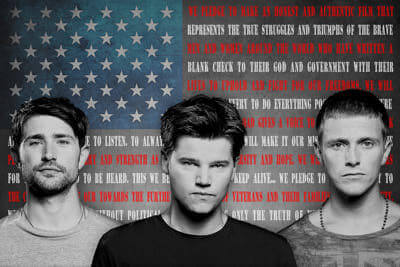
Other filmmakers have turned to Kickstarter for funding, and recently Spike Lee was in the news because of his campaign to raise money and his offer of dinner and court-side New York Knicks ticket for donors who contribute $10,000 to his project. But most filmmakers who turn to the funding source don’t have the resources at Lee’s disposal. Case in point: Matt Dallas, Charlie Bewley, and Steven Grayhm’s Thunder Road Kickstarter Campaign kicking off on July 31, 2013. Their goal is to raise $1 million in order to get Thunder Road, an independent film about the post-war lives of three soldiers who served the United States in Iraq and Afghanistan, into production. Grayhm, Dallas, and Bewley did extensive research, traveling the U.S. and talking to real veterans who’ve experienced Post Traumatic Stress Disorder (PTSD) as a result of their time served in the military. The film will examine how difficult it can be to return to civilian life and the psychological effects of trying to fit back in the civilian world.
I had previously spoken with Steven Grayhm, Matt Dallas, and Charlie Bewley during their lengthy road trip visiting veterans in order to get the Thunder Road script as accurate as possible. At that time they were busy collecting stories and in the process of writing the screenplay. Now, with the script ready to go and an eye on starting filming next winter in Detroit, I caught up with Dallas, Bewley, and Grayhm as the Kickstarter Campaign is ready to launch.
Exclusive Matt Dallas, Charlie Bewley and Steven Grayhm Interview
How important is the Kickstarter campaign to getting Thunder Road off the ground?
Matt Dallas: “It’s absolutely crucial. We’ve have been seeing a lot of filmmakers react to the industry right now and it’s just getting harder and harder to get a film made, especially as an independent filmmaker to get your actual story told, the actual story that you always set out to tell. So now being able to raise your own money, whether it be through Kickstarter or Indiegogo, it allows you to be able to hold onto the original intention of the film from the beginning as opposed to selling it to a studio or some other producer who then can go and completely change your film.
We had actually been talking about Kickstarter for the past two years, but we never really pulled the trigger. And then when Veronica Mars had such success with theirs, we decided to go that route. And then as we were putting our Kickstarter together, Zach Braff’s came about and he had a huge success as well. That kind of was just the confirmation that we needed that this was the right avenue for us.”
Charlie Bewley: “It really is just helping a neighbor out, helping out that community. Veterans are amongst us every day. It’s like one in 15 people now is a veteran and people who have been affected by military life and veteran life, that goes up to like one in 10, one in nine. It really is just helping out your neighbor, and in fact the point of this project is to put it in people’s faces exactly what is going on with the veterans. [The film] will help take the veil off this sort of secret subculture of people and in doing that we’re hoping to help veterans integrate into our society. In doing this Kickstarter campaign, we are really trying to bring them all together in one community and show the world what they go through.”
You’ve been working on Thunder Road and putting in time on the research and script over the past few years. Since we last spoke two years ago, have you been doing further research or has most of the work been finishing the script?
Steven Grayhm: “What’s happened basically in the last two years, I worked on the script full time when we got back from the road trip and I felt there was just one piece missing which was there was a particular soldier that a lot of people across the country that we met with had insisted that I meet with. We weren’t sure if he would take my phone call, if he would be receptive to me, but he wasn’t a guy that we could actually have met that summer two years ago. So in December of 2011, I connected with him and he invited me to come stay with him in Pittsburgh. For the next month I worked on the script with him, and he’s a veteran who suffers from severe PTSD. He saw his best friend get killed right in front of him in a sheep pen in Iraq and that story now exists within Thunder Road. His journey as a civilian and as a soldier is very much what I based the character Calvin Cole, which I play in the film, on. So, there was that.
Then I went to England to research more for Charlie’s character and I met with Allied Forces there and veterans. I met with a disabled veteran who had stepped on a land mine and lost both of his legs from the waist down. We spent some time with him and, so yeah, it didn’t just stop at the road trip. And then from that point on I was just writing every day and then we began to take meetings.”
Matt Dallas: “And just to build on that a little bit too, coming home from this road trip and having gathered all of the stories and accounts that we had, we realized that our story had taken a turn. There was absolutely so much that Steven had changed from the original idea or from the original script that was what we originally set out to make, because as you met with people you just started to realize that there was so much more story to be told. So over the past two years, on top of building on his original story, it’s been implementing all of the research that we had gathered and then being open to the story changing to accommodate all of those stories.”
Have you stayed in contact with the veterans you’ve spoken to over the years as you were doing the research?
Matt Dallas: “Oh, absolutely. We’re actually meeting up with a lot of them again going out on the road trip this time. We even have some of the guys that we met in Minnesota, they’ve set up fundraisers for us. So, absolutely. Steven, I know, is on the phone with them daily, talking to the guys from all over the country. I shouldn’t say guys: men and women.”
You’re planning a road trip to coincide with the Kickstarter campaign. What do you have lined up and why will you be on the road again?
Steven Grayhm: “We’ll be leaving Los Angeles around, I believe, August 3rd. We’ll be doing press locally first and then leaving Los Angeles and we’ll be going in a similar sort of trajectory that we did last time. The plan thus far, and without listing off everything, we’ll be going to Texas, to South Carolina, North Carolina, Virginia, New York, Minnesota, stop in Toronto because there’s going to be a premiere there for the film. We didn’t really do middle America on our first road trip and this time we are going to stop through Matt’s home town of Phoenix. We’ll basically go where people will have us, where we can spread the word.”
Charlie Bewley: “It probably is worth saying at this point that Steven really is the glue that binds us in this whole thing. He has taken this from the word go and he worked hard and tirelessly for three years. He really needs a holiday, so hopefully when we get out on the road we’ll have a good time.”
Why have you remained so passionate about this particular story and what is it you’re hoping to share with audiences worldwide in Thunder Road?
Steven Grayhm: “I think the biggest thing, the most serious thing about this project is there’s 2.3 Americans veterans of Iraq and Afghanistan wars and at least 20 to 30% of them have PTSD or depression or both. The military counselors are saying that that is just what’s being reported and that there’s actually much more. It’s an epidemic. I feel like if we can do anything out of this project, it’s just giving a voice to the ghosts that walk amongst us. That’s it.
And I just want to reiterate or to add to what Matt said about how the story changed. I had no way to anticipate that, but in such a beautiful way it changed from the road trip and from the research that I did. There was just so much more heart to it and it just really spoke to the human spirit. It spoke to my spirit and I hope that it speaks to our audience’s spirit.”
Matt Dallas: “I just think we don’t realize how affected everybody is. We’re at a point in society where we’ve never been as disconnected from a war as we do feel now because we just have a way now with technology to kind of like live in our own bubble. So to be able to like lift that veil and present this issue to the world has been something that we’re so excited about.”
Charlie Bewley: “It’s the idea that I have so much in my life, I have to give back at every opportunity. This has always been that opportunity to give back on a massive scale, because we’ve got so many veterans from the Iraq and Afghanistan conflicts. The type of people that actually know what’s going on in their heads…you can make many assumptions, we did before we started our research on the basis. And then to almost forget about them once they get back, I just think it’s an absolute travesty and so to actually have a public forum to highlight that is important. I think the public awareness on the lives of veterans is lacking right now.”
Why do you think this story about the recent wars and the return of veterans with PTSD hasn’t been done yet?
Matt Dallas: “I think because people are afraid it’s not going to make money. The bottom line, and this is actually the meetings we’ve had with actual producers, there are people that are obsessed with, ‘Dramas don’t make money.’ They believe you can’t put people in the theaters and they want big action stars and big action movies. That I can tell you from experience from sitting in these meetings. But we don’t believe that to be true. I believe that if you have a good story and especially something like this that speaks to many people out there right now, that so many people are affected by, I think that people will absolutely go see this movie because already with the amount of veterans that are coming back right now, and their families, and the people that are affected, I think it’s absolutely a story that people would want to see. I think it’s a story that people need to see.”
Sorry, didn’t mean to scare you. The following video warns humans to prepare themselves for the virus which will kill one in 10 people. Fortunately, it’s merely a viral video promoting the 2014 Apes film, Dawn of the Planet of the Apes.
Dawn of the Planet of the Apes is directed by Matt Reeves and stars Jason Clarke, Andy Serkis, and Keri Russell. 20th Century Fox is opening the new Apes film in theaters next July.
The Plot:
A growing nation of genetically evolved apes led by Caesar is threatened by a band of human survivors of the devastating virus unleashed a decade earlier. They reach a fragile peace, but it proves short-lived, as both sides are brought to the brink of a war that will determine who will emerge as Earth’s dominant species.
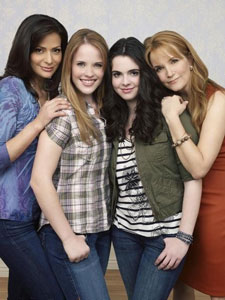
ABC Family’s giving a third season to the drama series Switched at Birth starring Katie Leclerc, Vanessa Marano, Constance Marie, D.W. Moffett, Lea Thompson, Lucas Grabeel, Sean Berdy, and Gilles Marini. The family-friendly network’s also given back-order pick-ups to Twisted and The Fosters.
“ABC Family has always been a home for groundbreaking storytelling with iconic characters and families and we’re thrilled to have The Fosters and Twisted join our line-up as breakout summer hits,” stated Michael Riley, President ABC Family. “We are very proud of the original series we continue to foster, bringing real and relatable characters to life for our viewers and know they are destined to become part of the zeitgeist alongside Switched at Birth and Pretty Little Liars.
“It’s thrilling to count our two freshman series, The Fosters and Twisted among our stable of strong, must-see, must-tweet series,” added Kate Juergens, Executive Vice President, Original Programming and Development and Chief Creative Officer, ABC Family. “Switched at Birth is like no other show on television and we are so proud to have it as part of our family. Adding additional seasons and episodes of our returning series spotlights how well our programming resonates with our audience.”
The Fosters:
The Fosters is a compelling, one-hour drama about a multi-ethnic family mix of foster and biological kids being raised by two moms. Stef Foster, a dedicated police officer, and her partner Lena Adams, a school Vice Principal, have built a close-knit, loving family with Stef’s biological son from a previous marriage, Brandon, and their adopted twins Mariana and Jesus. Their lives are disrupted in unexpected ways when Lena meets Callie, a hardened teen with an abusive past who has spent her life in and out of foster homes. Lena and Stef warily welcome Callie, along with her younger brother Jude, into their home thinking it’s just for a few weeks, until a more permanent placement can be found.
The Fosters stars Teri Polo as Stef Foster, Sherri Saum as Lena Adams, Jake T. Austin as Jesus Foster, Hayden Byerly as Jude, David Lambert as Brandon Foster, Maia Mitchell as Callie, Danny Nucci as Mike Foster and Cierra Ramirez as Mariana Foster.
Switched at Birth:
In Switched at Birth, two families are forever altered when they discover their daughters were switched at birth. Life hasn’t been easy for hard-working, single mom Regina Vasquez, but along with her mother, Adriana, Regina has provided her daughter Daphne, a typical teenager who just happens to be deaf, with a loving and secure home. Although she attends a school for the deaf and hard-of-hearing with best friend Emmett, Daphne’s hearing loss does not prevent her from leading a full life. In sharp contrast to the Vasquezes, Kathryn, a stay-at-home mom and John Kennish, a state senator, lead a seemingly perfect life with their two children, Bay and Toby.
But when the Kennishes’ learn the hospital made a grievous error and Bay is not their biological child, their entire world is turned upside down. Regina, Kathryn and John must learn to co-exist as parents and blend two families into one for the sake of their daughters, despite overwhelming socioeconomic, ethnic, and cultural differences.
Twisted:
Twisted is a one-hour mystery full of twists and turns that follows Danny Desai, a charismatic 16-year-old with a troubled past who returns to his hometown after spending five years in juvenile detention. Immediately branded an outcast, Danny attempts to reconnect with his two childhood best friends, Jo and Lacey, and smooth over tensions with his mother, Karen, whose socialite status plummeted after her son’s imprisonment and the mysterious disappearance of her husband, Danny’s father. When a fellow student is found dead in her home, Danny instantly becomes the prime suspect and the town spirals into a frenzy of suspicion and mystery. Jo and Lacey must decide if their childhood friend is unforgivable, or if he’s really a victim being persecuted for his own twisted secrets.
Twisted stars Avan Jogia as Danny Desai, Maddie Hasson as Jo Masterson, Kylie Bunbury as Lacey Porter, Kimberly Quinn as Tess Masterson, Sam Robards as Kyle Masterson, Ashton Moio as Rico, and Denise Richards as Karen Desai.
You’re a strong young woman who loves going out with friends. Yet you know that even this simple plan can be like weaving between roadblocks, many of them strangers asking for your phone number.
Breelan Angel’s It’s My Turn offers a map through this obstacle course. Produced by Dwight Baker for MisBhavin’ Records, it suggests that empowerment is a major draw to the “girls’ night out” experience, whether as a declaration of well-earned independence on the title cut (written by Angel, Greg Barnhill and Joanna Cotten), anticipation of an upcoming San Marcos, Texas, idyll in “Feeling No Pain” (Angel and Clay Mills), a confrontation with a rival for her man’s attention on “Walk of Shame” (Angel and Shane Stevens) or going face-to-face with a barfly who’s being just a little too friendly on “Real Good Night” (Angel and Rachel Thibodeau).
But that last song is deceptive: When the beat slows and stops and Angel speaks directly to the guy, her message is optimistic about what may — or may not — follow. It’s more about hope than hostility. Her treatment of this encounter is surprising — and assuring. The Baytown, Texas, native appears to be co-writing from experience on each of these 10 tracks. (Of course, Angel could have written as well about the time she spent at Southern Methodist University or mulling over the idea of studying law, but that somehow sounds less inspirational.) And if it’s imagination more than real-world events that underlies her songs, that says even more about her insight and empathy.
IN HER OWN WORDS
SONG YOU WOULD LOVE TO COVER
“‘Crazy,’ by Patsy Cline. I’m a sucker for the oldies!”
PET PEEVE
“I hate when people leave wet towels on the floor.”
DREAM DUET PARTNER
“Definitely George Strait. It would be the biggest honor to get to sing with him.”
PHRASE YOU FIND YOURSELF SAYING OVER AND OVER
“’Good goat’ – it’s something I always say instead of ‘good grief’ or ‘oh, my gosh.’”
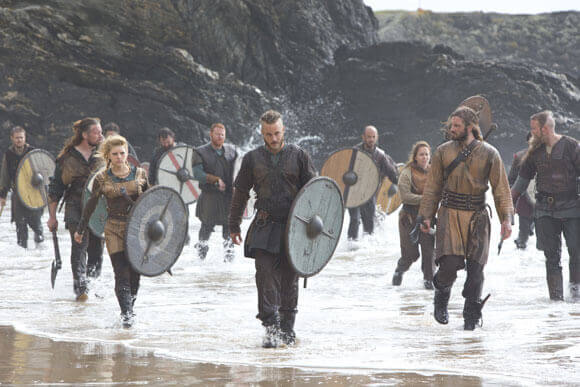
Ragnar (Travis Fimmel) walks armed along the beach, leading his crew after landing ashore in the west - Photo by Jonathan Hession / HISTORY Copyright 2013
A tease of season two of History Channel’s critically acclaimed series Vikings shows that Floki (played by Gustaf Skarsgard) may not be around for the whole upcoming season. But while series creator Michael Hirst says Floki’s one of his favorite characters to write for, he won’t guarantee us at the 2013 San Diego Comic-Con that he’ll continue to write scenes for Floki much longer.
Asked about keeping Floki around, Hirst replied, laughing, “Sometimes you have to kill the thing you love.”
Hirst also talked about the reaction of viewers and scholars as well as his writing process in our Vikings interview in San Diego.
Michael Hirst Vikings Interview:
What’s the general overall fan reaction to the first season? Have they been suggesting where they want you to go next season? What has it been like?
Michael Hirst: “It’s been surprising to me from my experience because it’s been overwhelmingly positive. It was interesting this evening when I answered a question about the gods, and the people really responded to that. There’s something in the atmosphere at the moment. The Christian-Pagan thing is working so well that that’s getting a big response from people. I don’t know why, particularly.
I don’t know why a few years ago, I wrote a movie script about Alfred the Great, who was an English king who fought against the Vikings, and I told people I was working on the Vikings and Alfred the Great, and they were, ‘Okay.’ Last year or the year before when I started working on this, I was telling people I’m working on the Vikings and I get, ‘The Vikings! You’re working on The Vikings! How amazing!’ I realized then it was in the zeitgeist, that things had changed, and I can’t explain that. I can’t explain that.
I think the reality of the show appeals to people. I think it’s a great cast. It’s finding out about something you think you know, but you actually don’t know anything, really. Everyone thinks they know about the Vikings, but most of it is bullsh*t the Christian monks told us. I think it’s been interesting for a lot of people to find out what the Vikings were really like, or find out that all of their prejudices were wrong.”
Did you write all of the episodes of the first season?
Michael Hirst: “Yes.”
That’s a lot of work.
Michael Hirst: “Well, I wrote all The Tudors. I wrote 38 hours of The Tudors. I’ve written the first nine episodes, and I’ve now written seven out of the 10 episodes for next season. It’s a lot of work, but I’m very bad at delegating; I like it too much. I love it.”
Do you have a story arc set up over a certain period? Do you know where you want it to end?
Michael Hirst: “Yeah. I spend a lot of time reading, thinking, sketching out things. I’ve kind of learned from experience not to set sail on an open sea without a soundboard. You have to know where you’re going because you can get very lost. What I tend to do now is quite detailed outlines. Sometimes, the actual writing I can do quite quickly. I can do an episode in ten days or two weeks or something, but that’s because I know exactly where … or more or less exactly.
There’s always a little part of it that I leave open, that I don’t know what’s going to happen myself. I want to be surprised by the people or something that pushes me, because that keeps it fresh for me and exciting.”
Will you be able to keep to that story arc if it lasts eight seasons?
Michael Hirst: “Yeah, I can go on. Ragnar had a lot of sons, and the sons were quite extraordinary. One of them sailed around the Mediterranean. They attacked Paris. They came here to North America, or at least to Canada. Oh, there’s plenty. The Viking period, that is, the Pagan Viking period, lasted about 400 years as we know it from the first attack on Lindisfarne Island. But the Pagan gods are much older than the Christian gods, you may say.”
Is there any character you like writing for more than any other?
Michael Hirst: “I love writing for Floki. That’s a character who’s developed partly from talking to Gustaf [Skarsgard] and watching how he does it. It’s interesting how characters develop. Henry James used to talk about characters as being either fixed constituents or free spirits. By ‘fixed constituents’ he meant characters who do a job for you. You put them in place and they do what you want them to do. Free spirits are characters who are more real and who you’re not quite sure always what they’re going to do. For a writer, that’s much more interesting, obviously.
I try and keep as many free spirits going as I can. I’m interested in the continuous dynamics between these characters who are very close. Even with people who know each other, there’s always the unexpected. In fact, the better I feel I know them, the more I can allow them to do things that might be out of character. It’s very important for me because, as you say, it is a lot of work so I have to be interested all the time. I have to be passionate about it.”
How tough is balancing that ensemble when you have so many interesting characters? How do you make sure you’re spending enough time with each one?
Michael Hirst: “When I do the outlines, I ask myself whether I’ve followed through…I’ve always got these storylines going through…and whether I’ve done justice. To be absolutely honest with you, the character of Siggy was a very, very minor character when we started. Just Earl Haraldson’s wife who had nothing to say in the first two episodes, but we’d cast a great actress and I was going, ‘Goodness, I’ve got this great actress and she doesn’t say anything. She loves this world she’s in.’
I started to develop the character and then she became a really interesting character. It added to the burden because here’s someone else in play, but it also opens the world up a bit more.
When I started writing The Tudors, I didn’t know that I could write series TV. I’d never done it before. I had no idea. Then I found that I could, and that I enjoyed it. Therefore, my experiences writing TV on the whole have been much better than writing movies. It’s partly the fun I have on making these connections and telling these stories. I’ve time to develop storylines in TV in series drama. In a movie, you reveal characters because you don’t have time to do any more, but in TV you can spend time developing them and find out about them. It’s a lovely process. It’s a privilege, really.”
The seer character is so creepy and supernatural. Will we see more of that?
Michael Hirst: “You say again that it’s supernatural, but it’s not fantasy because in the sagas you read about the seers or prophetesses … sometimes they were women. I read one saga in which Odin goes to see a prophetess, a seer, and I just quote part of it because the seer complains bitterly that he, or she, has had to get out of the ground.
In other words, they’re dead, really, but they come out to answer Odin’s questions. Odin asks a question about his son, and it’s very terrible, terrible. So I had this person in mind. It was real for me, not a fantasy and to the Vikings, a very real person in their society. It was, I think, our first director decided what he would look like. He’s hundreds of years old. He’s seen everything. Or he’s not…he’s just a grumpy old man.”
As you mentioned, the history of the Vikings have been distorted and is somewhat vague. As a writer, did that help you in creating the outline knowing this or did it help you be creative because there wasn’t as much source material?
Michael Hirst: “It was quite liberating because, you know, I’d occasionally got into trouble writing Henry VIII. Lots of English historians were saying, ‘Oh, it wasn’t like that,’ as if they were there. [Laughing] Because actually, I was remarkably scrupulous about this. I can defend most of the things I wrote in The Tudors. But, never mind. I was still attacked. But here, it’s wonderful because I just go around saying, ‘Hey, buddy, it’s the Dark Ages.’
I had a radio interview in Boston with the head of Scandinavian studies at Harvard. He’d watched the first two episodes and I thought he was going to chew me up. He said, ‘Listen, this is the first time my culture has ever been taken seriously, so thank you.’ There probably are mistakes and stuff, but, hey, it’s the Dark Ages, and he said that.”
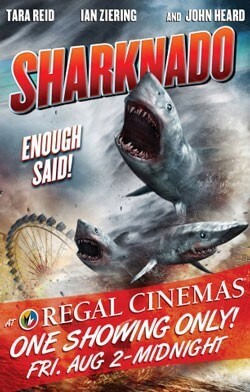
Did you miss Syfy’s campy original movie Sharknado? If so, and if you want to catch sharks hurtling through the air on a big screen, NCM Fathom Events and The Asylum are hosting a one-night-only midnight screening of Sharknado at 200 theaters.
Social media helped make the film into an instant classic when it premiered on Syfy on July 11, 2013, and the network’s already working on a Sharknado sequel.
“Sharknado was an instant hit with fans – and celebrities – from the moment they first saw it, creating a social media phenomenon on July 11 with nearly 400,000 social mentions,” stated Shelly Maxwell, executive vice president for NCM Fathom Events. “Imagine sharks invading from the skies on 40-foot screens in movie theaters nationwide.”
The midnight screenings will take place on Friday, August 2nd at 12:05am local time. For tickets and a list of participating theaters, visit www.FathomEvents.com.
The Plot: Sharknado is the story of beachside bar regulars including owner Fin (Ian Ziering), bartender Nova (Casie Scerbo) and local drunk George (John Heard) as they team up with Fin’s ex-wife April (Tara Reid) to investigate the ecological nightmare that has sharks swimming through the streets of Los Angeles and falling from the skies.