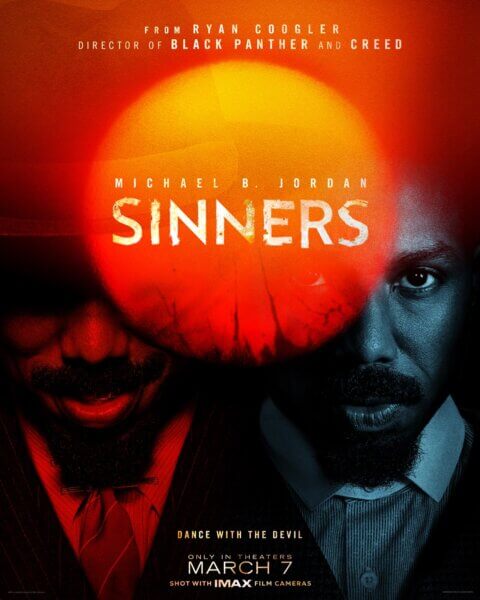
You’ve got to love that YouTube commenters are pointing out the Sinners trailer confirms Ryan Coogler and Michael B. Jordan (in a dual role) should have collaborated on a Blade film. The official trailer is an excellent example of how you tease a film without giving away the plot.
Two-time Oscar nominee Coogler and Jordan reunite for the fifth time following their successes on Fruitvale Station, Creed, Marvel’s Black Panther, and Black Panther: Wakanda Forever. The cast also includes Oscar nominee Hailee Steinfeld (Hawkeye), Jack O’Connell (Ferrari), Wunmi Mosaku (Passenger), Jayme Lawson (The Woman King), Omar Benson Miller (True Lies), and Delroy Lindo (Da 5 Bloods).
“Trying to leave their troubled lives behind, twin brothers (Jordan) return to their hometown to start again, only to discover that an even greater evil is waiting to welcome them back,” reads Warner Bros. Pictures’ Sinners synopsis.
Coogler, Sev Ohanian, and Zinzi Coogler serve as producers, with Ludwig Göransson, Will Greenfield, and Rebecca Cho. Coogler’s behind-the-scenes team includes director of photography Autumn Durald Arkapaw, Oscar-winning production designer Hannah Beachler, editor Michael P. Shawver, Oscar-winning composer Ludwig Göransson, and Oscar-winning costume designer Ruth E. Carter.
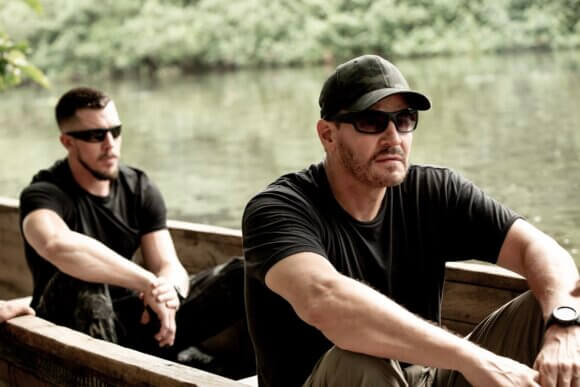
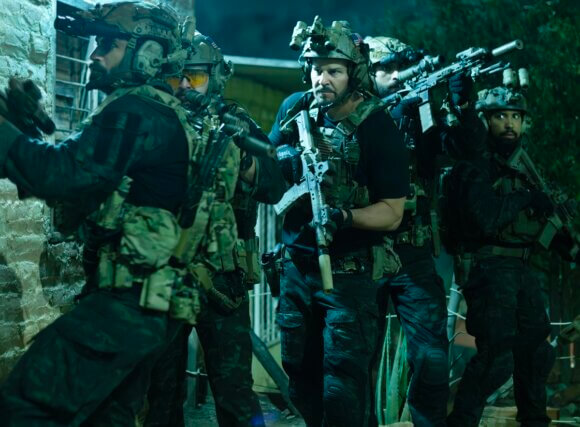
Beau Knapp as Drew Franklin and David Boreanaz as Jason Hayes in ‘SEAL Team’ episode 9, season 7 (CREDIT: Pablo Arellano Spataro/Paramount+)
Jason added to his body count and BRAVO discovered they have a traitor in their midst on Paramount+’s SEAL Team season seven episode eight. Episode nine will find the team reeling from that discovery. “The Sea and the Hills” is set to stream on Sunday, September 29, 2024.
Season seven stars David Boreanaz as Jason Hayes, Neil Brown Jr. as Ray Perry, A.J. Buckley as Sonny Quinn, Toni Trucks as Lieutenant Lisa Davis, Raffi Barsoumian as Omar Hamza, and Beau Knapp as Drew Franklin.
“The Sea and the Hills” Plot: BRAVO returns from Nazario’s camp stunned. Despite losing the element of surprise and discovering a traitor, the team must capture Nazario alive.
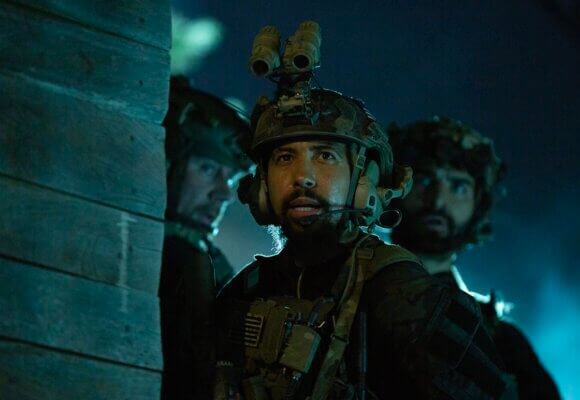
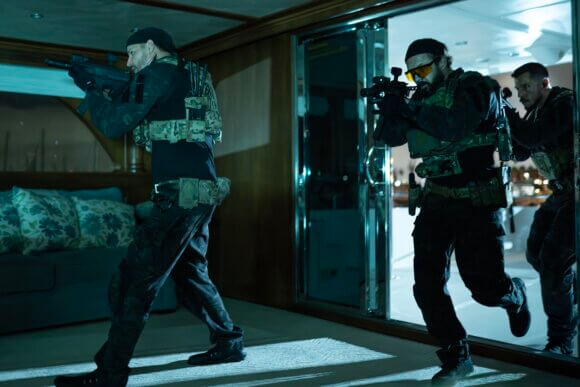
Tyler Grey as Trent Sawyer, Neil Brown Jr. as Ray Perry and Raffi Barsoumian as Omar Hamza in episode 9, season 7 (CREDIT: Pablo Arellano Spataro/Paramount+)
The series follows the lives of the Navy SEALs’ most elite unit as they execute dangerous high-stakes operations to defend their country at a deeply personal cost. In the final season, Jason Hayes (Boreanaz) struggles to balance his warrior’s existence with the responsibilities of single fatherhood. Ray Perry (Brown Jr.), his trusted second in command, questions whether he will be able to leave the battlefield behind as his retirement nears. Dedicated door-kicker Sonny Quinn (Buckley) battles against changing tides as Jason and Ray’s shifting focus means that other teammates must shoulder more responsibility. Both Omar Hamza (Barsoumian) and Drew Franklin (Knapp) find diving into work an effective way to distance themselves from their past traumas.
Vital to mission success is Lieutenant Lisa Davis (Trucks), a no-nonsense officer who ushers the team into a new era of warfare against powerful rivals for supremacy on the world stage. Ripped away from their loved ones at a moment’s notice to be deployed across the globe, Bravo team remains dedicated to their duties. Even in the face of overwhelming odds, they know this is the price to keep the families they left behind safe.
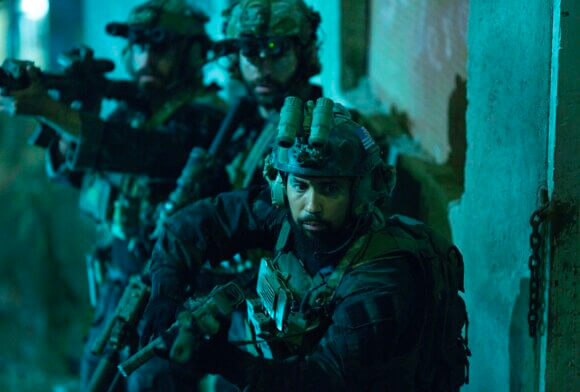
Justin Melnick as Brock Reynolds, Raffi Barsoumian as Omar Hamza and Neil Brown Jr. as Ray Perry in episode 9, season 7 (CREDIT: Pablo Arellano Spataro/Paramount+)Justin Melnick as Brock Reynolds, A.J. Buckley as Sonny Quinn, David Boreanaz as Jason Hayes, Raffi Barsoumian as Omar Hamza and Neil Brown Jr. as Ray Perry in episode 9, season 7 (CREDIT: Pablo Arellano Spataro/Paramount+)Raffi Barsoumian as Omar Hamza and Neil Brown Jr. as Ray Perry in episode 9, season 7 (CREDIT: Trae Patton/Paramount+)David Boreanaz as Jason Hayes, A.J. Buckley as Sonny Quinn and Beau Knapp as Drew Franklin in ‘SEAL Team’ episode 9, season 7 (CREDIT: Michael Moriatis/Paramount+)
Zachary Quinto as Dr. Oliver Wolf in ‘Brilliant Minds’ episode 1 (Photo by: Peter Kramer/NBC)
Zachary Quinto stars as Dr. Oliver Wolf in NBC’s new medical drama Brilliant Minds, inspired by neurologist and bestselling author Oliver Sacks. Dr. Sacks’ approach to treating patients was “not to fit the patient into a syndrome or disease, but to examine the ways in which an individual coped and adapted in unique ways to different neurological challenges,” according to his official website. Brilliant Minds’ first episode begins by establishing that Dr. Wolf’s approach echoes Dr. Sacks.
Episode one, airing on September 23, 2024, opens with Oliver explaining that he believes it’s impossible to treat a patient until he understands who they truly are. And that means that sometimes you must break the rules and use extraordinary methods to make contact.
With Harold, an elderly gentleman with Alzheimer’s, the unusual treatment involves breaking him out of a hospital. A short motorcycle ride while dressed in formal attire later, and they’ve made it to Dr. Wolf’s intended location: Harold’s granddaughter’s wedding. Harold’s daughter and son-in-law immediately confront Wolf and Harold, pointing out that Harold doesn’t have a clue who they are or where he is. “He’s lost his memory, not his humanity,” says Wolf.
Wolf refuses to leave, even after being warned not to break the bride’s heart on her wedding day. He takes a seat next to Harold on a piano bench and plays “God Only Knows.” That instantly sparks a memory, and Harold begins singing and playing, not missing a note. The song ends, and Harold recognizes his granddaughter, Sofie. She’s shocked and delighted as Harold tenderly kisses her face. Wolf explains that music unlocks Harold’s memories.
André De Shields as Harold and Zachary Quinto as Dr. Oliver Wolf in ‘Brilliant Minds’ episode 1 (Photo by: Rafy/NBC)
Unfortunately, Wolf’s defense of his actions as being in the best interest of his patient falls on deaf ears. Instead of rejoicing over Harold’s brief return to normalcy and a happy reunion with his loving granddaughter, Dr. Wolf’s behavior leads to his termination from the hospital. Wolf has no regrets; he will always do whatever’s necessary and put his patients first.
City Island, Bronx. Wolf’s in his garage working out when his friend Dr. Carol Pierce (Tamberla Perry) shows up with a job offer. It’s a small department, and he’ll get to be hands-on, but Wolf turns it down. He can’t work at Bronx General. Period. End of conversation. Or not quite…as Carol assumes it’s highly unlikely job offers are flooding in. Carol, the head of the psych department, describes a case she knows he can’t resist. A single mom of two young boys who, after a right temporal lobectomy, had a dramatic behavior change. Wolf perks up, but Carol refuses to provide more details, reeling him in. She praises his talent and says they’re in desperate need of someone with his expertise.
Wolf doesn’t commit before she leaves, but it’s obvious Carol knows exactly which buttons to push.
(Key early tidbits: Wolf can’t recognize faces and doesn’t use a cell phone. He also has a frig full of plants in glass containers, as well as dozens of ferns hanging in baskets around his house.)
Wolf goes for a swim in the Hudson River and thinks back to a time when, as a young boy, his father suggested he should try to tie something memorable about a person’s physical appearance to remember their name. Another memory shows a broken, bloody window and his father at the kitchen sink with an injured hand. His mother cleaned up the mess and warned Wolf it’s what happens when his dad doesn’t take his medication.
After the swim, Wolf heads to Bronx General and accepts the job. Carol shows him around and confirms he’ll be a one-man show in Neuro. They’re overcrowded and understaffed, and as they arrive at his office, she drops the bomb that he’ll be working with interns. Wolf doesn’t want them, assuming they’ll hate him, but Carol thinks they’ll tolerate him.
“You know, it might go a long way if you opened up to them about your condition,” says Carol.
“Carol! It’s 2024. We do not call homosexuality a condition,” says Wolf, which earns a laugh since Carol was referring to his face blindness.
Alex MacNicoll as Dr. Van Markus, Aury Krebs as Dr. Dana Dang, Spence Moore II as Dr. Jacob Nash, and Ashleigh LaThrop as Dr. Ericka Kinney in ‘Brilliant Minds’ episode 1 (Photo by: Rafy/NBC)
15 minutes in, and here come the four interns who’ll be adjusting to life working with Dr. Wolf: Erika Kinney (Ashleigh LaThrop), Dr. Van Markus (Alex MacNicoll), Dr. Dana Dang (Aury Krebs), and Jacob Nash (Spence Moore II). Dana breaks the news that they have a new attending, and Erika reveals she’s heard Wolf’s a genius. Jacob’s just finished announcing that he’s heard Wolf’s a “huge d*ck” when the man himself enters the locker room in a towel. The interns quickly introduce themselves, but further conversation is interrupted by Hannah, the patient Carol described earlier, running through the hallways, swearing she’s not crazy.
Wolf rushes to Hannah’s aid as the agitated patient explains that her sons have been taken away. Strangely, the kids are standing just a feet away, but Hannah swears she doesn’t recognize them. Hannah says that her kids were with her when she went in for surgery, but when she woke up, two lookalikes had taken their place.
She asks Wolf to promise to get her kids back, and he assures her he’ll do what he can. They’ll figure it out together.
After a series of tests and X-rays, Wolf and Carol determine that she’s fine, except that she can’t recognize her own children. She remembers what her sons look like, but her brain won’t accept that these are her children. Dr. Josh Nichols (Teddy Sears), chair of neurosurgery who performed the procedure, joins them and is confused about why Hannah’s getting an MRI.
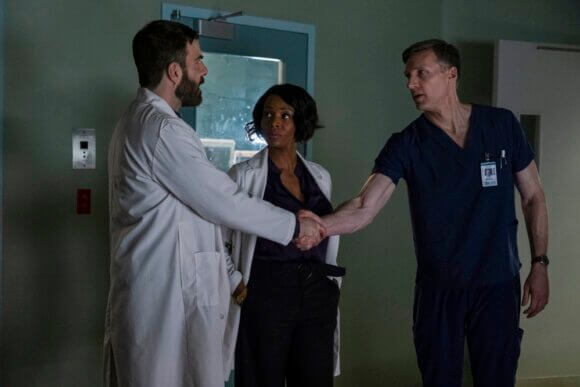
Zachary Quinto as Dr. Oliver Wolf, Tamberla Perry as Dr. Carol Pierce, and Teddy Sears as Dr. Josh Nichols in ‘Brilliant Minds’ episode 1 (Photo by: Rafy/NBC)
Josh points out Hannah hasn’t had any seizures since the surgery, and this side effect should go away in a week. Wolf begs to differ, explaining that Hannah has severe emotional detachment. Josh brushes that off, certain he cured her epilepsy – and that’s what really matters.
Wolf wants to observe Hannah at home, and Carol agrees but suggests he take the interns. However, Wolf thinks that whole intern thing just isn’t working out. Carol realizes he didn’t tell them about his face blindness, but Wolf insists he just doesn’t like them. Carol won’t let him off the hook and reminds him he doesn’t like anybody.
Erika chases Wolf down at his car as he’s about to leave for Hannah’s. He doesn’t recognize her, and she introduces herself again, and then provides a few details about the other interns as they approach. Van is sweet and odd, Dana is a genius with anxiety, and Jacob played football at Notre Dame and only got into medicine after an injury ended his athletic career. Erika describes herself as the one who works the hardest and as the team’s real quarterback.
Wolf’s a crazy driver and the interns fear for their lives on the way to Hannah’s. Dana pulls out her meds and jokingly asks if anyone wants to split a Klonopin. Wolf immediately sticks out his hand. The interns wonder why they’re going to Hannah’s place to observe her, and Wolf quotes Sir William Osler: “Ask not what disease the person has but rather what person the disease has.”
The interns play with the boys while Wolf speaks with Hannah. She just moved into the place and reports she’s feeling better now that she no longer has seizures. The only problem is she can’t connect with her boys anymore. Wolf has her close her eyes and describe a defining trait of each of her kids. She closes her eyes and smiles as she describes her children. Hannah gets emotional and Wolf assures her that’s a good thing. She says she loves her boys and when they’re not there, her heart bursts with happiness. It’s when she sees them that there’s a problem.
Wolf tells her to think about their defining traits overnight.
That night, there’s an emergency and Wolf’s called to Hannah’s house. He arrives and her sons are in the process of being taken away by Child Protective Services. Apparently, Hannah kicked them out in the rain and refused to let them back in. Hannah told CPS that the boys aren’t her kids, so CPS is taking them away for their protection.
The following day, CPS meets with Carol and Wolf and insists this is neglect. Wolf says this case is an injury to her brain and requires patience, time, and empathy. Removing the children won’t help, but CPS doesn’t agree.
Wolf puts off meeting with the hospital’s Chief Medical Officer to work on Hannah’s case. The boys believe their mom hates them, but Wolf assures them it’s a neurological issue. He’ll do what he can to help.
A flashback shows Wolf’s mom comforting him after his dad, who’s sick, failed to show up for a visit. She wants him to stay strong but keep their family’s business to himself. The flashback gives Wolf the idea to take Hannah back to her childhood home. The interns are charged with figuring out where that is, without asking Hannah. Wolf wants her reaction to be a genuine surprise.
Jacob thinks calling around is beneath him, and Erika calls him out on his attitude. Van can’t stop smiling over Erika putting Jacob in his place. (Van definitely has a crush.) Fortunately, Dana ends the research session when she finds Hannah’s childhood home.
Wolf and Hannah talk about her ex-husband, who rarely has contact with the boys. He thought her epilepsy made her a bad mom, but she beams when she talks about her kids. They pull up to her old house, and she claims that it looks fake, like a film set. Fake, just like her boys since the surgery.
Tamberla Perry as Dr. Carol Pierce, Zachary Quinto as Dr. Oliver Wolf, and Kira Guloien as Hanna Peters in ‘Brilliant Minds’ episode 1 (Photo by: Rafy/NBC)
A test shows that when she looks at videos of her kids, she doesn’t feel any emotional response. None whatsoever. It’s Capgras syndrome. Whatever she deeply connected to emotionally before the surgery doesn’t evoke a response when she looks at them. However, the audio without video of her kids not only works but causes her to experience a seizure.
Wolf explains the seizure was the result of nerve memory.
Dr. Josh Nichols is furious that Wolf interfered with his patient and brought on a seizure. They argue over methods, and Nichols tosses Wolf off the case.
Later, Wolf learns Hannah’s checked herself out and is worried she may harm herself. He races to the bluffs, a location she mentioned in her favorite memories of the boys. He arrives in the nick of time, just as she’s about to drive off a cliff. She thinks her boys no longer need her, but Wolf believes he’s found the key to unlock the door in her brain.
Wolf gathers CPS, Dr. Nichols, Carol, and the interns for a demonstration of the solution. He blindfolds Hannah, and she immediately recognizes her boys when they speak to her. She cries as she pulls them in for a hug, and everyone in the room is stunned (and touched).
Wolf draws a road map that details how he rerouted the way Hannah absorbs information and connects to her kids. Audio cues allow her to get back “home.” CPS isn’t sure this will work, but Wolf begs her to give Hannah a chance.
He lays out a plan in which Hannah will speak to the boys by phone every morning before actually seeing them. That will establish their connection. Plus, she’ll wear special glasses that will retrain her brain to prioritize sound over sight. And she needs to be honest with her kids about her condition so they can handle it together as a family.
This case has helped Wolf decide to come clean, and he tells his interns that he’s face blind. He hopes they can all open up to each other, even when it’s uncomfortable.
He and Carol have a private chat, and she admits she knew the case would be triggering for him. However, she believes his face blindness is a gift because he sees what everyone else misses.
Episode one ends with Wolf finally meeting with the Chief who, it turns out, is his mom.
* * * * * * * * *
New season one episodes will air on NBC on Mondays at 10pm ET/PT.
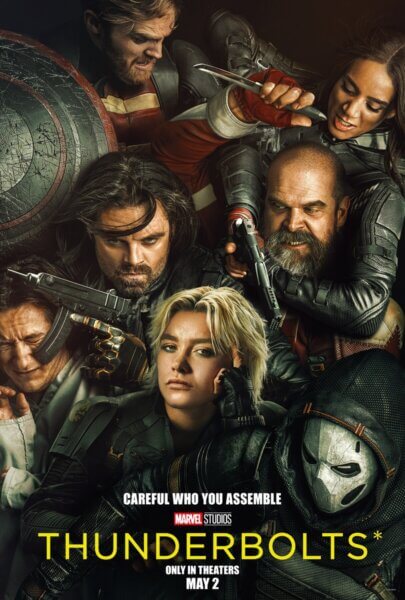
Marvel’s showing off the first teaser trailer for Thunderbolts*, a comic book-inspired action film led by Florence Pugh as depressed assassin Yelena Belova. And that “depressed assassin” description came straight from Marvel.
Pugh’s joined by Sebastian Stan as Bucky Barnes, David Harbour as Red Guardian, Wyatt Russell as John Walker, Olga Kurylenko as Taskmaster, Hannah John-Kamen as Ghost, and Julia Louis-Dreyfus as Valentina Allegra de Fontaine. The cast also includes Lewis Pullman and Geraldine Viswanathan.
During the 2024 San Diego Comic-Con panel, producer Kevin Feige declined to explain the * in the title, suggesting you have to watch the movie to find out. Jake Schreier directs and Louis D’Esposito, Brian Chapek, Jason Tamez, and Scarlett Johansson executive produce.
Marvel Studios is releasing Thunderbolts* in theaters on May 2, 2025.
Tamara Smart joins ‘Percy Jackson and the Olympians’ (Disney/David Bukach)
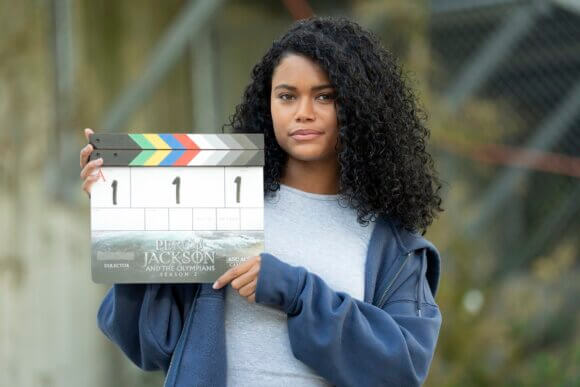
Disney+’s Percy Jackson and the Olympians has found its Thalia Grace. Tamara Smart (Resident Evil) has joined the season two cast as a recurring guest star, playing Zeus’ daughter.
Smart joins returning series stars Walker Scobell, Leah Sava Jeffries, Aryan Simhadri, Charlie Bushnell, Dior Goodjohn, and Daniel Diemer in the upcoming season. The second season is based on Rick Riordan’s second novel of his Percy Jackson and the Olympians series, The Sea of Monsters.
Disney+ offers this description of Thalia: “Thalia is the Demigod daughter of Zeus who made her last stand to protect her friends at the edge of Camp Half-Blood. Rather than let her die, Zeus transformed her into a tree that anchors the force field that protects camp. Tough and prickly, with a rebel/punk sensibility, Thalia is fiercely loyal to her friends and distrustful of her father’s world.”
Commenting on Tamara Smart’s casting, author and executive producer Rick Riordan said, “Thalia Grace is one of the most important characters in the Percy Jackson universe, so the right casting was critical. Thalia is a powerful warrior, a fiercely loyal friend, and a demigod rebel with a very ‘punk’ / ‘rage-against-the-machine’ sensibility. As soon as we saw Tamara Smart play this role, we knew we had found our daughter of Zeus. She was, no pun intended, electric. Tamara puts the ‘grace’ in Thalia Grace!”
Riordan and executive producer Jonathan E. Steinberg created the series. Additional executive producers include Dan Shotz, Rebecca Riordan, Craig Silverstein, Albert Kim, Bert Salke, D.J. Goldberg, James Bobin, Jim Rowe, Jason Ensler, Sarah Watson, and The Gotham Group’s Ellen Goldsmith-Vein and Jeremy Bell.
Jamaica Vaughan, Nick E. Tarabay, and Ivana Baquero in ‘Spartacus: House of Ashur’ (Photo Credit: Starz)
Starz’s Spartacus: House of Ashur starring Nick Tarabay has added 12 guest stars to its cast. The much-anticipated new addition to the Spartacus franchise is in production in New Zealand, with Spartacus creator, writer, and executive producer Steven S. DeKnight guiding the series as showrunner.
“Spartacus: House of Ashur will be a history-bending, erotic, thrilling, roller-coaster experience that builds on everything that made the original series a colossal hit,” reads Starz’s synopsis. “The series poses the question: what if Ashur, played by fan favorite Nick Tarabay, hadn’t died on Mount Vesuvius at the end of Spartacus: Vengeance? And what if he had been gifted the gladiator school once owned by Batiatus in return for aiding the Romans in killing Spartacus and putting an end to the slave rebellion?”
In addition to Tarabay, the previously announced cast includes Lucy Lawless as Lucretia, Graham McTavish as Korris, Tenika Davis as Achillia, Jamaica Vaughan as Hilar, and Ivana Baquero as Messia. Jordi Webber plays Tarchon, Claudia Black is Cossutia, India Shaw-Smith is Viridia, and Leigh Gill is Satyrus.
Spartacus: House of Ashur‘s new guest stars include Dan Hamill (Love Child) as Celadus, Andrew McFarlane (The Lost Flowers of Alice Hart) as Gabinius, Jackson Gallagher (Playing for Keeps) as Caesar, Jaime Slater (Pacific Rim Uprising) as Cornelia, and Simon Arblaster (Shortland Street) as Proculus. Arlo Gibson (The Sounds) guest stars as Opiter, Cameron Rhodes (Housebound) is Uvidus, Evander Brown (The Dead Lands) is Ephesius, Graham Vincent (My Life is Murder) is Hedylus, and Louis Hunter (Troy: Fall of a City) is Erato.
Donald Ross (My Life is Murder) will play Salvius and Duane Wichman Evans (Shortland Street) is Dacus.
Starz hasn’t announced a premiere date for the 10-episode season.
Adam Pearson and Sebastian Stan in ‘A Different Man’ (Photo Credit: Matt Infante / Courtesy of A2)
After working with him on 2018’s Chained for Life, writer/director Aaron Schimberg seems to have found a muse in actor Adam Pearson. Pearson is probably best known as “The Deformed Man” who attempted to escape from Scarlett Johansson in Jonathan Glazer’s surreal 2013 sci-fi film Under the Skin, but Schimberg has found a way to give the unique actor meatier roles. And that’s exactly what he does with A Different Man.
A Different Man is about a struggling actor named Edward (Sebastian Stan from Captain America: The Winter Soldier) who is inflicted with neurofibromatosis, a condition that has resulted in deformations on his head and face. He discovers that he is a candidate for an experimental treatment, and the results are miraculous. To go along with his new face, he decides to change his entire identity, becoming “a different man” named Guy.
Meanwhile, his neighbor, an aspiring playwright named Ingrid (Renate Reinsve from The Worst Person in the World), misses him when he unexpectedly disappears from her life and writes a play in which the old Edward is the main character. Guy auditions for the part, unrecognized by Ingrid with his new face and name. But his biggest competition for the role is another actor with the same condition named Oswald (Pearson) who may be a better Edward than Edward ever was.
A Different Man is a quirky little movie that’s hard to pin down. It’s equal parts black comedy, intellectual drama, and psychological horror. The little bursts of humor are only rivaled by the sporadic shocks in an otherwise serious film. It’s powerful and thoughtful filmmaking that does go off the rails a bit at the end, but that’s the point. It takes the viewer on a journey that isn’t always pleasant but feels necessary, and as it gets deeper into its story, it drifts farther and farther away from reality.
One interesting facet of A Different Man is the use of makeup prosthetics to make Sebastian Stan look like the early Edward. Of course, this is done to facilitate the “handsome” face he gains after his medical procedure, but it does bring up the question: is Pearson (and by extent his real condition) being exploited by being included in the movie? There’s a particularly well-written scene that addresses that concept, ostensibly talking about Ingrid’s play, but could just as easily be applied to Schimberg’s movie as well. There’s a thin line between representation and exploitation in this case, and Schimberg’s treatment leans towards the former.
Which brings us to Pearson’s performance. While Pearson’s neurofibromatosis plays into his character of Oswald, the condition doesn’t define him like Edward’s does. Rather than being seen as an oddity like he has been in other roles, Pearson brings real life and spark to Oswald. Aided by Schimberg’s writing, Pearson’s portrayal makes Oswald human, and, quite frankly, turns him into the only redeemable character in the film.
That’s really the crux of the movie. In trying to better his life, Edward becomes the villain when he turns into Guy. Oswald is the hero that Edward wishes he could have been before his procedure. There’s some jealousy there, and not just because Oswald seems to get everything Edward wants. Oswald is intelligent, charming, talented, and sophisticated. Oswald is an admirable character, while Edward is not. Oswald is everything Edward is not. And Edward hates that.
Although it’s hardly a feel-good story, A Different Man isn’t a tearjerker, either. It’s a character study of two men who are complete opposites despite sharing many of the same traits, interests, and desires. It’s grotesquely funny in places, to the extent where the audience often wonders if it’s acceptable to laugh, and it has more than a few jolts that seem to exist solely to make the viewer uncomfortable, but mostly, it’s a movie that will make you think. And that’s a good discomfort, the kind that keeps going long after you’ve left the theater.
GRADE: B+
MPAA Rating: R for some violent content, graphic nudity, sexual content, and language
Release Date: September 20, 2024 Limited
Running Time: 1 hour 52 minutes
Studio: A24
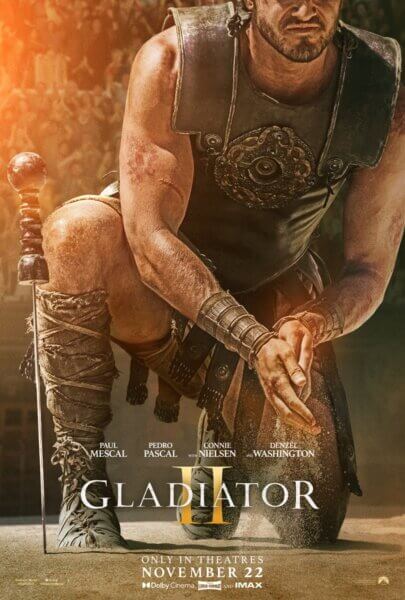
In addition to dropping the rap music, Paramount Pictures’ new trailer for Gladiator II drops a confirmation that Lucius’ father was Maximus. Of course, given that this is a sequel and that Maximus was killed in the original film, we won’t be seeing Russell Crowe involved in his son’s life in the gladiator arena.
The trailer shows off a CGI baboon and a flooded arena, and includes Lucius uttering Maximus’ famous line: “I will have my vengeance.”
“From legendary director Ridley Scott, Gladiator II continues the epic saga of power, intrigue, and vengeance set in Ancient Rome. Years after witnessing the death of the revered hero Maximus at the hands of his uncle, Lucius is forced to enter the Colosseum after his home is conquered by the tyrannical Emperors who now lead Rome with an iron fist,” reads Paramount Pictures’ official synopsis. “With rage in his heart and the future of the Empire at stake, Lucius must look to his past to find strength and honor to return the glory of Rome to its people.”
Paul Mescal (All of Us Strangers) leads the cast as Lucius. Pedro Pascal (The Last of Us) stars as General Marcus Acacius, Joseph Quinn (A Quiet Place: Day One) is Emperor Geta, Fred Hechinger is Emperor Caracalla, Derek Jacobi is Gracchus, Connie Nielsen returns as Lucilla, and Denzel Washington stars as Macrinus.
David Scarpa wrote the screenplay and Douglas Wick, Ridley Scott, Lucy Fisher, Michael Pruss, and David Franzoni serve as producers. Executive producers include Walter Parkes, Laurie MacDonald, Raymond Kirk, and Aidan Elliott.
Paramount Pictures is releasing Gladiator II in theaters, Dolby Cinema, and IMAX on November 22, 2024.
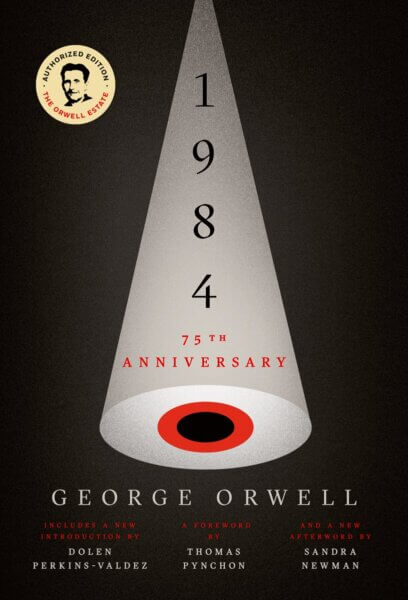
‘1984’ by George Orwell (Photo Credit: Penguin Random House)
The American Library Association (ALA) runs the Office for Intellectual Freedom (OIF) to track attempts to ban or restrict access to books across the United States, and then to inform the public about censorship efforts in our libraries and schools. The last week of September is usually the time it sets aside for its annual Banned Books Week, which celebrates the freedom to read whatever you want. And what better way to celebrate that than by watching 10 films based on banned books that also ran into censorship issues? Celebrate the freedom to watch!
From the ALA website: “In 2023, OIF documented 1,269 demands to censor library books and resources, the highest number of attempted book bans since ALA began compiling data about censorship in libraries more than 20 years ago. 4,240 unique book titles were targeted for censorship in 2023, a 65% increase compared to 2022 numbers. A challenge is an attempt to remove or restrict materials, based upon the objections of a person or group. A banning is the removal of those materials.”
Book banning is a real and current threat, but it dates back thousands of years. Pretty much as soon as humans figured out how to write and share ideas, somebody else wanted to censor them. Around 212 B.C., Chinese emperor Shih Huang Ti not only burned books but reportedly had more than 400 Confucian scholars buried alive because he perceived the ideals they wrote about as a threat. The Bible and Shakespeare’s plays have also suffered censorship and banning over the centuries and in various places.
We also need to remember that the popularity of horror, crime, and suspense comics in the late 1940s and early 1950s prompted Congress to hold an official inquiry into comics and juvenile delinquency in 1954, prompting cities to pass or consider bans on comic books in general. Al Feldstein and Harvey Kurtzman, editors of the highly successful EC Comics (Tales from the Crypt, Shock SuspenStories), were forced to cancel many of their comics lines between 1954 and 1956 because of self-censorship pressures from the comics industry (instigated to avoid government censorship) and a conflict with the industry’s Comics Code Authority.
Book banning, burning, and censorship have been used throughout history as a means of political control to keep certain ideas, such as freedom, from the public. It has also been used to supposedly protect people from things deemed immoral or obscene. And it remains a constant threat that we need to be vigilant about. So here are 10 films based on banned books that also ran into censorship problems.
10 Films Based on Banned Books
1. 1984
Book by George Orwell, 1949
Film by Michael Radford, 1984
Reasons for ban or censorship: Social and political themes (including being seen as pro-communist), explicit sexual content.
Might as well start at the top. If you search for “the most banned book,” then the Internet will reply with: George Orwell’s 1984. Orwell depicts a dystopian world in which a totalitarian state uses Thought Police to exert hypervigilant control over its people and where Big Brother is always watching. But the protagonist, Winston Smith, decides to engage in forbidden love and and join a revolutionary group to bring down the Party and challenge their authority.
Let’s be honest, there is nothing that terrifies those in power more than a free-thinking population willing to question its government. By sympathizing with those living under an oppressive regime, and showing them fighting back, the book has been banned and burned in multiple countries over the years, proving the book remains a powerful argument for freedom of speech and expression.
Although the USSR banned the book till 1988, Jackson County, Florida felt the need in 1981 to declare the book “pro-communist” and attempted to ban it (it also was not happy with the explicit sexual content). The Florida challenge seemed to ignore that much of the book is actually anti-communist (dissidents in Russia embraced it). In truth, the book is anti-government and is meant as a warning against the totalitarianism Orwell saw happening in Nazi Germany and Stalinist Russia.
The film of 1984 faced far less controversy, but just to prove how dangerous ideas can be, a 2014 screening of the film was canceled in Thailand because of how it might have heightened the political unrest in the country at the time.
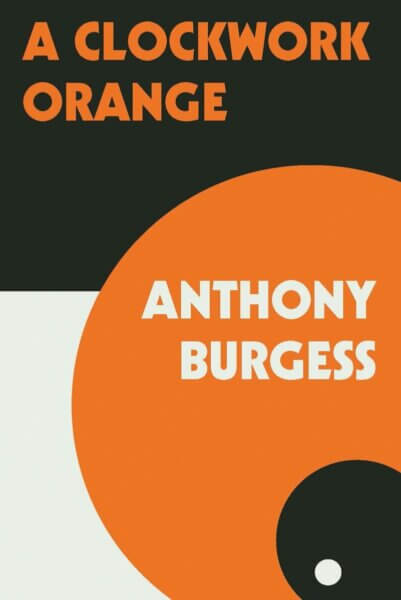
‘A Clockwork Orange’ by Anthony Burgess (Photo Credit: W.W. Norton & Company)
2. A Clockwork Orange
Book by Anthony Burgess, 1962
Film by Stanley Kubrick, 1971
Reasons for ban or censorship: Objectionable language, sexual violence, pornography.
I remember reading this in high school, and my dad having to write a note to the school and my English teacher explaining that he knew I was reading it, and he knew what it was about, and it was okay for me to read about a bit of the ultra-violence. Burgess’ book presented a dystopian world desensitized to violence and where young men like Alex ran wild committing horrific crimes. The 1971 film received an X rating on release in the U.S. and Kubrick censored less than a minute out to get a revised R rating on re-release.
Ironically, one of the scenes he cut was a humorous one where Alex and two women were enjoying an energetic threesome at a sped-up frame rate as the “William Tell Overture” played. Apparently, the censors were more comfortable with a woman being raped (which occurs graphically in the film) than with women enjoying sex. The film was blamed for some copycat crimes. Kubrick apparently received death threats and consequently pulled the film from distribution in the United Kingdom until after his death.
3. The Last Temptation of Christ
Book by Nikos Kazantzakis, 1952
Film by Martin Scorsese, 1988
Reasons for ban or censorship: Depicting the life of Jesus Christ and his struggle with various forms of temptation including fear, doubt, depression, reluctance, and lust. The book and the film depict Christ engaged in sexual activities, which caused it to be condemned as blasphemy by some religious groups.
This is another instance of dual censorship as both the 1952 book and the 1988 film were condemned by the Catholic and Greek Orthodox churches as blasphemous. So, in this case, it was not the government or schools calling to ban them but religious organizations. The main objection and root of the religious controversy comes from the novel’s conceit that presents Jesus Christ dying on the cross and imagining an alternate existence in which he was not the son of God but instead a mortal man living a normal life with a wife and family. The film had a disclaimer stating: “This film is not based on the Gospels but upon the fictional exploration of the eternal spiritual conflict.”
I remember having to cross a picket line to see the movie and thinking there are young people on dates in line to see a movie about Jesus Christ, shouldn’t the churches be applauding that? Scorsese, who wanted to be a priest at one point, is absolutely reverent with the material and eager to contemplate both the divine and the human in the sincerest manner, thus making the religious outrage seem completely misplaced.
‘Lolita’ by Vladimir Nabokov (Photo Credit: Knopf Doubleday Publishing Group)
4. Lolita
Book by Vladimir Nabokov, 1955
Film by Stanley Kubrick, 1962
Reasons for ban or censorship: Obscenity, sexual content, specifically for depicting a sexual relationship between a 37-year-old man and his 12-year-old stepdaughter.
Ironically, Lolita was categorized as obscene in France and England and banned for a few years in the 1950s but was not banned in the U.S., which gave the book a major publicity boost. But that is not to say it was warmly welcomed throughout the U.S. In 1958, the Cincinnati Public Library voted to ban it, and as recently as 2006 Florida challenged the book for its themes of pedophilia and incest.
It remains controversial because the story deals explicitly with the sexual relationship between the middle-aged Humbert Humbert (who would be played in the film by James Mason) and the 12-year-old Lolita/Dolores (played by a 14-year-old Sue Lyon in the film). Adding to the controversy of both the book, and perhaps more so the film, was the humorous tone taken in telling Humbert’s story. The levity (acerbically satirical as opposed to just jokey) contrasted with the seriousness of the topic. It also confused and offended some, making it more difficult for them to determine if what they were reading/watching was depicting or endorsing Humbert’s behavior.
The film received an X rating in Britain, limiting who could see it. In the U.S., Kubrick had to appease the censors in advance of shooting the film regarding certain things such as minimizing focus on the age of Lolita. Religious groups (The U.S.’ National Legion of Decency and the UK’s Moral Law Defence Association and Christian Action) protested the film. The National Legion of Decency insisted that 30 seconds of footage be cut from the final film to avoid it receiving the Legion’s C (C for condemned). It also demanded that the film advertising contain the warning: “no one under 18 would be admitted.”
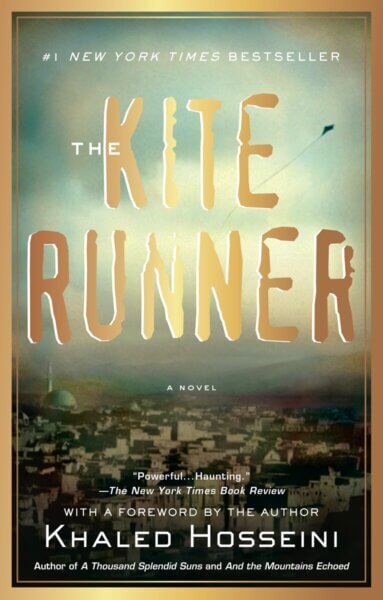
‘The Kite Runner’ by Khaled Hosseini (Penguin Random House)
5. The Kite Runner
Book by Khaled Hosseini, 2003
Film by Marc Forster, 2007
Reasons for ban or censorship: Sexual content, violence, unsuited to age group, profanity
(top challenges about using the novel in high schools).
The Kite Runner tells the story of Amir, which is set against the backdrop of Afghanistan’s political turmoil, from the fall of the monarchy to the rise of the Taliban regime. The story included incidents involving rape and torture.
ALA cited the book as being challenged in 2008 (for offensive language, sexually explicit, unsuited to age group), 2012 (for homosexuality, offensive language, religious viewpoint, sexually explicit), and 2014 (for offensive language, unsuited to age group, violence). ALA also noted that in 2017, The Kite Runner ranked as the fourth most challenged book. While the most frequent challenges were regarding sexual violence, Islamophobia was also cited with complainants suggesting the novel could inspire terrorism and promote Islam.
The government of President Hamid Karzai’s Afghanistan banned the film from theaters and DVD shops, because of the rape scene and the ethnic tensions.
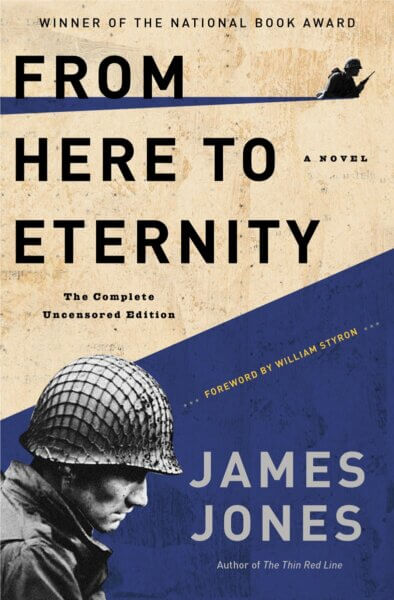
‘From Here to Eternity’ by James Jones (Photo Credit: Penguin Random House)
6. From Here to Eternity
Book by James Jones, 1951
Film by Fred Zinnemann, 1953
Reasons for ban or censorship: Language, sexual content, depiction of the military.
As with the self-censorship of the Comics Code Authority and the self-censorship of Hollywood’s Production Code, sometimes the censorship comes prior to a book or a film ever reaching the public. When Scribner was working with Jones on From Here to Eternity, they had to consider that the U.S. Postal Service would not carry material it considered obscene. So, Scribner, for what it deemed practical financial reasons, needed to make sure Jones’ book was not labeled obscene. This led to the publisher telling Jones to remove certain four-letter swear words and to remove scenes involving explicit homosexuality.
Similarly, the film had to make censorship decisions in advance of shooting to change Lorene from being a prostitute at a brothel to being a hostess at a private social club. And Karen’s hysterectomy – caused in the book by her unfaithful husband transmitting gonorrhea to her – ends up in the film being prompted by a less controversial miscarriage. The changes were made to satisfy the Hollywood Production Code.
The Navy chose to forbid its servicemen from seeing the film on its ships or shore installations, calling it “derogatory of a sister service” and a “discredit to the armed services.”
7. All Quiet on the Western Front
Book by Erich Maria Remarque, 1929
Film by Lewis Milestone, 1930
Reasons for ban or censorship: Pacifism, obscenity.
The novel follows Paul and his classmates as war breaks out in Germany in 1914, and they eagerly enlist in the army to show their dedication to their fatherland. But they get a shocking dose of reality once they hit the battlefield. Remarque wanted to depict the realities of war, to show the violence as senseless with the soldiers not as heroes but rather as youths ill-prepared for the violence and hardships of war. Remarque took a distinct anti-war stance.
It might be a badge of honor that All Quiet on the Western Front was one of the books burned by the Nazi Party after Hitler took power. The Nazis did not appreciate Remarque’s depiction of German soldiers as disillusioned or his anti-war tone that they read as anti-German. Remarque’s writing was even declared “unpatriotic” by propaganda minister Joseph Goebbels.
But the novel faced censorship outside of Germany as well. The English translation of the novel was banned in Boston on grounds of obscenity. But the most common reason for banning in multiple countries was regarding its anti-war, pacifist stance. The Czech military libraries removed the book from their shelves, while Italy just flat-out banned the novel.
The 1930 film version was banned in Germany by Hitler’s regime in 1933, because it challenged their ideals of honor, sacrifice, nationalism, and militarism. But in places like Australia the film was banned on the grounds of pacifism for several years.
‘Persepolis’ by Marjane Satrapi (Photo credit: Penguin Random House)
8. Persepolis
Book by Marjane Satrapi, 2000
Film by Marjane Satrapi and Vincent Paronnaud, 2007
Reasons for ban or censorship: Gambling, profanity, political viewpoint, depiction of torture.
The autobiographical graphic novel traces Satrapi’s life in pre- and post-revolutionary Iran and then in Europe, as she evolves into a rebellious, punk-loving teenager. But in the background, Iran is troubled by growing unrest and members of Satrapi’s liberal-leaning family are detained and then executed.
Not surprisingly, Satrapi’s critical commentary on Iran led to the book being banned in that country. It also faced a brief ban in Lebanon prompted by clerics who deemed the book “offensive to Iran and Islam.”
In 2013, Chicago Public Schools removed the graphic novel from some classrooms and libraries, but public pushback led to the ban being lifted.
The film was also temporarily banned in Lebanon because of its portrayal of sex and events in the Iranian Revolution (Satrapi shows dissidents being tortured by the Iranian government).
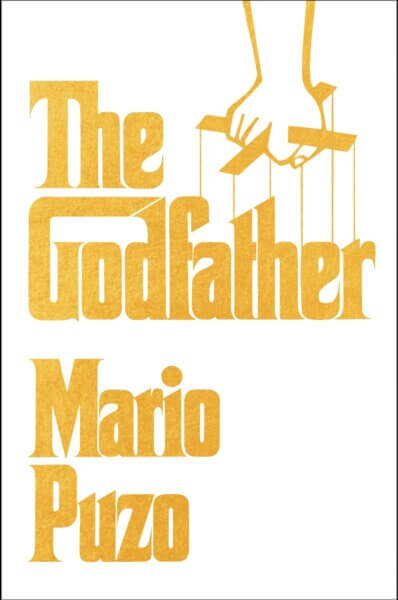
‘The Godfather’ by Mario Puzo (Photo credit: Penguin Random House)
9. The Godfather
Book by Mario Puzo, 1969
Film by Francis Ford Coppola, 1972
Reasons for ban or censorship: The Italian American Civil Rights League protested the film’s depiction of Italian Americans; complaints were also made about the violence, supposed glorification of crime, and sexual content.
If you watched the streaming series The Offer, then you will have some insight into the issues Coppola faced making the movie and side-stepping the complaints of certain Italian American civil liberty groups. While many films faced censorship over using obscene language, Coppola had to navigate around the words “mafia” and “Cosa Nostra,” which were avoided in the film so as not to offend Italian American groups.
To air on TV, Coppola had to trim some scenes of violence.
10. The Exorcist
Book by William Peter Blatty, 1971
Film by William Friedkin, 1973
Reasons for ban or censorship: Immorality; challenged as vulgar and obscene based on most religious standards.
The Exorcist deals with a young girl who appears to be possessed by a demon and the Catholic priests who attempt to exorcise the demon.
As with Martin Scorsese, William Peter Blatty was a Catholic schoolboy with a great reverence for the church. Blatty described his book as an “argument for God.” So, it is ironic that some religious groups complained about the book as blasphemous. Ironic but not surprising when you consider the language the possessed girl uses and some of the highly sexualized scenes. Needless to say, the film met with similar responses. Adding to the film’s controversy was the fact it supposedly provoked fainting, vomiting, and heart attacks in U.S. cinemas.
The British Board of Film Classification initially passed the film with an “X” certificate but then revisited the film after the Video Recordings Act (VRA) was introduced in 1984 and the BBFC had to decide if the video version of the film could remain on the shelves. The censors were concerned that because the protagonist was 12 the film might appeal to under-aged viewers who could access a video more readily than enter a cinema. So, the BBFC, at the beginning of 1988, decided to remove the video from the shelves (after years of availability) and it was to remain unavailable for 11 years because the BBFC felt that a restrictive rating was not enough to protect and prevent young viewers from watching it.
At the film’s initial release, Singapore initially banned it and then re-rated it for M18 after cuts to “a scene of a disfigured statue of the Virgin Mary, and a scene of the possessed girl stabbing herself in the crotch with a crucifix while uttering ‘Jesus f**k you!’”
To conclude I will leave you with this lovely comment from DC’s Politics and Prose website to sum up the spirit of this list: “In celebration of Banned Books Week, Politics & Prose Bookstore tips its cap to the books that offended, outraged, and generally poisoned the minds of the masses with wanton creative expression. Though our selections make great kindling, we assure you they’re much more enjoyable when read. Join us all week on the slide into moral turpitude with the best-censored reading material the canon has to offer.”
Zoe Saldana returns to star in season two of Paramount+’s espionage thriller Lioness. The first full trailer for season two shows a new operative’s been recruited who needs some convincing that their actions are for the good of their country.
In addition to series star/executive producer Zoe Saldana, the returning cast includes Laysla De Oliveira, Emmy nominee Michael Kelly, Oscar winner Nicole Kidman, Oscar winner Morgan Freeman, Dave Annable, and Jill Wagner. Genesis Rodriguez, LaMonica Garrett, James Jordan, Austin Hébert, Jonah Wharton, Thad Luckinbill, and Hannah Love Lanier also star.
Zoe Saldana as Joe in ‘Lioness’ season 2 (Photo Credit: Lynsey Addario/Paramount+)
“In season two, as the CIA’s fight against terror moves closer to home, Joe (Saldaña), Kaitlyn (Kidman), and Byron (Kelly) enlist a new Lioness operative to infiltrate a previously unknown threat. With pressure mounting from all sides, Joe is forced to confront the profound personal sacrifices she has made as the leader of the Lioness program,” reads Paramount+’s synopsis.
Lioness was created by Taylor Sheridan (Yellowstone, Mayor of Kingstown). Sheridan executive produces along with Nicole Kidman, Jill Wagner, David C. Glasser, Ron Burkle, Bob Yari, David Hutkin, David Lemanowicz, Geyer Kosinski, Michael Friedman, and Keith Cox. The series is produced by MTV Entertainment Studios and 101 Studios.
Paramount+ is launching season two on October 27, 2024, with the release of the first two episodes. New episodes of the eight-episode season stream on Sundays.