Advertisement
Home Blog Page 2912

Baristas Coffee Reality TV Show in the Works

Baristas Coffee

Well, why not? They’ve done a reality show about everything else – and most people love coffee – so why not go ahead and base a reality TV series around a drive-through coffee chain? Baristas Coffee Company says a reality show is in its “initial stages of production” that will feature their coffee chain.

Mark Teitelman is directing with M&M Productions producing. “The show will be a character-driven, drama-filled adventure and a true soap opera, stated Mark Mayer,” CEO of M&M Productions.

Season 1 will be shot in Seattle. Per the press release, the show will involve the Baristas competing with each other “in a series of challenges to determine who gets the best shift (girls can make up to $500 a day in gratuities) and who gets to live in the opulent Coffee Castle. Every week 35 new girls will audition for spots at the locations that have been vacated by girls who failed to meet the challenges. Along the way we learn about the lives of the girls and the two entrepreneurs who founded Barista’s, Barry and Scott along with the girls supervisors as they try to run the business.”

For those unfamiliar with the coffee chain, the coffee shops all feature girls in “themed evocative costumes each with a very different persona.” The series will ask customers to vote on their favorite girls, and those votes will figure into weekly challenges.

Okay…

‘Haywire’ Movie Review

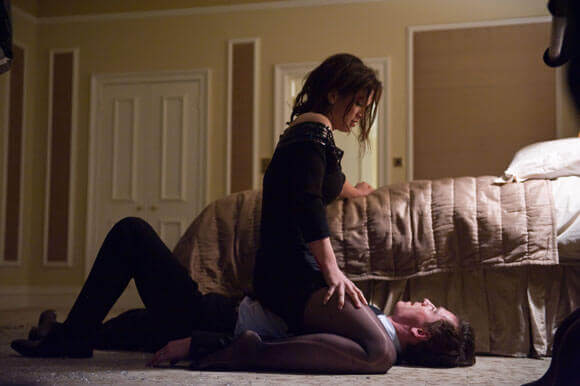
Gina Carano and Michael Fassbender in 'Haywire'
Gina Carano and Michael Fassbender in 'Haywire' - © Relativity Media

So … there’s this director. His name’s Steven Soderbergh. He makes movies like Ocean’s Eleven, Ocean’s Twelve, Ocean’s Thirteen, and The Girlfriend Experience. Sure, he’s also made others like Traffic and Out of Sight but let’s concentrate on what seems to be his more consistent path: laying down crappy elevator jazz over scenes of people walking around while the audience wonders how long it’s been since a character said something.

Sure, movies are a visual medium but playing fast and loose with the camera while pinning a film’s success on the likability of the actors is hoping for lightning to strike multiple times in the same spot. Yes, it’s a myth that lightning never strikes the same place twice … but waiting to see it happen is really, really dumb.

That about sums up how Haywire comes off. It wants to be this stylish spy thriller but meanders about lazily while that crappy elevator jazz plays ad nauseam. The basic espionage plot seems like something written on the back of a cocktail napkin and forgotten in the screenwriter’s jeans until after they were washed. The good actors do an okay job with their parts. The bad/nonactors do not.

Case in point, the leading lady Gina Carano. A real MMA fighter and former American Gladiator, she’s a badass. She’s also very, very hot. Too bad that’s not quite enough in a film where she’s given dialogue. As much as I really wanted to forgive any stiffness (no pun intended), it was painful to listen to each flat-line delivery or watch each blank expression. To add insult to injury, there are scenes where she acts opposite Channing Tatum. While I’ve heard great things about him as a person, watching Carano act with him is like watching the blind leading the seriously blind through an M.C. Escher maze.

Of course, the large majority of people looking to plunk down their $62 to see the film are just hoping there’s some great action. On that front, the fight scenes are fun … just don’t expect too many more than what you see in the trailer. Carano spends more time walking around or talking too much to a kid she basically kidnaps (Michael Angarano) in order to fill the audience in on backstory than she does beating in people’s faces.

Also, thanks to the terrible pacing Soderbergh maintains, the brisk 93-minute runtime feels more like 120. Half of that is just getting the audience caught up with where the film begins. The final scene is nicely left up to the imagination but considering the masses tend to prefer a completely spoon-fed resolution, it’ll be interesting to hear what they have to say upon grumbling their way outside of the theater.

It’s actually not quite clear who Soderbergh made Haywire for. If it was general audiences, there’s not nearly enough action. If it was the art-house crowd, they’ll be wishing for better acting and a more intelligent script. I enjoyed watching Carano strut around in evening wear and beat the crap out of a few people, but instead of looking for her mark or memorizing bland dialogue, I’d rather have just watched some reruns of her days as Crush on American Gladiators where she actually looked like she was having some fun. The only fun I had with the film was leaving it behind me in the rearview mirror.

GRADE: C-

Haywire hits theaters on January 20, 2012 and is rated R for some violence.


‘Extremely Loud and Incredibly Close’ Movie Review

Sandra Bullock and Thomas Horn in 'Extremely Loud & Incredibly Close'
Sandra Bullock and Thomas Horn in 'Extremely Loud & Incredibly Close' - © Warner Bros Pictures

On paper, the plot of Extremely Loud and Incredibly Close seems like a blatant ploy to tug on heartstrings and garner awards attention (and the title’s a little cumbersome). A man dies in the World Trade Center on 9/11, and his autistic son discovers a key with no lock shortly thereafter and systematically scours New York City to complete one last quest left for him by his father. As if the story wasn’t enough, Tom Hanks plays Dad, and Sandra Bullock is Mom the widow; that alone generally makes a film Oscar bait.

And yet, the end result is that Extremely Loud and Incredibly Close (seriously, that’s the title?) is one of the very best films of 2011 (NY & LA release last December). How does something so saccharine-sounding turn things around? It all starts with director Stephen Daldry.

If anyone was going to make this play as sincerely as it needed to, it would be him. After all, the notion of a teenage boy being raised by his blue-collar father following mom’s death, who wants to do nothing more in life than become a ballet dancer, well … that just shouldn’t work. It’s so sweet theaters should have handed out insulin with tickets. But it did work, and over ten years after Billy Elliot, Daldry is working his cinematic magic once again.

Helping him achieve his vision is a remarkable cast. Sure, Hanks and Bullock use their magnetic on-screen presences to the fullest, but it’s young Thomas Horn and the other primary supporting cast that make the film. Horn doesn’t have prior experience in front of the camera unless you count his win on kids’ Jeopardy!, and it’ll be interesting to see if he makes a run at future films. Playing a high-functioning autistic boy, there are necessary and understandable emotional cues that the character is not supposed to manifest. This works in favor of a fledgling actor. However, to his credit Horn also more than ably captured the frustration and extreme ends of the emotional spectrum asked of him; being the central character, he’s on-screen the majority of the two hours, and that’s asking a lot for anyone, let alone a young kid.

Buoying Horn’s performance are Max von Sydow, John Goodman, Viola Davis, and Jeffrey Wright. The combination of those four actors alone is enough to pique my interest in any film, and here in Extremely Loud and Incredibly Close (you’re really sticking with that title?), it makes for some very powerful and moving scenes. In particular, von Sydow is the one who comes closest to stealing the show. Playing a man who has vowed never to speak again, everything is communicated through either the “Yes/No” each etched in his palms, scribbling on a notepad, or pure talent. Reading his body language is like reading a script. It’s impressive and at times heart-wrenching to watch.

Another key element working in the film’s favor is Alexandre Desplat’s score. As always, he’s been a busy man, also contributing his talents in 2011 to Harry Potter and the Deathly Hallows: Part 2, Carnage, The Tree of Life, A Better Life, and The Ides of March. Here, he adds all the right notes once again, helping to emphasize and cradle the emotions on screen rather than simply shape and form them like other composers have a habit of doing.

Obviously, this isn’t the kind of movie one enters into lightly. We’re not talking about some vapid rom-com made only to distract audiences from reality and pad producers’ wallets. So despite however many sheets of Kleenex you might go through over the course of Extremely Loud and Incredibly Close (I give up, that’s the title), the emotional roller coaster is worth every penny you’ll shell out to see this, whether in theaters or at home. This deserves some serious awards attention, and although that sort of thing doesn’t really matter, it would just be nice to see truly worthy material be recognized for standards of excellence too often ignored by other films that are slapped together just to meet the bottom line.

GRADE: A

Extremely Loud and Incredibly Close hits theaters in wide release on January 2012 and is rated PG-13 for emotional thematic material, some disturbing images, and language.


Blake Shelton Reschedules January 2012 Tour Dates

Blake Shelton "All About Tonight"

Warner Bros Records released the following notice on January 17th regarding the rescheduling of a few of Blake Shelton’s January 2012 tour dates:

“It is with much sadness that we announce the passing of Blake Shelton’s father, Dick Shelton. Mr. Shelton, who was in declining health this past year, was surrounded by loved ones in Oklahoma upon his passing this evening. Due to this unfortunate event, the following dates of his “Well Lit & Amplified Tour 2012″ have been rescheduled: Rapid City, SD (1/19), Bismarck, ND (1/20), Billings, MT (1/21) and Bozeman, MT (1/22). The rescheduled dates in March are listed below.”

“I appreciate your understanding during this difficult time and thank you for all your prayers. Your support means the world to me. I love you guys,” stated Blake.

Rescheduled Dates:
Bismarck, ND March 20th
Rapid City, SD March 21st
Bozeman, MT March 22nd
Billings, MT March 23rd

Ticketholders for the January dates will be able to use their tickets on the rescheduled March dates. Or, you can request a refund at the point of purchase.

The “Well Lit & Amplified Tour 2012” will get back on its published schedule on January 26th in Columbus, Georgia. For more information on Blake Shelton’s tour, visit BlakeShelton.com.

Our thoughts are with Blake Shelton and his family at this difficult time.

Rihanna and Coldplay Will Perform Together Live at the Grammys

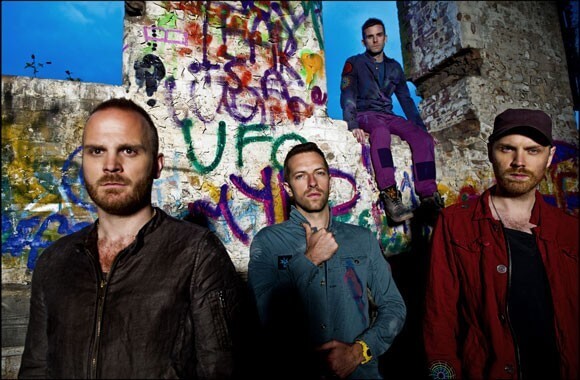
Coldplay
Coldplay – Photo Credit: Sarah Lee

You read that headline right: Grammy nominees Rihanna and Coldplay are confirmed to perform live together for the very first time at the 54th Annual Grammy Awards on Sunday, February 12, 2012. Coldplay and Rihanna will be performing “Princess Of China” off of Coldplay’s Mylo Xyloto, and MusiCares Person of the Year Paul McCartney will also be taking the stage to perform at the star-studded event to be broadcast live from the Staples Center in LA.

The three artists join a list of performers that includes Jason Aldean and Kelly Clarkson, Foo Fighters, Bruno Mars, Nicki Minaj, and Taylor Swift. And on January 18th it was announced that after a seven year break, the Grammys are going to have a host – and it will be LL Cool J.

Rihanna’s nominated this year in the Album Of The Year and Best Pop Vocal Album for Loud, and in the Best Rap/Sung Collaboration category for “What’s My Name?” (with Drake), and “All Of The Lights” (with Kanye West, Kid Cudi & Fergie).

Coldplay has three nominations going into the 2012 Grammy Awards in the Best Pop Duo/Group Performance category for “Paradise,” and in the Best Rock Performance and Best Rock Song categories for “Every Teardop Is A Waterfall.”

‘Star Wars: The Clone Wars’ Deception Clips

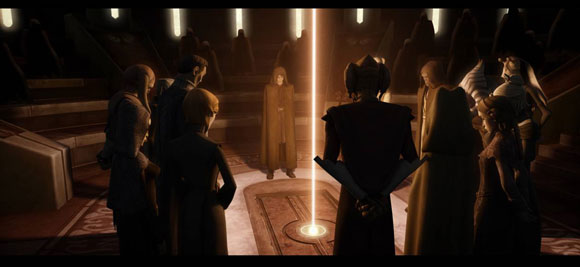
Star Wars: The Clone Wars Deception
A scene from Star Wars: The Clone Wars "Deception" Episode - © Lucasfilm Ltd

Star Wars: The Clone Wars “Deception” episode debuts on January 20, 2012, and Cartoon Network just released two clips from the upcoming show.

The Plot: “When the Jedi learn of a Separatist plot to kidnap Chancellor Palpatine, one of them must go deep undercover as a hardened criminal to extract information from the conspirators. To alleviate all suspicions and fit seamlessly into a high security Republic prison, a Jedi must die! But not everything is what it seems in The Clone Wars. Witness the “Deception” – an all-new episode – which features the return of the series’ most memorable villains behind bars: Cad Bane, Boba Fett and Bossk.

Lady Gaga Set to Launch the Born This Way Foundation

Lady Gaga Foundation
Today, Lady Gaga and her mom, Cynthia Germanotta, officially announced they’ll be launching the Born This Way Foundation (BTWF) on Wednesday, February 29th, 2012 at Harvard University’s Sanders Theatre. Per the press release, “Lady Gaga will be joined by some very special guests as she personally unveils BTWF before a crowd of policy makers, non-profit organizations, foundation leaders and youth themselves who are working to create a kinder and braver world.”

“My daughter’s foundation was born out of her passion to create a better world where people are kinder and nicer to one another and are accepted for who they are, regardless of how different they may be,” stated Cynthia Germanotta. “She has experienced many of the struggles that our youth encounter today, and identifies with the lasting effects they can have without proper support. Together, we look forward to creating a new movement that will engage and empower youth and accept them as valuable members of our society.”

Lady Gaga’s Born This Way Foundation is a non-profit that will address issues such as “self-confidence, well-being, anti-bullying, mentoring and career development and advocacy, with a focus on digital mobilization to create positive change.” BTWF is partnering with the Harvard Graduate School of Education to raise awareness of these important issues and to help find ways to reduce all types of bullying.

“We share the spirit of the Born This Way Foundation in our commitment to inspire social change, empower youth, and foster moral communities. It is an honor to host this historic event on our campus,” said Dean Kathleen McCartney of the Harvard Graduate School of Education.

Source: Born This Way Foundation – January 19, 2012

Posted by Rebecca Murray

Death Cab for Cutie Announces North American Tour Details

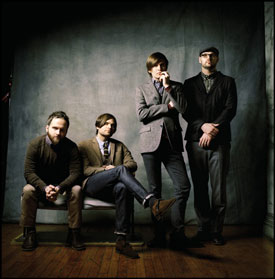
Death Cab for Cutie
Death Cab for Cutie (Photo Courtesy of Atlantic Records)

Death Cab for Cutie’s 2012 North American tour will kick off on April 10th in Denver at the Ellie Caulkins Opera House, with Youth Lagoon joining the tour beginning on April 27th in New York City. San Francisco’s Magik*Magik Orchestra will accompany DCFC on stage for the 2012 string of concerts across North America. The orchestral group and DCFC worked together before on VH1 Storytellers and the band’s Codes and Keys.

Codes and Keys was released in May 2011 and entered the Billboard 200 at #3. It’s nominated in the Best Alternative Music Album category at the 2012 Grammy Awards.

Tickets go on sale to fan club members on January 20, 2012. The general public can purchase tickets starting January 27th. For more details, visit deathcabforcutie.com.

Death Cab for Cutie 2012 North American Tour

APRIL
10 Denver, CO Ellie Caulkins Opera House
11 Omaha, NE Omaha Music Hall
13 Louisville, KY Louisville Palace
14 Grand Rapids, MI Covenant Fine Arts Center
15 Milwaukee, WI Riverside Theatre
16 Chicago, IL Chicago Theatre
19 Toronto, ON Massey Hall
20 Montreal, QC St. Jean Baptiste Church
21 Boston, MA Citi Performing Arts Center
23 Providence, RI Veterans Memorial Auditorium
24 Buffalo, NY Kleinhans Music Hall
25 Upper Darby, PA Tower Theatre
27 New York, NY Beacon Theatre*
30 North Bethesda, MD Strathmore*

MAY
1 Knoxville, TN Tennessee Theatre*
3 Dallas, TX McFarlin Memorial Auditorium*
4 Austin, TX ACL Live at the Moody Theater*
6 Mesa, AZ Mesa Arts Center – Ikeda Theater*
7 Los Angeles, CA Walt Disney Concert Hall*
8 Oakland, CA Fox Theater*
11 Portland, OR Arlene Schnitzer Concert Hall*
13 Seattle, WA Paramount Theatre*


TCM Reveals the 10 Most Influential Silent Films

TCM LogoIn honor of the critically acclaimed, award-winning nearly silent black & white film The Artist, Turner Classic Movies has put together a top 10 list of the Most Influential Silent Films in movie history. The films that made TCM’s cut includes productions released between the years of 1915 to 1928 and, of course, includes The Birth of a Nation and Cecil B. DeMille’s The Ten Commandments (1923).

TCM also asked The Artist director Michel Hazanavicius to share his personal favorite silent films, and he chose as one of his favorites Charlie Chaplin’s City Lights (1931). “No need to explain it,” Hazanavicius told TCM. “Just watch it.”

Hazanavicius also selected The Unknown (1927), a movie he says is, “a sexy, perverse film that takes place in a gypsy circus. It has one the best performances by Lon Chaney as a knife thrower with no arms who falls in love with a young Joan Crawford.”

The Artist director’s list also includes F.W. Murnau’s City Girl (1930), John Ford’s Four Sons (1928), Josef von Sternberg’s Underworld (1927), and King Vidor’s The Crowd (1928).

TCM’s List of 10 Most Influential Silent Films:

The Birth of a Nation (1915) – Directed by D.W. Griffith
One of the most challenging of all film masterpieces, D.W. Griffith’s first great feature demonstrates filmmaking innovations and a shocking example of the medium’s potential for cultural impact. Griffith wanted to make a film that would rival the feature-length epics coming out of Europe. With his innovative use of panoramic long shots, iris effects and panning shots, among other techniques, the film was a marvel, and its Civil War battle scenes, staged with the help of West Point, are among the most effective ever put on film. He almost single-handedly established the American film as an art form. The story of two families split by the Civil War and the combination of historical and fictional materials would become Hollywood mainstays. But Griffith’s material – two novels and a play written by Thomas Dixon in a personal campaign to maintain laws against racial intermarriage – triggered massive protests and violence around the nation. The political message so tarnished Griffith’s reputation he made Intolerance (1916) the next year to counter charges of racism. The racist depiction of freed slaves and the glorification of the Ku Klux Klan in The Birth of a Nation inspired both the Klan’s modern resurgence (it would use the film in recruiting drives into the 1970s) and a series of protests that thrust the still young NAACP into national prominence. It also further encouraged black businessmen to finance films of their own, leading to the “race film movement” that flourished into the 1950s.

The Four Horsemen of the Apocalypse (1921) – Directed by Rex Ingram
This early anti-war drama, the sixth-highest grossing of all silent films, is a testament to the medium’s cultural impact, particularly when manipulated by master artists like writer June Mathis and director Rex Ingram. Mathis was one of the industry’s first female executives, heading Metro Pictures’ scenario department. Her interest in spiritism drew her to the Blasco Ibañez best seller, which used biblical imagery to depict an Argentine family torn apart by World War I, even though most studios had deemed it unfilmable. When she came up with a script that worked, studio head Louis B. Mayer was so impressed he gave her director and star approval. Hiring Ingram to direct was no issue as he had been rising steadily in the industry, but her choice of Rudolph Valentino to play a key role was controversial. Not only was he a bit player at the time, but Hollywood had never promoted such an ethnic leading man (the dark-skinned sex symbol was of Italian and French lineage). One look at the rushes, though, and Mathis and Ingram not only expanded his role but added the tango sequence to show off his dancing abilities. The result was a national craze for the tango and the gaucho pants Valentino wore in that scene. The role of a society playboy shamed into military service made Valentino a star and turned the “Latin lover” into one of the screen’s most bankable commodities.

Nanook of the North (1922) – Directed by Robert Flaherty
Although Robert Flaherty is often hailed as the father of the documentary and Nanook of the North often called the first feature in that genre, his work is far from what filmmakers would consider documentary today. The director readily admitted that some of his sequences were staged, which would become a common practice for early documentarians. Among other things, Flaherty changed his subject’s name from Allakariallak to “Nanook” and cast his own common law wives to play Nanook’s two mates. He also had Nanook and his fellow Inuit hunt walrus and seal with spears, even though they had recently begun using guns, because he wanted to capture the way they had lived before European influences took hold. Since the only cameras available to the director were large and bulky, his crew even had to construct a special three-walled igloo so they could shoot interiors. The director also may have invented the story that Nanook was dying of starvation as the film premiered. Allakariallak died at home two years later, reportedly of tuberculosis. The filming, however, was the real thing, shot in the remote locale when many so-called documentaries would be made in film studios with actors. With funding from a French fur company, Flaherty brought cameras, a generator and a portable lab halfway to the North Pole with him. When he showed the film’s participants the footage of the walrus hunt, it was the first film any of them had ever seen.

The Hunchback of Notre Dame (1923) – Directed by Wallace Worsley
After years of character work, Lon Chaney shot to stardom and started his reign as the “Man of 1,000 Faces” with this lavish adaptation of Victor Hugo’s classic tale of the deformed bell ringer in love with a beautiful gypsy. Although most fans know the 1939 Charles Laughton version better, connoisseurs like Orson Welles have hailed this as the story’s and character’s definitive screen version. Chaney fought for three years to get this film made. Nothing came of his efforts until he shared his dream with Irving Thalberg, recently named head of production at Universal Studios. Thalberg helped spearhead a lavish production that established Universal as a major studio, and the film proved to be their most successful silent. The sets covered 19 acres, while the production required a crew of 750, particularly during two months of night shooting – an unprecedented undertaking at the time. Chaney put himself through the wringer for the role, wearing a 15-pound plaster hump and false chest that made it almost impossible for him to stand up straight, while the contact lenses he wore for the role caused permanent vision problems. But the makeup was so convincing at the time that many patrons thought the studio had hired a real hunchback for the role. Beyond his physical transformation, the star delivered a sympathetic, deeply felt performance that set the standard for “human monsters,” to be followed by the likes of Boris Karloff, Christopher Lee and Chaney’s own son, Lon Chaney, Jr.

The Ten Commandments (1923) – Directed by Cecil B. DeMille
Today, the biblical epic is viewed as a product of the 1950s, when filmmakers used spectacular tales like The Robe (1953) to lure audiences away from their TV sets and back into theatres. The roots of the genre, however, lie in such silent spectacles as the Italian Quo Vadis? (1913), D.W. Griffith’s Judith of Bethulia (1914) and Cecil B. DeMille’s original tale of Moses and the exodus. Always aware of his audience, DeMille had already popularized the risqué society comedy with films like Old Wives for New (1918) and would anticipate the return of the Western with The Plainsman (1936). He brought back the epic twice, first with the lavish The Ten Commandments, then with Samson and Delilah (1949). He hedged his bets somewhat with The Ten Commandments; the biblical story comprises only a third of the film’s running time, followed by a modern morality tale illustrating the importance of Christian values. But that first section was as eye-popping as DeMille could make it, even including 2-strip Technicolor sequences. Sixteen hundred workers created the Egyptian sets, which featured 36 foot tall statues of the Pharaohs, 21 sphinxes and 110-foot-tall gates. The parting of the Red Sea was created with miniature shots of Jell-O, which jiggled to approximate the surging waters. Even the modern sequence featured the spectacular collapse of a church built with shoddy materials, a visual comment on defying the commandments. The only director who could top such grandeur was DeMille himself, when he remade The Ten Commandments three decades later.

The Gold Rush (1925) – Directed by Charlie Chaplin
When Amy Adams is left on her own in The Muppets (2011), she sits in a restaurant, sticks two forks into a pair of dinner rolls and makes them do a little dance. The scene is a loving tribute to one of the great sight gags in film history, Charlie Chaplin doing the Ocarina Roll in The Gold Rush. Often hailed as “The Little Tramp’s,” and even the silent screen’s, greatest comedy, the film is a treasure trove of brilliant comic routines and heart-rending pathos. The plot, about Chaplin’s involvement in the Klondike Gold Rush, had an unlikely inspiration – the fate of the Donner Party. That may explain the prevalence of food jokes, as the starving Chaplin cooks and eats his own shoe, is chased around a snow-bound cabin after equally ravenous partner Mack Swain imagines him a chicken, or dreams of entertaining the woman of his dreams (dance hall hostess Georgia Hale) by making the dinner rolls dance. That sequence, possibly inspired by a Fatty Arbuckle routine in 1917’s The Rough House, would be echoed by everyone from Curly Howard in the short “Pardon My Scotch” to Johnny Depp in Benny and Joon. The Gold Rush was Chaplin’s first successful film at United Artists, the studio he co-founded with Mary Pickford, Douglas Fairbanks and D.W. Griffith. At the time, it was the longest comedy every made and would become the highest grossing of all silent screen comedies. It was also the film by which Chaplin said he would most want to be remembered.

Battleship Potemkin (1925) – Directed by Sergei Eisenstein
The image of an untended baby carriage relentlessly rolling down a flight of stairs is one of the most iconic in film history. Brian De Palma used it to dramatic effect in The Untouchables (1987), while Woody Allen lampooned it in Bananas (1971). But the legacy of using montage as a tool to move the audience emotionally goes beyond that one masterful image. Drawing on early work by D.W. Griffith, Abel Gance and fellow Soviet Lev Kuleshov, director Sergei Eisenstein used montage to engage viewers, particularly to generate sympathy for the revolutionary sailors on the Potemkin and their sympathizers. By combining rhythmic cutting and recurring images – the czarist soldiers descending the steps, a nurse wearing pince-nez and the legendary baby carriage – he created a powerful narrative entirely out of images. Battleship Potemkin was not an instant hit, even in the Soviet Union. Initially it was banned in some countries because of its shocking violence. Later, countries would ban it for its revolutionary message. Nazi propaganda minister Joseph Goebbels declared it off-limits for Germany’s military personnel. But as prints circulated around the world, filmmakers gathered in small groups to view it with admiration. When David O. Selznick saw the film in 1926, he wired his boss (later to be his father-in-law), Louis B. Mayer, advising him to screen it at MGM to teach studio employees how to edit. Filmmakers, and film students, have now been learning from Battleship Potemkin for more than three quarters of a century.

Metropolis (1927) – Directed by Fritz Lang
Without Metropolis, there would be no Star Wars, no Alien no Blade Runner. Fritz Lang’s science-fiction masterpiece was one of the first films to create an entire world convincingly on screen. Working with cinematographer Karl Freund, special effects supervisor Eugen Schüfftan rose to new heights with this film, supervising dazzling miniature sets, mounting a camera on a swing for one sequence and creating the Schüfftan Process, a system using mirrors to combine actors with the miniatures almost seamlessly. That particular effect would become a mainstay of filmmaking around the world, while the sleek, modernistic design of the mad scientist’s laboratory would set the standard for science fiction for decades to come. Beyond that, Lang’s dystopian vision of a future dominated by unbridled capitalism until a workers’ revolt forces some kind of détente represented one of the screen’s first and still most effective uses of science fiction as social commentary. Even the performances – particularly Rudolf Klein-Rogge as the mad scientist Rotwang and Brigitte Helm as the noble Maria, who inspires the workers, and her evil robot doppelgänger – have been echoed in other films. In later years, Lang dismissed the film, partly because of its popularity with the Nazi Party, but even he could not deny its influence and, in many ways, its prescience, particularly when he saw the first manned space flights of the 1960s.

Sunrise: A Song of Two Humans (1927) – Directed by F.W. Murnau
Oscar lore labels Wings (1927) the first film to win Best Picture, but the same year it won, in a category then called “Best Picture, Production,” Sunrise won for “Best Picture, Unique and Artistic Production.” Even such an overstated award title ultimately understated the importance of this film, which first brought German Expressionism to Hollywood thanks to the work of director F.W. Murnau. The German filmmaker had developed his craft with such international classics as Nosferatu (1922) and The Last Laugh (1924), but arguably reached his highest level of achievement with this film. Murnau chose a simple story so like a fable the characters don’t even have names. Farmer George O’Brien is tempted to kill wife Janet Gaynor for love of The Woman from the City (Margaret Livingston). In other hands, it might have been old-fashioned melodrama, but Murnau raised it to a level of dreamlike poetry by inventing new ways of telling the story visually. Where most films of the time made only limited use of camera movement, he suspended a camera platform from above the sound stage so the camera could glide, even as it followed his characters through rough marshlands. He also created compositions of depth by having cameraman Karl Struss shoot multiple superimpositions before the invention of the optical printer. It all creates a dreamlike effect that would influence filmmakers as different as John Ford and Orson Welles for years after Murnau’s tragic death, just four years later in an auto accident.

The Passion of Joan of Arc (1928) – Directed by Carl Theodor Dreyer
It was this film from Danish pioneer Carl Theodor Dreyer that played the largest role in convincing critics the cinema was an art form. Dreyer threw out the elaborate script his French producers had prepared, instead basing his film almost entirely on transcripts of Joan of Arc’s trial. Then he made the amazing choice to cast a popular stage comedienne, Falconetti, to star. Though he had only seen her in a light comedy on the Parisian stage, he could tell even then that she had a spiritual side he could exploit, which is exactly what he did. To get just the right facial expressions, Dreyer forbade Falconetti and the other actors to wear makeup and moved his camera in as close as possible, using newly developed panchromatic film to capture even minute variations in skin tones. At times he forced his cast to work under extreme duress. Falconetti had to kneel for hours on bare stones, forbidden to show any expression on her face as Dreyer shot repeated takes to capture every nuance of her inner pain. And just to make things more grueling, he shot the entire film in sequence. Her suffering, captured in a film shot entirely in close ups and medium shots, makes the film a profoundly spiritual experience and has been hailed by many as the greatest piece of acting in film history.

Source: TCM – January 18, 2012

Posted by Rebecca Murray

Grant Bowler Lands the Lead in Defiance

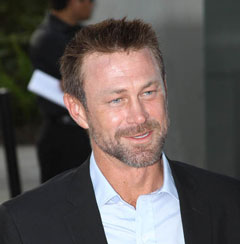
Grant Bowler
Grant Bowler at the True Blood Season 3 premiere - Photo © Richard Chavez
Best known for playing a werewolf biker named Cooter in HBO’s True Blood, Grant Bowler is set to star in Syfy’s science fiction series, Defiance. Not your ordinary TV show, Defiance will simultaneously debut on Syfy and as a multi-platform shooter MMO game from Trion Worlds. According to Syfy, the series and the game will exist in a single universe, “evolving together over time to tell an overall story that is more powerful together.”
 
Filming’s expected to begin this April, with Scott Stewart (Priest and the upcoming film adaptation of Mortal Instruments) set to direct. Rockne S. O’Bannon is writing the show and will executive produce.
 
Commenting on Bowler’s casting, President of Original Content, Syfy and Co-Head of Original Content for Universal Cable Productions Mark Stern said, “Grant’s charismatic charm and his depth as an actor make him the perfect anchor as we build the ensemble for this sweeping adventure series. We’re very excited to have him join us on this incredible journey.”
 
The Plot of Defiance:
 
Set in the near future, Defiance introduces a world where humans and aliens must learn to live together on an exotic new Earth that has been transformed by alien terra-forming machines.
 
Bowler plays Jeb Nolan, the law keeper in a bustling frontier boomtown that is one of the new world’s few oasis of civility and inclusion. Nolan is a former Marine who fought in the alien conflict and suffered the loss of his wife and child in the war. The trauma transformed him into a lone wanderer in the wilds of this new and dangerous world, bringing him to the town where his peacekeeping skills make him a valuable addition this new community.
 
Source: Syfy – January 18, 2012
 
Posted by Rebecca Murray
 

Trending