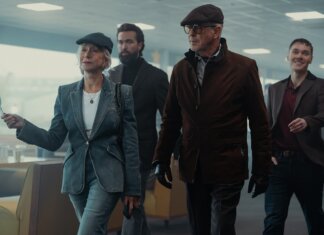
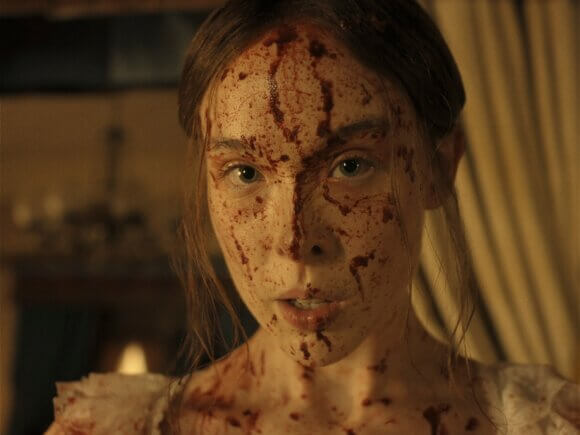
Netflix gathered the stars of Monster: The Lizzie Borden Story along with creator, writer, and showrunner Ian Brennan and director and executive producer Max Winkler to discuss the fourth season of Ryan’s Murphy’s Monster anthology series. Ella Beatty (“Lizzie Borden”) and Rebecca Hall (“Abby Borden”) are newcomers to the Monster world, but Charlie Hunnam (“Andrew Borden”) is fresh off leading season four, which focused on Ed Gein.
Although Lizzie’s the obvious monster, neither Abby nor Andrew could be labeled as innocent – at least in this version of the Lizzie’s tale. Hunnam describes Andrew as being on the monstrous side right up until he gets his 40 whacks. But, even given the disturbing subject matter, both seasons rank high on Hunnam’s list of favorite acting experiences.
“I’ve had some of the best experiences of my career doing these two seasons of this show, working with these beautiful casts, working with Max and Ian. And you know, unexpectedly in the first season that I did, Ed Gein, there was just a lot of laughter between takes and a lot of sort of joy in exploring this subject matter, which was kind of surprising. A lot of that really just comes from Max’s spirit,” said Hunnam.
He continued, “But we had a lot of fun, you know? And, obviously, took it very seriously and were aware that when the camera’s rolling, that we had a job to do and it was kind of dark and frightening. But there was a lot of fun to be had.”
The following are highlights from the Monster: The Lizzie Borden Story press conference held on September 9, 2026, ahead of the series’ September 17 premiere.
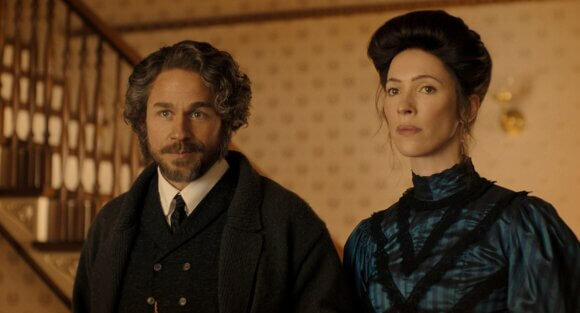
When asked about how they prepared for their roles and developed their characters, the cast shared:
Ella Beatty: “I read a wonderful book called The Trial of Lizzie Borden, which was really great information about her life and kind of the web of people around her. But early on, I started to make decisions about how much of the character that the audience would see in the show was made up of facts of the person in real life and how much of it was kind of our creation and a reflection of what was on the page.
So, I did do research about her, but I also felt that we were building somebody. And I worked a little bit with the movement coach, Julia Crockett, to take some of the facts from her life and translate that into a physicality and a posture and a way of sort of moving and existing and being. So, that’s really where I began. But what was on the page felt most important to me about the character to bring to life.”
Rebecca Hall: “I did absolutely nothing. Not a shred of research whatsoever. I didn’t do any research because I felt like she was kind of her own invention. And I felt that I wanted to make her my own invention, and I wanted freedom to get a little crazy and weird and just make her sort of her own character.”
Charlie Hunnam: “You know, I had a little, you know, couple of days of reading whatever limited information was on the internet about Andrew. But, you know, these guys, Ian and Ryan, get so deeply into the research and then decide what is gonna be relevant to the story that they’re telling and, you know, fill in the gaps with that brilliant invention. And I just felt like it was on the page.
Most of what I needed to start creating, what was exciting to me about Andrew Borden, was just on the page. And, you know, I always have a lot of fun with Max. Early on, I called Max and said, ‘You think we’re both gonna get fired if we give Andrew a stutter?’
Max said, ‘Probably, but let’s test it out.’”
The discussion turned to how the show navigates Lizzie Borden’s acquittal while creating a compelling narrative:
Ian Brennan: “It’s a good question, and it’s the question of this anthology. But even if she hadn’t been acquitted, we still don’t know what happened. You know, the story that comes out in either direction is still a story, and it may be based on facts, but you still don’t totally know what her journey was, even if she didn’t do it.
[Laughing] And I think she did do it.
I mean, that’s what you have to do with a show like this, a series like this, is to sort of look at what is there, what exists in sort of the public record. And it’s just your responsibility as a writer and as creator to make a decision. And to me, it was just very plain. I was like, ‘No, no, no, she did this,’ and then you go from there.
There’s just no two ways about it. It’s, like, what I think. And I think it’s what happened. I might be wrong, but it’s definitely what I think. And we allow for that in the show. I mean, we do show all the different permutations of what could have happened. But yeah, I think she did it.”
Max Winkler: “You know, we knew early on what we wanted the show to be about, which is it’s not just Lizzie Borden, but linking Lizzie Borden to these other women throughout history who were also put in cages and put upon, and what happens to people after years and years and years of oppression, which is almost always that they fight back. And we knew early on how we were gonna end the show, so the last image of the show is very, very connected to the first image of the show.
For us, post-Lizzie’s trial, how we wanted to end the show was very much about this is our interpretation of Lizzie Borden and what she meant to history. You know, you hear these nursery rhymes, but you very rarely explore the person and what led to that person becoming something that was a legend. They were a human being. They had good qualities and bad qualities, which is something that I think Ian and Ryan do so well in this series.
But the story is about very much female rage. And you forget that – I don’t forget, but I think most people forget – that women couldn’t vote until 1920. That’s not that long ago. Couldn’t vote. I think what the story asks post-Lizzie’s trial, what Ian kind of created in the breaking of that final episode with Ryan, is how to most make Lizzie’s life mean something in the story we were trying to tell, which I think they did really well.”
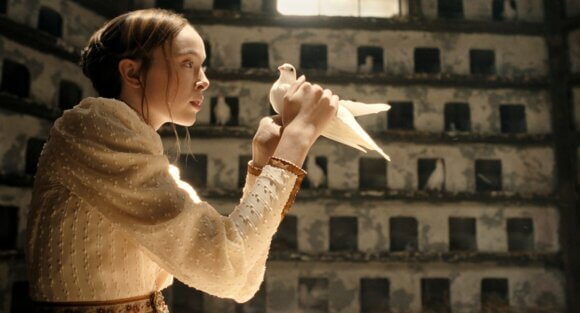
Reflecting on her initial response to landing the lead role, Ella Beatty explained:
“I was so excited. I was over the moon. And then I also felt, ‘How am I gonna do this and what does it mean?’ For me, just starting to work on it even before we were in pre-production was really helpful. Just starting to kind of, ‘Okay, how does this person walk? How does this person listen? How does this person breathe? How does this person dream?’ You know, all of those things that aren’t necessarily tangible work can help you feel like you’re starting.”
Charlie Hunnam spoke about shifting from portraying serial killer Ed Gein to taking on the role of victim Andrew Borden:
“Yeah, I wouldn’t say that Andrew is particularly innocent. You know, he’s definitely got his moments of being pretty monstrous. I don’t know. I mean, it’s always about trying to find, to sound trite, kind of the truth of a character and what motivates them. And while, you know, undeniably, some of the stuff that Andrew gets up to are pretty horrible and damning, I also felt kind of tender towards him.
I felt that he was also trapped in his own cage. You know, not necessarily being oppressed by the outside world, but by his emotional reality. He was dealing with grief and being the victim of a life that he created for himself that didn’t make him really happy. And so, he was also sort of trapped in a cage of his own making and turned him kind of rageful and spiteful to the world around him.”
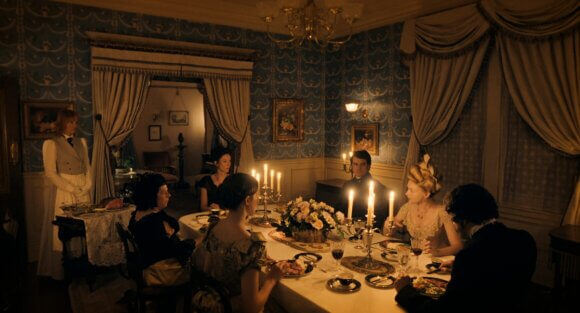
The cast opened up about the most difficult elements of stepping into these complex characters:
Rebecca Hall: “Well, I will say, I was really nervous about the vomit thing because I’m quite a kind of … you know, if someone’s feeling things, I feel the thing that they’re feeling quite quickly. Often, including an illness. And definitely, I’m hair-trigger away from – so I was very worried about it. Put it that way. And as it turned out, the rig was kind of less disgusting and more funny than I was expecting. And it suddenly became kind of weirdly enjoyable.”
Charlie Hunnam: “[…] Quitting the pipe when I finished. There was definitely a weaning off period that was unpleasant. Yeah, you know, unfortunately, that tobacco that you have to smoke on set would give me really a headache and make my throat sore. But unfortunately, you do have to smoke that. But you know, you gotta take your job seriously, so I would also smoke the pipe when I was not at work, just to make sure I looked authentic on screen. And so, then I was smoking real tobacco and got a little addicted to it. But thankfully I’m past that period in my life now.
I’m a reformed smoker so letting that little dabble back in was a slippery slope. But I made a deal with myself that the day we wrapped, I was gonna put the pipe down, which I did.”
The creative team discussed their approach to ensuring Lizzie Borden’s story resonates with a contemporary audience:
Ian Brennan: “Well, I mean, the weaving of the timeline sort of does that for you in a way. […] Early on, we sort of made the decision to do needle drops, as well, to keep the music contemporary. Which it’s so strange that that can really carry a lot of weight. We didn’t want the show to feel sort of stuffy and mildewy, which it’s not my style. It’s not Ryan’s style. It’s not Max’s, either. So, it’s just taste.
You know, in a way, for me, you try to key into the voice of the period. You try to understand. You sort of wrap your head around the lexicon. And then what I try to do is then like speak in my own sort of writer’s voice with that constraint. So, it is sort of as snarky and biting, as fun as I enjoy writing, but crammed into this sort of Victorian lexicon, is super fun. And also, I think the use of music in this, you know, Victorian setting is fun.
You just try to attack it with as much eye to being entertaining and biting and still as snarky as usual. And then it’s, for me at least, it sort of makes the period sort of come alive a little bit. I understand it more. It feels more real.”
Max Winkler: “And the scripts were very funny. You know, the first I read it, it felt like kind of like a bizzaro Noises Off or something like that, which is one of my favorite movies and plays. And so that in itself, the humor is what makes this time period extremely fertile for that stuff. And also separates it from, you know, kind of the old gaslight movies that we loved. You know, like The Heiress, and I loved The Age of Innocence, and I loved The Red Shoes, and the Powell and Pressburger movies. And Michael Bederman and I watched that a lot when we were talking about what it was gonna look like.
But you know, early on in the process, I had listened to this Kate Bush song, and I always try to go to Kate Bush when I’m looking for something. It’ll be the third time I’ve used her. The modern music, if it’s not done right, can feel like you’re pandering. But the music that we end up using for this is very much based on a sort of yearning, desire, especially from people who were bucking against trends at a certain time. So, once I had heard that Kate Bush song, it kind of unlocked the pilot as we were editing it together and trying to figure out exactly how to land the tone, which is so complicated because you want the emotion, you want the violence, and the fear and the trauma of it.
And it’s also so important to carry Ryan [Murphy] and Ian’s sense of humor that was in the script, which the actors did beautifully. And so, that was kind of how we did it.”
All eight episodes of Monster: The Lizzie Borden Story are available to stream on Netflix.