Advertisement
Home Blog Page 1785

Top 10 Must-See Alan Rickman Films: Alan Rickman’s Best Performances

Alan Rickman in Harry Potter and the Deathly Hallows Part 2

Yet another singularly talented performer has passed away the first month of 2016. First it was horror icon Angus Scrimm (best known as The Tall Man in the Phantasm films) and then pop-star-turned-actor David Bowie. Now Alan Rickman. Very few actors had Rickman’s range and effortless ability to move from evil villain to lovable romantic lead. He played a king, a president, an android, and God’s personal messenger — all with a stylish flourish that often made him the best thing in any film he worked on. He was never nominated for an Oscar and that is Oscar’s loss. Voters probably kept thinking, “Oh there will be another year we can remedy this.” But alas there will not be. He probably came closest to nabbing a nomination for the art house hit Sense and Sensibility or the blockbuster franchise Harry Potter. But a lack of Oscar is of no matter to fans that know his worth and know he will be truly, madly, deeply missed. Here is a list of his ten most memorable and diverse roles.

10 Best Alan Rickman Films

1. Die Hard as Hans Gruber (1988)

There is no debate on this being number one. Die Hard was Alan Rickman’s first feature film and from the moment he appeared on screen as Hans Gruber he had us absolutely hooked. In fact, many of us would have been just as happy if Bruce Willis’s John McClane had been the one to fall from Nakatomi Tower and Gruber had lived on to appear in another film. That’s how much we loved his villainy! As Hans he projected a smart ironic sensibility and his clipped delivery gave each line a zing. Even “Ho ho ho ho” sounded like a killer punch line.

Best line (although every one was a winner): “Oh, yes. What was it you said to me before? ‘Yippie-ki-yay, motherf**ker.’”

Alan Rickman in Robin Hood

2. Robin Hood Prince of Thieves as Sheriff George of Nottingham (1991)

Rickman deserves an honorary lifetime achievement award for making us want to watch awful movies just because he’s so damn good in them. I really don’t want this horrendous Kevin Costner take on Robin Hood in my library yet how can I NOT have Rickman’s Sheriff of Nottingham readily on hand for whenever I want to see the proper way to chew scenery.

Best line (but you need the set up):
Sheriff of Nottingham: “I’m going to cut his heart out with a spoon…”
Guy of Gisborne: “Why a spoon, cousin? Why not an axe?”
Sheriff of Nottingham: “Because it’s DULL, you twit. It’ll hurt more.”

3. Truly Madly Deeply as Jamie (1990)

Considering that Rickman introduced himself to the cinema world as Hans Gruber, it’s surprising that he was able to so readily endear himself to audiences as an appealing romantic lead in films like Sense and Sensibility, Love, Actually, and my favorite Truly Madly Deeply. I didn’t want to clutter this list with three romantic comedies so let Truly Madly Deeply stand as evidence of his skill in this genre. Truly Madly Deeply serves up a supernatural romance as Rickman plays Jamie, a man whose sudden death leaves his widow understandably distraught. So he comes back from beyond the grave to comfort her and complicate her life. An unconventional romantic comedy with a delightfully unconventional leading man.

Best line: “I really, truly, madly, deeply, passionately, remarkably love you.”

4. Harry Potter as Professor Severus Snape (2001-11)

Rickman played Professor Snape in eight Harry Potter films and for years kept a secret about Snape’s character that author J.K. Rowling had entrusted him with. His character proves to be the most tragic and our feelings for him go through the greatest transformation over the course of the series but early on in filming Rowling, who had at that point completed less than half of the Harry Potter novels, gave Rickman a vital piece of information about Snape that she thought would help him with his performance. On January 18, after Rickman’s death, she finally revealed on Twitter what that secret was: “I told Alan what lies behind the word ‘always.’” That line occurs in a pivotal scene in Harry Potter and the Deathly Hallows, Part 2, when Snape reveals that he “always” loved Harry’s mother. Rickman was perfectly cast because he was unafraid as an actor to be unlikable in a role and then be able to turn that completely around. The role sums up one of the things that made him so brilliant and unusual as a performer.

Best line: “Always” will be the one that fans adore but for sheer brilliance of delivery I suggest it is, “Turn to page 394.” No other actor could say such a trivial phrase and have it convey so much and be so funny.

Alan Rickman in Galaxy Quest

5. Galaxy Quest as Sir Alexander Dane (1999)

Galaxy Quest is an affectionate homage/send-up of sci-fi shows like Star Trek and the rabid fan base it has spawned. Galaxy Quest is a space opera TV series that gets canceled but the cast is so beloved by fans that they keep coming back together for fan conventions. Only problem is they seem to hate each other and the roles that have come to define their careers. Rickman plays a classically trained British actor cast as an alien doctor. He shines as the cranky Brit who complains endlessly about how degrading it is to have been in that show and forced to forever repeat his iconic line.

Best line: “By Grabthar’s hammer, by the suns of Worvan, you shall be avenged.” (And all its variations.)

6. Dogma as Metatron (1999)

Metatron describes himself as “the voice of God. Any documented occasion when some yahoo claims God has spoken to them, they’re speaking to me. Or they’re talking to themselves.” Not only is Rickman the voice of God but also he’s one pissed-off angel with an attitude – mainly because he’s not allowed to drink and he has no genitalia. Rickman is spot on in this Kevin Smith comedy and he turns every line into a gem.

Best line: “I’m as anatomically impaired as a Ken doll.”

7. The Hitchhiker’s Guide to the Galaxy as the voice of Marvin (2005)

Doug Adams’ cult favorite The Hitchhiker’s Guide to the Galaxy was originally a radio show, then a series of novels, comic books, and a TV show. It finally hit the big screen in 2005 but the feature film felt anti-climatic and not nearly as much wacky fun as what came before. But the film got two things right: Martin Freeman as our human protagonist Arthur Dent and Alan Rickman as the voice of the perpetually bored and depressed android Marvin (Warwick Davis provided the body in a suit that looks oddly like super deformed version of Big Hero 6’s Baymax). Rickman proves that with his voice alone he can create a memorable character plus only he could make such endless complaining entertaining rather than grating.

Best line: “Here I am, brain the size of a planet, and they ask me to take you to the bridge. Call that job satisfaction, ’cause I don’t.”

Alan Rickman in Bottle Shock

8. Bottle Shock as Steven Spurrier (2008)

Rickman played some famous historical figures ranging from King Louis XIV to Viennese physician Franz Mesmer to President Reagan. He also played a not quite so well-known real person with British wine connoisseur Steven Spurrier. In 1976 Spurrier organized what is now famously referred to as the “Judgment in Paris” where California wines beat French competitors in a blind tasting. Needless to say, Rickman has a grand old time putting French snobbery in its place. Rickman’s wry, underplayed delivery contrasts a cast that mostly overplays (most notably Bill Pullman and Chris Pine). Rickman keeps his performance carefully nuanced and never exaggerated. We may find Spurrier’s elitism funny but Rickman keeps it on a very human scale. He’s a snob but he’s not close-minded. Someone points out that being a snob limits him, and that’s when Rickman’s Spurrier starts to open his palate to the California wines – and, in a hilarious scene, maybe even to KFC.

Best line: Jim Barrett asks Spurrier, “Why don’t I like you?” The answer is “because you think I’m an asshole and I’m not. I’m just British and you’re not.”

9. Nobel Son as Eli Michaelson (2007)

Just to remind us that he could still be nasty as hell even after adorable romantic roles, Rickman takes on the role of Eli Michaelson, a smug, philandering bastard who wins the Nobel Prize for Chemistry. Then his son gets kidnapped and the ransom amount equals the two million dollars in Nobel prize money. Of course Michaelson refuses to pay. The film turns into a vicious black comedy about extreme family dysfunction. The movie is a schizophrenic mess but Rickman’s performance is wicked fun.

Best line: “If anyone in this room ever doubted my intellectual superiority, or your good fortune to be under my incomparable tutelage, you can now formally kiss my fine white ass.”

10. Lee Daniels’ The Butler as Ronald Reagan (2013)

What a wild piece of casting this is! I almost hate Rickman for making Reagan so, um, likable. He avoids impersonation and caricature to make the President more human than he ever seemed in real life. I conclude with this role because it goes to show Rickman’s diversity, range, and fearlessness in taking on any acting challenge.

Best line: “This whole civil rights issue, I sometimes fear I’m on the wrong side of it.”

Bonus (non-movie) Pick: In Demand music video by Texas, Rickman gets to tango. Wow!



‘Pee-wee’s Big Holiday’ Has a Premiere Date and New Teaser Trailer

Netflix has finally confirmed a premiere date for Pee-wee’s Big Holiday, a new original movie starring Paul Reubens as Pee-wee. The film will premiere on Friday, March 18, 2016 at 12:01am PT with Magic Mike‘s Joe Manganiello and Stalker‘s Jessica Pohly co-starring. The cast also features Stephanie Beatriz from Brooklyn Nine-Nine and Alia Shawkat from Arrested Development.

Reubens and Paul Rust (Arrested Development) wrote Pee-wee’s Big Holiday and John Lee directed. Judd Apatow (Trainwreck, Bridesmaids) produces along with Reubens. In the new Pee-wee film, “a fateful meeting with a mysterious stranger inspires Pee-wee Herman to take his first-ever holiday in this epic story of friendship and destiny.”

Watch the Pee-wee’s Big Holiday teaser trailer:

‘Mr. Robot’ – Rami Malek Interview on Complicated Characters

Rami Malek and Christian Slater in Mr Robot
Rami Malek as Elliot Alderson and Christian Slater as Mr. Robot (Photo by: Virginia Sherwood / USA Network)

USA Network’s Mr. Robot was one of the big successes of the fall 2015 television season, earning two Golden Globes, three Critics’ Choice Awards, and a spot on the AFI TV Programs of the Year list. The critically season one of the series starred Rami Malek and Christian Slater who were charged with guiding viewers on a journey down a twisted path to a finale that was one of the most talked about episodes of 2015. At the 2016 Television Critics Association’s press event, series creator/writer Sam Esmail promised season two will be just as engaging.

“I think the whole show has been about Elliot’s emotional journey, and I really wanted to focus on that and make it less about the plot,” explained Esmail. “How does Elliot reconcile the fact that he’s just been aware that he’s seeing this fantasy? So that’s the struggle that is going to kind of take over in season two.”

After the Mr. Robot panel, Malek provided further insight into playing Elliot while answering questions from a small group of journalists.

Rami Malek Interview:

Can you talk about how mentally and emotionally challenging this role is?

Rami Malek: “As you can imagine it’s very challenging – very challenging mentally and emotionally. I really respond to characters like that, very complicated characters, but it wears on me as I think it should. If I didn’t go home entirely spent after every day of work and prep for this role, I would think I was doing him an injustice.”


What about your mental health care?

Rami Malek: “It’s daunting. I won’t lie. There have been nights when I’ve come home and really just struggled, just moments where I’ve struggled because of this character. I won’t say that I haven’t.

My cast has been my therapy. I’m not kidding.”

What was your initial take on him when you first read the script?

Rami Malek: “I thought that it read very poetically and it was profound. It had something to say and behind it was a unique voice that I hadn’t heard before. Instantly I wanted to be a part of it and discover more about it.”

It sounds like not everything has been revealed about the first season. Do you know everything?

Rami Malek: “I go back through and comb through every script finely and see what I’m missing. [Creator/writer Sam Esmail] doesn’t do anything without purpose. I’ve asked him a few questions about things that I thought that I missed and he’s told me that my beliefs are untrue or unfounded. But I’m sure there will be things that I discover later with you.”

How carefully did you have to play the whole Sixth Sense aspect of the first season?

Rami Malek: “I treated everything with my research as if I was dealing with what was reality. I mean, everything I saw to me was real. It was not a delusion. He questioned himself quite a bit, but as an actor playing a role I think the most convincing way to do it is to see it as it is.”

Do you think about going online differently now?

Rami Malek: “Entirely differently. I fear it. I just think we’re exposed in a way that I didn’t realize. I didn’t think we were in the past. You read about things that happen in society with hacks and whatnot, but once you get in there and do the show you realize it’s happening in one sense or another to all of us.”

Do you get to smile once on Mr. Robot?

Rami Malek: “I do, but they all end up on the cutting room floor.”

How did you feel when you read the script to episode eight which is when reality really starts crashing down?

Rami Malek: “Eight? Oh, I loved eight. Eight was a very special script. I knew it was coming at some point. I didn’t know exactly how the fallout was going to be played out. I live for those types of challenges and those big scenes. It’s why I got into this, to have those types of moments and discoveries.”

Can you talk about your scene with BD Wong?

Rami Malek: “It was a very long night. We shot it in a number of different ways from a number of different angles. Yeah, it was very fast-paced. I remember our director telling us…he gave us directions of, ‘Try to make it like you’re in a boxing ring,’ at one point.”

Was this really a good point in your career to have a project like this come around?

Rami Malek: “People are calling me a breakout actor, but I’ve been around. I’ve been doing small roles in great movies for quite a while. I’m just picking challenging roles and it feels like as good a time as any, as far as I’m concerned. I’m enjoying it thoroughly.”


John Travolta Interview – ‘People v. O.J. Simpson: American Crime Story’ and Transforming Into Robert Shapiro

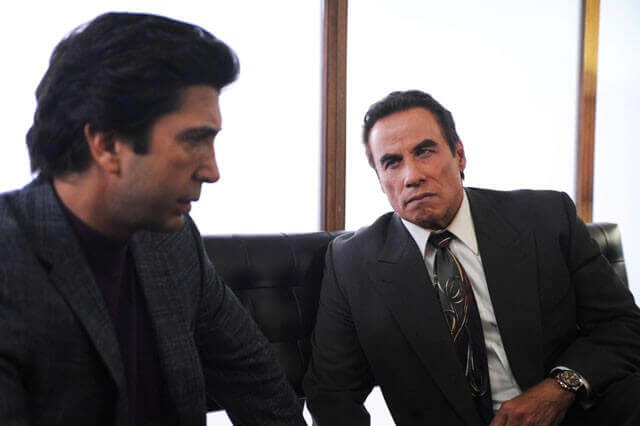
David Schwimmerand John Travolta in People vs OJ
David Schwimmer as Robert Kardashian and John Travolta as Robert Shapiro in ‘The People v. O.J. Simpson: American Crime Story’ (Photo by Ray Mickshaw/FX)

John Travolta returns to primetime TV with a starring role in FX’s anthology series People v. O.J. Simpson: American Crime Story. In the 10-episode series, John Travolta sinks his teeth into the role of Robert Shapiro, a key player among O.J. Simpson’s Dream Team of lawyers who helped defend the ex-NFL star when he was charged with two counts of murder.

The new series from American Horror Story and Glee‘s Ryan Murphy and The Hunger Games‘ Nina Jacobson goes behind the scenes of the trial to reveal what went on outside of the courtroom among the defense and prosecution teams that the public wasn’t privy to during what was labeled ‘The Trial of the Century.’

After participating in FX’s People v. O.J. Simpson panel at the Television Critics Association’s winter press event, Travolta met with a small gathering of reporters to discuss how he approached playing Shapiro in this much-anticipated series.

FX will premiere The People v. O.J. Simpson: American Crime Story on February 2, 2016 at 10pm ET/PT.

John Travolta Interview:

Had you encountered Robert Shapiro at any point during your time in Hollywood?

John Travolta: “No, you would think I would have. I have a different legal team, even though you would have thought I would have run into him. I know a lot of people who knew him and that helped because I could ask questions. But he did write a letter to me at one point very thrilled that I was going to portray him.”

What fascinated you about him as you started to try the character on a little?

John Travolta: “The thing is his ego I knew I could grasp. I think I’d been around enough of his type of men in the legal world and in the show business world – producers, studio heads – there’s enough of the kind of person I understood that I felt like I could get an angle on it that would work.”

Have you watched any episodes?

John Travolta: “Only one. I loved the first one, but I really wanted to wait to see how several of them come out and maybe binge-watch it to see the totality of the work.”

It’s such an extreme production. Did it come out differently than you expected on the set?

John Travolta: “Actually, better. I knew that we were set up for potential excellence, but I never had to use the [producing] card because everybody was on their A-game. I just at one point said, ‘You know what? These guys know exactly what they’re doing and I’m just going to do my part.’”

Is there a particular scene or sequence that you’re really looking forward to seeing on screen?

John Travolta: “Yes. There’s one in episode seven where I actually blackmail Kardashian, which was the most despicable moment I’ve ever had in my career of acting. I can’t believe that the character actually leverages him to try to settle, to convince the team to settle. It was such a strange day to play that and I want to see how that came out. And then there are a lot of moments that I’m looking forward to. I’m looking forward to the F. Lee Bailey scene. I’m looking forward to the fun aspects of watching Robert Shapiro, some of the humorous things. Especially, you know, he’s sitting in front of him, and he says, ‘You know who the victim is here? Me!’ Those are kind of enjoyable moments so it balances this darkness if you will.”

Do you remember where you were when the Bronco chase was going down?

John Travolta: “Yes. We had just won the Palme d’Or at the Cannes Film Festival for Pulp Fiction. My dad was on the chair in the living room in Carmel, Monterey – we were living up in Northern California – and he said, ‘Johnny, you’re not going to believe this.’ And then I was pulled right into this scenario.”

Have you ever met OJ?

John Travolta: “No. You would have thought I would have.”

Have you found there’s more attention on this than even the biggest movies you’ve done because of the subject matter and because it’s television?

John Travolta: “Yes.”

How are you facing that?

John Travolta: “Because it’s been a positive reaction to the quality of the communication, I’ve been pleased with everyone I’ve spoken with about it. It’s been a pleasure because it’s an agreeable subject. They’re so many that are pleased with the result of it that it’s easier to experience the big reaction it’s getting.”

You’ve talked about when Pulp Fiction was going down, you were in this transition state of reinvention. What was that like?

John Travolta: “I think I was at a point where I felt I had done well in my career, but I never imagined that one project could give me that kind of a second career where I was offered the A scripts again, the Oscar contender type scripts. There weren’t many examples of that in the history of cinema so I was very honored and privileged that I had that kind of role.”

Has Quentin Tarantino ever had anything else for you?

John Travolta: “No. In the day, he gave me a choice between Dusk Till Dawn or Pulp and I said, ‘I’m not really into vampires. I like the other one.’”

Is this that kind of game-changing role do you think, given the landscape and how prestigious TV is right now?

John Travolta: “Well, TV is definitely prestigious and it’s 10 hours of a character, not two. So those elements could balance out to be a game-changer in a lot of ways, and all an actor wants is the best opportunities to play the best roles. That’s really what they’re looking for, nothing else.”

Could you see yourself doing more television if it were a 10-hour series?

John Travolta: “Yes, a limited series. I don’t know if I could do it full-time. And I also enjoy doing movies. I wouldn’t want to eliminate my time for that.”

John Travolta as Robert Shapiro
John Travolta as Robert Shapiro (Photo Credit: FX)

How was it different playing this character as opposed to playing a variation on Bill Clinton in Primary Colors? How did you approach playing a well-known real person without fictionalizing him?

John Travolta: “Well, it’s a similar approach because I felt like it was a very thinly veiled interpretation of Clinton and Mike Nichols wanted us not to admit that we were playing him. I said, ‘Mike, I look like him, I’m speaking like him, I’m walking like him, I’m behaving like him. We’re taking the direct dialogue from his speeches.’ I said, ‘I’m playing him, man, so let me play him.’ I had a very similar approach from building the character from physical attributes and vocal attributes and really enjoying that process, which is my favorite thing to do.”

Do you feel some of the pressure other actors are feeling in this portraying a real-life person?

John Travolta: “I do but from my own personal viewpoint. This is how I feel: if I get it right enough, I can invite you into a true story. Because there will be a good majority of people who will be so familiar with the case and the character that unless I convince you – just like with Primary Colors – that I am that person, you won’t be as easily invited. So, you have to do just enough to say, ‘Hey, look, this is the game we’re playing. We’re playing this scenario. Come along and go for this ride.’”

Were you surprised by the theatrics of this trial?

John Travolta: “I was more surprised by the theatrics behind the scenes than the actual trial. We were amazed every new episode. When those Mark Fuhrman tapes came up, which you’re going to get to, we couldn’t believe what we were reading. Every week we couldn’t believe what we were reading.”

Do you feel differently about the trial now?

John Travolta: “No, just more informed. I just feel like I completely understand. This is almost the point of where someone gives an Oscar to someone for a performance they did. I mean, Rodney King should have maybe had the swing or other unfair situations, and this was the one that was almost the catch-all for earlier things that should have been handled differently.”

There’s almost a theatrical way Shapiro had of carrying himself. Can you talk about how that played into your performance without veering into a camp kind of territory?

John Travolta: “All you had to do was watch the videos of him. I was doing only what I observed him to do. I didn’t do any more than what he was. He was delicious to watch because he was doing exactly what I…and I’m good at taking on characteristics of people physically, whether it’s from dance or it’s all the years of being an actor. But that’s where I kind of excel so watching him I was like, ‘Oh, wow, this is kind of interesting. This will be something to do to make this authentic.’ But I wasn’t really doing anything different than what you can find on the videos.”

What do you think about the return of musicals on TV and would you be interested in doing Grease?

John Travolta: “Not in the live aspects. I did 16 years of theatre and my cup runneth over for live productions. But in a musical movie, yes.”

Will you be watching Grease: Live?

John Travolta: [Laughing] “Well, now that I know when it is I’m watching it. Why not?”


Lupe Velez Profile: The Mexican Spitfire

Lupe Velez
RKO Radio Pictures publicity portrait of Lupe Vélez for ‘Mexican Spitfire’ (1940)

Today we have movie stars who hail from all over the world, but back in the 1930s, it was unusual to have anybody in films who was from another country. Inroads were made when beautiful Dolores Del Rio became a popular favorite in films such as Ramona (1928) and Flying Down to Rio (1933). She was born in Durango, Mexico. Rudolph Valentino, of course, was an Italian lover type, and Ramon Novarro and Gilbert Roland headed up the Latin hotties of male stars. Pola Negri, of Poland, was the first European actress to be invited to star in Hollywood silent films. Following her was Vilma Banky of Hungary, who also made a name for herself in silents.

Lupe Velez was a tiny thing – just barely five feet tall – but she seemed to be born with firecrackers in her tummy. She came roaring into life on July 18, 1918 to her mother Josefina, a vaudeville singer, and her father Jacobo Villalobos Reyes, a colonel in the armed forces of Mexico. When as a young girl Lupe showed an interest in performing, her father was outraged and forbade his daughter from being in show business.

Her father’s objections meant nothing to the headstrong Lupe, and she proceeded to seek out venues where she could dance the then-popular “shimmy.” In 1925 she was cast in the big stage revues Mexican Rataplan and !No lo tapes! and became a big audience favorite. The following year American Frank Woodward contacted stage star Richard Bennett (father of American film stars Constance and Joan Bennett) about Lupe. Bennett was looking for a Mexican cantina singer for his new play. Lupe traveled to Hollywood but was rejected for the part for being too young.

While in Hollywood, Lupe met film and stage comedienne Fanny Brice (whom Barbra Streisand played in Funny Girl many decades later). Ms. Brice could spot talent and she took a liking to Lupe because of her sparkling personality. She put in a good word for Lupe to impresario Florenz Ziegfeld, who could use Lupe in one of his Broadway musicals. However, just before Lupe was ready to chuck it all and move to New York, fate intervened. MGM Producer Harry Rapf offered Lupe a screen test. When Comedy King producer Hal Roach saw the test, he signed Lupe to a contract to appear in some short films. The first one was a Laurel and Hardy comedy, Sailors, Beware! in 1927.

Ms. Velez made her major film debut in Douglas Fairbanks’ action-romance The Gaucho also in 1927. The film was a huge hit and Velez was a sensation in her debut, becoming an overnight star.

During her rise to stardom, she was active on the romantic front as well. Being high-spirited and overflowing with hormones at ages 19 and 20, Ms. Velez sought out some of Hollywood’s hottest men. One of her first conquests was cowboy star Tom Mix. Tall and strong, Mix was catnip to Velez. Although he was in his mid-forties and twice Velez’s age, his appeal was physical. Their romance ran its course as Mix’s film career started to slide. Mix died tragically in a fiery crash in 1940 when his racy white Cord convertible ran off the road in Arizona.

Never one to sit still, Lupe set her eyes on the young and handsome Clark Gable, newly arrived in Hollywood. Gable, himself, cut off their romance because he was afraid Lupe would run all over town discussing their sexual secrets. She did.

One of the best-kept secrets was that Lupe was having a torrid affair with comic genius Charlie Chaplin in 1928. Lupe revitalized Chaplin’s libido after he had gone through a torturous divorce from his wife. Again, although Chaplin was twice her age, she inspired him to rise to the occasion.

Lupe actually did some acting during her sexual escapades. She filmed Stand and Deliver for famed director Cecil B. DeMille in 1928 and starred in director D.W. Griffith’s Lady of the Pavements in 1929. She hated co-star Jedda Goudall, and the two had a ferocious catfight on the set. Velez’s hot temper came to the fore once again.

Although her reputation for being “hot-headed” was well-known, it didn’t deter male lovers from hovering around like a bee to honey. When she was cast in the film The Wolf Song in 1929, she began her first widely publicized romance with the young and luscious Gary Cooper.

Cooper, 28, was tall and lanky at 6’3” and was raised in Montana. He towered over Lupe, 20, but she didn’t mind. Veteran Hollywood writer Adela Rogers St. Johns wrote, “It seemed so funny, tiny, tempestuous Lupe and six-foot-three of slow-moving Cooper: her fire-cracker Mexican accent and her sparkling laughter against the slow drawl and slower smile of the big cowboy; Lupe’s public demonstration and declarations of love and Gary’s embarrassment and adoration.”

Their two-year relationship, however, was fraught with massive fights in which Lupe was the aggressor and who physically attacked Cooper. The rugged star became a physical wreck, causing him to lose weight and have a nervous breakdown. His home studio, Paramount Pictures, granted him a leave of absence so he could recuperate. At the train station, Lupe stalked Cooper and shot at him with a pistol as he was getting onto the train. Cooper couldn’t depart fast enough and managed to dodge the bullet as he leaped into the Pullman. That was the end of their torrid affair.

However, Cooper is quoted in Floyd Connor’s book Lupe Velez and Her Lovers as commenting years later that, “I guess I was in love with Velez as much as one could get with a creature as elusive as quicksilver. She flashed, she stormed and sparked…” Ms. Velez gave Cooper an offhanded compliment by saying, “He has the biggest organ in Hollywood…” One wonders if it was a Wurlitzer.

Lupe had made her talking picture debut in the film Tiger Rose with dog star Rin Tin Tin back in 1929. She followed that with director William Wyler’s The Storm (1930) co-starring William Boyd (with whom she had an affair before he became “Hopalong Cassidy”), and The Squaw Man (1931) for Cecil B. DeMille.

Taking a break from Hollywood in 1932, Lupe was signed by Broadway impresario Florenz Ziegfeld to play Conchita in the musical revue Hot-Cha!. Co-starring were comic Bert Lahr (later the Cowardly Lion in Wizard of Oz), Eleanor Powell (who danced her way to stardom in later MGM musical films and married Glenn Ford), and Buddy Rogers (who married silent star Mary Pickford after she dumped Douglas Fairbanks). The show closed after 119 performances and was the final show produced by Ziegfeld.

Lupe was up to more of her evil shenanigans when beautiful actress Estelle Taylor co-starred with her in East is West. The girls became best friends during the filming. When Heavyweight Champion boxer Jack Dempsey fell madly in love with Taylor, the two got married. Lupe was now on a campaign to break up that marriage, which she did in subtle ways. Apparently Lupe and Dempsey had been canoodling before he met Taylor. He abruptly cut off their relationship, and Lupe never forgave him. Hell hath no fury like a woman scorned, to coin a phrase!

Lupe had a thing for fighters. She was also ahead of her time. She conducted a flagrant but secret affair with black boxer Jack Johnson. In those days, blacks and whites almost never conducted sexual affairs out in the open. She was a wild one, for sure. But Johnson was somewhat of a showman himself. Proud of his manhood, he would wear skintight trunks and wrap his elephant-sized endowment with gauze to make it appear even bigger in the ring. Ringling Bros. weren’t the only ones proud of their outsized elephant trunks. Johnson was a hoot.

Lupe was never at a loss for male companionship. Around 1932-33 she met the young Adonis Randolph Scott. He was new on the scene and catnip to the rambunctious Lupe. She lit up, he lit out and left her for Cary Grant. He and Grant lived together for more than ten years!

The Latin bombshell met Olympic swimming champion Johnny Weissmuller at the hotel where she was staying that was owned by film star Marion Davies. Weissmuller had won four Olympic medals in the 1924 Games and then another four in the following Olympics. He set 67 swimming records. The Romanian-born athlete was 25 years old, 6’-3” tall with the body of a Greek God. He was just what Lupe wanted. There was one problem – Weissmuller was already married. MGM had spotted him and knew he was perfect to play the lead in Tarzan, the Ape Man.

Weissmuller dumped his wife and he and Lupe were married October 8, 1933 in Las Vegas. They immediately started fighting and separated after four months of wedded bliss. They reconciled even though Lupe was a night owl and Johnny was a day person. They constantly battled and Lupe usually beat him to a pulp. Lupe filed for divorce several times in 1934 and changed her mind. Finally, in 1938 she filed a petition that was finalized in 1939. Weissmuller’s patience was so strained he dumped a plate of salad on her head at the fabulous Ciro’s nightclub. The battling Weissmuller’s were finally divorced. Lupe was no longer swinging on Tarzan’s vine.

MGM had renewed her contract back in 1934, and the decade provided Lupe with many hit pictures. Many of her films were comedies, and she starred with Jimmy Durante in four hit pictures. Unfortunately, after she made Hollywood Party with Laurel & Hardy, Jimmy Durante, The Three Stooges, and Mickey Mouse, MGM unceremoniously dropped her. The excuse was that the studios were no longer going to make Spanish versions of their films and there was no longer a need for Latin actresses. It was the first time Lupe was without a studio contract and she felt adrift.

Being let go by MGM turned out to be the best thing that had happened to Lupe. After appearing in several pictures to round out the 1930s decade – including some made in her native Mexico – she was offered a role that would change her life.

Mexican Spitfire Poster

That role was of Carmelita Lindsey in a 1939 RKO “B” picture called The Girl From Mexico. She was co-starred with bald comic Leon Errol and handsome Donald Woods. Despite its lowly status, the picture became a tremendous hit with audiences. RKO rushed them into another film, this time called Mexican Spitfire, an appellation that was applied to Lupe herself because of her volatile nature. Her character of Carmelita was an emotional singer who was temperamental to the other cast members, including her husband Dennis (Wood), a wealthy American businessman. The 1940 film became another smash for Lupe.

The Spitfire series of eight slapstick comedy films rejuvenated Lupe’s sagging career. This led to being cast in several musicals and comedies for other studios such as Six Lessons from Madame La Zonga (Universal, 1941) with Helen Parish and William Frawley, Honolulu Lu (Columbia, 1941) in which she is an entertainer in a nightclub that caters to sailors Forrest Tucker and Lloyd Bridges, and Redhead From Manhattan (Columbia, 1943).

The early 1940s were Lupe’s peak period and she was back on top with the low budget series, which included Mexican Spitfire Out West (1940), Mexican Spitfire’s Baby (1941), Mexican Spitfire at Sea (1942), Mexican Spitfire Sees a Ghost (1942), Mexican Spitfire’s Elephant (1942), and Mexican Spitfire’s Blessed Event (1942).

During this period she worked with some of Hollywood’s greatest comic talents, including daffy ZaSu Pitts, Patsy Kelly, William Frawley, Leo Carillo, and Eddie Albert.

Lupe’s well-known tempestuous romances and her violent temper made her a favorite of the tabloids and movie magazines of the time. She was always in the headlines, most of which was bad publicity and didn’t help her career. She was romantically linked with Gary Cooper, Charlie Chaplin, Clark Gable, cowboy Tom Mix, Tarzan Johnny Weissmuller, Errol Flynn, John Gilbert, Cecil B. DeMille star Henry Wilcoxon, singer Russ Columbo, Randolph Scott, author Erich Maria Remarque (who wrote All Quiet On The Western Front and later married beautiful film star Paulette Goddard), Clayton “Lone Ranger” Moore, director Victor Fleming (Gone With The Wind), and boxers Jack Johnson and Jack Dempsey.

An example of how tempestuous Lupe was, in 1943 she announced her engagement to actor Arturo de Cordova, her co-star in the Mexican picture La Zandunga (1938). This also caused a sensation because de Cordova was a married man with four children. Lupe, by any stretch of the imagination, was not at all discreet about her love affairs.

Although no one knew it, Lupe’s last film was Nana, a Mexican version of Emile Zola’s classic story, made at Aztec Studios in October 1943. At this same time Lupe took on another lover in the form of 27 year-old bit actor Harald Ramond. He was French and had participated in World War II as a Resistant fighter and had escaped the Nazis. He was a strong and controlling man who knew how to tame Lupe.

Lupe discovered she was three months pregnant when she announced her engagement to Ramond without his knowledge or consent. When he learned of her pregnancy, he refused to marry her. She was deeply hurt and stunned because she knew her career would be ruined in Hollywood if word got out she was not married and was going to have a baby. It just wasn’t done in those days. Although Lupe’s manager tried to get Ramond to marry her to give the baby a name, he again backed out. Because Lupe was a devout Catholic, abortion was out of the question.

She could see only one way out: suicide. After swallowing 70 Seconal pills, she lay down on her pink satin pillow on her over-sized Hollywood bed and arranged herself like a movie star, with her hands folded across her chest. Dramatic to the end, Lupe went out of this world in glamorous style.

Internationally-famed Hollywood writer Adela Rogers St. John said, “Lupe was the epitome of joyous, uninhibited lust for life. Never was there a more effervescent, earthy female Latin personality. She was so colorful and explosive as the Fourth of July.”


‘Fast and Furious’ 8 Has a Title and Its First Poster

Vin Diesel has shared the first teaser poster for the eighth film of the Fast and Furious franchise on Instagram. The upcoming F&F film is now officially titled Fast 8 and will definitely arrive in April 2017. It had been previously announced as an April 14, 2017 theatrical release, but the poster only confirms the month and year so it may have moved off the 14th. The poster also shows that the film will be set in New York.


F. Gary Gray (Straight Outta Compton) is attached to direct and F&F fans can expect the full cast to return. The tagline promises “New Roads Ahead” for the eight film of the series and the first to shoot in full following the death of franchise star Paul Walker. Walker died in a car crash during the filming of Furious 7, with his brother stepping in as a stand-in for scenes that hadn’t been completed before he passed away.

A photo posted by Vin Diesel (@vindiesel) on

‘The Americans’ Season 4 – Matthew Rhys Interview

Matthew Rhys The Americans
Matthew Rhys during the ‘The Americans’ panel at the 2016 FX WINTER TCA (Photo by Frank Micelotta/FX)

So many threads were left dangling on the season three finale of FX’s The Americans that star Matthew Rhys spent the summer equally as anxious as the viewers to find out what would happen in season four. During our interview with Rhys at the Television Critics Association’s 2016 press day, Rhys said, “I was dying to know how it would all pan out. You keep lighting fuses at the end of certain seasons and you spend the summer going around, ‘How is this going to resolve itself or not?’”

After participating in FX’s TCA Q&A, Rhys chatted with reporters about Philip’s motivation, the Jennings family relationships, and wearing wigs. Season four starring Rhys, Keri Russell, Noah Emmerich, Holly Taylor, and Alison Wright is set to premiere on March 16, 2016 at 10pm ET/PT.

Matthew Rhys Interview:

Do you think it was a big turning point for Philip when Elizabeth decided she loved him?

Matthew Rhys: “Oh, enormous. I think it hinged on that because they wouldn’t have survived without that. That’s what added the intensity to everything. If it had carried on being these two operatives sort of following a mandate but bonded by children, it would be a lot different show. It’s the fact that they do fall in love that makes everything else so incredibly difficult.”


Does that make him easier to play or harder to play?

Matthew Rhys: “I don’t think it makes him easier to play. It makes the situations harder but infinitely more interesting.”

Is it always exciting to play the scenes where Philip has to improvise to survive and not blow his cover, and to see how his actions are rationalized?

Matthew Rhys: “Absolutely. I stand by that that they do give an enormous amount of thought to very specific spontaneous moments and how they would react or whatever. And that just makes the playing of it that much more exciting and real as well.”

Does Philip really care for Martha at this point, or does the show need to show him caring about Martha in order to keep the character relatable and not have people write him off?

Matthew Rhys: “You know, I think for Philip there was in the recruitment of Martha in the beginning, there may have been an element of naivety on his behalf, that he was just intelligence-gathering in a way that was working whereby he hoped, I think, maybe, as I say, ignorantly or not, the jeopardy was of a low level. And then once the switch was turned and it’s like the payoff of having four seasons, you can start planting these ticking bombs with the knowledge that, sooner or later, they will go off, which sort of dramatically is fantastic. And I think as soon as the big reveal came, you knew there was this downward spiral. I think, for Philip in that moment, he realized there was the manipulation of an innocent that played heavily on his moral conscious and compass and that sort of fed into how he interacted with Martha.”

Are the wigs uncomfortable? Is it a mixed blessing to get to wear these disguises?

Matthew Rhys: “Absolutely. You know what I think? Inevitably, so many shows aren’t sure what they are at the beginning. There was an element of disguise that started in the pilot and caught fire and then they ran with it. I have to say I hate wearing wigs. They’re desperately uncomfortable. I don’t know if you know this, but Keri and I often swap wigs. We do. They restyle them. Our hair department is amazing in what they do. However, if I’m wearing one of Keri’s wigs, it’s incredibly tight on my head.”

Americans Season 4 Poster

Is there anything from the ‘80s that shocks you as far as the clothes and tchotchkes and such? Are you still discovering that decade?

Matthew Rhys: “No, not really. I’m a child of the ‘80s so it’s always been vivid for me. And, you know, the show’s always been careful in staying away from the madness of the ‘80s, the shoulder pads and the fingerless gloves and things that pop. I think they’ve kept it an understated ‘80s show, which I think was wise. So we do stay away from the insanity of the ‘80s.”

Is there a pop cultural moment or news moment from the ‘80s that you hope you get to play some part in in the show?

Matthew Rhys: “I always wanted to do the dance from Dexys Midnight Runners ‘Come On Eileen’ on the show but we’ve just passed that moment. I was like, ‘Can’t we get that?’ And they’re like, ‘No, it’s too expensive.’ I could have put on my denim dungarees and clapped above my head.”

Is there any kind of connection between what’s happening on this show and now geopolitically? Is there an eerie kind of element?

Matthew Rhys: “I think there’s certainly strong overtones of it when we weave in and out of things that are going on. I remember when the first show aired and some reviewers were saying, ‘This doesn’t seem very credible,’ and then that CIA agent was called to court in Moscow with all those wigs. And we were like, ‘Ha-ha – it still goes on!’ This was based on the arrests in 2010 of that Russian cell in New Jersey only they put it back in the Cold War. So it absolutely is, especially the way Putin is these days.”

In the early episodes of The Americans, Philip had an optimism about America and had hopes that this was his real home. Is that Philip gone?

Matthew Rhys: “Yes, I think to a degree. To me personally, I’ve always had this thing that with each season, the intensity increases. And I think for Philip it becomes a sort of quest for survival. I think his goal has become kind of narrower, more pure in that he wants his family to be okay and that means having to do everything to the best of his ability. So is there a part of him that still wants and yearns for that? Yes, absolutely. But I think what we see more is this metronome increasing as he’s kind of going, ‘I just need to do everything as best as I can so everyone stays alive.'”

How do you feel about the possibility the show will end after season 6? Is it something you’d like to do for many more seasons to come?

Matthew Rhys: “I think parts like these are few and far between with this sort of level of intensity, duplicity, the sort of multiple personality elements, the multiple relationships elements. I don’t see parts like this coming along often, so I’m happy to play it as long as possible.”

‘Chicago Med’ – Colin Donnell Interview on Playing a Doctor and the Appeal of Medical Dramas

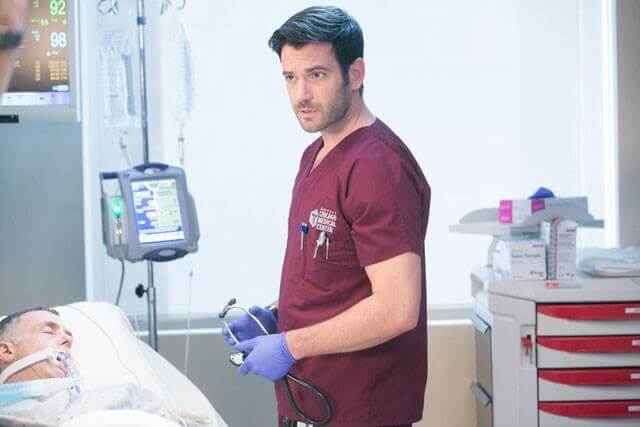
Colin Donnell in Chicago Med Season 1
Colin Donnell as Dr. Connor Rhodes in ‘Chicago Med’ (Photo by Elizabeth Sisson/NBC)

Season one of NBC’s Chicago Med starring Colin Donnell, Torrey DeVitto, and Oliver Platt is currently airing on Tuesday at 9pm ET/PT, quickly becoming an important part of the Chicago P.D. and Chicago Fire universe the network’s established. Storylines merge and casts crossover to guest starring appearances among the three shows, opening up the Chicago world to more detailed, complex stories.

NBC presented a Chicago Med/Chicago Fire/Chicago P.D. panel at the Television Critics Association 2016 event in Los Angeles and following the panel Chicago Med‘s Colin Donnell spoke with a small group of reporters about being a part of a medical drama and joining NBC’s Chicago world.

Colin Donnell Interview:

Were you a fan of medical shows before Chicago Med?

Colin Donnell: “I was a huge fan of ER, Chicago Hope. I would be lying if I said I have many, many shows that I sit down and watch end to end. But ER has always been one that stuck in my brain. I don’t know if I ever pictured myself being a doctor on TV, but I’m happy to be one. My wife even got me a shirt that says, ‘I’m not a doctor. I just play one on TV.’ It feels a little weird wearing it now, but…

What’s great about these shows and what’s so unique, obviously, if you take a look at the pictures is that there’s a huge family of people out there. And when you start to be able to blend all of those stories together, it becomes something way beyond just a medical show. It becomes something truly about people that are running a hospital.”

How are you doing with the jargon?

Colin Donnell: “I’m pretty good. I’m getting better. Doing tongue-twisters as a kid I think is helping out.”

Police shows and medical shows are so popular. Did you think one would come your way?

Colin Donnell: “Yeah. I mean, I’ve got to say TV is sort of still a new thing for me so Arrow was my first one – or Pan Am if you want to go back a little bit further. So, I’m just happy to be working in television, honestly. I’ve always felt like sort of a theatre gypsy and I was happy to be working there. And then all of a sudden when these opportunities started presenting themselves, it was, ‘Sure, I’ll play a reporter. Sure, I’ll play a billionaire playboy. Sure, I’ll play be a drug addict coke dealer.’ I just have a great time.”

Isn’t it the great drama of medical shows that no matter what symptoms you’re dealing with, every patient is different? You could deal with the same disease and still tell different stories.

Colin Donnell: “The beauty of being a medical show and the reason I think they’ve been around so long is that there is such a depth to the well of stories that we can draw from. And exactly as you said, no two problems are ever the same. You look at the common cold on one person and they can be five years-old and perfectly healthy within five minutes, and then you can have the same common cold in somebody who’s 85 years old and it’s a life-threatening illness. So, it’s cool. And we’re dealing with all of these things that go beyond just the medicine. Really, we’re starting to tackle issues of health care and it’s really cool. There’s a wealth of storylines to start drawing from that.”

Part of the medical show relationships is that the doctor gets close to the patient for one week, and then they’re gone. Do you get close to the guest stars and then they’re gone?

Colin Donnell: “Certainly. We’ve been really, really blessed with a great group of people who are willing to come on and be poked and prodded by us. We have a great time. Some of the stuff that we’re doing lately is carrying over over multi-episode arcs and it’s great to have those people around. I love to be able to tell a story over multiple episodes. People don’t always get better in a day, so to be able to carry some of these same patients through one, two, three, four episodes is a privilege. We’ve been blessed with some really wonderful actors.”

Can you talk about all the interaction between all of the characters in the hospital? It seems like it’s this big web of characters.

Colin Donnell: “It is. I can’t speak highly enough about the cast, first and foremost. The way that they set up the show is that there’s a huge, wide, spread of different characters from administrative to psychiatry to surgery to trauma to ED to students, nurses, we have the whole gamut in the hospital. We have a good time. We have a real good time with each other; we personally love hanging out with each other. Before we ever set foot here, I heard so much about how the Fire set was such a lovely group of people. I was like, ‘That can’t be actually true,’ but it is. Because of them and the way that they set things up, it’s really been a wonderful filtering down process of informing how it’s supposed to go around here. It’s like we are here and we’re all making great television and we’re all going to have a great time doing it. You come in, you do your work, you go home to your family – or you go out and grab a drink and have a good time.”

Is there any chance you can come back on Arrow?

Colin Donnell: “As far as I know nothing’s in the works. I’ve been a little busy getting this guy off the ground.”

Did landing this show force them to resolve your arc maybe earlier than it would have resolved otherwise?

Colin Donnell: “You know, I don’t know if they ever really had long-term plans for anything with Tommy. Certainly they’ve always been happy for me for my successes, and happy to see me go off and do all sorts of things. Hopefully we can have a conversation and maybe squeeze in a couple of episodes here and there, if they’ve got ideas.”

‘Jessica Jones’ is Renewed for Season 2 and Netflix Sets Premiere Dates for 11 Series

Krysten Ritter Photo from Jessica Jones
Krysten Ritter stars in ‘Jessica Jones’ (Photo Credit: Netflix)

Netflix confirmed Marvel’s Jessica Jones starring Krysten Ritter will return for a second season. Jessica Jones also stars David Tennant, Mike Colter, Rachael Taylor, Carrie-Anne Moss, Eka Darville, Erin Moriarty, and Wil Traval, and has Melissa Rosenberg (Twilight) on board as the showrunner and executive producer. Liz Friedman and Jeph Loeb also executive produce.

Netflix also announced the premiere dates for a slew of original programs and revealed the two leads for one of the Black Mirror episodes. Gugu Mbatha-Raw (Concussion) and Mackenzie Davis (The Martian) will star an episode with Owen Harris (Kill Your Friends) set to direct. Charlie Brooker created and is writing the series and will executive produce with Annabel Jones.

Netflix Premiere Dates:

Flaked – Premieres globally Friday, March 11, 2016 at 12:01am PT
Flaked is the serio-comic story of Chip, a celebrated long-time resident of the insular world of Venice, California who falls for the object of his best friend’s fascination. Soon the tangled web of half-truths and semi-bullshit that underpins his all-important image and sobriety begins to unravel. Five-time Emmy Award nominee Will Arnett plays Chip, a man doing his honest best to stay one step ahead of his own lies. The series also stars David Sullivan, Ruth Kearney and George Basil. Executive producers Will Arnett and Mark Chappell (The Increasingly Poor Decisions of Todd Margaret) co-created and co-wrote the 8-episode series. Ben Silverman(Founder and Chairman of Electus), Peter Principato and Mitch Hurwitz (Arrested Development) also serve as executive producers on the show. Electus and Principato-Young are providing production services.


The Ranch – First 10-episodes premiere globally Friday, April 1, 2016 at 12:01am PT
Set in present day on a Colorado ranch, this multi-camera comedy series stars Ashton Kutcher, Danny Masterson, Sam Elliott and Debra Winger. The show follows Colt’s (Kutcher) return home after a brief and failed semi- pro football career to run the family ranching business with his older brother Jameson “Rooster” (Masterson) and father Beau (Elliott), whom he hasn’t seen in 15 years. Winger stars as Colt’s and Rooster’s mother, Maggie, who runs the local town bar. The Ranch is executive produced by Don Reo (Two and Half Men, My Wife and Kids) and Jim Patterson (Two and a Half Men, Mike and Molly). Kutcher and Masterson serve as executive producers and co-executive producer respectively.

Lost & Found Music Studios – Premieres globally on Friday, April 1 at 12:01am PT
As part of the expanding slate for tweens and teens, Lost & Found Music Studios is a live action series about a group of talented teenage musicians who struggle to find their authentic sound and place in the world as they hone their craft at a prestigious music studio. In each episode, young artists navigate the ups and downs of the music industry, as they find their way to love, inspiration, and redemption. After all, the next hit song could be just one heartbreak away.

Unbreakable Kimmy Schmidt – Second installment premieres globally Friday, April 15, 2016 at 12:01am PT
After living in a cult for fifteen years, Kimmy (Ellie Kemper – The Office) decides to reclaim her life and start over in New York City. Armed with just a backpack, light-up sneakers, and a couple of way-past-due library books, she’s ready to take on a world she didn’t even think existed anymore. Wide-eyed but resilient, nothing is going to stand in her way. She quickly finds a new job (working for 30 Rock‘s Jane Krakowski), a new roommate (Tituss Burgess – 30 Rock), and a new beginning. The cast also includes Lauren Adams, Sara Chase, Sol Miranda and Emmy winner Carol Kane (Taxi). The first season of this acclaimed comedy was nominated for an Emmy® award.

Kong: King of the Apes – Premieres globally on Friday, April 15, 2016 at 12:01am PT
This animated TV series for kids from Executive Producer Avi Arad, this is a fresh and modern take on the classic King Kong story. Set in 2050, KONG is still the strongest creature ever born with many human traits that make him the ultimate iconic hero. In KONG, the future looks bright for San Francisco’s Alcatraz Island since its transformation into the most impressive Natural History and Marine Preserve on the planet. But when the star attraction suddenly goes ape and KONG becomes public enemy number one, the villain that framed him is free to unleash an army of gigantic robotic dinosaurs on the unsuspecting world. Ironically, KONG is the only force formidable enough to stop these super-powered dinosaurs and the evil genius manipulating them. But KONG is now the world’s most hunted fugitive. Fortunately, there are three young humans who know the truth and are willing to risk their lives to help KONG evade capture, while he battles to save humankind.

Marseille – Premieres globally Friday, May 5, 2016 at 12:01am CET
As the municipal elections approach in Marseille, Robert Taro, the city’s Mayor for the last twenty years, prepares his last coup: push through the vote for the construction of a casino in the historic center of the Marina. Nothing has been left to chance, and his successor, Lucas Barrès, is already designated. But the latter’s all-consuming ambition and the secret interests of the city’s leaders, whether they come from its opulent villas or from the cities of the northern suburbs, impede the Mayor’s plans. The race for Mayor becomes a power struggle where no holds are barred. Only one question arises: how far will they go?

The cast includes Gérard Depardieu (Robert Taro), Benoît Magimel (Lucas Barrès), Géraldine Pailhas (Rachel Taro), Nadia Farès (Vanessa d’Abrantès), Stéphane Caillard (Julia), Jean-René Privat (Cosini), Guillaume Arnault (Eric), Hedi Bouchenafa (Farid), Carolina Jurczak (Barbara), and Nassim Si Ahmed (Selim). Marseille is written by Dan Franck who serves as Executive Producer. Florent Siri, director of episodes 1-4, also serves as Executive Producer. Thomas Gilou is the director of episodes 5-8. Marseille is produced by Paris-based Federation Entertainment, led by Pascal Breton, producer of the hit French series Dolmen and Sous le Soleil.

Grace and Frankie – Second installment premieres globally Friday, May 6, 2016 at 12:01am PT
Jane Fonda and Lily Tomlin star as Grace and Frankie, two women whose lives are suddenly turned upside down when their husbands, played by Martin Sheen (“Robert”) and Sam Waterston (“Sol”), reveal they are gay and leave them for each other. Both sparring partners and partners-in-crime, they form an unlikely bond to face an uncertain future together and discover a new definition of “family,” with laughter, tears and plenty of mood enhancers along the way. From executive producers Marta Kauffman (Friends) and Howard J. Morris (Home Improvement), the hilarious and heartbreaking comedy takes on aging with gusto – from joint pain to joint rolling and blind dates to night blindness – and offers a poignant look at how life’s turning points show us who we really are. The series also stars Brooklyn Decker, Ethan Embry, Baron Vaughn and June Diane Raphael. In addition to Kauffman and Morris, the series is also executive-produced by David Ellison, Dana Goldberg and Marcy Ross from Skydance Productions, along with Paula Weinstein and Fonda and Tomlin.

Word Party – Premieres globally on Friday, June 3 at 12:01am PT
A vocabulary building show for preschoolers from The Jim Henson Company, Word Party follows four adorable baby animals as they sing, dance and play. The show invites our youngest viewers to help teach the baby animals new words, learn these new words themselves, and even celebrate these achievements with a “Word Party!” Word Party is produced using the groundbreaking Henson Digital Puppetry Studio, a proprietary technology from Jim Henson’s Creature Shop that allows puppeteers to perform digitally animated characters in real time – enabling the animation to be more lifelike and spontaneous.

Orange is the New Black – Fourth installment premieres Friday, June 17, 2016 at 12:01am PT
Ready to do a little more time with the ladies of Litchfield? The outrageous, award-winning and critically-acclaimed series from EmmyⓇ Award winner Jenji Kohan stars Taylor Schilling, Uzo Aduba, Laura Prepon, Kate Mulgrew, Natasha Lyonne, Laverne Cox, Dascha Polanco, Michael Harney, Danielle Brooks, Taryn Manning, Selenis Leyva, Yael Stone, Nick Sandow, Samira Wiley, Lea DeLaria, Jackie Cruz, Elizabeth Rodriguez and Adrienne Moore. Lionsgate Television produces the series.

Stranger Things – Premieres globally Friday, July 15, 2016 at 12:01am PT
The new drama series written and directed by Matt Duffer and Ross Duffer (Wayward Pines, Hidden) consists of eight, one-hour long episodes. In the series, a young boy vanishes into thin air. As friends, family, and local police search for answers, they are drawn into an extraordinary mystery involving top secret experiments, terrifying supernatural forces, and one very strange little girl. The series, set in Indiana, is a love letter to the ‘80s classics that captivated a generation.

Stranger Things stars Winona Ryder (Show Me a Hero), David Harbour (Suicide Squad), Finn Wolfhard (The 100), Millie Brown (Once Upon A Time), Gaten Matarazzo (The Blacklist), Caleb McLaughlin, Noah Schnapp (Bridge of Spies), Natalia Dyer (After Darkness), Charlie Heaton (Shut In), and Matthew Modine (Weeds). The Duffer Brothers are writing, directing and showrunning the series, and will serve as executive producers along with Shawn Levy and Dan Cohen via their 21 Laps entertainment banner.

The Get Down – Part-one premieres globally Friday, August 12, 2016 at 12:01am PT
The first six episodes of Baz Luhrmann’s all-new music-driven drama, from Sony Pictures Television, will focus on 1970s New York City – broken down and beaten up, violent, cash strapped — dying. Consigned to rubble, a rag-tag crew of South Bronx teenagers are nothings and nobodies with no one to shelter them – except each other, armed only with verbal games, improvised dance steps, some magic markers and spray cans. From Bronx tenements, to the SoHo art scene; from CBGBs to Studio 54 and even the glass towers of the just-built World Trade Center, The Get Down is a mythic saga of how New York at the brink of bankruptcy gave birth to hip-hop, punk and disco — told through the lives and music of the South Bronx kids who changed the city, and the world…forever.

Luhrmann, director of Moulin Rouge!, Romeo + Juliet, and The Great Gatsby, will direct the first episode and serve as executive producer, overseeing all creative aspects of the show. Joining him on the creative team are four-time Academy-Award winner Catherine Martin, along with Pulitzer Prize-winning writer Stephen Adly Guirgis (The Motherf***er With The Hat) and hip-hop historian and writer Nelson George, and a trio of the pioneers of hip-hop: Grandmaster Flash, DJ Kool Herc, and Afrika Bambaataa, each of whom will also be portrayed on the series. The cast includes Shameik Moore, Justice Smith, Herizen Guardiola, Skylan Brooks, Tremaine Brown Jr., Yahya Abdul-Mateen II, Jimmy Smits, Giancarlo Esposito and Jaden Smith.

‘Vinyl’ – Ray Romano Interview on HBO’s New Drama Set in the ’70s

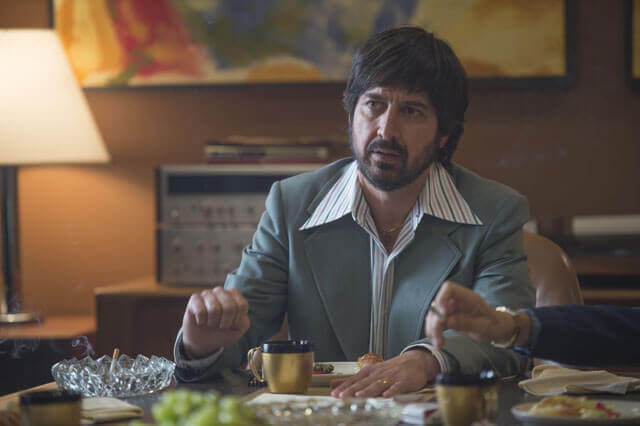
Ray Romano in Vinyl
Ray Romano stars in ‘Vinyl’ (Photo: Macall B. Polay/HBO)

HBO’s new series Vinyl takes an inside look at the music business in the 1970s. With executive producers Mick Jagger and Martin Scorsese, there are a wealth of both music aficionados and historians behind the scenes. In front of the cameras, Bobby Cannavale stars as Richie Finestra, a struggling record executive looking for a breakout act.

In a surprising turn, Ray Romano plays one of Finestra’s partners, Zak Yankovich. Zak is a more conservative businessman, sometimes a voice of reason and sometimes downright opposition to Finestra. Romano was part of a Vinyl panel for the Television Critics Association and afterwards he stuck around speaking to press about the show. Vinyl premieres February 14, 2016 on HBO.

Ray Romano Interview:

You’ve said Vinyl is so cool it seems surreal. Is there a sense of coolness on this that hasn’t been on your other projects?

Ray Romano: “I don’t even think you have to ask that question. Mick Jagger, snorting fake coke, hanging out with hookers, beating up Bobby Cannavale – we go at it one episode – this is like nothing I’ve ever done. Nothing this edgy and dark as this, and there’s humor also.”

Men of a Certain Age was a little dark.

Ray Romano: “It had an edge to it, but that character was flawed but not as flawed as this guy. From the pilot you can’t really see how deep and dark it gets for my character, but it gets pretty cool in that sense.”

Working with icons like Martin Scorsese and Mick Jagger, what were the cool things you learned about them?

Ray Romano: “Mick, I only met once, but for Marty, first of all, I knew he was a genius when it came to films and all and his knowledge of films, but I had no idea. Every conversation we had he’d reference an old movie from the ‘50s. I told him I went to Sicily with my wife and the watermelon man woke us up in the morning. He’s like, ‘Oh, that’s just like such and such a movie.’ The next day in my dressing room the DVD of that movie would be there. He’d have somebody get it. So, just to talk to him and the wealth of knowledge…he knew I didn’t know anything but he loved to talk about it. And also he would let us do our thing acting-wise. He opened it open to us and let us improvise here and there, so that was very cool. The energy and the enthusiasm he has… Again, I’d never met him so it was all exciting to experience.”

This is set in the wild music scene in the ’70s. Have you experienced anything like what goes on in this series during your career?

Ray Romano: [Laughing] “No, just my wife’s spending of my money. But, no, I never lived in the fast lane like that. As far as that end of it goes, my story’s kind of boring. I snorted coke for the first time on this show and it was fake coke. I never did it in my life. So, it’s fun to play it but I don’t have anything to draw on really.”

What is it that you guys are snorting?

Ray Romano: “It’s like a lactose/lactate powder. Some form of milk powder.”

What’s your relationship to music as an actor?

Ray Romano: “My mother’s a Juilliard graduate. She studied to be a concert pianist and then she gave it up to have a family, so she taught for 50 years. She taught us piano. We play a little piano. I play drums. I annoyed my parents for a little bit. But, otherwise, I like all types of music. I can’t specify one. But I am a rock ballad guy.”

How much music do you hear on the set?

Ray Romano: “If you’re there, you can hear anything. Anytime I see a cool scene, even that I’m not in and it involves a musician playing anything, I record it on my phone and send it to my kids. In a scene with Janis Joplin, there’s a woman singing Janis Joplin and they’re playing the music. And Marty would play music before every scene. For every scene he would crank up the music just to get the energy going.”

What’s the best music to get lucky to?

Ray Romano: “I lost my virginity to the first three minutes of ‘Stairway to Heaven,’ so try that one.”

What were you looking for when you got this project?

Ray Romano: “It was 10 years since Raymond and [my reps] knew I wasn’t going to do a sitcom again. They knew I didn’t want to do a straight wall-to-wall comedy as far as a movie or whatever, but a drama – an indie dramedy – would have been fine. I did Parenthood, Men of a Certain Age, something like that. So this, my agent just sent me the script. ‘See if you like this role and I’ll see if they’re interested.’ The cool thing was Marty had never heard of me, never saw me. So when I sent my audition tape, he was seeing me for the first time. That was like a blessing in disguise.”

You said they knew you were never going to do a comedy again?

Ray Romano: “A sitcom. I think I can safely say I’m never going to do a multi-camera sitcom because I did it. I don’t want to have to follow what I did. If that’s my legacy, that’s fine. I want to comedy again; I love doing comedy and I did comedy in this. But multi-cam I’m happy with the way I left it.”

Are you happy for that to be your legacy?

Ray Romano: “I want to still work. I want to keep it going. I don’t mind that that’s part of it. I don’t mind that that’s the genre, I made my mark in that genre. But, yeah, I’m happy that I’m doing something. I’m not going to retire, really, so I’d like to do something great again.”

Do you still do standup?

Ray Romano: “I still do standup. I don’t do it very much but one thing good about this was it filmed in New York so I got to hang out at the clubs where I started. I was five blocks from the Comedy Cellar down in the Village where I started, so I would go on the nights I wasn’t working. I would go down and I came up with some good new material. That’s always exciting. I still play Vegas three or four times a year, five times a year, and I do a lot of charities.”

More on Vinyl:
Interview with Olivia Wilde

Trending