Apple TV+ is showing off the first teaser from The Studio, a new half-hour comedy starring Seth Rogen as a movie studio head. Rogen also writes, directs, and executive produces along with Evan Goldberg.
The 10-episode season also stars Catherine O’Hara, Kathryn Hahn, Ike Barinholtz, and Chase Sui Wonders. Bryan Cranston pops in as a guest star.
“In The Studio, Seth Rogen stars as Matt Remick, the newly appointed head of embattled Continental Studios. As movies struggle to stay alive and relevant, Matt and his core team of infighting executives battle their own insecurities as they wrangle narcissistic artists and craven corporate overlords in the ever-elusive pursuit of making great films,” reads Apple TV+’s synopsis. “With their power suits masking their neverending sense of panic, every party, set visit, casting decision, marketing meeting, and award show presents them with an opportunity for glittering success or career-ending catastrophe. As someone who eats, sleeps, and breathes movies, it’s the job Matt’s been pursuing his whole life, and it may very well destroy him.”
The Studio will premiere on March 26, 2025, with the release of the first two episodes. New episodes stream on Wednesdays.
Rogen, Goldberg, Peter Huyck, Alex Gregory, and Frida Perez created the series. Executive producers include James Weaver, Alex McAtee, and Josh Fagen.
It’s only a minute long but the first How to Train Your Dragon teaser trailer confirms so many elements about the live-action version. Toothless is basically Toothless from the animated films, Hiccup looks like fans expect him to, and even the finger placement as Hiccup touches Toothless for the first time matches the animated original. (A YouTube commenter pointed that out.)
Mason Thames (The Black Phone), Nico Parker (The Last of Us), Nick Frost (Truth Seekers), Julian Dennison (Deadpool 2), and Gabriel Howell (Bodies) star. The cast also includes Bronwyn James (Wicked), Harry Trevaldwyn (Smothered), Ruth Codd (The Midnight Club), Peter Serafinowicz (Guardians of the Galaxy), and Murray McArthur (Game of Thrones).
Gerard Butler reprises his role as Chief Stoick the Vast from the animated films for the live-action adaptation.
“On the rugged isle of Berk, where Vikings and dragons have been bitter enemies for generations, Hiccup (Thames) stands apart. The inventive yet overlooked son of Chief Stoick the Vast (Gerard Butler, reprising his voice role from the animated franchise), Hiccup defies centuries of tradition when he befriends Toothless, a feared Night Fury dragon. Their unlikely bond reveals the true nature of dragons, challenging the very foundations of Viking society,” reads Universal Pictures’ synopsis. “With the fierce and ambitious Astrid (Parker) and the village’s quirky blacksmith Gobber (Frost) by his side, Hiccup confronts a world torn by fear and misunderstanding.
As an ancient threat emerges, endangering both Vikings and dragons, Hiccup’s friendship with Toothless becomes the key to forging a new future. Together, they must navigate the delicate path toward peace, soaring beyond the boundaries of their worlds and redefining what it means to be a hero and a leader.”
The How to Train Your Dragon trilogy director Dean DeBlois wrote, directed, and produced this live-action version. Marc Platt and Adam Siegel also serve as producers.
How to Train Your Dragon will open in theaters on June 13, 2025.
Is Valentine’s Day the perfect time to launch season three of Yellowjackets? Paramount+ with Showtime seems to think so, announcing the upcoming season will premiere on February 14, 2025 with the release of the first two episodes.
New episodes will stream on Fridays.
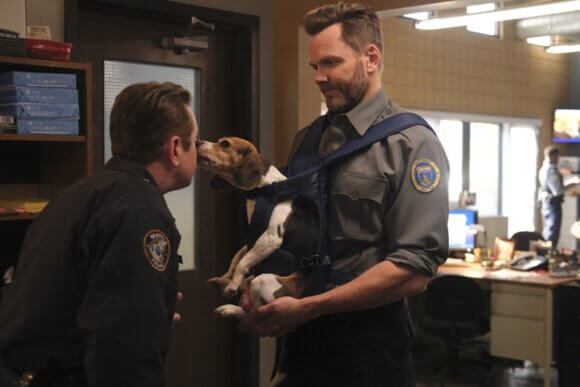
The season three premiere date announcement also confirmed two-time Oscar winner Hilary Swank (Million Dollar Baby, Boys Don’t Cry) and Animal Control‘s Joel McHale are on board as guest stars. They join returning series stars Critics Choice Award winner Melanie Lynskey as Shauna, Emmy nominee Christina Ricci as Misty, and Tawny Cypress as Taissa. Sophie Nélisse is Teen Shauna, Jasmin Savoy Brown is Teen Taissa, Sophie Thatcher is Teen Natalie, Samantha Hanratty is Teen Misty, and Courtney Eaton is Teen Lottie.
The cast also includes Liv Hewson as Teen Van, Steven Krueger as Ben Scott, Warren Kole as Jeff, Kevin Alves as Teen Travis, Lauren Ambrose as Van, and Simone Kessell as Lottie. Elijah Wood reprises his recurring role as Walter.
Sophie Thatcher as Teen Natalie and Kevin Alves as Teen Travis in ‘Yellowjackets’ season 2 episode 2 (Photo Credit: Kailey Schwerman / SHOWTIME)
“Created by Ashley Lyle and Bart Nickerson (Narcos), Yellowjackets is the saga of a team of wildly talented high school girls soccer players who become the (un)lucky survivors of a plane crash deep in the remote northern wilderness,” reads Showtime’s synopsis. “The series chronicles their descent from a complicated but thriving team to savage clans, while also tracking the lives they’ve attempted to piece back together nearly 25 years later, proving that the past is never really past and what began out in the wilderness is far from over.
Equal parts survival epic, psychological horror story and coming-of-age drama, the 10-episode third season will pick up in the aftermath of the dramatic season two finale.”
Lyle, Nickerson, and Jonathan Lisco are the season three showrunners and serve as executive producers. Additional executive producers include Drew Comins, Jeff W. Byrd, Sarah L. Thompson, Ameni Rozsa, and Brad Van Arragon.
National Geographic’s ‘Meet the Planets’ (Credit: Shutterstock / Anterovium)
Nat Geo is moving forward on four unscripted series, including Surviving Pompeii featuring two-time Emmy nominee Tom Hiddleston. The just-announced slate of National Geographic projects also includes The Real Finding Nemo, Meet the Planets, and Diana: One Day in Paris.
“These new unscripted series epitomize everything National Geographic stands for — bold, captivating storytelling rooted in world-class research and expertise,” stated Tom McDonald, executive vice president of Global Unscripted and Factual Content. “Whether it’s the cutting-edge innovation of The Real Finding Nemo (working title), the storytelling panache of Surviving Pompeii (working title), the sweeping ambition of Meet the Planets (working title), or the unparalleled access in Diana: One Day in Paris, National Geographic is building on its reputation as the home of the most distinctive factual series from the very best storytellers in the world.”
Nat Geo’s New Unscripted Series Details
THE REAL FINDING NEMO (Working Title)
Following the success of the Disney+ Original series A Real Bug’s Life comes THE REAL FINDING NEMO (working title), an intimate and entertaining journey through the thrilling underwater world of charming characters where life is filled with epic drama and relatable life situations. Inspired by Pixar’s smash hit film, this series will immerse viewers in the intricate dynamics of life on the reef and beyond as the underwater citizens engage in friendship, deception, romance, and resilience.
From Freeborne Media along with the world’s best underwater cinematographers, our ocean characters will transport viewers into the world below with themes that are relevant to sea creatures and human creatures alike. Dive into a clownfish’s epic quest, the unpredictable danger-filled “drop-off,” and experience the everyday jobs that keep Reef City alive like any thriving metropolis in the human world.
‘Surviving Pompeii with Tom Hiddleston’ on Nat Geo (Credit: Shutterstock / Tunatura)
SURVIVING POMPEII WITH TOM HIDDLESTON (Working Title) (Plimsoll Productions) Tom Hiddleston brings his passion for ancient history to life in SURVIVING POMPEII WITH TOM HIDDLESTON (working title), produced by Plimsoll Productions. Continuing his partnership with Loki executive producer Kevin R. Wright on this original concept, Hiddleston leads a groundbreaking historical exploration that immerses audiences in the eruption of Vesuvius in 79 A.D. and the hauntingly preserved Roman city it left behind.
SURVIVING POMPEII (working title) is a creatively ambitious meld of documentary and drama on a journey into the past that is still echoed in the present. Hiddleston, who studied Classics at Cambridge University and is a dedicated enthusiast of ancient history, embarks on a detective-like quest, breathing life back into the lost voices of Pompeii’s people. Each episode uncovers real stories hidden for centuries, revealing the extraordinary instants of everyday life that allow us to touch the humanity of those who lived almost 2,000 years ago.
Through richly emotional narratives, Hiddleston unveils a remarkably modern city and brings to light the lives of ordinary Romans — not just the elite — showing how their resilience and choices still echo in our world today. SURVIVING POMPEII (working title) is both a forensic investigation and a deeply empathetic experience, drawing viewers into a meticulous, minute-by-minute retelling of Pompeii’s final moments. This is history as you’ve never seen it: captivating, urgent and profoundly human.
MEET THE PLANETS (Working Title) (Maximum Effort, BBC Studios Science Unit)
From Ryan Reynolds’ Maximum Effort and the Emmy Award-winning BBC Studios Science Unit comes MEET THE PLANETS (working title), an astronomy series that brings the galaxy’s most famous family to life, with the sun as the matriarch, surrounded by her unruly planetary children. The first series of its kind, MEET THE PLANETS (working title), will collide mind-blowing science with sharp scripted comedy and original animation, allowing the planets to speak for themselves.
DIANA: ONE DAY IN PARIS (72 Films) DIANA: ONE DAY IN PARIS is a three-part documentary series exploring the tragic death of Princess Diana on the 30th anniversary of that fateful paparazzi car chase through a Parisian motorway tunnel. Produced by the team behind the critically acclaimed 9/11: One Day in America and JFK: One Day in America, the series will use the One Day In… franchise’s trademark present-tense approach that bypasses conspiracy theories in favor of factual accuracy. It will uncover new insights using rare archives and interviews with witnesses who have never spoken publicly. This landmark series will look at the 24 hours before and after Diana’s death in forensic detail and follow the story through to her funeral one week later when the world mourned the passing of an icon.
SNL‘s Vanessa Bayer guest stars on a special Christmas-themed episode of CBS’s Elsbeth. Season two episode six, “Gold, Frankincense and Murder,” will air on Thursday, December 5, 2024 at 10pm ET/PT.
Carrie Preston stars as Elsbeth Tascioni, Wendell Pierce stars as Captain C.W. Wagner, and Carra Patterson is back as Officer Kaya Blanke. Robert King, Michelle King, Liz Glotzer, and Jonathan Tolins serve as executive producers.
“Gold, Frankincense and Murder” Plot: Celebrity Christmas curators Dirk and DeeDee Dashers (Vanessa Bayer) go from tinsel to tragedy after Dirk is killed in a freak accident and Elsbeth begins to suspect his wife is behind the death. Meanwhile, Elsbeth gets a holiday surprise courtesy of Wagner and Kaya. Dan Bucatinsky guest stars as Kidder Hawes, super agent for the Dashers’ empire. Rachel Raimist directs from a script by Erica Larson.
Emmy Award winner Carrie Preston is back as Elsbeth Tascioni, the astute but unconventional consent decree attorney working with the NYPD to catch New York’s most well-heeled murderers utilizing her unique point of view. Season two of the critically acclaimed series brings new cases and challenges when mistakes of the past come back to haunt Elsbeth, her boss Captain Wagner (Pierce), and detective in training Officer Kaya Blanke (Patterson).
Donna Murphy, Teddy Sears, and Zachary Quinto in ‘Brilliant Minds’ episode 8 (Photo by: Rafy/NBC)
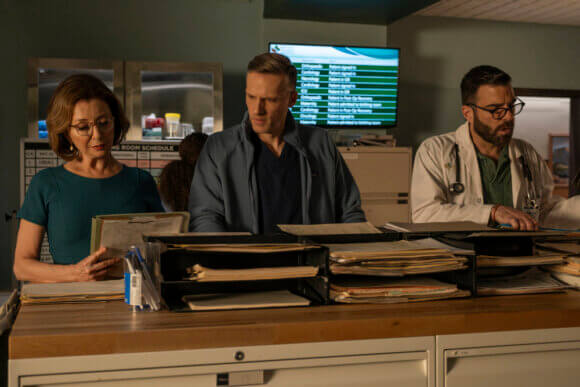
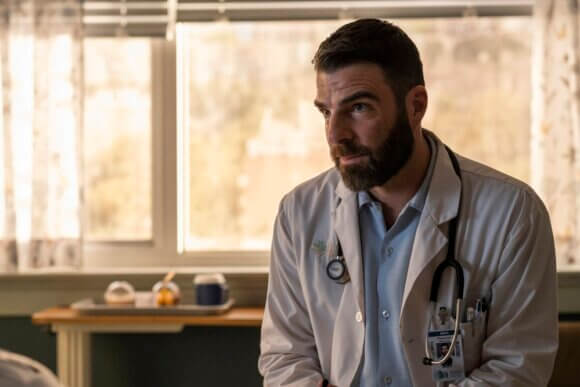
NBC’s Brilliant Minds episode eight opens with Dr. Oliver Wolf (Zachary Quinto) thinking about what motivates us to carry on, even on our worst days. His opinion? It’s all about desire. When we get what we want, our brain gives us dopamine – the neurotransmitter that creates pleasure.
Dr. Ericka Kinney (Ashleigh Lathrop) and Dr. Jacob Nash (Spence Moore II) engage in a little flirting, but what catches Dr. Carol Pierce’s (Tamberla Perry) attention is the look that passes between Oliver and Dr. Josh Nichols (Teddy Sears).
In other news, the tension between Oliver and his mom, Dr. Muriel Landon (Donna Murphy), is so thick you could cut it with a knife.
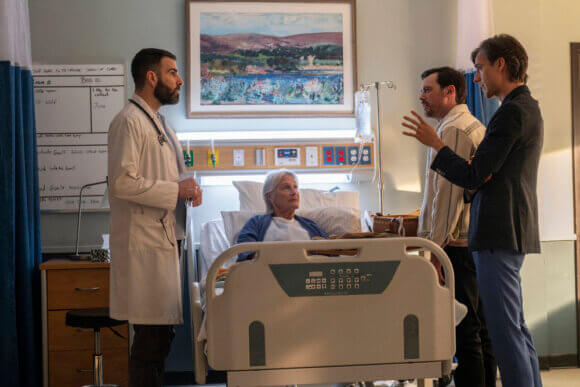
Episode eight’s titular case involves June Sullivan (Susan Nimoy), an elderly woman whose two adult sons are concerned she may have dementia. Her assisted living facility asked her to leave because she’s been going into other residents’ rooms at night. She gets aggressive when they return her to her room. June thinks it’s all nonsense, and her sons are embarrassed when she suggests Dr. Wolf looks like a younger version of their dad. June wonders if Oliver gives his mom a hard time, too.
A flashback shows a teenage Oliver being rude to his mom and Tom, a med student from Oxford who came to stay at their house.
Carol speaks with patient Alison Whitaker (Julia Chan), a PhD student at NYU who’s having difficulty refraining from contacting her ex. Alison’s an intelligent woman who hates feeling weak when it comes to men. She mentions Carol’s private life and confesses she googled her while doing research. Carol’s a little put off by that admission.
Dr. Dana Dang (Aury Krebs) and Ericka tell their fellow interns, Jacob and Dr. Van Markus (Alex MacNicoll), that June’s living facility did indeed kick her out. And, it turns out, she left with a literal bang – sleeping with half the male residents before being booted. They run through the list of medical conditions that could cause hypersexuality, including dementia. Ericka suggests they admit her to find out what’s really going on.
And now, about 10 minutes in, it’s confirmed Dr. Oliver Wolf and Dr. Josh Nichols are really, really into each other. Oliver closes his blinds and locks the door before he and Josh get caught up in a passionate kiss. The scene ends before we’re treated to what comes after the kiss!
Oliver speaks with June about her sex life and learns she and her husband had a healthy one. He was her first and only until a year ago when he died. Since then, she’s been exploring her sexuality. She doesn’t feel sick; she’s just enjoying herself now that she’s single and doesn’t have children to raise.
Oliver and the interns discuss June’s case and Jacob’s fully supportive of her sexual activities. Ericka remains convinced it’s a symptom of a disease, while Dana thinks June’s just “finding herself.” Oliver suggests they need to confirm the root cause with a series of tests.
Oliver and Josh relax over lunch and discuss June, similar cases, and Josh’s preference for a fork over chopsticks when eating noodles. (How cute!)
Another flashback shows Oliver apologizing to Tom for being rude and offering to show him around the city.
Zachary Quinto, Susan Nimoy, Jim Watson, and Kristopher Turner in ‘Brilliant Minds’ episode 8 (Photo by: Rafy/NBC)
June’s results are back and Ericka and Dana inform Oliver everything is normal. Suddenly, they receive a stat page from June’s room. Her sons are there and explain that they were talking when she stopped making sense. Oliver recognizes the word salad as Wernicke’s Aphasia, and she may be having a stroke. Oliver orders an immediate CT scan, and it confirms she had a transient ischemic attack (a mini-stroke).
Oliver assures her sons that she should recover quickly and get her speech back. However, TIA is a warning sign that she could have a full stroke soon. He asks about what their mom was like before their dad passed, and they describe her as kind and caring. She was healthy except for a period decades ago when she and their dad got sick for weeks. Their parents had high fevers, and their dad even lost some hair. Oliver latches on to that and wants to perform a lumbar puncture on their mom to zero in on a diagnosis.
Ericka provides June with info on the spinal tap, and June admits that sex is the only activity that makes her feel young. Ericka thinks a brisk walk would do the same thing. June’s surprised when Ericka says she’s gone without dating and sex for three years and admits she went without sex for the last decade of her marriage. She warns Ericka not to make the same mistake.
A flashback shows Tom and Oliver having a great time at the beach. Tom asks about Oliver’s dad and Oliver explains he died four years ago. Oliver’s happy to have someone to discuss it with since his mom avoids the topic. A montage of scenes shows Oliver and Tom spending more time together and growing closer.
Carol asks Dana to try and find Alison Whitaker, her patient who’s gone radio silent. Dana suggests that Carol check the hospital’s records, and Carol sees her listed as Alison Zhang-Whitaker. Dana googles her and finds a photo of Alison with Carol’s husband. Also, she’s a med student at Columbia, not NYU.
Oliver informs June that she has neurosyphilis from an untreated case of syphilis from decades ago. It spread to her central nervous system and caused hypersexuality. That’s why it’s called Cupid’s disease. If not treated, it can be fatal.
June’s disappointed that what she’s been feeling is due to a disease.
June’s sons are shocked by the diagnosis, and June is forced to admit their father cheated on her. She remained in the marriage because she loved him. Her sons had no idea and apologize. However, they disagree with her decision not to seek treatment. June loves being sexually awake and doesn’t care that the condition could kill her. She’s 80 years old and wants to feel alive. (#TeamJune)
Oliver and June have a private talk, and Oliver doesn’t try and change her mind. He believes it’s possible her sons may come around. Oliver notices something and has June copy a simple design.
The interns debate June’s decision, which turns into a discussion on sex and emotional intimacy. Ericka seems surprised when Jacob says it’s over if there’s no physical connection between two people. On the other hand, Van prefers the emotional intimacy of a relationship.
Oliver and Josh step into the elevator and an update on June leads to kissing, which leads to the door opening while they’re kissing. Which leads to Oliver’s mom catching them. They look like embarrassed teenagers when she joins them in the elevator without saying a word.
Oliver shows June’s sons her drawing, which doesn’t resemble his example. Instead, she’s made Oliver’s simple box design into a beautiful drawing with flowers. The disease unlocked something in June; it’s an awakening. The sons understand but can’t get on board with their mom choosing to die instead of seeking treatment. They ask her to consider her grandkids, and June changes her mind. She promises to do anything to get better for her sons, and one of her boys reveals he wants her to move in with him and his daughters.
Ted Sutherland and Andrew Hornton in ‘Brilliant Minds’ episode 8 (Photo by: Rafy/NBC)
Once more to a flashback we go, and Oliver joins Tom while he’s studying. Oliver shares study tips and Tom tells him he’s very impressive. They kiss just as Oliver’s mom arrives home and sees them on the couch.
Oliver tells Carol about June’s decision, but Carol’s mind is elsewhere. She admits she just discovered she was treating the woman who slept with her husband and ruined their marriage. Carol confesses she liked Alison before Alison slipped up and mentioned her husband during a session. It turns out that whenever Alison mentioned her ex, she was talking about Carol’s husband. Still, Carol wishes she never knew her husband cheated on her.
Oliver believes Alison is an unreliable narrator and needs help. Carol knows that and will set her up with a new therapist.
“If there’s one thing I do know, it’s setting boundaries,” says Carol.
Speaking of boundaries, Oliver’s mom enters the elevator with Dr. Nichols. She tells him it’s none of her business who Oliver gets involved with, but she warns him not to hurt her son.
Oliver speaks with June and it’s obvious she’s not the vivacious woman she was before starting the treatment. She isn’t looking forward to living with her son without freedom or independence. That conversation alarms Oliver, and he tells her sons that June’s suffering from despair. Her symptoms are disappearing but so is her spark.
Oliver asks them to reconsider how they feel about her sex drive and support her going through hormone therapy to enhance her libido. Sure, that will mean she’s dramatically different from the mom they grew up with, but she’ll be happy. They can help save what makes her feel alive.
The sons agree.
The episode’s grab-a-tissue moment comes when Josh visits Oliver in his office and suggests they need to break off their relationship. Josh thinks it was just a reaction to their grief over Roman, and it would be best to keep things professional. Josh seems stunned when Oliver immediately agrees and even jokes about not being awkward when they see each other at work.
Alison comes in for her appointment and Carol suggests she visit another psychiatrist. Alison refuses to change doctors and claims Carol is the only therapist she feels comfortable talking to.
Zachary Quinto as Dr. Oliver Wolf in ‘Brilliant Minds’ episode 8 (Photo by: Rafy/NBC)
Oliver, Dana, and Ericka say their goodbyes to June, who is in a much better mood now that she’ll get her sex drive back. Plus, she’s moving into a different retirement community. Dana even gives her a present for her “alone time,” and June chuckles when she looks in the bag. Oliver assures her she’ll feel like the June who walked into the hospital with a twinkle in her eye.
As they’re saying goodbye, two of June’s sexual partners arrive, happy to have her back. Dana says, “Here’s to being women who aren’t afraid to get their needs met.”
Oliver, in a voiceover, says desire is a complicated emotion that leads to the highest highs and lowest lows. A flashback shows that the day after Tom and Oliver kissed, Tom flew home without saying goodbye. Oliver’s recollection of that day leads to him barging into his mom’s office and demanding to know what she said to Josh. Muriel refuses to say, and Oliver brings up Tom. Tom left the day after she saw them kiss, and by sending him away, she made him feel as if he’d done something wrong – and that there was something wrong with him.
Muriel claims it was inappropriate of Tom, so she sent him away. Oliver confesses that because she didn’t say anything to him about it, she made him feel rejected. Muriel admits she kept silent because she didn’t want to know. It was a different time and she’d seen so much pain (and death) and feared what was in store for Oliver. She didn’t know how to talk to him. Oliver says he was finally happy with Tom, and she ripped that away. Muriel apologizes, claiming she just wanted to protect him.
“I didn’t need protection. I needed love,” says Oliver, voice breaking.
Elsewhere, Ericka nervously pours wine and prepares for a date. She greets Van (yes, Van!) at the door and when he walks in, it’s obvious he didn’t think this was a date. Ericka kisses him and Van’s still confused and asks about her feelings for Jacob. However, that line of conversation ends quickly when they kiss again. Van takes off his shirt and Ericka pushes him onto the bed.
Oliver tackles the Josh situation head-on, telling him it’s not about grief and that their odds are 50/50. He doesn’t want to end this relationship before it even begins. Josh responds with a smile, “I’d say our odds are more like 60/40.”
McCall and Dante’s relationship will get some screen time on CBS’s The Equalizer season five episode five, “Take My Life…Please!” Directed by Richard Lyons from a script by Vanessa K. Herron, episode five airs on Sunday, November 24, 2024 at 9pm ET/PT.
Queen Latifah stars as Robyn McCall, Tory Kittles is Detective Marcus Dante, Adam Goldberg is Harry Keshegian, and Liza Lapira is Melody “Mel” Bayani. Laya DeLeon Hayes plays Delilah and Lorraine Toussaint is Viola “Vi” Marsette.
“Take My Life … Please!” Plot: The team investigates who is trying to put a hit on a stand-up comedian. Also, McCall grapples with her feelings for Dante, who is still in town deciding how to proceed with Big Ben, and Delilah continues her college search.
“The Equalizer is a reimagining of the classic series starring Academy Award nominee and multi-hyphenate Queen Latifah as Robyn McCall, an enigmatic woman with a mysterious background who uses her extensive skills as a former CIA operative to help those with nowhere else to turn. McCall presents to most as an average single mom who is quietly raising her teenage daughter. But to a trusted few, she is The Equalizer – an anonymous guardian angel and defender of the downtrodden, who’s also dogged in her pursuit of personal redemption.
Robyn’s clandestine work and her personal life often collide when her smart and observant daughter, Delilah, and her aunt Vi, who lives with Robyn to help her balance life as a working mother, struggle to conceal her vigilante career. While Robyn worries about the mental and emotional toll her work exacts on her family, she is joined in her pursuit of justice by Melody “Mel” Bayani, an edgy bar owner and sniper from Robyn’s past who recently quit the Equalizer team to recover from post-traumatic stress disorder; and Harry Keshegian, a paranoid and brilliant white-hat hacker married to Mel.
As Robyn aids the oppressed and exploited, she sometimes works with Marcus Dante, an NYPD detective and trusted friend who respects the need for Robyn’s type of justice even as he often questions her methods.”
Emily Watson and Olivia Williams in ‘Dune: Prophecy’ (Photo by Attila Szvacsek/HBO)
HBO dives into the world of the Bene Gesserit with Dune: Prophecy, which premiered on Sunday, November 17, 2024. The series takes place 10,000 years before Dune and a century after the war against AI that led to the banning of thinking machines. Dune: Prophecy explores the creation of the Bene Gesserit, what motivates the Sisterhood, and their use of eugenics that will ultimately lead to the creation of Paul Atreides (played by Timothee Chalamet in Denis Villeneuve’s Dune films).
Prior to the series’ debut, stars Emily Watson (“Valya Harkonnen”), Olivia Williams (“Tula Harkonnen”), Jodhi May (“Empress Natalya Arat Corrino”), and Travis Fimmel (“Desmond Hart”) joined executive producer Jordan Goldberg and showrunner/executive producer Alison Schapker for a press conference. The following are select highlights from the lengthy in-person and virtual press event for one of HBO’s most anticipated series.
On Dune: Prophecy’s time frame and the creative freedom to shape this series:
Alison Schapker: “Our series is inspired by Sisterhood of Dune which is a novel by Brian Herbert and Kevin J. Anderson. And in that novel, they’re examining the rise of the Bene Gesserit and also the origin of story of the Second Mother Superior Valya Harkonnen and her sister, Tula Harkonnen. So, we are actually telling a portion of our story actually in that time period.
We’re interested in kind of Valya Harkonnen’s whole lifetime. We’re looking at her upbringing and sort of how she came to the Sisterhood in one aspect of our series. But then in the other time period of our series, we’re seeing Valya as a person who has grown the power of the Sisterhood, who is in charge, who is then faced with a crisis. So, we’re really toggling between two time periods: one that tethers us to the books very closely, and one that allows us to create. We did that in conjunction with the Herbert Estate and very carefully and respectfully of the world-building and in the novels. But it was exciting to have some room to adapt for television.”
On the characters’ desire for power and the constantly shifting dynamics that creates:
Jordan Goldberg: “I think the beautiful thing about Dune, Frank Herbert’s Dune, is the moral ambiguity of all the characters. At some point, you’re dealing with a hero and pretty soon they become the villain and vice versa. What’s interesting about all of these characters is that in our story, they are 100 years removed from the great machine wars. Humans have just been liberated from millennia under the influence of machines. They’re now kind of controlling their own destinies. But as Frank Herbert used to say, there’s always an uncertainty out there that you can’t account for.
But there are going to be organizations and groups and people that believe that they want to control things to make a certainty for them to make themselves less fearful of that. So, there’s an emotional reason to control everything, to control the future. And that really causes conflict between all these people who have different schemes at play.”
On Valya’s incredibly strong set of convictions:
Emily Watson: “I think she’s very unafraid. Nothing fazes her. You know, terrible things are happening, people are dying all around her, and she’ll be just kind of figuring out what can I get from this situation? How can I advance the cause? How does that serve me? Let’s get that player off. You know, she’s very strategic and not much fazes [her], so she’s just super, super smart.”
On balancing the softer side of Tula with her ruthless actions:
Olivia Williams: “I think the secret is playing a younger sister and being a younger sister when your older sister has occupied the full of sound and fury position, then you internalize and keep your rage inside and keep it quiet. But, you know, watch out for the quiet ones. And the other thing is, she’s a science nerd, you know, and so the way she finds of eliminating her enemies is extremely efficient and quiet – and extremely effective.
She’s also, you know, [got] the sort of softness. She’s troubled by her conscience. But does it make you a better person if you cry while you’re killing people?”
Travis Fimmel and Charlie Hodson-Prior in ‘Dune: Prophecy’ episode 1 (Photograph by Attila Szvacsek / HBO)
On finding Desmond’s moral compass:
Travis Fimmel: “I think he has a moral compass, but he feels so justified in some of the stuff that he does in his history and the anger he has and the heartbreak that he has. He feels very justified in hurting people. But at the same time, when he does hurt these people, it also hurts him very badly, physically and mentally. And it kind of turns him on, so it’s a bit S&M-ish, I think.
But yeah, it’s a fun character to play. Like all the characters, they’ve got their own voice. They all [have] hidden agendas. And I just I’m very lucky to be a part of it.”
On figuring out how Desmond would look while channeling his power:
Travis Fimmel: “I’m still thinking about what to do with that. First out, these two witches are horrible people and their characters I have big problems with. But it’s tricky. It’s not like I can fly or something. I just got to stare at somebody and have a lot going on in my head. I really had no idea what to do. Just make sure I got a lot of inner thoughts and inner monologue going in my head and which is back to the S&M stuff.”
Jodhi May and Mark Strong in ‘Dune: Prophecy’ episode 1 (Photograph by Attila Szvacsek / HBO)
On Empress Natalya’s relationship with Emperor Javicco Corrino:
Jodhi May: “It’s really interesting the way that our introduction to this emperor and empress is through the lens of a marriage that is starting to really unravel. And we talked quite a lot about, certainly for Natalya, the sense that even though it was an arranged marriage, it was one that had love in it and that was built on the idea that this was going to be a team effort, if you like. And I think what you see is a woman who feels it’s, you know, I guess my equivalent imaginatively was it’s a bit like Russia, where you see this sort of, at the turn of the century, a sort of Rasputin figure coming in and this woman feeling really alienated and estranged from her husband and his dependency and his emasculation, if you like, in terms of leadership.
But she has no voice. She has no power. You know, there’s such a deep sense of frustration there. I think that really is character-defining. And what I love about Alison’s female roles is that she really puts power under the lens, dissects it.”
Fox’s 2024-2025 midseason lineup includes the premiere of Denis Leary’s Going Dutch and Doc starring Molly Parker. January 2025’s primetime schedule also includes the return of Joel McHale’s Animal Control for season three, and a “Head Chefs Only” season of Gordon Ramsay’s Hell’s Kitchen.
Dramas 9-1-1: Lone Star and Rescue: HI-Surf will return from their winter breaks in late January 2025, and Fox’s Wednesday schedule of The Masked Singer (season 13) and The Floor kicks off on February 12, 2025. Gordon Ramsay’s Next Level Chef season four debuts on February 13th.
FOX JANUARY 2025 PREMIERES AND FEBRUARY “SUPER WEEK” 2025 HIGHLIGHTS
DOC:Doc stars Molly Parker as the hard-charging, brilliant Chief of Internal Medicine Dr. Amy Larsen, who suffers a brain injury that erases the last eight years of her memory. The accident leaves her with no recollection of patients she’s treated, colleagues she’s crossed, the soulmate she divorced, the man she now loves and the tragedy that caused her to push almost everyone away. But with the immense loss, comes a second chance to do things differently.
GOING DUTCH: In Going Dutch, the arrogant, loudmouth U.S. Army Colonel Patrick Quinn (Denis Leary) — after an epically unfiltered rant — is reassigned to the Netherlands, where he is punished with a command position at the least important army base in the world, notable for its Michelin Star-commissary, top-notch bowling alley, lavender-infused laundry and the best (and only) fromagerie in the U.S. Armed Forces.
Surrounded by a diverse group of military misfits, the colonel tries to reinstate discipline and professionalism with the help of the base’s previous interim leader, who just happens to be his estranged daughter (Taylor Misiak).
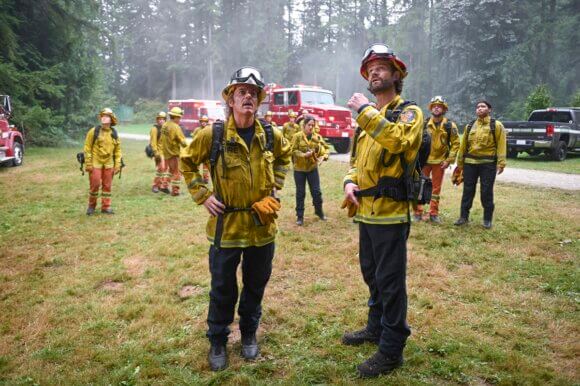
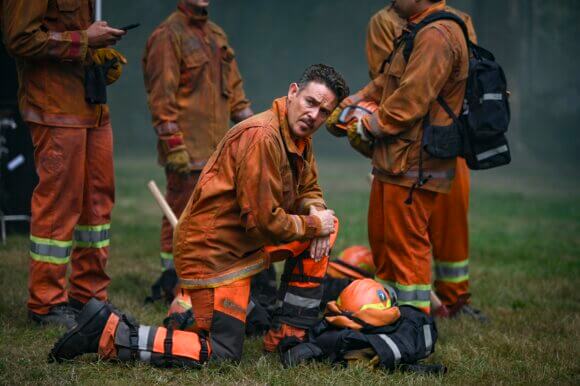
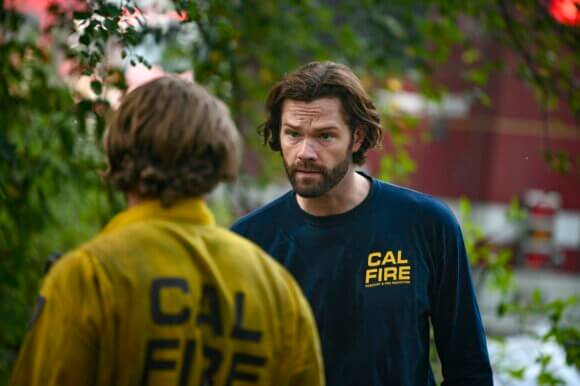
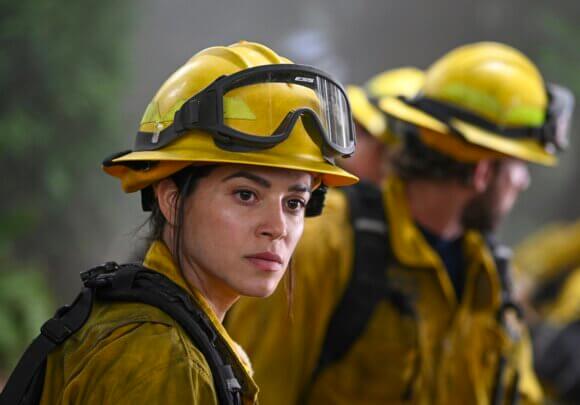
CBS released a special Jared Padalecki featurette as the Supernatural star continues his guest-starring role as Camden, a SoCal firefighter, on Fire Country season three episode six. “Not Without My Birds” will air on Friday, November 22, 2024 at 9pm ET/PT.
Max Thieriot stars as Bode, Billy Burke plays Vince, Kevin Alejandro is Manny, and Diane Farr is Sharon. Stephanie Arcila plays Gabriela, Jordan Calloway is Jake, Jules Latimer is Eve, and Rafael de la Fuente is Diego.
“Not Without My Birds” Plot: When a fire breaks out in a park containing an eagle nest, Station 42 and Three Rock work to rescue the protected species and prevent the fire from spreading into town. Alexis Ostrander directs from a script by Barbara Kaye Friend (story by Joe Hortua).
Fire Country stars Max Thieriot as Bode Leone, a young convict seeking redemption and a shortened prison sentence by joining a prison release firefighting program in Northern California, where he and other inmates are partnered with elite firefighters to extinguish massive, unpredictable wildfires across the region. It’s a high-risk, high-reward assignment, and the heat is turned up when Bode is assigned to the program in his rural hometown, where he was once a golden all-American son until his troubles began.
Years ago, Bode burned down everything in his life, leaving town with a big secret. Now he’s back, with the rap sheet of a criminal and the audacity to believe in a chance for redemption with Cal Fire.