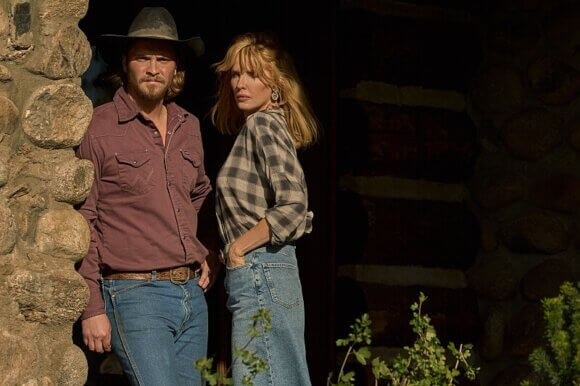
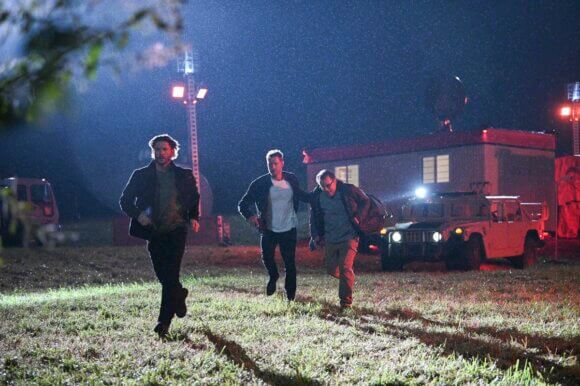
John Dutton believes it’s time to remind everyone exactly who it is that runs the valley in the official trailer for Paramount Network’s Yellowstone season five part two. It’s Dutton against Dutton against the world in the minute-and-a-half trailer that finds Beth prepared to secure her family’s legacy, Rip ready to do whatever it takes, Jamie believing he’s man enough to take down his father, and Kayce forming a special bond with Thomas Rainwater.
Season five stars Kevin Costner as John Dutton, Luke Grimes as Kayce, Kelly Reilly as Beth, Wes Bentley as Jamie, and Cole Hauser as Rip. Kelsey Asbille stars as Monica, Brecken Merrill is Tate, Jefferson White plays Jimmy, Forrie Smith is Lloyd, Denim Richards is Colby, Ian Bohen is Ryan, Finn Little is Carter, Ryan Bingham is Walker, and Gil Birmingham is Thomas Rainwater.
The final season’s final episodes premiere on November 10, 2024. New episodes air on Sundays at 8pm ET/PT.
“Yellowstone chronicles the Dutton family who controls the largest contiguous cattle ranch in the United States,” reads Paramount Network’s synopsis. “Amid shifting alliances, unsolved murders, open wounds, and hard-earned respect – the ranch is in constant conflict with those it borders – an expanding town, an Indian reservation, and America’s first national park.”
Luke Grimes as Kayce Dutton and Kelly Reilly as Beth Dutton in ‘Yellowstone’ season 5 episode 12 (Photo Credit: Paramount Network)
Taylor Sheridan and John Linson created the series and serve as executive producers. Additional executive producers include Art Linson, Kevin Costner, David C. Glasser, Bob Yari, Stephen Kay, Michael Friedman, Christina Voros, and Keith Cox.
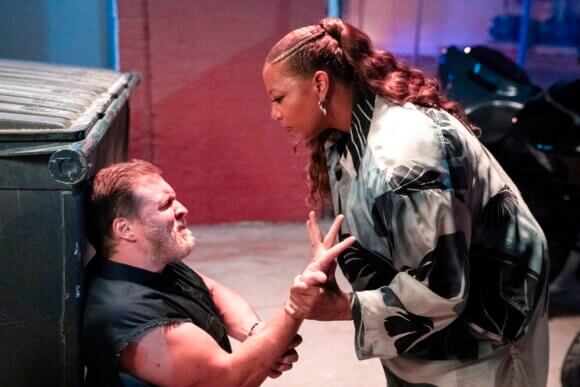
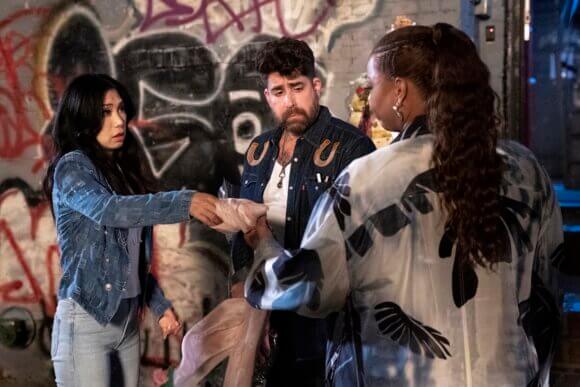
CBS’s The Equalizer season five episode two offers fans a special Halloween treat with a case involving a haunted apartment building. Directed by Chris Fisher from a script by Aurora Ferlin and Joe Gazzam, episode two – “Haunted Heights” – will air on Sunday, October 27, 2024 at 9:30pm ET/PT.
Season five moves to its regular 9pm ET/PT time slot on November 3rd.
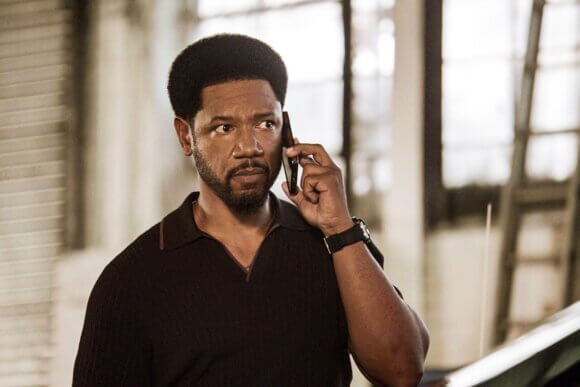
Queen Latifah stars as Robyn McCall, Tory Kittles is Detective Marcus Dante, Adam Goldberg is Harry Keshegian, and Liza Lapira is Melody “Mel” Bayani. Laya DeLeon Hayes plays Delilah and Lorraine Toussaint is Viola “Vi” Marsette.
“Haunted Heights” Plot: McCall investigates a death in an apartment building where residents believe the structure is haunted after a young woman suspects her grandmother was pushed down a flight of stairs via supernatural means. Meanwhile, Aunt Vi helps Delilah get ready for her senior photos.
“The Equalizer is a reimagining of the classic series starring Academy Award nominee and multi-hyphenate Queen Latifah as Robyn McCall, an enigmatic woman with a mysterious background who uses her extensive skills as a former CIA operative to help those with nowhere else to turn. McCall presents to most as an average single mom who is quietly raising her teenage daughter. But to a trusted few, she is The Equalizer – an anonymous guardian angel and defender of the downtrodden, who’s also dogged in her pursuit of personal redemption.
Robyn’s clandestine work and her personal life often collide when her smart and observant daughter, Delilah, and her aunt Vi, who lives with Robyn to help her balance life as a working mother, struggle to conceal her vigilante career. While Robyn worries about the mental and emotional toll her work exacts on her family, she is joined in her pursuit of justice by Melody “Mel” Bayani, an edgy bar owner and sniper from Robyn’s past who recently quit the Equalizer team to recover from post-traumatic stress disorder; and Harry Keshegian, a paranoid and brilliant white-hat hacker married to Mel.
As Robyn aids the oppressed and exploited, she sometimes works with Marcus Dante, an NYPD detective and trusted friend who respects the need for Robyn’s type of justice even as he often questions her methods.”
Zachary Quinto, Spence Moore II and Ashleigh LaThrop in ‘Brilliant Minds’ episode 5 (Photo by: Rafy/NBC)
NBC’s Brilliant Minds episode five opens with Dr. Oliver Wolf (Zachary Quinto) reflecting on coping mechanisms and how they help us make it through the day. Oliver’s voiceover tells us that sometimes our ghosts are visible to everyone. Other times, only we can see them.
In the case of ex-Marine Steve Hill (Joshua Echebiri), his ghosts seem very, very real to him. Dr. Carol Pierce (Tamberla Perry) tells Oliver that Steve’s suffering from intrusive thoughts and severe anxiety, and that he revealed he’s been seeing ghosts of people he served with.
Carol and Oliver meet with Steve and his pregnant wife, Anna (Sabryn Rock), and she confirms he’s been struggling. Steve doesn’t want to burden his wife, but confesses he often breaks down. He hands over his medical records from the VA, and Anna says they only gave him meds, which he stopped taking. Anna is shocked when Oliver asks about Steve’s recent visions. Steve didn’t share this particular development, and he admits his friend Lance Corporal Aiden Miller’s recent death has been painful to accept.
Following the meeting, Carol tells Oliver, Jacob (Spence Moore II), and Ericka (Ashleigh LaThrop) that she initially believed Steve’s suffering from PTSD. However, she’s realized Steve’s withholding something. Oliver points out that seeing ghosts isn’t part of PTSD and asks Ericka and Jacob to investigate Steve’s military history. Also, they should check to see if Aiden suffered from any similar conditions before his death.
Carol will talk to Dr. Josh Nichols (Teddy Sears) since he was in the military.
Wolf has determined that John Doe (Alex Ozerov-Meyer) has locked-in syndrome, which means part of his brain stem is permanently damaged. His eye movements mean his cognitive abilities are intact, but he’s unable to move. “If we’re right, John Doe has been in a very lonely place for a very long time,” says Wolf.
Wolf tells his team of interns that their job is to find out who is behind John Doe’s eyes. Oliver asks Van (Alex MacNicoll), who feels what others are feeling, if he’s getting anything from John and Van says no. The other interns have no idea why Oliver asked Van that question, and a short while later Dana (Aury Krebs) peppers him with questions. She jokingly accuses him of sleeping with Wolf, and Van reluctantly admits Wolf diagnosed him with mirror-touch synesthesia. Dana’s impressed and thinks Van has a super rare superpower, but Van confesses it feels more like a curse.
Dana promises not to tell anyone.
Aury Krebs, Alex Ozerov-Meyer and Alex MacNicoll in ‘Brilliant Minds’ episode 5 (Photo by: Rafy/NBC)
Van and Dana create a yes/no system for John Doe that allows him to answer with his eyes. John indicates he understands them, isn’t in pain, and knows where he is.
Wolf visits Steve Hill at his work and returns his notebook with his medical records. Steve wonders if Oliver was followed and claims that “they” came for Aiden and will come for him next. Oliver asks if Steve has anything he wants to share that he hasn’t shared with his wife. Steve admits that he believes the government put a microchip in his head to control him. The chip makes him see things, and he wants Oliver to remove it.
Steve undergoes an MRI, and Oliver, Ericka, and Jacob don’t find anything unusual in the resulting scan. Oliver believes they need to keep the results to themselves; too much info too quickly could result in a full-blown psychosis. They need to keep his trust and should admit him.
A flashback shows Oliver walking with his dad through the woods when his father becomes paranoid that hikers are following them.
Dr. Jordana Moore (Nicki Burke) from the VA has a personal connection with Steve and meets with Carol and Oliver to provide more information. He was an exemplary Marine but changed after his deployment. Steve stopped coming to the VA because he didn’t trust them. He was ultimately dishonorably discharged and lost his VA benefits after threatening to reveal military secrets online.
Jordana reveals Steve was never on the front lines, but she’s not allowed to say his actual assignment. Later, Josh confirms via a military contact that Steve’s unit supported the front lines with artillery fire from miles away. His unit never suffered any combat-related injuries. However, Josh also learned that more than half of Steve’s unit has died since returning home, mostly by suicide.
Josh and Oliver brainstorm possible causes, and Oliver compares it to football players who suffer from chronic traumatic encephalopathy (CTE). Josh thinks Oliver’s on to something, but Oliver is confused about how Steve and his unit could have CTE if they weren’t in combat.
Zachary Quinto as Dr. Oliver Wolf and Teddy Sears as Dr. Josh Nichols in ‘Brilliant Minds’ episode 5 (Photo by: Pief Weyman/NBC)
Josh takes Oliver to a shooting range, thinking there’s a way to tie CTE to Steve. Oliver’s never shot a gun before and as Josh is providing instructions, Oliver asks what serving in the military was like. Josh says the military whipped him into shape, but ”don’t ask, don’t tell” wasn’t an ideal situation.
Oliver fires a shot and immediately feels the blast wave through his arms. Josh believes firing a much larger weapon hundreds of times a day every day for months could result in CTE. To confirm this, they need to analyze the brain of someone from Steve’s unit who died.
Carol and Oliver meet with Aiden’s grieving parents, who describe their son as being paranoid after returning from a tour of duty. He was also other than honorably discharged for assaulting his therapist. Oliver asks if they’ve heard of CTE and explains how it’s possible Aiden and others in the unit suffered from it. Aiden’s parents are shocked when Oliver asks to exhume their son’s body to look at his brain. Aiden wasn’t given a military funeral and, therefore, is the only member of the unit they can access.
Carol assures them this is a last resort, and Oliver believes this might give them closure.
Jacob and Ericka ask Steve a series of questions with Oliver supervising. Steve’s surprised when Ericka mentions CTE, and Oliver explains that Aiden complained of similar symptoms right before he killed himself.
Another flashback shows Oliver’s dad stomping out their campfire so that the hikers won’t find them. His dad admitted he stopped taking his meds and believes he’s more aware now and can protect Oliver.
Steve locks himself in a room with a scalpel, ready to carve the microchip out of his head since Oliver’s not helping him. Oliver’s able to talk Steve down by using simple math to engage his prefrontal cortex. Steve puts down the scalpel after Oliver reminds him that he’s just weeks away from becoming a father.
Josh, Oliver, and Carol look at the pathology results and it’s confirmed Aiden had CTE. Steve’s wife alerts them that Steve isn’t in his room. She can’t find him anywhere.
Oliver finds Steve at work, and Steve apologizes for leaving the hospital. He doesn’t think he can be there for his wife and baby. Oliver explains that his father had ghosts, too, and he still wishes he was in his life. He also breaks the news that Aiden had CTE, which means Steve probably suffers from it too. Oliver assures him he’ll help him manage his symptoms, but Steve’s worried because the VA cut off his benefits.
Joshua Echebiri as Steve Hill and Zachary Quinto as Dr. Oliver Wolf in ‘Brilliant Minds’ episode 5 (Photo by: Rafy/NBC)
Oliver speaks before a military panel and describes Steve Hill’s condition, comparing what happened to Steve’s brain to stretching a rubber band repeatedly. It’ll break over time. Aiden had a textbook case of CTE, and they believe the same is true of the men in Steve’s unit.
“Steve’s conspiracies and delusions are not an attempt to betray his country. They’re a cry for help caused by a neurodegenerative disease,” says Wolf.
Oliver pleads with the panel to understand what Steve and his unit went through and to restore their lost benefits and dignity.
John Doe’s condition seems to have worsened, and he’s not responding to lights in his eyes. He might have had another stroke, but Van confirms his vitals are still normal. Neither Van nor Dana can figure out what’s going on, and Van suggests that maybe the spark of life he felt going outside with Ericka and Jacob is wearing off. Suddenly, John opens his eyes and looks up and down rapidly as Mrs. Petrov, a patient who comes in for dialysis, walks by speaking Russian.
With Mrs. Petrov’s help, Van, Dana, and Oliver communicate using the Russian alphabet as Mrs. Petrov interprets. John’s message reads: “Don’t leave me.” Oliver becomes emotional and asks Van and Dana to get a paid interpreter to learn more about John.
That night an inebriated Jacob stops by Ericka’s apartment. Jacob seemed upset after Steve’s diagnosis, and now he admits he blacks out a lot. He’s worried about turning into Steve and explains that in his junior year, he decided not to play anymore after two concussions. Jacob regrets that decision because he was a really talented player, and now he’s just a “bad doctor.”
Jacob makes a move to kiss Ericka and she pulls away. He asks that it be her who slices his brain open.
He’s snoring on the couch as morning breaks and Ericka wakes him with coffee. He wonders if they did anything the previous night, and Ericka assures him nothing happened.
Ericka, Jacob, and Dana are gossiping about Van’s condition when Van walks in. Dana broke her promise not to tell anyone, and Ericka compliments Van on his sensitivity. Dana asks Van to forgive him, and Van smiles and confesses that he knew word would get out by telling her. He wouldn’t have to tell each of them himself.
“Well played,” says Jacob.
Oliver’s voiceover informs us that Steve’s VA benefits were reinstated, his family was compensated, and his honor was restored. Oliver and Carol watch as Steve speaks with a group of veterans and shares his story. While there isn’t a cure for CTE, it’s possible to slow its progress.
Episode five ends with Oliver asking Josh if implanting a microchip in John might work as a brain-computer interface to help him communicate. It’s experimental tech, but it’s possible the chip might give John back his voice. Oliver isn’t going to leave this patient and needs Josh’s help.
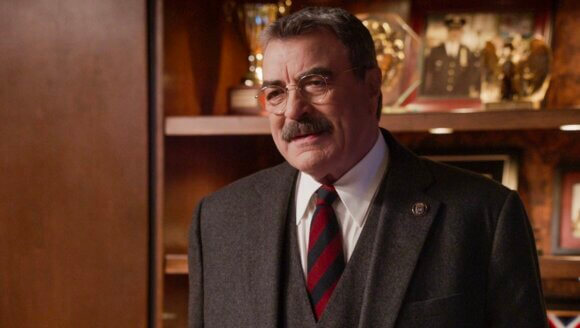
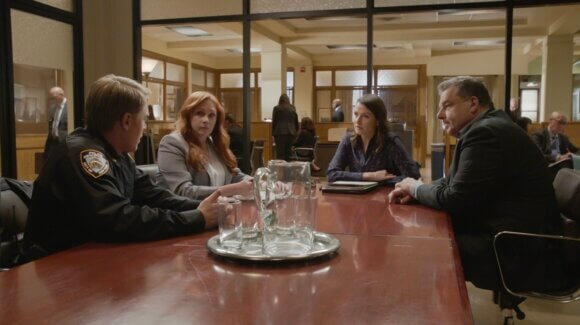
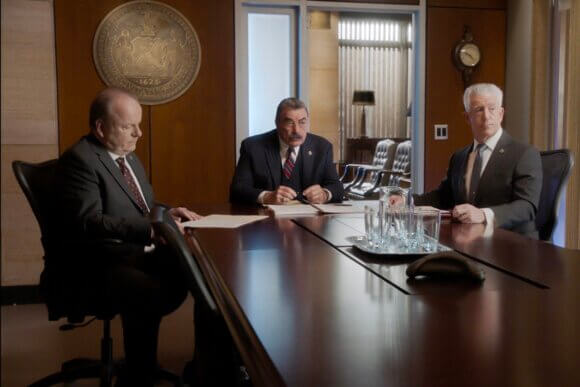
Jake Weber guest stars on CBS’s Blue Bloods season 14 episode 12, playing a British investigator named Christopher Granger. Directed by Donald Thorin, Jr. from a script by Ian Biederman, episode 12 – “Without Fear or Favor” – will air on Friday, October 25, 2024 at 10pm ET/PT.
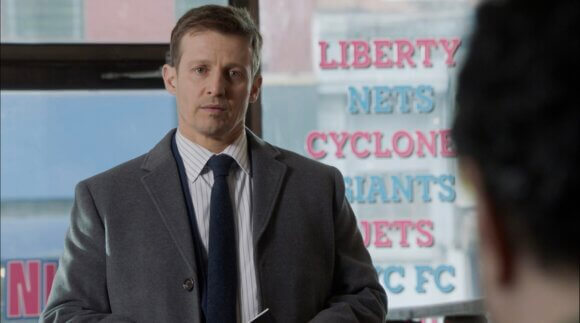
Tom Selleck returns to lead the final season’s cast as Frank Reagan. Donnie Wahlberg stars as Danny Reagan, Bridget Moynahan plays Erin Reagan, Will Estes is Jamie Reagan, Len Cariou is Henry Reagan, Marisa Ramirez plays Maria Baez, and Vanessa Ray stars as Eddie Janko.
“Without Fear or Favor” Plot: Danny joins forces with British investigator Christopher Granger (Jake Weber) to pursue a deadly international fugitive, and Erin faces pressure from her boss, D.A. Crawford (Roslyn Ruff), to secure an indictment against an officer. Also, Jamie investigates a sports gambling website accused of scamming its users, and Frank clashes with Mayor Chase (Dylan Walsh) when the mayor uses his authority to have a retired cop released from jail.
Blue Bloods is a drama about a multi-generational family of cops dedicated to New York City law enforcement. Frank Reagan is the New York Police Commissioner, and heads both the police force and the Reagan brood. He runs his department as diplomatically as he runs his family, even when dealing with the politics that plagued his unapologetically bold father, Henry, during his stint as chief. A source of pride and concern for Frank is his eldest son, Danny, a seasoned detective, family man, and Iraq War vet who, on occasion, uses dubious tactics to solve cases with his partner and new mother, Detective Maria Baez.
Erin, the middle daughter, is a New York assistant D.A. who serves as the legal compass for her siblings and father, while also pursuing a run for district attorney. Jamie is the youngest Reagan, a Harvard Law graduate and the family’s golden boy. Unable to deny the family tradition, Jamie decided to give up a lucrative future in law and follow in the family footsteps as a cop. He’s found a friend and ally in his wife, Eddie, who keeps him on his toes, and has very different reasons than the Reagans for joining the police force.
Michael Emerson as Leland Townsend in ‘Evil’ episode 14, season 4 (Photo Credit: Elizabeth Fisher/Paramount+)
CBS’s Elsbeth will become a family affair when Emmy winner Michael Emerson (Evil) joins the season two cast in a recurring role. Emerson, who is married to series star Carrie Preston, will kick off his special guest starring run with the Thursday, December 12, 2024 episode.
Per CBS: “Emerson will join the critically acclaimed series as a foil to his wife’s Elsbeth Tascioni, in which he will play Judge Milton Crawford, a haughty, soft-spoken and bespectacled man from an old New England family of public servants who sees his place in the nation’s elite as a birthright. Additional episode dates will be announced at a later date.”
In addition to Carrie Preston in the titular role, season two stars Wendell Pierce as Captain C.W. Wagner and Carra Patterson as Officer Kaya Blanke. Robert King, Michelle King, Liz Glotzer, Erica Shelton Kodish, Bryan Goluboff, Gail Barringer, and showrunner Jonathan Tolins serve as executive producers.
“Elsbeth stars Emmy Award winner Carrie Preston as Elsbeth Tascioni, the astute but unconventional consent decree attorney working with the NYPD to catch New York’s most well-heeled murderers utilizing her unique point of view,” reads CBS’s synopsis. “Season two of the critically acclaimed series brings new cases and challenges when mistakes of the past come back to haunt Elsbeth, her boss Captain Wagner (Pierce) and detective-in-training Officer Kaya Blanke (Patterson).”
Michael Emerson has earned two Emmy awards for his performances in Lost and The Practice. Emerson’s credits also include Person of Interest, Without a Trace, The Laramie Project, and The Name of the Rose.
The ship experiences a zombie outbreak on ABC’s Doctor Odyssey season one episode five. “Halloween Week” will air on Thursday, October 24, 2024 at 9pm ET/PT.
Joshua Jackson (Fatal Attraction) plays Dr. Max Bankman, Phillipa Soo (Shining Girls) is Nurse Avery Morgan, Sean Teale (Little Voice) is Nurse Tristan Silva, and Don Johnson (Rebel Ridge) stars as Captain Robert Massey. Ryan Murphy, Jon Robin Baitz, and Joe Baken write and executive produce the first season.
“Halloween Week” Plot: It’s Halloween on The Odyssey, featuring a high-stakes costume contest. But when a zombie-like illness plagues select passengers, the festivities take a dark turn. Meanwhile, Avery and Max embark on a rescue mission.
Don Johnson and Joshua Jackson in ‘Doctor Odyssey’ episode 5 (Disney/Tina Thorpe)
Doctor Odyssey Plot Description, Courtesy of ABC:
From the brilliant mind of Ryan Murphy comes the high-octane procedural Doctor Odyssey. Max (Jackson) is the new on-board doctor for a luxury cruise ship where the staff works hard and plays harder. It’s all hands on deck as Max and his small but mighty medical team navigate unique medical crises and each other miles from shore.
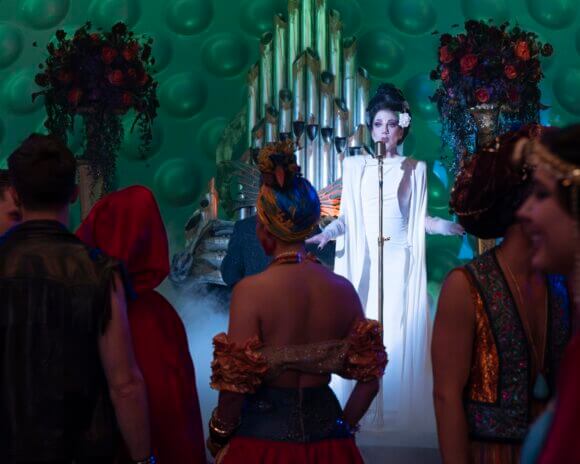
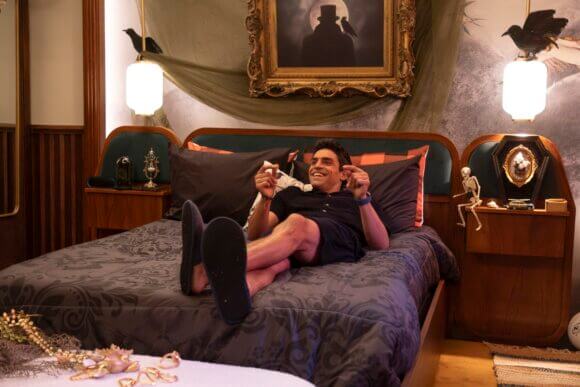
Marija Abney and Michelle Nunez in season 1 episode 5 (Disney/Tina Thorpe)Rick Cosnett, Marija Abney, Phillipa Soo and Joshua Jackson in episode 5 (Disney/Tina Thorpe)Andrea Miller in the “Halloween Week” episode (Disney/Tina Thorpe)Don Johnson and Phillipa Soo in episode 5 (Disney/Tina Thorpe)Sean Teale in episode 5 (Disney/Tina Thorpe)
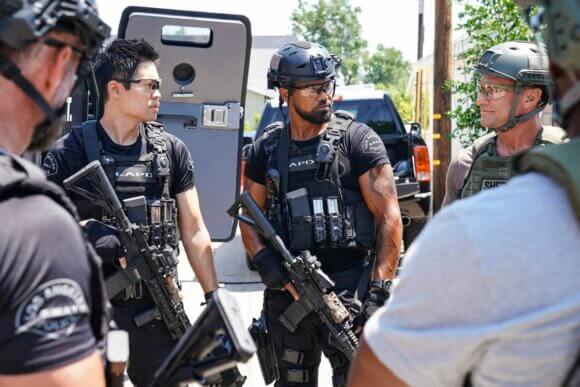
The squad’s called in to help find violent robbers on CBS’s S.W.A.T. season eight episode two. Directed by Cherie Dvorak from a script by Matthew T. Brown, episode two – “Gang Unit” – will air on Firday, October 25, 2024 at 8pm ET/PT.
Season eight stars Shemar Moore as Daniel “Hondo” Harrelson, Jay Harrington as David “Deacon” Kay, David Lim as Victor Tan, Patrick St. Esprit as Commander Robert Hicks, and Anna Enger Ritch as Zoe Powell. Annie Ilonzeh is Devin Gamble and Niko Pepaj plays Miguel “Miko” Alfaro.
“Gang Unit” Plot: When a spree of brutal stash house robberies spills into L.A., 20-Squad must team up with the sheriff’s department’s gang unit to unmask a violent crew who leaves no witness alive.
S.W.A.T. stars Shemar Moore as a former Marine and locally born and raised SWAT sergeant tasked to run a specialized tactical unit that is the last stop in law enforcement in Los Angeles. Torn between loyalty to where he was raised and allegiance to his brothers in blue, Daniel “Hondo” Harrelson strives to bridge the divide between his two worlds.
Committed to the job, Hondo is equally devoted to his marriage and fatherhood. The other members of Hondo’s elite S.W.A.T. unit include David “Deacon” Kay, an experienced S.W.A.T. officer and dedicated family man who always puts the team first; Victor Tan, who started in the LAPD Hollywood Division and uses his confidential informants in the community to help the team; Zoe Powell, a tough and loyal team member trying to reconnect with the son she gave up for adoption as a teen; and Miguel “Miko” Alfaro, a headstrong officer who overcame a troubled childhood, and is now a trusted 20-Squad addition following a rocky transfer to Los Angeles S.W.A.T.
Responsible for the management of all Metro Division S.W.A.T. units is Commander Robert Hicks, a senior LAPD official with the Special Operations Bureau. With Hondo leading the charge, these dedicated men and women bravely put themselves at risk to protect their community and save lives.
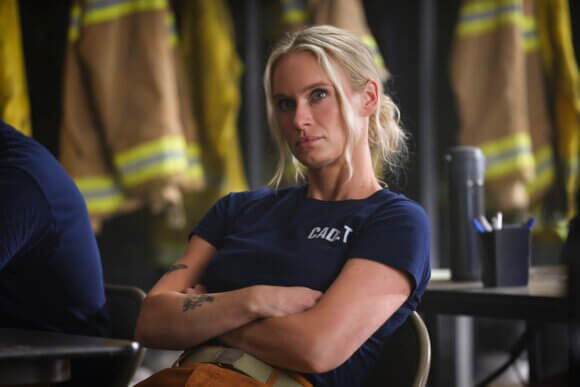
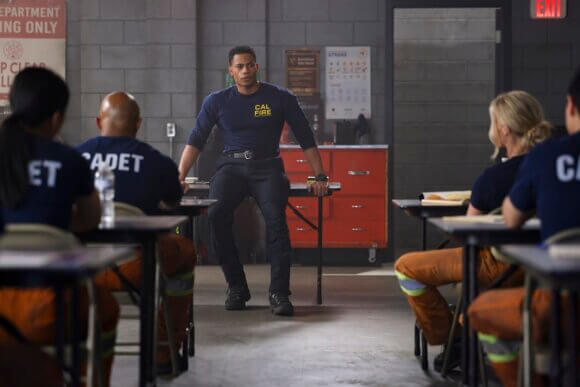
Season three of CBS’s Fire Country kicked off with Gabriela coming clean about her feelings for Bode and calling off her wedding to Diego. Oh, and there was a helicopter crash that required all hands on deck. Season three episode two,” “Firing Squad,” will find Bode faced with a life-altering decision. Directed by Gonzalo Amat from a script by Anupam Nigam, episode two airs on Friday, October 25, 2024 at 9pm ET/PT.
Max Thieriot stars as Bode, Billy Burke plays Vince, Kevin Alejandro is Manny, and Diane Farr is Sharon. Stephanie Arcila plays Gabriela, Jordan Calloway is Jake, Jules Latimer is Eve, and Rafael de la Fuente is Diego.
“Firing Squad” Plot: Bode receives a life-changing opportunity that could impact his future as a firefighter, and Leven Rambin guest stars as Audrey, a former fire camp inmate.
Fire Country stars Max Thieriot as Bode Leone, a young convict seeking redemption and a shortened prison sentence by joining a prison release firefighting program in Northern California, where he and other inmates are partnered with elite firefighters to extinguish massive, unpredictable wildfires across the region. It’s a high-risk, high-reward assignment, and the heat is turned up when Bode is assigned to the program in his rural hometown, where he was once a golden all-American son until his troubles began.
Years ago, Bode burned down everything in his life, leaving town with a big secret. Now he’s back, with the rap sheet of a criminal and the audacity to believe in a chance for redemption with Cal Fire.
CBS’s Tracker season two episode two opens with a man (Steven Culp) sneaking through the woods. He starts recording as he films a satellite dish and explains he’s on a secret DOD site that isn’t supposed to exist. As he’s filming, his camera goes wonky with electrical interference. That’s followed by a piercing noise that forces him to his knees. A spotlight shines down from above.
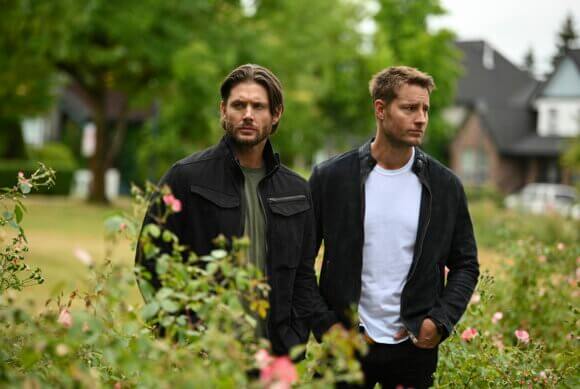
The man’s name is Scott Palmer and his daughter, Patty, hires Colter (Justin Hartley) to find him after she receives a distressing phone message and can’t reach him for two days. The police won’t help her since there aren’t any signs of foul play. She and Colter look around his house and it’s a mess, which doesn’t seem unusual. Her mom’s dead, but when she was alive, her parents were really into aliens and UFOs. Scott’s last voicemail indicated he found something unusual. Patty admits he was into government conspiracy stuff, and Colter says he completely understands.
Her dad thought he was being followed because he was on to the government’s secret alien program. Colter gets her to admit her dad was harassing astrophysics professor Dr. Iris Blair. Patty thinks Iris’s husband might have something to do with her dad’s disappearance since he had a restraining order against Scott.
Colter and Velma (Abby McAnany) discuss the $20,000 case, and Reenie (Fiona Rene) will look into the restraining order. Velma loves feeling useful and being part of Reenie’s team.
Reenie learns Scott called Dr. Blair 20 times a day, which is why her husband filed for the restraining order. Colter scans the call logs and then pays a visit to Dr. Blair (April Parker Shaw) who claims to know nothing about Scott going missing. She says he wouldn’t stop calling, but Colter points out that some calls lasted 10 minutes. Dr. Blair admits Scott had interesting ideas on Unidentified Anomalous Phenomenon (UAPs) and was sharing information with her.
As Dr. Blair’s talking, it becomes obvious she’s scared of something/someone.
Bobby (Eric Graise) calls with the news that Scott’s phone is dead and that his phone location records were wiped clean. However, he found Scott’s car’s last location: an unmarked road on government land. Bobby believes in UAPs and suggests a few resources Colter (a non-believer) should check out.
Before they hang up, Colter asks Bobby to look into Dr. Blair.
Night falls, and Colter reaches Scott’s car’s final location. He rings Bobby to tell him there’s nothing there, and Bobby reveals that he found a secure message board that Dr. Blair contributes to about UAPs/UFOs. Colter keeps searching the area and finds Scott’s car tucked away in the woods. The call starts breaking up as Colter continues to look around. He finds a hole in the fence that Scott cut, and as he comes within feet of where Scott was in the spotlight, his phone starts acting strange and then completely shuts down.
12 hours later, Bobby, Reenie, and Velma frantically search for Colter. A sheriff found Colter’s truck but there’s no sign of what happened to Colter. Reenie knows something’s wrong and calls Russell for help.
Colter comes to in a cell, handcuffed to a bed, with a man explaining he’s lucky he was found before he was blown up by unexploded ordinances. Colter was hit with a tranquilizer dart to stop him from exploring the area. His interrogator warns Colter there’s a guard right outside the door who will dose him again if he’s a problem.
As soon as he leaves, Colter works his way free of the restraints. He listens through the door and then stares at the surveillance camera. The guards watch from a booth but don’t stop Colter as he inspects his cell.
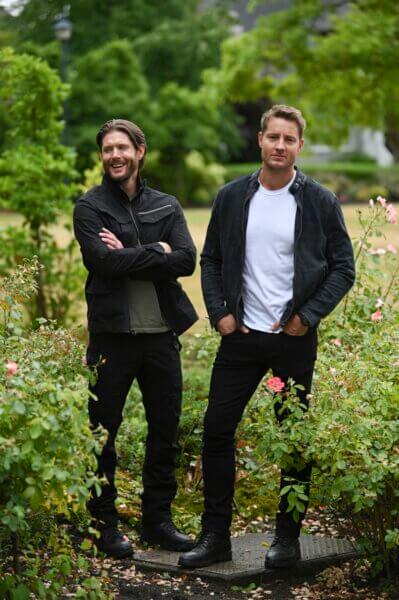
His interrogator tells someone there’s eight hours until something happens, just as Russell (Jensen Ackles) sneaks through the halls and enters Colter’s cell. He’s taken out three guards and hands Colter a gun as they make their way through the halls.
They emerge outside, and Russell suggests they keep moving. He’s been inside a covert DOD program and knows these people aren’t to be messed with. Russell confirms Reenie called him and he just happened to be nearby. He discovered that Colter wandered onto a “black site” and came to his rescue.
Russell admits he keeps asking Reenie out and she keeps putting him off. He thinks rescuing Colter might actually earn him a date, especially if Colter tells Reenie he was brave. Colter declines to be any part of the Russell/Reenie possible dating scenario.
Russell not only believes in UAPs, but he’s also actually seen stuff that would knock the socks off Colter. Colter fills his brother in on Scott Palmer, and Russell suggests maybe the aliens took him. He recalls when their dad took them to see the lights in the sky, and their dad pointed to the spaceship on Colter’s pajamas when he asked what they were. Colter claims not to remember any of this and suggests it was just a meteor shower.
Patty calls and informs Colter that men in a black SUV are parked outside her dad’s house. She thinks it’s possible her dad is actually in danger, and Colter tells her to try and sneak out without being seen.
Colter realizes that they must have let him go on purpose since they let him keep his phone. They’re using him to find Scott. Russell pulls over and smashes Colter’s phone. He then digs a tracker out of Colter’s neck, and Colter tosses it and his now useless phone into a field.
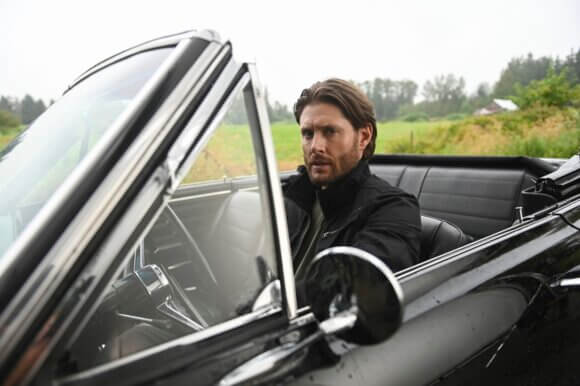
In addition to Russell’s car (which looks like Supernatural’s Baby, but isn’t), Tracker tosses in another nod to Supernatural by having Jensen Ackles make a sandwich without asking while waiting for Dr. Blair to return home.
Dr. Blair arrives home and is shocked to discover Colter and Russell inside her house. Colter believes she told Scott something and that’s why he’s being hunted by government agents. Colter holds up a printout with symbols and numbers that look similar to what appeared on his phone, and Dr. Blair says it’s a form of communication they’ve been seeing for six months. She’s not sure it has to do with UAPs, but it appears that’s possible. They’re trying to decode the messages, and Scott sent a screenshot of a recent message that appeared on his phone.
This message looks just like Colter’s, but Colter’s top line ended with 2901. Dr. Blair believes they’re geodata coordinates and pulls up the location on a map. That may be where Scott’s heading and Russell warns Dr. Blair to be careful. She should probably skip town until it’s safe.
A short while later, she hustles to her car with a bag and calls her husband. Before she can drive off, Colter’s interrogator knocks on her driver’s side window.
Colter and Russell arrive at the location 200 miles away and there’s nothing there. Russell brags when his phone rings and it’s Reenie. Before he can answer it, Colter yanks it from his hand and tosses it away. It’s possible their trackers are tracking Reenie’s signal. (Sure, Colter, that’s the only reason you don’t want your brother hooking up with Reenie!)
The brothers pause when they hear something. Not far away they discover a UAP landing site buzzing with people. An announcement says, “The surge begins in T-minus 10 minutes.”
Russell and Colter sneak around the base and decide to split up, with a plan to meet up in 20 minutes. The announcement continues, telling everyone to move into the safety zone.
Bobby and Reenie can’t figure out where Colter and Russell are; they should have checked in already. Velma discovers Dr. Blair’s car showed up on a police scanner as a 10-54 (possible dead body) followed by a 10-56 (suicide). They realize someone got to Dr. Blair.
Russell’s confronted by Colter’s interrogator inside a building, and the man notes that their dad also liked to get in the government’s way. He asks Russell about Scott Palmer and Russell denies knowing the name. Russell believes the government sent out a message and someone answered back. That’s why there’s a landing pad outside for an “alien meet-and-greet.”
Russell disarms the interrogator and knocks him out. He spends a few minutes looking around and then removes a jar from a cabinet. Meanwhile, Colter takes out a guard as the countdown is down to T-minus two minutes.
Colter finds Scott hiding in a building, but Scott refuses to leave. He needs to see whatever this is the government’s about to do. He’s certain an alien spaceship is on the way and is adamant that the world needs to know the truth. Cotler assures him it’s not worth dying for. Scott disagrees.
They’re still arguing when suddenly a bright light appears outside. Colter warns Scott to cover his ears as a piercing sound fills the air. The building shakes and items crash to the floor, and then just as suddenly it’s over.
Scott and Colter meet up with Russell outside the building, as a security breach is announced. They have to try and leave now, or they won’t make it out alive. A helicopter tracks their movements, and they run into the woods, outside the perimeter. They’re walking down a dirt road as a van approaches and the driver gets out, addressing Colter by name. He hands Colter a phone and it’s Reenie on the other end. She ordered the van to get them, which was super expensive.
She calls them the dumb Shaw brothers and is angry neither would text her back. It’s also obvious she’s relieved they’ve been found safe and sound.
Russell and Colter deliver Scott home and his daughter’s thankful he’s back safe and sound. She hands over the $20,000 and thanks Colter before walking off arm-in-arm with her dad.
Russell wonders if Colter’s changed his mind about UAPs, but Colter doesn’t think what they just experienced proves anything. Colter suggests it was a test of a defense system, while Russell thinks it was an alien spaceship. Russell shows Colter the bottle he grabbed, and Colter reacts sarcastically, saying he’s impressed with this rock. Russell believes it’s much more than a rock. It could be part of an alien ship. He’s going to have his guy run tests.
Tracker tosses in multiple nods to Supernatural as the episode ends. Colter looks at Russell’s car and says, “Sweet ride. I wouldn’t mind getting behind the wheel of this thing.” Russell replies, “That’s never going to happen.”
As they’re driving to get Colter’s car, Colter tells his brother about Dr. Blair’s murder made to look like a suicide. Russell believes the government isn’t interested in them any longer since the operation in the woods is complete. Colter’s shocked to learn his interrogator knew about the Shaw family, and wonders if there’s something in their dad’s box that Dory kept that might connect the dots.
Russell doesn’t think it’s any big deal, but Colter isn’t going to drop it.
They make it to the dirt road where Colter’s truck’s parked, but Russell won’t drive down it. “This ‘baby’ doesn’t drive on gravel,” says Russell.
Russell’s pleased with himself and says he’s off to Colorado for a date with Reenie. She finally agreed after he saved Colter. As they say goodbye, Colter reluctantly admits his brother rescued him and says thanks.
The Invisible Man director Leigh Whannell tries his hand at another classic Universal monster with Wolf Man. Arriving in January 2025, the new take on the classic werewolf story finds It Comes at Night‘s Christopher Abbott discovering his feral side as the titular character.
The Blumhouse horror film stars Julia Garner (Apartment 7A), Matlida Firth (Coma), Sam Jaeger (The Handmaid’s Tale), Ben Prendergast, and Benedict Hardie (The Invisible Man). The cast also includes Zac Chandler, Beatriz Romilly, and Milo Cawthorne.
“Golden Globe nominee Christopher Abbott stars as Blake, a San Francisco husband and father, who inherits his remote childhood home in rural Oregon after his own father vanishes and is presumed dead. With his marriage to his high-powered wife, Charlotte (Garner), fraying, Blake persuades Charlotte to take a break from the city and visit the property with their young daughter, Ginger (Firth),” reads Universal’s synopsis.
“But as the family approaches the farmhouse in the dead of night, they’re attacked by an unseen animal and, in a desperate escape, barricade themselves inside the home as the creature prowls the perimeter. As the night stretches on, however, Blake begins to behave strangely, transforming into something unrecognizable, and Charlotte will be forced to decide whether the terror within their house is more lethal than the danger without.”
Wolf Man opens in theaters on January 17, 2025.
Whannell co-wrote the screenplay with Corbett Tuck, with Ryan Gosling and Jason Blum producing. Executive producers include Whannell, Beatriz Sequeira, Mel Turner, and Ken Kao.