Apple TV+’s new clip from the upcoming fifth episode of Manhunt shows Lincoln’s Secretary of War Edwin Stanton (Tobias Menzies, The Crown, Outlander) ordering soldiers to hunt down Booth using a recently procured map of Booth’s potential hiding places. Episode five, “A Man of Destiny,” streams on April 5, 2024.
Apple TV+’s critically acclaimed series stars Anthony Boyle (Masters of the Air) as John Wilkes Booth, Hamish Linklater (Midnight Mass) as President Abraham Lincoln, Lovie Simone (Greenleaf) as Mary Simms, and Will Harrison (Daisy Jones & The Six) as David Herold. Brandon Flynn (13 Reasons Why) plays Edwin Stanton Jr, Damian O’Hare (Hatfields & McCoys) is Thomas Eckert, Glenn Morshower (The Resident) is Andrew Johnson, and Matt Walsh (Veep) is Dr. Samuel Mudd.
Created by Emmy nominee Monica Beletsky, the seven-episode limited series is based on James Swanson’s bestselling, Edgar Award-winning non-fiction book, Manhunt: The 12-Day Chase for Lincoln’s Killer. Beletsky, author Swanson, Carl Franklin, Layne Eskridge, Kate Barry, Michael Rotenberg, Richard Abate, Frank Smith, and Naia Cucukov serve as executive producers.
“A Man of Destiny” Plot: President Johnson interferes with Lincoln’s vital plans. Stanton’s health deteriorates as he closes in on Booth.
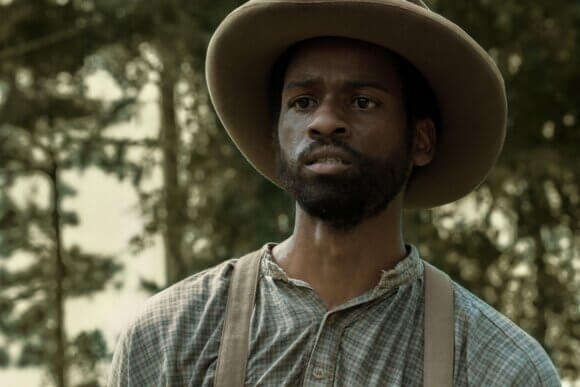
Brandon Flynn and Tobias Menzies in ‘Manhunt’ episode 5 (Photo Credit: Apple TV+)Anthony Boyle and Will Harrison in episode 5 (Photo Credit: Apple TV+)Tobias Menzies, Brandon Flynn and Damian O’Hare in episode 5 (Photo Credit: Apple TV+)Lovie Simone in episode 5 (Photo Credit: Apple TV+)Antonio J Bell in episode 5 (Photo Credit: Apple TV+)Matt Walsh in episode 5 (Photo Credit: Apple TV+)
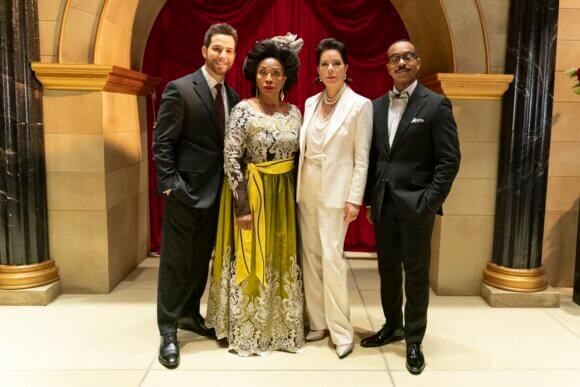
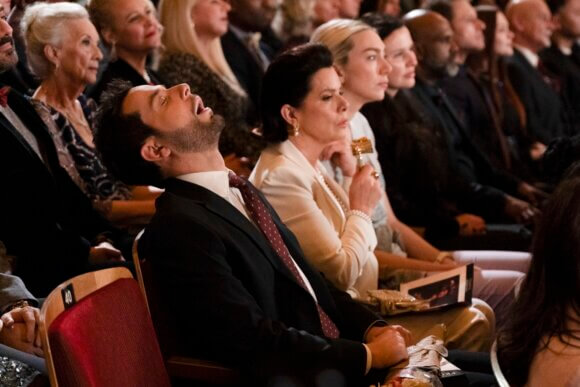
CBS’s So Help Me Todd snagged Jenifer Lewis (black-ish) as a guest star on season two episode five, “End on a High Note.” Directed by Marcus Stokes from a script by Nicole French, episode five is set to air on Thursday, April 11, 2024 at 9pm ET/PT.
Oscar winner Marcia Gay Harden leads the cast as Margaret Wright and Skylar Astin stars as the titular Todd. Season two also features Madeline Wise as Allison, Tristen J. Winger as Lyle, Inga Schlingmann as Susan, and Rosa Arredondo as Francey.
“End on a High Note” Plot: Margaret and Todd defend international opera star, supreme diva and Lyle’s mother, Jaqueline (Lewis).
So Help Me Todd stars Academy Award winner Marcia Gay Harden and Skylar Astin as razor-sharp, meticulous attorney Margaret Wright and Todd, her talented but scruffy, aimless son whom she hires as her law firm’s in-house investigator. As the black sheep of the well-heeled Wright family, Todd is a laidback, quick-thinking, excellent former private detective who fell on hard times after his flexible interpretation of the law got his license revoked.
Margaret’s penchant for excellence and strict adherence to the law is at complete odds with Todd’s scrappy methods of finding his way through sticky situations: by the seat of his wrinkled pants. When Todd inadvertently teams with his mother on a case, she’s surprised to find herself duly impressed by – and proud of – his crafty ability to sleuth out information with his charm and his wide-ranging tech savvy. At last, Margaret sees a way to put her son on a “suitable” path to living an adult, financially solvent life she approves of, and she asks him to join her firm. Todd agrees, since it means getting his license back and once again doing the job he excels at and loves.
Mother and son working together is a big first step toward mending their fragile, dysfunctional relationship, and they may even come away with a better understanding of each other at this pivotal point in their lives. But whether Todd and Margaret will be able to accept each other for who they are is another case entirely.
Scarecrow, Dollface, and Pin-Up Girl show up in the dead of night at the front door of their chosen victims in Lionsgate’s The Strangers – Chapter 1 30-second security footage clip. The studio also unveiled three character posters featuring the creepy mask-wearing strangers.
Chapter 1 stars Madelaine Petsch (Riverdale), Froy Gutierrez (Cruel Summer), Gabriel Basso (The Night Agent), and Ema Horvath (The Lord of the Rings: The Rings of Power). Renny Harlin directed from a screenplay by Alan R. Cohen and Alan Freedland, based on The Strangers by Bryan Bertino.
“After their car breaks down in an eerie small town, a young couple (Madelaine Petsch and Froy Gutierrez) are forced to spend the night in a remote cabin,” reads Lionsgate’s synopsis. “Panic ensues as they are terrorized by three masked strangers who strike with no mercy and seemingly no motive in The Strangers – Chapter 1, the chilling first entry of this upcoming horror feature film series.”
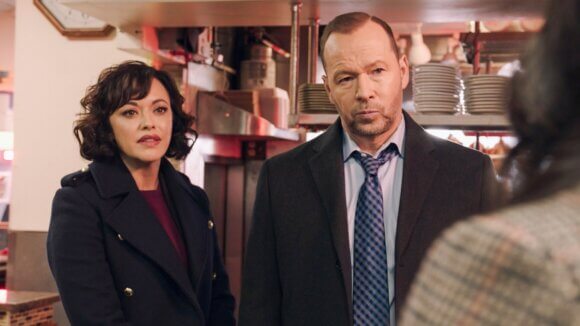
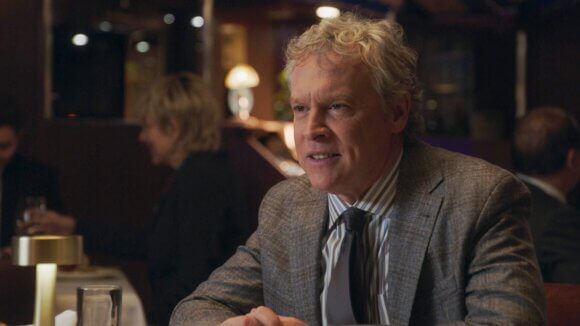
Emmy winner Tate Donovan guest stars as a labor union leader on CBS’s Blue Blood season 14 episode five. Directed by Robert Harmon from a script by Ian Biederman and Van B. Nguyen, episode five – “Bad Faith” – will air on Friday, April 5, 2024 at 10pm ET/PT.
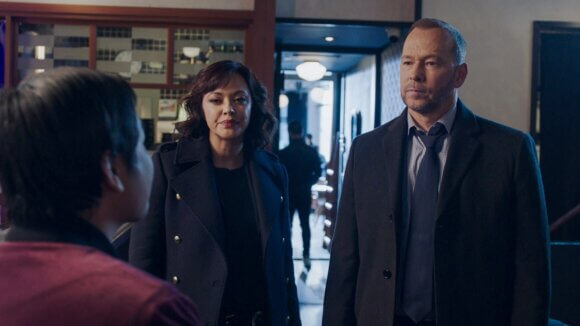
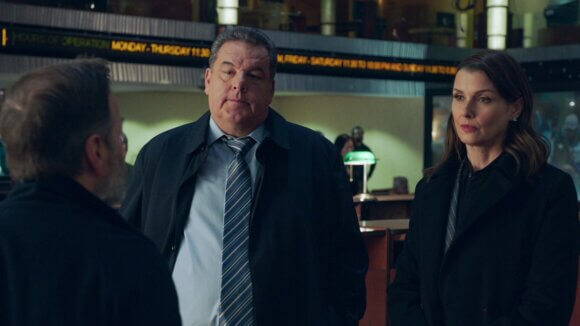
Tom Selleck returns to lead the final season’s cast as Frank Reagan. Donnie Wahlberg stars as Danny Reagan, Bridget Moynahan plays Erin Reagan, Will Estes is Jamie Reagan, Len Cariou is Henry Reagan, Marisa Ramirez plays Maria Baez, and Vanessa Ray stars as Eddie Janko.
“Bad Faith” Plot: Erin is designated to lead a federal investigation into corrupt horse racing. Also, Jamie investigates a drug trafficking operation involving rival gangs; Danny and Baez look into a series of assaults in Little Vietnam with the help of a familiar face; and Frank is torn when he learns the Brotherhood of Teamsters are lobbying for NYPD officers to join their union. James Le Gros guest stars as Don Voorhees, a potential trial witness.
Blue Bloods is a drama about a multi-generational family of cops dedicated to New York City law enforcement. Frank Reagan is the New York Police Commissioner, and heads both the police force and the Reagan brood. He runs his department as diplomatically as he runs his family, even when dealing with the politics that plagued his unapologetically bold father, Henry, during his stint as chief.
A source of pride and concern for Frank is his eldest son, Danny, a seasoned detective, family man, and Iraq War vet who on occasion uses dubious tactics to solve cases with his partner Detective Maria Baez. Erin, the middle daughter, is a New York assistant D.A. who serves as the legal compass for her siblings and father. Jamie is the youngest Reagan, a Harvard Law graduate, and the family’s golden boy. Unable to deny the family tradition, Jamie decided to give up a lucrative future in law and follow in the family footsteps as a cop. He’s found a friend and ally in his wife, Eddie, who keeps him on his toes and has very different reasons than the Reagans for joining the police force.
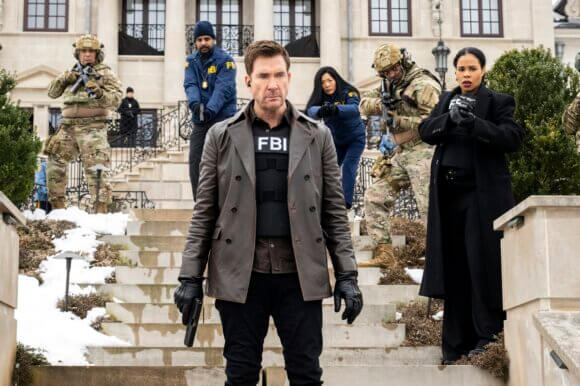
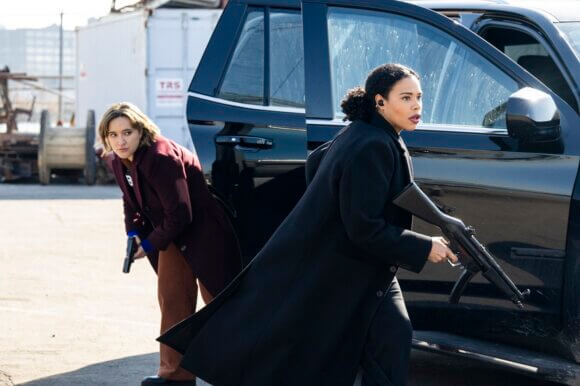
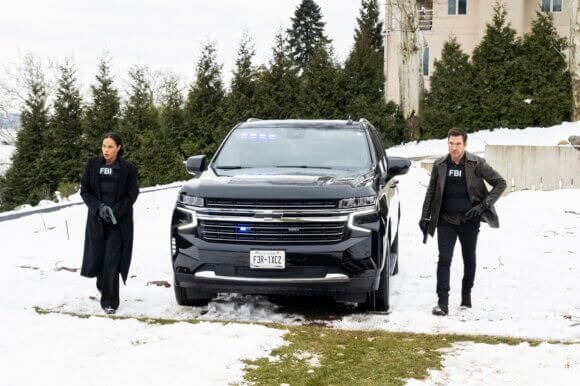
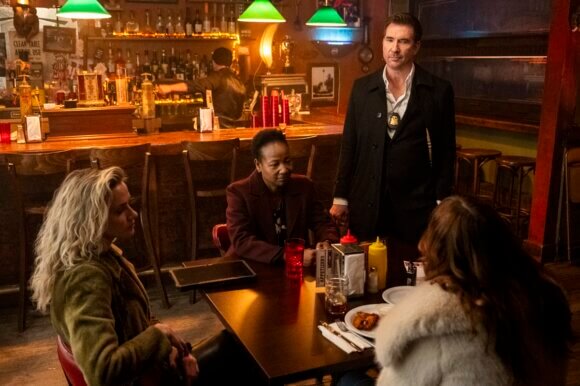
The team’s on the hunt for the person(s) responsible for the murder of four cops on CBS’s FBI: Most Wanted season five episode seven. Directed by Sharon Lewis from a script by David Hudgins and Chris Salmanpour, episode seven – “Rendition” – will air on Tuesday, April 2, 2024 at 10pm ET/PT.
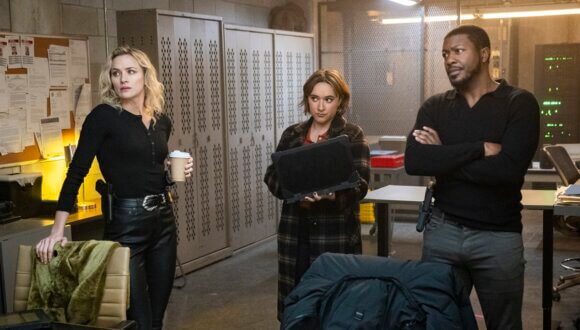
Season five stars Dylan McDermott as Supervisory Special Agent Remy Scott, Roxy Sternberg as Special Agent Sheryll Barnes, Keisha Castle-Hughes as Special Agent Hana Gibson, Edwin Hodge as Special Agent Ray Cannon, and Shantel VanSanten as Special Agent Nina Chase.
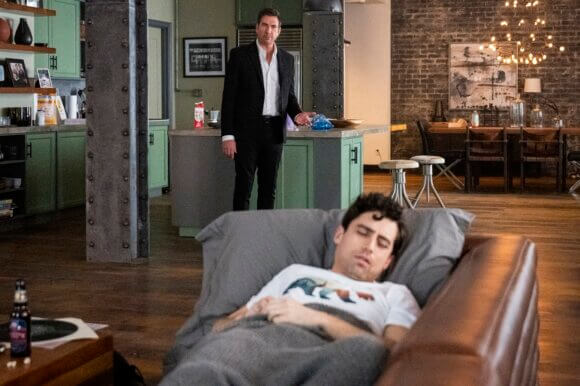
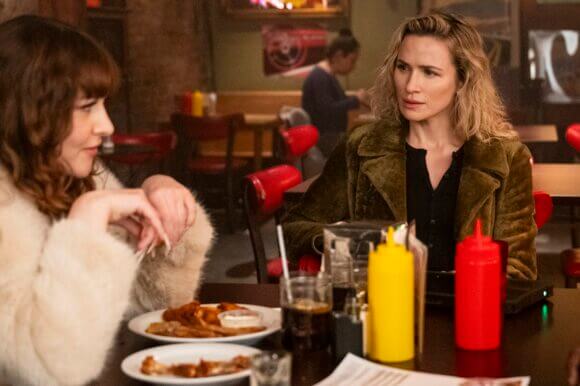
“Rendition” Plot: The Fugitive Task Force springs into action after four detectives are shot dead during a prisoner exchange outside of a diner in New Jersey. Meanwhile, Remy struggles with having Corey as a roommate.
From Emmy Award winner Dick Wolf, FBI: Most Wanted is a high-stakes drama that focuses on the Fugitive Task Force, an elite unit that relentlessly pursues and captures the notorious criminals on the Bureau’s Most Wanted list. The team’s charming but formidable leader is Supervisory Special Agent Remy Scott, who started his career in the New York FBI field office before rising through the ranks of the Bureau in Philadelphia and Las Vegas.
The team includes Special Agent Sheryll Barnes, a former NYPD detective and forensics expert who is raising two young children with her wife; Special Agent Hana Gibson, a gifted millennial computer whiz with a sharp wit and mad hacking skills; Special Agent Ray Cannon, who is a former New Orleans cop-turned-junior detective and worked Violent Crimes in Albany after following in his retired FBI agent father’s footsteps.
The newest member of the Fugitive Task Force is well-seasoned Special Agent Nina Chase who, most recently, worked assorted cases with the New York office of the Federal Bureau of Investigation. Originally from the Houston field office where she specialized in undercover work, Nina is a standout agent who is skilled with cars and has a penchant for driving fast. Always in the field and always on the run, FBI: Most Wanted is a weekly adrenaline shot about the thrill of the chase.
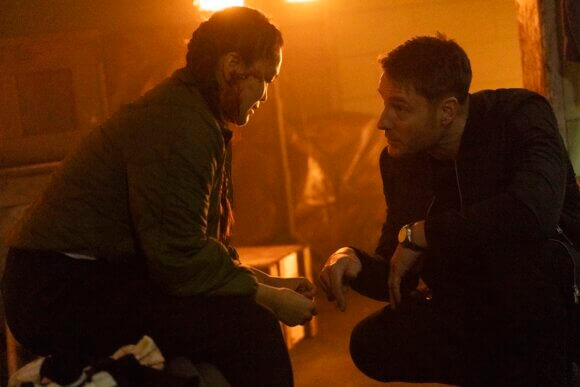
CBS’s Tracker season one episode seven opens with a young woman (Dianne Doan) attacked in an alley. She’s a much better fighter than her assailants and is on the verge of escaping up until the moment one of the men pulls out a gun.
The woman turns out to be a friend of Bobby’s named Sun Mai, and Colter (Justin Hartley) rushes to Chicago to investigate her abduction. Bobby (Eric Graise) is on the scene too, and fills Colter in on Sun. It turns out she’s a rising MMA star and quite a skilled fighter. Bobby explains the last time she was seen was on Monday after she finished her workout. She left the gym via the back alley exit.
He was supposed to meet Sun on Tuesday morning to show off the website he created for her, but she failed to show up.
Colter and Bobby check out the alley, and unfortunately, there aren’t any cameras. There’s really no reason for her to leave out the back, and Bobby recalls she got into an argument recently with another fighter named Dake. The guy happens to be in the gym right now, and Bobby confesses he already tried to speak with him – and it didn’t go well.
Sun doesn’t trust the government and, like Bobby, always uses a burner phone. Colter finds what looks like a piece of her phone on the ground and has Bobby call the number. A phone rings nearby and a quick look confirms there’s blood on it. Colter asks Bobby to trace Sun’s missed calls from Monday.
Bobby was right about Dake being difficult to talk to. Dake doesn’t even give Colter a chance to ask any questions before warning both him and Bobby to stop disturbing his workout. Art, the owner of the gym, steps in to de-escalate the situation and agrees to answer questions about Sun. Art doesn’t think Dake had anything to do with Sun’s absence; he thinks she’s just ghosting them.
Bobby’s concern for Sun’s safety finally gets to Dake and Art, and Art suggests Dake spill all the details about the last time Sun was seen in the gym. Dake explains why they were fighting, and it sounds like no big deal. “I hope she turns up. I really do,” says Dake.
Art confirms it was nothing more than “two alphas arguing over gym equipment.” He’s certain Dake has nothing to do with Sun’s disappearance. Art adds that Sun and her mother’s visas ran out, and she’s been stressed recently. He thinks it’s possible that ICE took her.
Colter contacts Reenie for help dealing with Immigration. She’ll be able to find out if they took her.
Although Sun’s mom doesn’t want help (she also doesn’t trust authorities), she’s reluctantly willing to let Colter and Bobby try and find her daughter. Colter explains they’re checking with Immigration just in case they picked her up. Colter’s also concerned that Sun’s phone indicates she was supposed to meet someone after her workout on Monday night. Sun’s mom doesn’t know who she’d be meeting, and she doesn’t have a boyfriend.
Sun’s mom fetches her daughter’s laptop and Bobby checks it out while she explains a lawyer named George Prine was working on pushing their green card applications through. They paid him upfront and he failed to deliver. He also refused to issue them a refund. Sun was angry they’d been cheated, but her mom suggested she let it go. Bobby finds something on Sun’s computer that proves she definitely didn’t just let it go.
Meanwhile, Reenie (Fiona Rene) uses her charms to get a lawyer she knows who works for the Feds to find out if Sun was picked up by Immigration.
Colter checks in with Velma (Abby McEnany) and Teddi (Robin Weigert) while on his way to attorney George Prine’s office. They’ve discovered he’s not a lawyer and his real name is Marv Johnson. He failed law school and has been scamming clients for years. Plus, he has a conviction for assault and battery.
Colter arrives at his office (it looks legit) and his receptionist claims he’s in court. Colter points out that’s strange since he’s not even a real lawyer. He calls out “Marv” and suggests the receptionist ask him about Sun Mai when he returns.
Marv is in his office, and after Colter leaves, he and his receptionist/partner-in-crime try to figure out if he’s a cop. Marv grabs his gun and starts following Colter, which, of course, Colter knew he would do. Colter grabs him and demands to know what he did to Sun. Marv denies he had anything to do with her disappearance, but Colter’s not buying it. After threatening his life, Colter gets the truth out of the scam artist.
It seems Marv sends his clients to a loan sharking crew when they need help paying his fees. Sun hadn’t paid back the loan and the “money jackals,” as Colter calls them, made Marv set up a meeting. Marv lied and said he had news about her visa when actually it was the loan sharks who wanted to meet Sun. Marv thought they’d just scare Sun and has no idea where they’re located.
Colter forces Marv to reveal they drive a crappy white van and that he knows part of the license plate number and a description of its exterior.
Reenie joins Bobby at Sun’s mom’s house and confirms Sun wasn’t picked up by ICE and hasn’t been deported. Bobby and Reenie assure the worried mom that Colter’s on the case and that he’s the best in the business. Reenie also reveals that she’ll work on getting the visa situation in order and that she won’t charge anything. (Colter’s also not charging for his services.)
Colter fills Bobby in on what he’s learned, and neither can guess where they’re holding Sun. Colter gives Bobby the partial plate number and a short while later Bobby determines it’s registered to All-Purpose Service Center.
Night’s fallen as Colter stakes out All-Purpose. He heads around back, breaks into the van, and finds a bag full of cash. Colter calls Bobby about finding the van and convinces Bobby to stay put as he needs to travel light right now.
Two men exit the shop as Colter hides in the back of the van. It pulls away with the men arguing over being late for a meetup.
While Colter is being driven around, Bobby and Reenie discuss how much he likes to keep secrets. He’s a lone wolf, and Bobby confesses he doesn’t know much about Colter’s family. And he hasn’t snooped around for answers. Reenie explains his dad died when he was young and that is part of why Colter is a loner.
Bobby reveals Colter saved him from a bad situation involving the Russian mob. Reenie’s surprised Colter never told her about that, but Bobby’s not. That’s just the way Colter rolls.
Bobby realizes Colter’s phone is on the move but he’s not in his truck. Colter’s not answering texts, and Bobby hopes he knows what he’s doing.
The van finally stops to drop the money. Colter hides under the van when it stops, and the two men grab the bag from the back and head inside a building, unaware of his presence. Once they’re inside, Colter calls Bobby from Sun’s phone and asks to be picked up at this drop-off site.
Bobby rolls up a short time later and they head off to follow the van, hoping one of its stops is where Sun is being held. Colter hid his phone in the van so they can track it.
The van stops and Colter orders Bobby to stay in the car. The men may have seen Bobby with Sun, but they won’t recognize Colter.
Colter hears music inside the building and kicks open an exterior door. Bobby gives Colter about a minute before following him in.
Inside, there’s a packed crowd watching an MMA match. Sun, injured and exhausted, is declared the winner, and Colter follows the men who help her out of the cage. He finds Sun trying to take care of her injuries and tells her he’s a friend of Bobby’s and is there to take her home. Sun refuses to leave because they’ll kill her mom if she doesn’t pay off her debt.
Bobby enters the arena area and learns this place is like the MMA but without any rules. He also learns Sun barely won and that they make the fighters fight with just a brief break to recover.
Sun tells Colter she just needs to fight for two more weeks. Colter informs her that Prine lied and that the sharks will never cut her loose. Sun blames herself because she took out the loan. Colter insists she needs to trust him and Bobby.
As Colter’s helping Sun to her feet, he’s attacked and held at gunpoint. The table is turned when Bobby sneaks in and helps Colter take down the armed man. Colter grabs his gun as Bobby checks on Sun. The man won’t give up his boss’ name, so Colter knocks him out.
They make it into another room but are shocked to run into Art from the gym. It turns out he’s the big boss and he orders them away from Sun, his “star attraction.” He denies he’s forcing her to fight but admits these fights are big business for him and bring in lots of money. Sun can stop fighting once her debt is paid off.
Colter challenges Art to drop his gun and fight him one-on-one. Art turns it down, and instead suggests his minion, Scott, would be willing to take his place. The conversation’s just a distraction and Colter kicks a trash bin into Art’s legs while Bobby and Sun escape. Colter grabs Art around the neck and threatens to shoot him if Scott doesn’t drop his gun.
Scott drops his gun, but apparently, Art’s not out of moves just yet. He attacks Colter and a fistfight ensues. Art escapes the room while Colter’s busy knocking out Scott. Colter grabs a gun and follows Art outside.
Art’s a big guy and he’s as slow as a slug. Colter easily catches up with him just as Bobby drives up and stops next to Art. As sirens come closer, Colter has Bobby take off with Sun while he remains behind holding Art at gunpoint.
In the days that follow, Reenie and Bobby check on Sun at her home and Sun’s mom makes a joke about Bobby being too skinny for her daughter. Reenie joins in on the teasing as Bobby and Sun exchange looks.
Reenie has great news to announce. First, George Prine is being charged with multiple offenses. Second, his arrest makes Sun and her mom eligible for a U Visa meant for victims of crime. Reenie will fly back for the hearing next Tuesday to represent them.
Bobby and Sun get a moment alone, and she thanks him for everything. She was impressed with his fighting skills, which she didn’t expect, and admits she underestimated him. Sun agrees to grab a drink later and discuss her website.
Meanwhile, Colter’s glancing through the folder with his personal information that he grabbed a few episodes back. Teddi and Velma call and confirm Art is facing multiple charges, including loan sharking. Plus, Reenie made sure Sun’s name wasn’t mentioned anywhere on Art’s charging documents.
He hangs up as Bobby and Reenie join him in a park. Colter turns down Bobby’s offer to pay for Sun, calling it “discounted services for a friend.” Bobby hates owing people and Colter promises that’s not what this is. Colter says they’re all good, and they’re all happy to be in the same place at the same time. Bobby wants to treat them to lunch, but Colter asks for a rain check because he’s got another job ahead of him.
Bobby shakes Colter’s hand before he walks off, thanking him for helping Sun. The episode ends with Reenie saying, “Lone wolf’s gonna lone wolf.”
Claire Danes is reuniting with Homeland co-creator and showrunner Howard Gordon for the Netflix limited series The Beast in Me. Described as a mystery thriller, the limited series was created by Gabe Rotter (The X-Files) and has Gordon attached as showrunner and executive producer.
“Since the tragic death of her young son, acclaimed author Aggie Wiggs has receded from public life, unable to write, a ghost of her former self. But she finds an unlikely subject for a new book when the house next door is bought by Nile Sheldon, a famed and formidable real estate mogul who was once the prime suspect in his wife’s disappearance,” reads the Netflix synopsis. “At once horrified and fascinated by this man, Aggie finds herself compulsively hunting for the truth – chasing his demons while fleeing her own – in a game of cat and mouse that might turn deadly.”
Danes will star as Aggie and serve as an executive producer. Additional executive producers will include Daniel Pearle (American Crime Story), Conan O’Brien, Jeff Ross, David Kissinger, and Jodie Foster. Series creator Rotter is writing and executive producing.
Three-time Emmy winner Claire Danes (Homeland, Temple Grandin) recently starred in the limited series Full Circle with Zazie Beetz, Jim Gaffigan, CCH Pounder, and Timothy Olyphant. Additional recent credits include Fleishman Is In Trouble and The Essex Serpent.
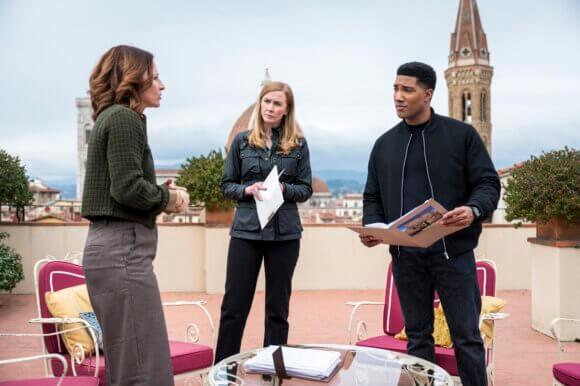
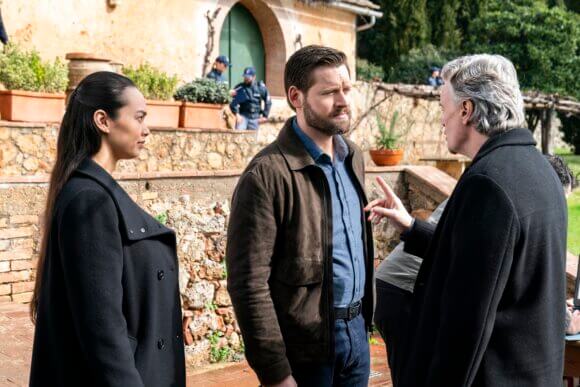
The team takes on a case involving the mob on CBS’s FBI: International season three episode seven. Directed by Jonathan Brown from a script by Kyle Steinbach, episode seven – “Andiamo!” – will air on Tuesday, April 2, 2024 at 9pm ET/PT.
Luke Kleintank returns to lead the season three cast as Special Agent Scott Forrester. Heida Reed stars as Special Agent Jamie Kellett, Carter Redwood is Special Agent Andre Raines, Vinessa Vidotto plays Special Agent Cameron Vo, Eva-Jane Willis is Europol Agent Megan “Smitty” Garretson, and Christina Wolfe is Special Agent Amanda Tate.
“Andiamo!” Plot: The Fly Team heads to the Tuscan countryside after an American couple’s son is kidnapped right outside their new home. Concerns are heightened as fingers begin to point to the mafia.
FBI: International Season 3 Description, Courtesy of CBS:
From Emmy Award winner Dick Wolf, fast-paced drama FBI: International is the third iteration of the successful FBI brand that follows the elite operatives of the Federal Bureau of Investigation’s International Fly Team. Headquartered in Budapest, they travel throughout Europe with the mission of tracking and neutralizing threats against American citizens wherever they may be, putting their lives on the line to protect the U.S. and its people.
The Fly Team’s Special Agent Scott Forrester, their accomplished and dedicated leader, puts his missions ahead of his personal life. Second in command is Special Agent Jamie Kellett, a heroic and fearless investigator – and her extensive network of informants is a powerful resource. Special Agent Andre Raines shines in the field and makes good use of his accounting background in tracking criminal enterprises’ moving money. Special Agent Cameron Vo, a competitive West Point grad, excels at interrogation and strategy, and Megan “Smitty” Garretson, a streetwise Europol agent with an extensive undercover background, uses her expertise to liaise with each host country they inhabit.
Newly embedded with the Fly Team is Special Agent Amanda Tate, a confident and tech savvy intel analyst, who stays quick on her feet and remains calm in the midst of chaos. Always at the scene where American interests are at risk, FBI: International is a globe-trotting depiction of law enforcement overseas.
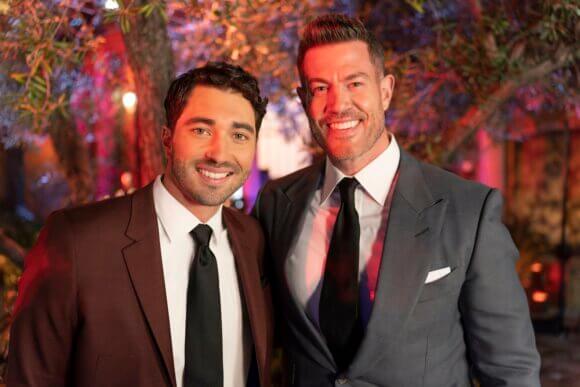
ABC’s 9-1-1 celebrates its 100th episode with a special The Bachelor crossover episode featuring Joey Graziadei and Jesse Palmer. Season seven episode four, “Buck Bothered and Bewildered,” will air on Thursday, April 4, 2024 at 8pm ET/PT.
Season seven stars Angela Bassett as Athena Grant, Peter Krause as Bobby Nash, Jennifer Love Hewitt as Maddie Buckley, and Oliver Stark as Evan “Buck” Buckley. Kenneth Choi plays Howie “Chimney” Han, Aisha Hinds is Henrietta “Hen” Wilson, Ryan Guzman is Eddie Diaz, and Gavin McHugh is Christopher Diaz.
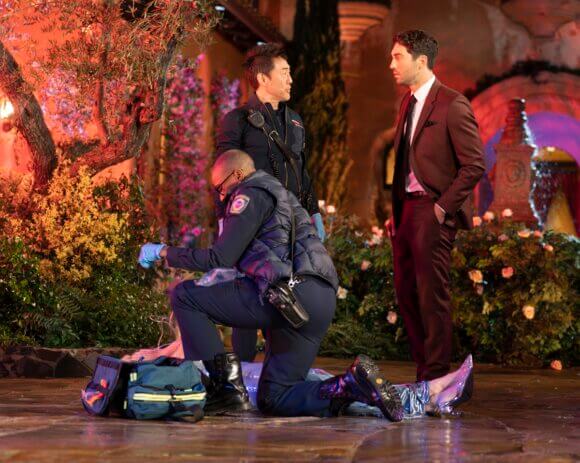
“Buck Bothered and Bewildered” Plot: Upon her return to shore, Athena’s son, Harry, finds himself in trouble with the law. Meanwhile, Buck grows envious as Eddie forms a close bond with someone else, and the 118 rescue a woman who’s stuck on receiving a rose at an iconic mansion.
Joey Graziadei and Jesse Palmer guest star on ‘9-1-1’ season 7 episode 4 (Disney/Chris Willard)
9-1-1 Description, Courtesy of ABC:
The series explores the high-pressure experiences of first responders — including police officers, firefighters and dispatchers — who are thrust into the most frightening, shocking, and heart-stopping situations. These emergency responders must try to balance saving those who are at their most vulnerable with solving the problems in their own lives. The show draws from real-life, high-pressure experiences of first responders who regularly face heart-stopping situations that are often unpredictable, intense, and uplifting at the same time.
Aisha Hinds, Kenneth Choi, and Joey Graziadei in season 7 episode 4 (Disney/Chris Willard)Kenneth Choi and Oliver Stark in season 7 episode 4 (Disney/Chris Willard)Peter Kraus, and Jesse Palmer in season 7 episode 4 (Disney/Chris Willard)Aisha Hinds, Kenneth Choi, and Joey Graziadei in season 7 episode 4 (Disney/Chris Willard)Kenneth Choi, Oliver Stark, Ryan Guzman, and Louis Ferrigno Jr in season 7 episode 4 (Disney/Chris Willard)Louis Ferrigno Jr and Ryan Guzman in season 7 episode 4 (Disney/Chris Willard)
Actor/director Dev Patel opens this two-minute look behind the scenes of Monkey Man by quoting a quote from the film: “The pain will leave you once it’s finished teaching you.” Patel, who made his feature film directing debut with the action thriller, learned that lesson the hard way, breaking his foot and his hand during shooting.
“I poured all of myself into this. Every frame, every beat, every detail…and it’s been a ferocious process making this film,” explained the Oscar-nominated actor.
Joining Patel in front of the camera are Sharlto Copley (District 9), Pitobash (Million Dollar Arm), Vipin Sharma (Hotel Mumbai), Sikandar Kher (Aarya), Adithi Kalkunte (Hotel Mumbai), and Sobhita Dhulipala (Made in Heaven). Ashwini Kalsekar (Ek Tha Hero), Makarand Deshpande (RRR), Jatin Malik, and Zakir Hussain (Duranga) also star.
“Inspired by the legend of Hanuman, an icon embodying strength and courage, Monkey Man stars Patel as Kid, an anonymous young man who ekes out a meager living in an underground fight club where, night after night, wearing a gorilla mask, he is beaten bloody by more popular fighters for cash,” reads Universal Pictures’ synopsis. “After years of suppressed rage, Kid discovers a way to infiltrate the enclave of the city’s sinister elite. As his childhood trauma boils over, his mysteriously scarred hands unleash an explosive campaign of retribution to settle the score with the men who took everything from him.”
Patel co-wrote the screenplay (based on his original story) with Paul Angunawela and John Collee. Producers include Patel, Jomon Thomas, Jordan Peele, Win Rosenfeld, Ian Cooper, Basil Iwanyk, Erica Lee, Christine Haebler, Sam Sahni, and Anjay Nagpal. Jonathan Fuhrman, Natalya Pavchinskaya, Jason Cloth, Suraj Maraboyina, Adam Somer, Aaron L. Gilbert, Andria Spring, Alison-Jane Roney, and Steven Thibault executive produced.