Glen Powell (Top Gun: Maverick) reunites with filmmaker Richard Linklater for Netflix’s Hit Man, a dark comedy so weird it’s hard to believe it’s inspired by a true story. The one-minute teaser stars Powell as a hitman who enjoys pie and promises to eliminate a pretty potential client’s problems. But all is not as it seems…
Glen Powell and director Richard Linklater previously worked together on Fast Food Nation, Everybody Wants Some!! and Apollo 10 ½: A Space Age Childhood. With Hit Man, Powell also collaborated with Linklater on the screenplay.
“When I was 14, I worked with Rick for the first time,” said Powell in an interview with Netflix’s Tudum. “And at that point, I thought, ‘Oh, my gosh, he’s one of the greats. I’m getting to be on a film set, a Richard Linklater film set.’ And now it’s 20 years later, and I look at Rick the same way. I just pinch myself every day that I get to be here.”
Adria Arjona as Madison Masters and Glen Powell as Gary Johnson in ‘Hit Man’ (Photo Cr. Courtesy of Netflix)
The cast also includes Adria Arjona, Austin Amelio, Retta, Sanjay Rao, Molly Bernard, and Evan Holtzman. Linklater, Powell, Mike Blizzard, Jason Bateman, and Michael Costigan served as producers. Stuart Ford, Zach Garrett, Miguel A. Palos Jr., Shivani Rawat, Julie Goldstein, Vicky Patel, Steve Barnett, Alan Powell, John Sloss, Scott Brown, and Megan Creydt executive produced.
Hit Man currently sits at 96% fresh on Rotten Tomatoes following festival screenings. Netflix is planning a limited theatrical release prior to the film’s June 7, 2024 debut on Netflix.
“Inspired by an unbelievable true story, a strait-laced professor discovers his hidden talent as a fake hit man,” reads Netflix’s synopsis. “He meets his match in a client who steals his heart and ignites a powder keg of deception, delight, and mixed-up identities.”
Sidney Flanigan stars as Autumn and Talia Ryder as Skylar in ‘NEVER RARELY SOMETIMES ALWAYS’ (Credit: Courtesy of Focus Features)
On January 22, 1973, the Supreme Court issued its landmark 7–2 decision in Roe v. Wade, protecting a woman’s constitutional right to choose. Nearly a half-century later, on June 24, 2022, the U.S. Supreme Court overturned Roe v. Wade. In the year that has followed that decision, a flurry of new legislation on abortion has been introduced, with many women now finding themselves in states where abortion is unavailable or severely restricted. Without federal protections, state legislatures are now determining abortion access, with some states increasing restrictions or even banning access while others are improving and protecting it.
From the silent days to the present, films have tried to reflect changing attitudes toward abortion. But no matter how many stories are told, people complain that the issue has not been covered well enough and that representation still falls short of reality.
One memorable turning point in pop culture was not in film but on TV just prior to the landmark 1973 ruling. In the CBS sitcom Maude, the title character played by Bea Arthur is a 47-year-old grandmother who finds herself unexpectedly pregnant. Her adult daughter encourages her to get an abortion since it is legal in New York and not as dangerous as it was decades prior. It was a groundbreaking TV moment seen by millions all at the same time and apparently prompted by a $10,000 reward offered by the group Zero Population Growth to any television comedy that addressed ways of controlling population growth.
Movies have not had a comparable single landmark moment. But looking at films over the decades does reveal a potent commentary about abortion, women’s rights, and changing societal views.
Here’s a list of 12 key films about abortion. The list is in chronological order and is by no means all-inclusive since there are over 200 films dealing with the issue either directly or peripherally, with the number still growing. But this is a good starter list and provides a solid cinematic context for where we are today with onscreen representation of abortion.
1. Where Are My Children? (1916)
This silent film is considered the first U.S. film to portray abortion onscreen. The story centers on Richard Walton, a district attorney, and his wife, Edith. While Richard tries to prosecute an abortionist, Edith secretly obtains abortions from the doctor so that children do not complicate her life. She also encourages her maid’s daughter to seek an abortion, which ends tragically in death for the young woman.
The film takes a clear anti-abortion stand but does address the socio-economic issues that can lead a woman to abortion, and it does suggest birth control as a means of avoiding abortion.
2. Detective Story (1951)
Taking a big jump in time to this next film in part because abortion is mostly absent from film during the decades of the Hays Code — the Motion Picture Production Code was a set of industry guidelines for the self-censorship that was in place from 1934 to 1968 for films coming from major U.S. studios.
Abortion was illegal when Detective Story came out. But audiences knew abortions happened, and most probably considered it a shameful crime committed by shady doctors and considered the women who sought abortions as somehow tainted.
Detective Story shares plot similarities with Where Are My Children? Jim (played by Kirk Douglas) wants to lock up Karl Schneider, a local abortionist. Jim is fueled by righteous fire and condemns the man as “a butcher and a murderer.” No one ever uses the words “abortion” or “abortionist” in the film, but it is clear what the film is referring to. Then Jim discovers that his “immaculate wife” Mary had been pregnant and unwed before she married him and had gone to Schneider.
Mary pleads, “Don’t judge me… Please try and understand.” But Jim has neither mercy nor compassion. He calls her a “tramp” and adds, “You went to that butcher, Schneider. Everything I hate! What’s left to understand?!”
But the film does not share Jim’s intolerance. The film refuses to judge Mary and does try to understand her story. The film offers criticism of a society that leaves an unwed mother with few options and then condemns or stigmatizes her for whatever option she takes. Detective Story raised the issue of abortion when few other films were willing to, and it tried to do so in a manner that gave context to why a woman would seek an abortion.
3. The Shame of Patty Smith (1962)
The Shame of Patty Smith opens with a young woman gang raped by three punks. Then an officious man behind a desk directly addresses the audience and explains: “The subject matter is illegal abortion. According to estimates by the best legal authorities, from 600,000 to two million such operations are performed in the United States every year, close to three thousand a day, many of these illegal surgeries result in the death of the victim and caused the murder of about eight thousand women every year. One every hour… the names and places have been changed. Yes. The names and places change. The despair, degradation, and misery do not.”
That’s a pretty somber start to this low-budget exploitation film. Some things in the film have dated very badly (especially regarding how the rape is viewed), but others are rather progressive. When Patty asks her doctor about an abortion, he is sympathetic to her situation but feels his hands are legally tied. After she leaves, he laments, “Here I am the doctor she comes to desperately trusting for help. What does the doctor do? He practically chases her to some quack [and] then hides behind the law to justify his actions.”
The doctor expresses concern for all the girls who come in suffering injuries from botched abortions by “butchers,” and he wishes legal abortions were an option. At one point, a Swedish doctor explains that abortions are legal in his country and Japan. The idea amazes Patty’s friend (and perhaps the audience at the time), but the other doctor quickly points out with some moral smugness that the abortion rate exceeds the birth rate in Japan.
Patty’s priest, however, offers no compassion, only condemnation for her decision and calling it murder. A cop investigating the abortionists tells Patty’s friend, “I’ll never understand why those girls don’t come to us when something like this happens.” The friend curtly replies, “Lieutenant, if you were a woman you’d understand.”
Although Patty must “pay” for her sins, the film clearly sympathizes with her and advocates for safer alternatives. The film, because it was little seen both at the time of its release and now, does not offer any kind of landmark turning point but it does signal that attitudes, even within the medical profession, are moving toward understanding the need for safe and legal abortions.
4. Love with a Proper Stranger (1963)
Unlike The Shame of Patty Smith, Love With A Proper Stranger was neither low-budget nor under the radar. It was a studio film starring Natalie Wood and Steve McQueen.
Wood plays Angie, a salesgirl who gets pregnant after a one-night stand with Rocky (McQueen), a musician. Rocky doesn’t even remember Angie when she tells him she’s pregnant, but he helps her get enough money for the abortion. When they meet the abortion provider, they and the audience are shocked by the woman’s attitude, shabby apartment, and unclean tools.
Fearing for Angie’s safety, Rocky grabs her and escorts the near-hysterical Angie out. Angie then decides to keep the child and initially insists she can do it on her own. But since this is a studio film, Rocky eventually wins her over so they can form a more traditional family.
While the outcome is a pat Hollywood ending, the film is notable for suggesting the gritty reality of illegal abortions to a mainstream audience.
5. Alfie (1966)
The British film Alfie centers on the womanizing title character played by Michael Caine. When one of his girlfriends gets pregnant, he resists having any involvement in her decision-making and tells her, “What you asking me for? It’s yours, isn’t it? Nobody in this world has any right to stop you doing what you want to.” But it’s not because he respects her right to choose but rather that he just doesn’t want to be bothered.
But when he gets a married woman pregnant and she remorsefully insists on an abortion, he offers his flat for the procedure. The abortionist reminds them, “I hope you both appreciate the seriousness of this case. To terminate a pregnancy after 28 days is a criminal offense punishable in a court of law with seven years’ jail. Not only that, but it’s a crime against the unborn child. It’s a course never to be embarked upon lightly. You must consider the circumstances thoroughly before you go through with your decision.”
The woman sees no other alternative, so she goes through with the abortion. The film offers a decidedly graphic depiction of abortion when Alfie sees the aborted fetus in the trash can.
Alfie then confesses: “I could have dropped on the spot with the shock. All I was expecting to see was… Come to think of it, I don’t rightly know what I was expecting to see. Certainly not this perfectly formed being. I half expected it to cry out. It didn’t, of course. It couldn’t have done. It could never have had any life in it. Not a proper life of its own… as it lay there so quiet and so still… it quite touched me. And I started praying or something. Saying things like, God help me! and things like that. And then I starts to cry. Straight up. The tears were running down my face. All salty. Like I was a kid myself… not for him. He was past it. For my bleeding self!
You know, it don’t half bring it home to you what you are when you see a helpless little thing like that lying in your own hands. He’d have been quite perfect. And I thought to myself, you know what, Alfie? You know what you done? You murdered him.”
That is a vivid and impactful scene. The film does not take a stand on the abortion as morally right or wrong. But it makes it visceral and suggests it is a decision not to be made lightly. It also reveals the impact an abortion can have not just on the woman but also on the man.
The film displayed a willingness to deal with the reality of an abortion in a quietly groundbreaking way.
6. Story of Women (1988)
French director Claude Chabrol tells the story of Marie LaTout (Isabelle Huppert in a stunning performance), who is reportedly based on the real person, Marie Louise Giraud, who was guillotined in occupied France as an abortionist who profited from the earnings of prostitutes. Chabrol and Huppert are not interested in trying to make Marie sympathetic or palatable. But they are interested in suggesting that Marie is made a scapegoat and severely punished with execution even though her accusers are made to appear culpable of more heinous crimes than hers.
Chabrol makes us feel that society is as guilty as her.
The story is set in Occupied France during World War II, and Marie, a housewife, becomes an abortionist while her husband is interned in a German POW camp as a means of making ends meet. She is depicted as a flawed character and as someone whose actions do lead to the death of some of her customers. But again, she would not need to provide these services, and women would not be seeking her out, if there were other options available.
7. Roe vs. Wade (1989, but not Roe V. Wade 2020)
Please do not watch the wrong film. The 1989 TV movie starring Amy Madigan as Sarah Weddington and Holly Hunter as “Jane Roe” tells the real-life story behind the landmark legal decision. The 2020 film feigns telling the true story of the case but instead uses it as a jumping-off point for a didactic anti-abortion tirade featuring conservative actors Jon Voight and Stacey Dash. But the 1989 film is solid and sincere.
Hunter and Madigan are great, and the film provides some insight and context to the famous case.
8. Citizen Ruth (1996)
Citizen Ruth, Alexander Payne’s first feature, serves up plenty of flawed characters as well as a flawed society. Ruth (Laura Dern) is, as the poster suggests, “one bad mother.” She is pregnant and in trouble with the law again, and simply wants an abortion. But she gets turned into a poster child that people on both sides of the abortion issue want to claim for their cause.
The great thing about the film is that Payne skewers those on both sides of the abortion issue as well as the media for fanning the flames of the debate. Ruth isn’t spared either. She is shown as willing to change her morals for whichever side she thinks will pay the higher price.
The film is not about the real issue of abortion but rather about how people have used the issue to serve their own purpose. Payne reveals a keen wit and a sly ability to poke fun at all his characters without turning them into complete caricatures. The film also offers commentary on how the debate can be and has been manipulated. Plus, it is savagely funny.
9. Vera Drake (2004)
Vera Drake (played Imelda Staunton) is a working-class mother in 1950s England who also performs home abortions for the desperate women who come to her. In contrast to Huppert’s Marie, Staunton’s Vera is designed to win our sympathies.
Director Mike Leigh uses abortion as a symbol of the differences between classes. Rich women can skirt the law and get safer abortions than lower-class women. The film has been criticized for trying to make us sympathize with an illegal abortionist who knew nothing about the medical procedure and endangered women’s lives.
Leigh stated in an interview: “I deliberately and without any affectation made Vera Drake to pose a moral dilemma that has no slick or easy answers. We live in an overpopulated world. There is no question that to bring an unwanted and unloved child into this chaos is deeply irresponsible. There is no question that you destroy life when you terminate a pregnancy. But there is also no question that choice ought to exist. Those are my personal views. The film can only work if the audience takes the moral and emotional debate away with them.”
Right-wing critics accused Vera Drake and many of the films depicting abortion as unfairly framing the issue in the past when abortions were decidedly more dangerous rather than addressing the issue in contemporary times when women do have more choices. But I would argue that we need to remember the past and the battles that have been fought, otherwise people forget that having legal access to abortion is not a guaranteed right. It was something that women fought hard to obtain, and the recent overturning of Roe V. Wade shocked some women who thought we could not go backwards.
Abortion needs to be explored in a larger context so that we understand where we have come from. Vera Drake ends up performing abortions because she feels compassion for the women who can’t afford another child or can’t deal with the scandal of being unwed and having a child. She is a person reacting to circumstances beyond her control and doing what she thinks can help. But she ends up having to face the consequences of her actions.
10. Lake of Fire (2006)
There are a lot of documentaries out there about abortion, but the reason I wanted to include this one is because it is less about taking sides and more about presenting the abortion debate in a manner that is intended to make you think. Because of that, it has been criticized by the left for not being pro-choice enough and from the right for not being fair to the pro-life side.
Abortion is a highly divisive issue, and both sides want to exclusively claim the moral high ground. But filmmaker Tony Kaye wants to let voices on both sides speak out and then let us sort through the information. And some interesting things happen.
He begins by letting the Christian right speak out first and actually monopolize a lot of the screen time. He doesn’t really challenge what they are saying, but as we listen, we slowly realize that all the voices are white men and it’s annoying. And that’s Kaye’s sly point. He doesn’t want to tell us that men are trying to control the debate about women’s bodies, he wants to show us and that is more impactful.
The film even foreshadows the downfall of Roe V. Wade in the comments of Roger Hunt, a South Dakota representative who sponsored a sweeping (but failed) state ban on abortion. His goal had been to get the legislation in front of the Supreme Court as a challenge to Roe v. Wade. He didn’t succeed, but someone else did in what was the culmination of decades of organized opposition to a woman’s right to choose.
“They’re prepared to organize for the long haul,” one interviewee explains in the film, and Kaye tries to connect the dots through decades of anti-abortion activism, and that’s the chilling point the film makes.
Lake of Fire is a two-and-a-half-hour documentary shot over a 16-year period, with Kaye risking his own money to finish it. From today’s perspective, the film plays like a potent warning, as if Kaye was trying to alert us to the dangers that lay ahead. He also wants to take a clear-eyed look at what abortion is to remind us that even if we are pro-choice, an abortion is never a decision one should make lightly.
Lake of Fire is a sprawling and complex documentary that is worth seeing if you want to better understand how we arrived at the point we are currently at and are facing a legal landscape without Roe V. Wade.
Never Rarely Sometimes Always begins with a high school talent show where one young girl sings an obviously very personal song about a relationship in which she feels controlled by the boy she loves. The film then follows her as she deals with difficulties at home and the discovery that she’s pregnant. Autumn (Sydney Flanigan) and her cousin Skylar (Talia Ryder) decide to take off from their rural Pennsylvania town and head for New York City so Autumn can get an abortion.
Writer-director Eliza Hittman maintains a remarkably restrained and non-judgmental tone in tackling a potentially hot-button issue. She gives us a pro-life health worker who gently tries to convince Autumn to consider having the child and putting the child up for adoption.
Then in New York, Autumn must go through an interview process by a compassionate woman at the clinic before receiving the abortion. This is where we discover the meaning of the title, it is the multiple-choice options to the questions she is asked. Questions like has your partner ever hit you… never, rarely, sometimes, always. As she answers questions about abuse, rape, and her sexual history we discover a bigger and more painful picture of her life.
Hittman always keeps the film intimate and about Autumn as a particular example of what a young woman growing up today can face. Take this also as an example of a new wave of films about abortion that allow the women to have more options, more control about their lives, and to not be stigmatized by the decisions they make.
In lighter comedies such as Juno and Knocked Up, the women choose not to have an abortion. In Juno, the baby is given up for adoption and in Knocked Up the mother keeps her child. All three films, in different ways and with different levels of realism, suggest that we are making progress. But with the overturning of Roe V. Wade, we now also realize there is still a long way to go.
The tagline for this documentary is: “They didn’t have a choice.” That takes on new meaning today as women find themselves facing a renewed battle for abortion rights a year after Roe V. Wade was overturned.
This recent documentary highlights the women who defied the anti-abortion laws, the Catholic Church, and the Chicago Mob. The women were known as the Janes, and they risked their personal and professional lives to support women with unwanted pregnancies before Roe V. Wade. This was a time when not only was abortion a crime, but it was also a felony to just circulate information about abortion in Illinois. But despite that, the Janes took it upon themselves to provide low-cost and even free abortions to an estimated 11,000 women between the late 1960s and 1973.
There is also a narrative film, Ask For Jane, that covers the same material, but I prefer the documentary and hearing from the real Janes, many of whom are speaking out about this for the first time. It’s a fascinating story of activism, compassion, and personal risk.
Now that Roe V. Wade has been overturned, maybe this film and these women can inspire a new generation of activists to find clever ways to make change happen and move us forward.
Lucasfilm’s Star Wars: The Bad Batch returns for one final season on February 21, 2024 with the release of the first three episodes. With the third and final season’s premiere just a month away, Disney+ has unveiled the official trailer which teases the return of fan-favorite Asajj Ventress to the animated sci-fi series.
The Star Wars: The Clone Wars spinoff features a voice cast that includes Dee Bradley Baker (American Dad!), Michelle Ang (Fear the Walking Dead: Flight 462), Keisha Castle-Hughes (Whale Rider), Jimmi Simpson (Westworld), Noshir Dalal (It’s Pony), and Wanda Sykes (The Upshaws).
“In the epic final season of Star Wars: The Bad Batch, the Batch will have their limits tested in the fight to reunite with Omega as she faces challenges of her own inside a remote Imperial science lab,” reads Disney+’s synopsis. “With the group fractured and facing threats from all directions, they will have to seek out unexpected allies, embark on dangerous missions, and muster everything they have learned to free themselves from the Empire.”
Season 3 Episode Release Schedule
February 21: Episode 1 “Confined,” Episode 2 “Paths Unknown,” and Episode 3 “Shadows of Tantiss”
February 28: Episode 4 “A Different Approach”
March 6: Episode 5 “The Return”
March 13: Episode 6 “Infiltration” and Episode 7 “Extraction”
March 20: Episode 8 “Bad Territory”
March 27: Episode 9 “The Harbinger”
April 3: Episode 10 “Identity Crisis” and Episode 11 “Point of No Return”
April 10: Episode 12 “Juggernaut”
April 17: Episode 13 “Into the Breach”
April 24: Episode 14 “Flash Strike”
May 1: Episode 15 “The Cavalry Has Arrived” (season/series finale)
Poster for Disney+’s ‘Star Wars: The Bad Batch’ season 3
The final season is executive produced by Dave Filoni (The Mandalorian), Athena Portillo (Star Wars: The Clone Wars), Brad Rau (Star Wars Rebels), Jennifer Corbett (Star Wars Resistance), and Carrie Beck (Ahsoka). Josh Rimes (Star Wars: Visions) is a co-executive producer and Alex Spotswood (Star Wars: The Clone Wars) is senior producer. Rau is the supervising director and Corbett is season three’s head writer.
Hamza Haq as Dr. Bashir Hamed in ‘Transplant’ season 3 episode 12 (Photo by: Yan Turcotte / Sphere Media/CTV)
We’ve arrived at the penultimate episode of NBC’s Transplant season three with an episode that finds Bash attempting to get closure with an old friend. Season three episode 12, “Tariq,” will air on Friday, February 2, 2024 at 9pm ET/PT. The season will wrap up with episode 13 on February 9th.
Hamza Haq leads the cast as Dr. Bashir “Bash” Hamed and Sirena Gulamgaus stars as Amira. Rekha Sharma plays Dr. Neeta Devi, Laurence Leboeuf is Dr. Magalie “Mags” Leblanc, and Ayisha Issa stars as Dr. June Curtis. Jim Watson plays Dr. Theo Hunter, Torri Higginson is Claire Malone, and Gord Rand is Dr. Mark Novak.
“Tariq” Plot: After a shocking incident at the hospital, the team rallies to save one of their own. Bash confronts a public health crisis in the refugee camp and seeks closure with an old friend. Dr. Devi faces scrutiny for her decisions. June contemplates helping her strong-willed patient with medically assisted death.
Laurence Leboeuf as Dr. Magalie Leblanc and Bruce Horak as Dr. Adam Viri in the “Tariq” episode (Photo by: Yan Turcotte / Sphere Media/CTV)
The Season 3 Plot, Courtesy of NBC:
The new season finds Bashir “Bash” Hamed (Haq) continuing his journey to start over, but with each new milestone comes a new challenge. While pursuing Canadian citizenship for himself and his younger sister, Amira (Gulamgaus), Bash closely examines who he’s becoming in his adopted country.
Still being asked repeatedly to prove himself, Bash works closely with his colleagues as they move forward following the dramatic conclusion of season two. Everyone continues to find themselves looking to adapt to change and understand how they fit in, both within and beyond the walls of York Memorial Hospital.
After Dr. Bishop’s (John Hannah) sudden departure, the team gains a new boss with the forward-thinking Dr. Neeta Devi. Dr. Devi has big ideas when it comes to overhauling the emergency department at York Memorial.
Hamza Haq as Dr. Bashir Hamed and Pascale Bussières as Dr. Denise Garnierin season 3 episode 12 (Photo by: Sphere Media / CTV)Laurence Leboeuf as Dr. Magalie Leblanc and Kenny Wong as Arnold De Luca in season 3 episode 12 (Photo by: Sphere Media / CTV)Ayisha Issa as Dr. June Curtis and Ron Lea as William Maxwell in season 3 episode 12 (Photo by: Sphere Media / CTV)Jim Watson as Dr. Theo Hunter and Emily Piggford as Crystal in season 3 episode 12 (Photo by: Sphere Media/CTV)Rekha Sharma as Dr. Neeta Devi in season 3 episode 12 (Photo by: Sphere Media/CTV)
Jon Bon Jovi (Photo Credit: David Roemer / Provided by Hulu)
Hulu’s picked up Thank You, Goodnight: The Bon Jovi Story, a four-part documentary series that goes behind the scenes and gets up close and personal with Jon Bon Jovi and the band. Hulu notes that the docuseries is the first to be produced with all members – past and present – of Bon Jovi cooperating.
The documentary series was directed and executive produced by Emmy Award winner Gotham Chopra (Kobe Bryant’s Muse, Man in the Arena), with Giselle Parets and Ameeth Sankaran for ROS also involved as executive producers.
“As thrilling as the story of a once-in-a-lifetime talent is, it is even more rare that a legend like Jon Bon Jovi lets the world into his most vulnerable moments while he’s still living them,” reads Hulu’s synopsis. “Forty years of personal videos, unreleased early demos, original lyrics, and never-before-seen photos that chronicle the journey from Jersey Shore clubs to the biggest stages on the planet. The series relives the triumphs and setbacks, greatest hits, biggest disappointments and most public moments of friction.”
Hulu has set a Friday, April 26, 2024 premiere date for Thank You, Goodnight: The Bon Jovi Story.
January 21, 2024 marked the 40th anniversary of the band’s release of their first self-titled album. Over their first four decades, Bon Jovi sold more than 130 million albums, and they were inducted into the Rock and Roll Hall of Fame in 2018. Frontman Jon Bon Jovi was also inducted into the Songwriters Hall of Fame, and has used his popularity and spotlight to raise funds to help the poor, unhoused, and hungry.
Apple TV+ has released an intense trailer for Constellation, a psychological thriller starring Noomi Rapace (The Girl with the Dragon Tattoo). The first trailer for the eight-episode series introduces Rapace as an astronaut who escapes a catastrophic event in space only to return home where she feels detached from her life and her young daughter.
Joining Rapace in the conspiracy-based drama are Jonathan Banks (Better Call Saul), James D’Arcy (Agent Carter), Julian Looman (Emily in Paris), William Catlett (A Thousand and One), and Barbara Sukowa (Voyager). Newcomers Rosie and Davina Coleman star as Alice.
Peter Harness (The War of the Worlds) created the series, writes, and executive produces, with Emmy Award-winner Michelle MacLaren (Shining Girls), Oscar nominee Oliver Hirschbiegel (Downfall), and Oscar nominee Joseph Cedar (Footnote) directing. MacLaren, David Tanner, Tracey Scoffield, Caroline Benjo, Simon Arnal, Carole Scotta, and Justin Thomson executive produce.
Noomi Rapace stars in ‘Constellation’ (Photo Credit: Apple TV+)
Constellation will premiere on Apple TV+ on February 21, 2024 with the release of the first three episodes. New episodes follow on Wednesdays leading up to the March 27th season finale.
“Constellation stars Rapace as Jo – an astronaut who returns to Earth after a disaster in space – only to discover that key pieces of her life seem to be missing,” reads Apple TV+’s synopsis. “The action-packed space adventure is an exploration of the dark edges of human psychology and one woman’s desperate quest to expose the truth about the hidden history of space travel and recover all that she has lost.”
All of Us Strangers‘ Andrew Scott takes on the lead role in Netflix’s Ripley, based on Patricia Highsmith’s popular Tom Ripley novels. The first one-minute teaser captures a noir vibe in stunning black & white and briefly reveals the first look at Scott in character.
The eight-episode drama also features Dakota Fanning (The Alienist) as Marge Sherwood and Johnny Flynn (Lovesick) as Dickie Greenleaf. Eliot Sumner, Maurizio Lombardi, Margherita Buy, and John Malkovich also star.
Oscar winner Steven Zaillian (Schindler’s List) wrote the series and directed all eight episodes. Zaillian also served as an executive producer along with Garrett Basch, Clayton Townsend, Guymon Casady, Ben Forkner, Sharon Levy and Philipp Keel of Diogenes. Series star Andrew Scott is a producer.
“Tom Ripley (Scott), a grifter scraping by in early 1960s New York, is hired by a wealthy man to travel to Italy to try to convince his vagabond son to return home,” reads Netflix’s synopsis. “Tom’s acceptance of the job is the first step into a complex life of deceit, fraud and murder.”
Four-time Oscar nominee Annette Bening and two-time Emmy nominee Sam Neill lead the cast of Peacock’s Apples Never Fall, a limited series based on Liane Moriarty’s New York Times bestselling novel. The first official teaser briefly introduces the family at the heart of the story and reveals that beneath the family matriarch’s happy facade lie carefully kept secrets.
Joining Bening and Neill in the seven-episode drama are Jake Lacy, Alison Brie, Conor Merrigan-Turner, and Essie Randles. Georgia Flood, Jeanine Serralles, and Dylan Thuraisingham also star, with Katrina Lenk, Timm Sharp, Nate Mann, Paula Andrea Placido, Pooja Shah, and Quentin Plair guest starring.
Melanie Marnich (The OA) adapted Moriarty’s book for the series and serves as executive producer and showrunner. Author Moriarty also executive produces along with Bening, David Heyman, Gregory Jacobs, Joe Hortua, Albert Page, and Jillian Share. Executive producer Chris Sweeney and Dawn Shadforth direct.
“I’ve never been able to resist a story that feels like an immersive vacation from life…and yet is deliciously about life. Enter: Apples Never Fall, by Liane Moriarty. The riveting and twisty mystery is anchored by the Delaney family, whose wit, wounds, yearning and complexity made me want to translate this great book to television and made me feel like the Delaneys had something to say to all of us,” commented Marnich.
Marnich continued: “Through them, this story dives into the complexities of love, long-term marriage, and the struggle to define oneself within—and beyond—family. It was thrilling to write about the truly grown-up issues the Delaneys are grappling with, like the sometimes brutal sacrifices parents make to keep a marriage and family together. We also take the gloves off when capturing what it takes to be a working mother and wife as we follow Joy into the mystery at the heart of this show.”
Peacock will release all seven episodes on March 14, 2024 for your binge-watching pleasure.
Annette Bening as Joy in ‘Apples Never Fall’ (Photo by: Jasin Boland/PEACOCK)
Peacock released this synopsis of the limited series:
“Apples Never Fall centers on the seemingly picture-perfect Delaney family. Former tennis coaches Stan (Sam Neill) and Joy (Annette Bening) have sold their successful tennis academy and are ready to start what should be the golden years of their lives. While they look forward to spending time with their four adult children (Jake Lacy, Alison Brie, Conor Merrigan-Turner, Essie Randles), everything changes when a wounded young woman knocks on Joy and Stan’s door, bringing the excitement they’ve been missing.
But when Joy suddenly disappears, her children are forced to re-examine their parents’ so-called perfect marriage as their family’s darkest secrets begin to surface.”
Conor Merrigan-Turner as Logan, Essie Randles as Brooke, Sam Neill as Stan, Annette Bening as Joy, Alison Brie as Amy, and Jake Lacy as Troy (Photo by: Vince Valitutti/PEACOCK)Jake Lacy as Troy, Essie Randles as Brooke, Alison Brie as Amy, and Conor Merrigan-Turner as Logan (Photo by: Vince Valitutti/PEACOCK)Sam Neill as Stan and Annette Bening as Joy (Photo by: Jasin Boland/PEACOCK)Conor Merrigan-Turner as Logan, Annette Bening as Joy, and Jake Lacy as Troy (Photo by: PEACOCK)
Finn Bennett and Jodie Foster in ‘True Detective: Night Country’ episode 2 (Photo by Michele K. Short/HBO)
HBO’s True Detective: Night Country, season four of the award-winning anthology, began with the mind-blowing discovery that an entire research team just up and vanished, leaving food on counters and a DVD playing back at the Tsalal Arctic Research Station in Ennis, Alaska. Episode one introduced Academy Award-winner Jodie Foster as Ennis Police Chief Liz Danvers and Kali Reis as Alaska Trooper Evangeline Navarro, who will be – reluctantly – teaming up to figure out what happened to the researchers, a disappearance that Navarro believes is connected to the cold case of a local activist and midwife who was brutally murdered six years ago.
Episode two kicks off with Liz and Officer Peter Prior (Finn Bennett) examining the researchers’ frozen bodies, which were discovered outside of town at the end of the season premiere. Their bodies are frozen in grotesque positions and partially sticking out of the snow. It appears the victims are naked and have ruptured eardrums, and Peter believes one of them scratched their own eyes out.
Danvers finds a symbol on one of the victims’ heads. She originally planned to turn the case over to Anchorage to investigate because it’s too big for their small department, but she’s changed her mind and wants to keep it. Danvers reminds everyone at the crime scene to be professional and at least act like they know how to behave.
Navarro finds the victims’ clothing, including shoes, arranged neatly not far from the bodies.
As the police are carefully digging out the bodies, one suddenly starts to move and makes disturbing gurgling noises.
The surviving victim is placed in a medically-induced coma and will most likely have his leg amputated. Liz takes a call from a nurse and learns he can’t be questioned. A call from Peter informs her he’s figured out how to move the bodies without destroying any evidence.
Liz disrupts a high school class and sends the students home. The teacher, Bryce (a geologist), isn’t happy about the intrusion or happy to see her since they used to sleep together. Liz assures him she just wants to ask about the Tsalal research facility.
Bryce describes the researchers as madmen and very reclusive. Most research facilities switch out personnel, but not Tsalal. No one comes in, and no one goes out. Bryce knows they spent decades trying to sequence the DNA of an extinct microorganism that potentially could stop cellular decay. In layman’s terms, the work they were doing could cure cancer and autoimmune diseases and was basically a game changer. However, he doesn’t think what they were doing was ever going to work.
Navarro stops by Rose’s place and asks if she sees Travis often. (Travis is the dead man who showed Rose where the missing researchers were.) Travis committed suicide because he didn’t want leukemia to take him. Navarro found him dead, and that’s how she and Rose (Fiona Shaw) met. Rose is certain a lot of Ennis residents can see the dead.
“I think the world is getting old, and Ennis is where the fabric of all things is coming apart at the seams,” says Rose.
Rose believes some of the dead come because they miss people, and some have something to say. Others just want to take the living with them.
Evangeline opens up to Rose about her sister’s troubles. Her sister believes people are following her and that their dead mother is calling her. Rose tells her not to confuse seeing the dead and mental illness.
As they say goodbye, Rose asks Evangeline if she saw the symbol on the body. After Rose draws the symbol in the snow, Evangeline confirms she’s seen it before. Rose says it’s older than Ennis – and probably older than the ice.
Liz returns to the station where Captain Connelly (Christopher Eccleston) is talking to the officers. Connelly informs Liz this case is going to Anchorage and Liz protests. She wants the case and Connelly assumes that’s only because it’s her way of getting back at him for sending her to Ennis.
Liz reads him a rule from the Alaska Forensic Crime Detection Laboratory Manual. It clearly states frozen bodies are not to be moved until properly thawed. If they’re moved, the evidence obtained could be compromised.
Score one for Liz, as she’s staved off the removal of the case from Ennis for now.
Liz heads to the ice rink to see if they can keep the bodies there while they thaw out. Kate (Dervla Kirwan), who is apparently a bigwig at the mine that owns the rink, agrees to help even though it’s obvious she despises Liz.
It seems like the entire town fills the streets as the bodies are brought to the rink. After they’re delivered, Liz and Peter get a better look at the injuries and Pete thinks they bit their own hands. Liz suggests they dig into old autopsies for similar self-inflicted wounds in past cases.
Jodie Foster and Finn Bennett in ‘True Detective: Night Country’ episode 2 (Photo by Michele K. Short/HBO)
Liz and Peter put faces to names (they have photos of each researcher from Tsalal), and thus far, Peter has counted five heads and nine feet. He wonders why they appear to be climbing on top of each other as if something was chasing them. Liz thinks hypothermia caused delirium.
Evangeline joins the frozen pile examination and notes that Kate might hate Liz more than she hates her. Liz confesses she slept with Kate’s husband while the couple were still married. Evangeline points out that the symbol on the surviving victim’s forehead was also tattooed on unsolved murder victim Annie K’s body. Evangeline thinks they should work together since it’s the same case. Liz refuses, and Evangeline insults her, claiming everyone hates her except Peter.
Peter has the brilliant idea to use the victims’ faces to unlock their phones.
Evangeline visits Annie’s brother, Ryan, to see if he recognizes Clark, the researcher who was photographed wearing Annie’s jacket. Unfortunately, Ryan’s never seen him. A miner catches a glimpse of the photo, and it’s evident he knows Clark. However, he denies it.
A fight breaks out and interrupts their conversation.
Back at the ice rink, Liz and Peter ask each other questions as they attempt to figure out what could have happened. (Liz likes to make Peter try and come up with the right questions as an investigative tool.) If there is, in fact, a killer, why would they fold the victims’ clothes in neat piles? They toss out ideas, including a polar bear attack, but nothing sticks. The symbol on a victim’s forward stumps them since they don’t know when it was drawn, what it means, or who drew it.
Peter nails one “right” question when he wonders how scared you have to be to run out into the freezing snow and ice without shoes or without being completely dressed.
Peter plays a video from researcher Facundo’s phone. In it, Clark can be seen in the background convulsing. When Facundo asks if he’s okay, Clark replies, “She’s awake.” The video then cuts off.
Kali Reis in ‘True Detective: Night Country’ episode 2 (Photo by Michele K. Short/HBO)
Evangeline goes to see Eddie Qavvik (Joel Montgrand), the owner of Qavvik’s Bar and her no-strings-attached sexual partner. Eddie reveals water in some parts of the town is undrinkable (and black) and the citizens are blaming the mine. Fights have been breaking out between townies and miners because of it.
There’s even talk of protests.
Liz interviews one of the cleaning crew (the same woman who hit the abusive guy in the head with a bucket in episode one) and learns she never saw Annie K at Tsalal. The woman also claims to have never seen the symbol before. The researchers never spoke to any of the cleaning ladies.
Another cleaning lady claims Clark was really strange, and she found him locked in his room, crying. The other researchers just ignored him.
Peter speaks with the delivery driver who discovered the tongue. He reveals that the last couple of times he went to Tsalal, Clark was talking to himself a lot and staring at nothing. The driver does confirm he’s seen the symbol and that Clark had it tattooed on his chest. He saw it while Clark was walking around naked and acting strange. The driver mentions he thought he saw someone when he first got to the research station, but he’s sure it was just one of the dead. Either that or he imagined it.
Evangeline heads out to see Chuck Moseley at the Silver Sky Mining barracks. On her drive there, she drops her phone, and when she reaches for it, she retrieves a necklace with a cross instead. Instantly, she flashes back to her mother wearing a necklace like it while going through a psychotic episode.
She snaps out of the memory when a truck honks at her. Evangeline swerves at the last minute and avoids a head-on collision. She throws the necklace out of the window.
Evangeline makes it to the mine barracks and speaks with Chuck, the miner who denied knowing the researcher even though it was obvious he did. Chuck claims Clark bought a trailer from his cousin seven years ago and paid $10,000 in cash.
Peter’s dad, Hank (John Hawkes), notices his files on Annie K are missing.
Liz and Peter fill each other in on the interviews they conducted. Peter also learned Tsalal was receiving funding from a shell company called NC Global Strategies which belongs to Tuttle United. Tuttle’s involved in a little bit of everything, including crude oil and cruise lines.
Liz retrieves her daughter, Leah (Isabella Star LaBlanc), from Peter’s house and sees that Kayla’s grandmother drew Kakiniit on Leah’s face. (Kayla is Peter’s wife.) Liz isn’t pleased and orders her to wash it off. In return, Kayla demands that Liz leave.
Evangeline tries to talk her sister into checking into The Lighthouse, a community center for people dealing with addictions. Her sister insists she doesn’t need to.
Later, Leah sneaks out while her mom’s working on their Christmas decorations. Liz finds the stuffed polar bear and has a flashback of herself with a child playing with the bear.
Peter’s at the ice rink defrosting the researchers when his dad slaps him across the face. Hank’s upset that Peter took Annie’s files without permission. He warns his son never to steal from him again. Hank also reminds him Liz isn’t his family and she doesn’t own him.
Liz visits Captain Ted Connelly at his hotel, and it’s revealed he’s another one of the men she has a sexual history with. (Liz seems to have a thing for married men and is quite the player.) After a quickie, Ted asks why she wants to keep this case. He admits he’s worried it’s going to turn into a disaster.
Jodie Foster, Kali Reis, and Finn Bennett in ‘True Detective: Night Country’ episode 2 (Photo by Michele K. Short/HBO)
After her sexual liaison, Liz returns to the station and looks over Clark’s credit card statement that Peter managed to retrieve. It shows Clark paid a tattoo shop on April 22, 2017. Liz reaches the tattoo artist, and she recalls Clark got sentimental and cried when he got the tattoo. She forwards Liz a photo of Clark’s tattoo and a photo of the model he used for inspiration.
Liz is too stunned to respond to the tattoo artist.
It turns out the model for the tattoo was a photo of Clark and Annie embracing, shirtless. Liz immediately heads to Evangeline’s and shows her the photos. She also discloses that the DNA came back on the tongue found at the Tsalal facility. It is Annie’s. Liz confirms their cases definitely overlap.
Evangeline wants to talk about the past and mentions Wheeler, but Liz stops her. (Who is Wheeler?!)
Leah pays a surprise visit to Peter at the rink. They discuss Liz, and Leah recalls that her dad was a stoner, and he and Liz used to love dancing together. She thinks Liz also smoked weed, and they both laugh while trying to picture that.
Evangeline goes to see Qavvik since she’s in the mood for sex. She tells him that she and Liz are teaming up, but right now, she doesn’t have anything new to contribute to the investigation. Suddenly, she figures out Clark bought a trailer to keep his relationship with Annie a secret. And where do you keep a trailer that you don’t want anyone to know about? The Nook.
Evangeline is right and finds the trailer just where she expected it to be.
Liz is pouring over Clark’s notes when Evangeline calls with news of the discovery.
Liz joins Evangeline at the trailer, and they look around the place. There are animal bones on the table and knitted dolls hanging from nooses. They also find Annie K’s phone and a life-size doll fully dressed on a bed.
Episode two ends with Peter calling them to come to the rink. Once there, Peter points out that there are only six bodies in the frozen pile. Clark is missing and Evangeline believes he’s alive.
Yuki Kura as Yoshii Nagakado in ‘Shogun’ (Photo CR: Kurt Iswarienko/FX)
The major broadcast networks’ February 2024 lineups include the return of primetime dramas and comedies that were delayed to midseason due to the Writers Guild and SAG-AFTRA strikes. The premium channels also have a sprinkling of new shows and returning series set to premiere in February, with Prime Video’s Mr. & Mrs. Smith, Apple TV+’s The New Look, FX on Hulu’s Shogun, and Netflix’s One Day making their debuts.
The FBI and NCIS franchises kick off new seasons in February; Abbott Elementary returns on the heels of creator/star Quinta Brunson’s Emmy win; and Young Sheldon, Blue Bloods, SWAT, The Good Doctor, and Curb Your Enthusiasm start their final season runs. And the much-anticipated The Walking Dead spinoff The Walking Dead: The Ones Who Live, starring Andrew Lincoln and Danai Gurira, takes viewers back to the post-apocalyptic zombie-filled world beginning February 25th.
February 2024 TV Premiere Dates:
Thursday, February 1 A Bloody Lucky Day Season 1 (Paramount+) Clone High Season 2 (Max) Farmer Wants a Wife Season 2 (Fox) Genius: MLK/X Anthology Season 4 (NatGeo)
Friday, February 2 Love & WWE: Bianca & Montez Season 1 (Hulu) Moon Girl and Devil Dinosaur Season 2 (Disney+) Mr. & Mrs. Smith Season 1 (Prime Video)
Wednesday, February 7 Abbott Elementary Season 3 (ABC) The Conners Season 6 (ABC) Judge Steve Harvey Season 3 (ABC) Not Dead Yet Season 2 (ABC)
Thursday, February 8 Couple to Throuple Season 1 (Peacock) Halo Season 2 (Paramount+) I Wasn’t Expecting a Baby! Season 1 (Lifetime) One Day Season 1 (Netflix) Tokyo Vice Season 2 (Max)
Friday, February 9 Alpha Males (Machos Alfa) Season 2 (Netflix) A Killer Paradox Season 1 (Netflix) Ninja Kamui Season 1 (Adult Swim) The Silent Service Season One – The Battle of Tokyo Bay (Prime Video)
Monday, February 12 Bob Hearts Abishola Season 5 (CBS) NCIS Season 21 (CBS) NCIS: Hawaii Season 3 (CBS) The Neighborhood Season 6 (CBS) Rock Paper Scissors Season 1 (Nickelodeon)
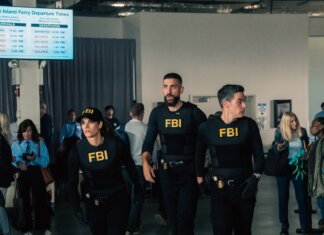
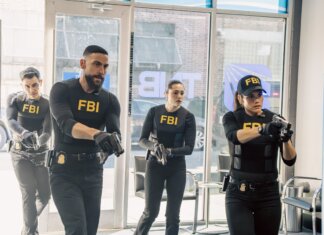
Tuesday, February 13 FBI Season 6 (CBS) FBI: International Season 3 (CBS) FBI: Most Wanted Season 5 (CBS)
Wednesday, February 14 Love Is Blind Season 6 (Netflix) The New Look Season 1 (Apple TV+) Resident Alien Season 3 (Syfy)
Thursday, February 15 Ghosts Season 3 (CBS) House of Ninjas Season 1 (Netflix) Ready, Set, Love Season 1 (Netflix) So Help Me Todd Season 2 (CBS) Vigil Season 2 (Peacock) Young Sheldon Season 7 (CBS)
Friday, February 16 Blue Bloods Season 14 (CBS) The Dynasty: New England Patriots Limited Series (Apple TV+) Fire Country Season 2 (CBS) Life & Beth Season 2 (Hulu) S.W.A.T. Season 7 (CBS)
Sunday, February 18 American Idol Season 22 (ABC) CSI: Vegas Season 3 (CBS) The Equalizer Season 4 (CBS) Last Week Tonight with John Oliver Season 11 (HBO) Naked and Afraid Season 17 (Discovery Channel) The Simpsons Season 35 (Fox) What Would You Do? Season 16 (ABC)
Poster for ‘The Good Doctor’ season 7 (Disney)
Tuesday, February 20 Crime Nation Season 1 (The CW) The Good Doctor Season 7 (ABC) Little People, Big World Season 25 (TLC) The Rookie Season 6 (ABC) Will Trent Season 2 (ABC)
Wednesday, February 21 Constellation Season 1 (Apple TV+) The Family Stallone Season 2 (Paramount+) Messi’s World Cup: The Rise of a Legend Limited Series (Apple TV+) Star Wars: The Bad Batch Season 3 (Disney+)
Thursday, February 22 Avatar: The Last Airbender Season 1 (Netflix) Death in the Dorms Season 2 (Hulu) Summer House Season 8 (Bravo)
Andrew Lincoln as Rick Grimes in ‘The Walking Dead: The Ones Who Live’ (Photo Credit: Gene Page/AMC)
Friday, February 23 The Second Best Hospital in the Galaxy Season 1 (Prime Video)
Sunday, February 25 Biography: WWE Legends Season 4 (A&E) The Walking Dead: The Ones Who Live Season 1 (AMC) WWE Rivals Season 3 (A&E)
Monday, February 26 Deal or No Deal Island Season 1 (NBC) The Voice Season 25 (NBC)
Tuesday, February 27 Shōgun Season 1 (FX on Hulu)
Wednesday, February 28 Iwájú Season 1 (Disney+) Survivor Season 46 (CBS)
Thursday, February 29 Elsbeth Season 1 (CBS) Me, Hereafter Docuseries (Hulu) The Tourist Season 2 (Netflix)