
Advertisement
Home Blog Page 759

National Film Registry Adds ‘Lord of the Rings’ and ‘Return of the Jedi’

Lord of the Rings The Fellowship of the Ring
Sean Astin and Elijah Wood in ‘Lord of the Rings: The Fellowship of the Ring’ (Photo © 2001 New Line Productions, Inc.)

Star Wars Episode VI — Return of the Jedi, The Lord of the Rings: The Fellowship of the Ring, Selena, and Cooley High are among the new group of 25 films set to be inducted into the National Film Registry of the Library of Congress. Films are chosen for the honor based on “their cultural, historic or aesthetic importance to preserve the nation’s film heritage,” with the new inductees bringing the total included in the National Film Registry to 825.

“Films help reflect our cultural history and creativity — and show us new ways of looking at ourselves — though movies haven’t always been deemed worthy of preservation. The National Film Registry will preserve our cinematic heritage, and we are proud to add 25 more films this year,” stated Librarian of Congress Carla Hayden. “The Library of Congress will work with our partners in the film community to ensure these films are preserved for generations to come.”

A film must be at least 10 years old in order to qualify for the National Film Registry. This year the public nominated 6,100 titles, with significant online support put behind the Return of the King and The Fellowship of the Ring nominations.

“In 1951, Professor Tolkien expressed the wish that ‘… other minds and hands, wielding paint and music and drama…’ might one day come to the world of middle-earth. And they did — actors and artists, composers and musicians, linguists and digital wizards — a myriad of talent came together to bring his vast work of imagination to life on the screen,” said the filmmaking team of Peter Jackson, Fran Walsh and Philippa Boyens. “It is a great honor to have The Lord of the Rings: The Fellowship of the Ring selected this year by the National Film Registry. We are proud to be part of an archive that celebrates and preserves the art of visual storytelling, for generations to come.”

2021 NATIONAL FILM REGISTRY INDUCTEES
(chronological order)

1. Ringling Brothers Parade Film (1902)
2. Jubilo (1919)
3. The Flying Ace (1926)
4. Hellbound Train (1930)
5. Flowers and Trees (1932)
6. Strangers on a Train (1951)
7. What Ever Happened to Baby Jane? (1962)
8. Evergreen (1965)
9. Requiem-29 (1970)
10. The Murder of Fred Hampton (1971)
11. Pink Flamingos (1972)
12. Sounder (1972)
13. The Long Goodbye (1973)
14. Cooley High (1975)
15. Richard Pryor: Live in Concert (1979)
16. Chicana (1979)
17. The Wobblies (1979)
18. Star Wars Episode VI — Return of the Jedi (1983)
19. A Nightmare on Elm Street (1984)
20. Stop Making Sense (1984)
21. Who Killed Vincent Chin? (1987)
22. The Watermelon Woman (1996)
23. Selena (1997)
24. The Lord of the Rings: The Fellowship of the Ring (2001)
25. WALL•E (2008)

The National Film Registry provided the following descriptions of the new inductees.

Chicana (1979)
Producer/director Sylvia Morales created Chicana, a 22-minute collage of artworks, stills, documentary footage, narration and testimonies, to provide a counterpart to earlier film accounts of Mexican and Mexican-American history that all but erased women’s lives from their narratives. Centering on successive struggles by women from the pre-Columbian era to the present to combat exploitation, break out of cultural stereotypes, and organize for national independence, women’s education, and the rights of workers, Chicana resurrects an arresting array of proto-feminist icons to inspire Chicana feminists with role models from their cultural past.

In 1977, Morales, an artist and cinematographer who had worked at KABC in Los Angeles and was enrolled in UCLA’s film school, became enthralled with a slide show created by Chicano Studies teacher Anna Nieto-Gómez that included a history of Mexican women of which Morales was unaware. With Nieto-Gómez’s support, Morales conducted additional research with Cynthia Honesto, hired composer Carmen Moreno to score the film and renowned actress Carmen Zapata to narrate it, shot documentary footage, and recorded interviews with Chicana activists Dolores Huerta, Alicia Escalante, and Francisca Flores to incorporate as voice-overs into the film.

Acknowledged as a brilliant and pioneering feminist Latina critique, Chicana has served as a stepping stone for Morales’ distinguished career as a writer and director of acclaimed cable and public television documentary and fiction productions. UCLA has digitally scanned the best surviving picture sources for interim preservation purposes and hopes to turn this provisional work into a full restoration effort.

Cooley High (1975)
NPR has called Cooley High a “classic of black cinema” and “a touchstone for filmmakers like John Singleton and Spike Lee.” Set in Chicago’s Cabrini Green housing project, Cooley is — at least at its start — a coming-of-age comedy about African American friends making the most of their halcyon high school days. But they soon find their lives and futures threatened when a small scuffle at a party escalates and projects them into a series of legal jeopardies.

Though often compared to 1973’s American Graffiti, Cooley stands beautifully on its own thanks to its unique sensibilities, the taut direction of Michael Schultz and the incredible naturalistic acting styles of its entire cast — which included Lawrence Hilton-Jacobs, Garrett Morris and Glynn Turman. Made on a small budget, Cooley would become one of the biggest critical and commercial successes of 1975. Retooled, Cooley High would also serve as the genesis for the successful TV sitcom What’s Happening!!

Evergreen (1965)
Before co-founding The Doors and the band learning their craft in Los Angeles clubs such as London Fog and Whisky a Go, Ray Manzarek attended UCLA’s Film School, where he met fellow film student Jim Morrison. While at UCLA, credited as Raymond D. Manzarek, he created the student film Evergreen about a jazz musician (Henry Crismonde) and his romance with an art student (played by Manzarek’s then girlfriend and future wife Dorothy Fujikawa).

Manzarek was always a huge fan of the potential of cinema. He once noted, “Film is the art form of the 20th century, combining photography, music, acting, writing, everything. Everything that I was interested in all came together with that one art form.” In Evergreen, which has been called a “12-minute, West Coast, cool jazz, cinematic tryst,” one can definitely spot the influence of the French New Wave and filmmakers such as Jean Luc Godard.

The film’s title reportedly comes from the Beat literary magazine, The Evergreen Review, and Evergreen features music by Herbie Mann/The Bill Evans Trio and the Jazz Crusaders. The location shots of mid-1960s Los Angeles comprise a magical time capsule of their own. Fujikawa sums up the impact of film on Manzarek and Morrison: “I think film informed his work and Jim’s work throughout their musical careers,” she said. “They always thought of their songs as cinematic expressions. They were always sort of little stories that were dramatic and told a story with music. In that way they were cinematic songs.”

The film has been digitally restored by the UCLA Film and Television Archive.

Flowers and Trees (1932)
In the darkest days of the Great Depression, audiences welcomed a diversion when they went to theaters. Studios responded with Busby Berkeley musicals, risqué pre-Code films and trippy animations such as the Fleischer Studios’ Betty Boop cartoons. Those attending the 1932 premiere of Disney’s Flowers and Trees watched birds singing and trees awakening, all in spectacular hues: Flowers and Trees was the first three-strip Technicolor film shown to the public, and the dawning of a new era. The overwhelming response convinced Walt Disney to make all future Silly Symphony shorts in color and a few years later came features like Snow White and the Seven Dwarfs. Even today, the hand-drawn animation and vibrant Technicolor continues to charm and dazzle, showing new audiences the magic cinema can bring.

The Flying Ace (1926)
The Norman Film Manufacturing Company of Jacksonville, Florida, was an important producer of “race films,” movies made specifically for Black audiences. Although owned by Richard Norman, a white man, the studio’s films tended to portray a world in which whites, and thus racism, was completely absent and Black relationships are at the center of the story. The Flying Ace is an excellent example, a romance-in-the-skies drama with a compelling cast, including Kathryn Boyd playing a character inspired by Bessie Colman, the first African American woman pilot.

Hellbound Train (1930)
This surreal and mesmerizing allegorical film by traveling evangelists James and Eloyce Gist is an important and, until recently, overlooked milestone in Black cinema. Painstakingly reassembled from more than 100 reels of 16mm at the Library of Congress by filmmaker S. Torriano Berry, this early example of independent community filmmaking is a fierce and entertaining condemnation of sinfulness with Satan portrayed as a tempting conductor. The Gists showed this silent film in Black churches accompanied by a sermon and religious music.

Jubilo (1919)
In the third film of his illustrious motion picture career, humorist and cowboy philosopher Will Rogers enacted the easy-going, likable tramp Jubilo, named after a Civil War song in which enslaved people using stereotypical dialect celebrate their hoped for emancipation. Theater organists and pianists no doubt played the tune repeatedly throughout the picture, and for years afterwards, it became a signature song for Rogers, a multiracial member of the Cherokee nation who often portrayed a comic trickster common in both African American and Native American cultures.

Despite its predictable plot, Jubilo was distinguished by the uniquely human character Rogers created and the title cards he authored that gave national audiences a taste of the topical remarks he would casually toss off from the stage as he entertained New York audiences with his roping and horseback riding tricks. One card, appearing after his character spends a night trying to fix an automobile, satirizes Henry Ford’s recently unsuccessful political ambitions with the line, “No wonder he wasn’t elected to the Senate with everyone owning one of these.”

Reviewers praised Rogers’ “wonderfully natural creation” and “rugged sense of humor,” and a few years later, director Erich von Stroheim commended Rogers’ pictures for their character-driven realism, a desired quality he found otherwise lacking in most of Hollywood’s more plot-dominated productions. The film is preserved by the Museum of Modern Art.

The Long Goodbye (1973)
In The Long Goodbye, Elliott Gould, star of such counterculture classics as M*A*S*H* and Little Murders, brings Raymond Chandler’s iconic depression-era detective Philip Marlowe into a contemporary Hollywood-infused setting where his moral compass seems anachronistic. Robert Altman directed this richly complex, iconoclastic and highly entertaining detective mystery with a script by Leigh Brackett, who had co-authored the screenplay of the film noir classic The Big Sleep, in which Humphrey Bogart epitomized Chandler’s hard-nosed individualist hero for an earlier generation.

The inspired, non-traditional cast, some of whom Altman encouraged to create their own characters and lines, includes Sterling Hayden, Jim Bouton, Nina van Pallandt, Mark Rydell and Henry Gibson. Shot by pictorially-inclined cinematographer Vilmos Zsigmond near the beginning of his illustrious career, The Long Goodbye employs unsettling, ever-moving camerawork and compositions that masterfully utilize the transparent and reflective surfaces common in southern California modernist architecture.

Altman and Zsigmond’s technique allows viewers to eavesdrop on a corrupt world of trivial pursuits and shocking violence that has left many of its inhabitants impotent, indifferent or deeply scarred. Gould’s repeated signature line, “Its OK with me,” resonates throughout until Chandler’s shining knight ends the film with a morally ambiguous resolution. Zsigmond won the National Society of Film Critics’ award for best cinematographer for his work in The Long Goodbye.

The Lord of the Rings: The Fellowship of the Ring (2001)
Director Peter Jackson kicked off his epic trilogy of films of J.R.R. Tolkien’s beloved oeuvre with this 2001 film. From its visually stunning depiction of Middle-Earth to his large, expert, all-star casting (Elijah Wood, Ian McKellen, Liv Tyler, Viggo Mortensen, Sean Astin, Cate Blanchett, Hugo Weaving, John Rhys-Davies, Orlando Bloom, Christopher Lee and Andy Serkis), Jackson and company created a respectful, literate adaptation of one of the world’s most cherished series of written works. Key to making all this magic work and the story of Hobbits surprisingly human are the heartfelt performances (led by Wood as Frodo and McKellen as Gandalf). The combination of magnificent production values and scenes filmed in spectacular New Zealand locations made this a must-see, particularly on wide screens in a cinema.

The Murder of Fred Hampton (1971)
This documentary profiles the final year in the life of Fred Hampton, the 21-year old charismatic leader of the Illinois chapter of the Black Panther Party. The first half shows Hampton making speeches, passionately urging armed militancy, as well as non-violent advocacy, to confront poverty, protest police brutality and build coalitions to broaden the message of the party from “Power to the People” to “All power to all people.”

During production, Hampton and Mark Clark were killed in a police raid, and the film transitions to an investigation of their deaths and the motives of authorities local and beyond. The New York Times, while admitting the film had flaws and certainly was unabashedly biased, assesses that the footage and TV documentation “constitute a remarkable, if uneven, case history. It is, in sum, an unleavened indictment of Edward V. Hanrahan, the Illinois state’s attorney, the policemen in the raid and the Chicago political establishment.

The film was restored by the UCLA Film and Television Archive.

A Nightmare on Elm Street (1984)
The great horror maestro Wes Craven, as both writer and director, gave a generation of teens (of all ages) terminal insomnia with this imaginative and intense slasher scare fest. Freddy Krueger (played by soon-to-be legend Robert Englund) is the burn-scarred ghost of a psychopathic child killer, now returned to haunt your dreams and take his revenge! Heather Langenkamp stars as the heroic Nancy, who figures out who Freddy is and must be the one to stop him. Also in the cast: Johnny Depp, John Saxon, Ronee Blakley and Charles Fleischer.

Made on a budget under $2 million, Elm Street became a box office sensation and has inspired numerous sequels (including a film that pitted Freddy against Jason of the Friday the 13th films), a 2010 remake, a TV series, books, comic books and videogames, making it one of the most successful film franchises in the history of any cinematic genre. The film established New Line Cinema as a major force in film production with some calling New Line “The House That Freddy Built.”

Pink Flamingos (1972)
The movie poster tells the story: drag icon Divine, resplendent in a red gown, hair and makeup at glorious extremes, perched on a cloud and brandishing a pistol, beneath the tagline “An Exercise in Poor Taste.” Baltimore favorite son John Waters’ delirious fantasia centers on the search for the “filthiest person alive” and succeeds, but not before having a lot of outrageous fun along the way. This cult classic has been embraced by a generation of filmmakers and is considered a landmark in queer cinema.

Requiem-29 (1970)
UCLA’s Ethno-Communications Program’s first collective student film had intended to capture the East Los Angeles Chicano Moratorium Against the War in Vietnam, Aug. 29, 1970, but the film turns into a requiem for slain journalist and movement icon, Ruben Salazar. The film shows footage of the march, the brutal police response and resulting chaos interspersed with scenes from the rather callous and superficial inquest.

Filmmakers attached to the project have confirmed that the original elements for the film disappeared over 40 years ago. The UCLA Film and Television Archive has facilitated a 4k scan of the surviving faded 16mm print for preservation purposes and hopes to turn this provisional work into a full restoration effort.

Return Of The Jedi (1983) aka Star Wars: Episode VI – Return of the Jedi
The original Star Wars trilogy reached its first apex with this film, the third release in the “a galaxy far, far away” trifecta. Directed by Richard Marquand, from a story by, of course, George Lucas, Jedi launches Lucas’ original, legendary characters — Luke, Leia, Han Solo, C-3PO, R2-D2 and others — on a series of new adventures, which takes fans from the planet of Tatooine to the deep forests of Endor.

Populated by intriguing new characters — including Ewoks and the gluttonous Jabba the Hutt — and filled with the series’ trademark humor, heart, thrills and chills, Jedi, though perhaps not quite up to the lofty standards of its two predecessors, still ranks as an unquestioned masterpiece of fantasy, adventure and wonder.

Richard Pryor: Live in Concert (1979)
Very few other stand-up comedy stars had ever taken their sets to the big screen and presented themselves and their comedic vision so fully, and in a manner so raw, so unadorned, and unedited. The great Richard Pryor did it four times. This riotous performance, recorded at the Terrace Theatre in Long Beach, California, is quintessential Richard Pryor: shocking, thought-provoking, proudly un-PC and, undeniably hilarious. Already, a legend in the world of stand-up comedy, this film — as straightforward in its title as Pryor is in his delivery — cemented Pryor’s status as a comedian’s comedian and one of the most vital voices in the history of American humor.

Ringling Brothers Parade Film (1902)
Recently restored by the Niles Essanay Silent Film Museum, this 3-minute actuality recording of a circus parade in Indianapolis in 1902 accidentally provides a rare glimpse of a prosperous northern Black community at the turn of the century. African Americans rarely appear in films of that era, and then only in caricature or as mocking distortions through a white lens. Actuality films indelibly capture time and place (fashions, ceremonies, locations soon to disappear, behavior at large events and the key daily routines of life), sometimes unexpectedly so as in this delightful gem.

Selena (1997)
In her first major film role, Jennifer Lopez’s performance in Selena captures the talent, beauty, youthful spirit and many of the reasons why Selena Quintanilla-Pérez was so beloved and on her way to becoming one of the biggest stars in the world. Already the first and most successful female Tejana music singer, Selena’s growing popularity in both Mexican and American music and fashion paved the way for many of today’s biggest pop stars, including Jennifer Lopez herself.

Directed and written by Gregory Nava, Selena is the official autobiographic film authorized by the Quintanilla family. Selena’s father, Abraham Quintanilla, serves as a producer and is played by Edward James Olmos in the movie. Olmos has said that there were moments on the set when Selena’s father would excuse himself and quietly cry in the corner because of the fresh emotions of her death and because many events were so accurately portrayed. The final montage of the movie features real footage and photos of Selena’s life.

Sounder (1972)
Cicely Tyson and Paul Winfield shine as a sharecropper couple trying to get by during the Great Depression in the rural South. Directed by Martin Ritt, the story follows the family’s pre-teen son (played by Kevin Hooks) as he is thrust into becoming the “man of the family.” Critic Stanley Kaufman wrote that Ritt “is one of the most underrated American directors, superbly competent and quietly imaginative,” and this understated brilliance and love for the humanity of ordinary folks is on glorious and moving display in Sounder. Taj Mahal both acted in the film and composed the score.

Stop Making Sense (1984)
The seminal New York-born rock/new wave/punk/post-punk band, the Talking Heads, were captured at the height of their powers in this now iconic concert film. Led by their charismatic frontman David Byrne, the Talking Heads tear through some of their most famous songs in this tight 88-minute performance. Selections include: ”Once in a Lifetime,” “Burning Down the House,” “Psycho Killer,” “Life During Wartime” and, from Chris Frantz and Tina Weymouth’s side project, the Tom Tom Club, a spirited rendition of “Genius of Love.”

Nearly as inventive visually as it is sonically, the film is directed by Jonathan Demme who, wisely, keeps his camera tightly focused on the stage, leaving the music and band members (and the members’ own unique theatrics) to speak completely for themselves. Leonard Maltin has called Stop Making Sense, “one of the greatest rock movies ever made.” It is infectious and the quintessential get-up-and-dance experience.

Strangers on a Train (1951)
Wildly imitated but never topped, this riveting 1951 Hitchcock classic tells of two men who, having met on the titular train, hatch a plan to “swap” murders, each killing someone the other knows and, thereby, giving the other an air-tight alibi. Farley Granger thinks the whole plan a joke while Robert Walker subsequently commits a murder and demands Granger keep his part of the deal.

This thriller contains strong supporting performances by Marion Lorne, Ruth Roman and Patricia Hitchcock and, of course, by the Master of Suspense’s signature, extraordinary visuals: from a tense tennis match to a wild, out-of-control merry-go-round finale, with a monogrammed cigarette lighter serving as one of Hitchcock’s trademark “MacGuffins.”

WALL•E (2008)
Wowing critics and audiences of all ages alike, Pixar Animation Studios has had an unrivaled run of cinematic masterpieces, including the marvelously unique WALL•E (2008). Fresh off the monster hit Finding Nemo (2003), director Andrew Stanton created an incredible blend of animation, science fiction, ecological cautionary tale, and a charming robot love story. It is the tale of a lovable, lonely trash-collecting robot, “WALL•E” (standing for Waste Allocation Load Lifter: Earth Class), who, one day, meets, quite literally, his Eve.

A triumph even by Pixar standards, the film uses skillful animation, imaginative set design (and remarkably little dialogue) to craft two deeply affecting characters who transcend their “mechanics” to tell a universal story of friendship and love. Comic relief is provided by M-O (Microbe Obliterator), a truly obsessed neat freak cleaning robot ever on the search for “foreign contaminants.” The film won the Oscar in 2009 for Outstanding Animated Feature.

The Watermelon Woman (1996)
This is the first feature film by Cheryl Dunye, one of the most important of African American, queer and lesbian directors. The director herself stars as Cheryl, a 20-something lesbian struggling to make a documentary about Fae Richards, a beautiful and elusive 1930s actress popularly known as The Watermelon Woman. The title of the film is a nod to Melvin Van Peebles’ 1970 The Watermelon Man.

In Watermelon Woman, the aspiring director explores the erasure of Black women from film history, as it dovetails with her own exploration of her identity as a Black lesbian seeking love and validation. The film was a new queer cinema landmark. Of why she became a filmmaker, Dunye, during a 2018 interview at Indiana University, recalls attending a screening of She’s Gotta Have It in Philadelphia and the follow-up Q&A with director Spike Lee. Many in the audience planned to slam Lee over his controversial sexualized female protagonist. Lee answered that it was his film and he will represent the characters as he wishes, and he noted that if you wanted to change how African American women are represented, go make your own film. Dunye took that suggestion, and we are the richer for that decision.

The film was restored by the UCLA Film and Television Archive.

What Ever Happened to Baby Jane? (1962)
Despite a memorable, long-running feud, two of classic cinema’s greatest grand dames united for the first, and only, time in this 1962 horror dark comedy which delves into the redundant worlds of fading film stardom and the macabre. Directed by Robert Aldrich, Baby Jane recounts the tattered lives of two now aged former stars: the dominating Baby Jane (played by Bette Davis) and her disabled sister Blanche (played by Joan Crawford) as they live out their lives in a decaying mansion, loathing one another as Jane torments Blanche.

The film, even today, remains vivid and often uncomfortably terrifying. Along with showcasing two powerhouse actresses, Baby Jane ignited — for better or worse — the “psycho-biddy” subgenre: films featuring older female stars in similar, grand ghoul enterprises.

Who Killed Vincent Chin? (1987)
In 1982, Vincent Chin, a 27-year old Chinese American, was beaten to death with a baseball bat in Detroit by two white auto workers. Detroit during that period was a cauldron of racism against Asian Americans, amid the decline of the U.S. auto industry as Americans elected to buy Japanese cars. Those who killed Chin likely assumed he was Japanese. In the end, the two men were found guilty of manslaughter but given probated sentences and served no jail time.

Directors Christine Choy and Renee Tajima-Peña’s Academy Award-nominated documentary examines this appalling miscarriage of justice and the multiple issues it raises including how irresponsible media can increase the risk of violence against ethnic minority communities. According to co-director Choy, the film’s key elements involve: (1) this being one of the very first civil rights case involving an Asian American (2) how the case mobilized many Asian Americans in the country, (3) Though the Chin side lost the case but also raised an incredible amount of consciousness about the civil rights issue involving all people of color and (4) The ultimate question of why the system failed and what have we learned from this?

The film was restored by The Academy Film Archive and The Film Foundation.

The Wobblies (1979)
“Solidarity! All for One and One for All!” Founded in Chicago in 1905, the Industrial Workers of the World (IWW) took to organizing unskilled workers into one big union and changed the course of American history. This compelling documentary of the IWW (or “The Wobblies” as they were known) tells the story of workers in factories, sawmills, wheat fields, forests, mines and on the docks as they organize and demand better wages, healthcare, overtime pay and safer working conditions. In some respects, men and women, Black and white, skilled and unskilled workers joining a union and speaking their minds seems so long ago, but in other ways, the film mirrors today’s headlines, depicting a nation torn by corporate greed.

Filmmakers Deborah Shaffer and Stewart Bird weave history, archival film footage, interviews with former workers (now in their 80s and 90s), cartoons, original art, and classic Wobbly songs (many written by Joe Hill) to pay tribute to the legacy of these rebels who paved the way and risked their lives for the many of the rights that we still have today.

The film was restored by the Museum of Modern Art.


Trailer: Nicolas Cage Plays Nick Cage in ‘The Unbearable Weight of Massive Talent’

Lionsgate’s The Unbearable Weight of Massive Talent teaser trailer confirms this is in fact the most Nicolas Cage movie of all Nicolas Cage movies. The twisted action-comedy finds the Oscar winner playing a heightened version of himself opposite Pedro Pascal (The Mandalorian) who stars as Nick Cage’s biggest fan.

Joining Cage and Pascal in the twisted comedy are Sharon Horgan, Ike Barinholtz, Alessandra Mastronardi, Jacob Scipio, Lily Sheen, Neil Patrick Harris, and Tiffany Haddish.

Director Tom Gormican (Ghosted) co-wrote the screenplay with Kevin Etten. Cage, Mike Nilon, Kristin Burr, and Kevin Turen serve as producers.

Lionsgate’s set an April 22, 2022 theatrical premiere.

The Plot:

“Nicolas Cage stars as… Nick Cage in the action-comedy The Unbearable Weight of Massive Talent. Creatively unfulfilled and facing financial ruin, the fictionalized version of Cage must accept a $1 million offer to attend the birthday of a dangerous superfan (Pascal). Things take a wildly unexpected turn when Cage is recruited by a CIA operative (Haddish) and forced to live up to his own legend, channeling his most iconic and beloved on-screen characters in order to save himself and his loved ones.

With a career built for this very moment, the seminal award-winning actor must take on the role of a lifetime: Nicolas Cage.”

The Unbearable Weight of Massive Talent
Pedro Pascal as Javi and Nicolas Cage as Nick Cage in ‘The Unbearable Weight of Massive Talent’ (Photo Credit: Katalin Vermes/Lionsgate)
The Unbearable Weight of Massive Talent
‘Nick Cage’ (Nicolas Cage) enjoying a welcome drink on ’Javi Gutierezz’s’ (Pedro Pascal) compound in Mallorca, Spain (Photo Credit: Katalin Vermes © 2021 Lionsgate)
The Unbearable Weight of Massive Talent
Nicolas Cage as Nick Cage and Pedro Pascal as Javi (Photo Credit: Katalin Vermes/Lionsgate)
The Unbearable Weight of Massive Talent
Nicolas Cage as Nick Cage in ‘The Unbearable Weight of Massive Talent’ (Photo Credit: Katalin Vermes/Lionsgate)


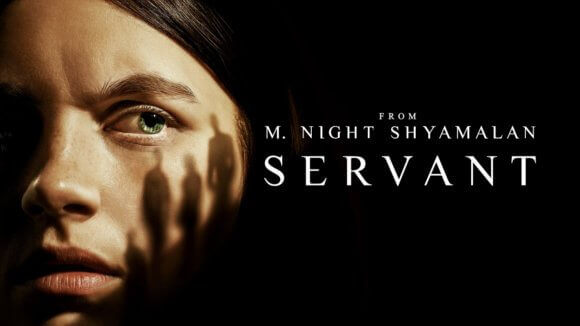
‘Servant’ Unveils a Season 3 Trailer and Earns a Season 4 Renewal

Apple TV+ announced they’ve renewed the psychological thriller Servant, executive produced by Oscar nominee M. Night Shyamalan (The Sixth Sense), for a fourth season. The announcement comes just one day after Apple TV+ released the trailer for the upcoming third season.

The 10-episode third season will premiere on Friday, January 21, 2022, with new episodes arriving on subsequent Fridays.

“Since the very first episode of Servant, audiences all over the world have loved buckling themselves in for this thrill ride, drawn into the cinematic, unsettling, twist-filled universe that M. Night Shyamalan has created,” stated Matt Cherniss, head of programming for Apple TV+. “With each suspense-filled season, viewers have been able to experience the living nightmares of these compelling characters on an increasingly deeper level and we can’t wait for everyone to see what’s in store as this gripping mystery takes another surprising turn in season four.”

Season three stars Lauren Ambrose reprising her role as Dorothy Turner. Toby Kebbell returns as Sean Turner, Nell Tiger Free is back as Leanne Grayson, and Rupert Grint is once again on board as Julian Pearce. Sunita Mani (No Activity) joins the cast for the upcoming season.

British Academy of Film and Television Arts nominated executive producer/writer Tony Basgallop created the series. In addition to Shyamalan, the critically acclaimed series is executive produced by Jason Blumenthal, Todd Black, Steve Tisch, Ashwin Rajan, and Taylor Latham. Shyamalan, Ishana Night Shyamalan, Carlo Mirabella-Davis, Dylan Holmes, Celine Held & Logan George, Kitty Green, and Veronika Franz & Severin Fiala direct season three episodes.

Servant Season 3 Poster
Poster for ‘Servant’ season 3 (Photo Credit: Apple TV+)

Apple TV+ released the following synopsis of the upcoming third season:

“Three months after we leave the Turner household in season two, things appear to be back to normal. Dorothy and Sean dote on Jericho, Julian has a new girlfriend, and Leanne has moved back into the brownstone. With the threat of the cult looming and suspicious visitors staked out in a nearby park, Leanne does everything she can to feel secure—ultimately causing more chaos for the Turner family. As Sean starts trusting in Leanne’s power, Dorothy feels increasingly threatened and worries for Jericho’s safety.

While the Turners struggle to keep their family whole, they must come to terms with the costs of Jericho’s return. Be careful what you wish for.”


‘After Life’ Third and Final Season Premieres in January 2022

After Life Season 3
Ricky Gervais and Diane Morgan in ‘After Life’ season 3 (Photo Credit: Natalie Seery / Netflix)

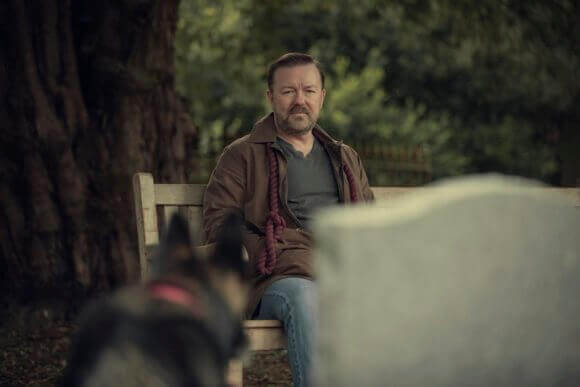
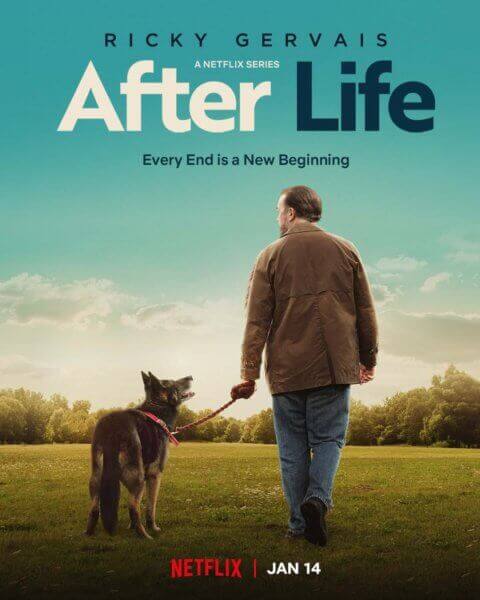
Netflix just released the first photos from the upcoming third and final season of Ricky Gervais‘ critically acclaimed series, After Life. The photos were accompanied by a season three poster and confirmation Gervais’ comedy-drama will launch its final season on January 14, 2022.

After Life was created by Ricky Gervais who stars as the central character, Tony. The season three cast also includes Penelope Wilton (Downton Abbey), Ashley Jensen (Extras), Tom Basden (David Brent: Life On The Road), Tony Way (Edge of Tomorrow), David Earl (Cemetery Junction), and Joe Wilkinson (Him and Her). Kerry Godliman (Derek), Jo Hartley (In My Skin), Diane Morgan (David Brent: Life On The Road), David Bradley (Game of Thrones), Peter Egan (Downton Abbey), Ethan Lawrence (Bad Education), Colin Hoult (Almost Never) and Michelle Greenidge (It’s A Sin) also star in the final season.

Kath Hughes (The Join of Missing Out) takes on the new role of Coleen the intern. Tim Key, Dave Hill, Wendy Albiston, Ricky Grover, Ben Hull, Cole Anderson-James, and Kate Robbins appear in guest-starring roles.

Gervais writes, directs, and executive produces the Netflix series. Duncan Hayes also executive produces the six-episode third season.

Netflix released the following description of the series:

“Set in the small fictitious town of Tambury, the show follows Tony, a writer for the local newspaper whose life is upended after his wife dies from cancer. Whilst still struggling with immense grief for his wife, Tony starts to realise that making other people feel good is what can give him hope and a reason to live. After all, every end is a new beginning.”

Afterlife Season 3
Ricky Gervais in season 3 (Photo Credit: Ray Burmiston / Netflix)
Afterlife Season 3
Ricky Gervais in season 3 (Photo Credit: Natalie Seery / Netflix)
Afterlife Season 3
Tom Basden in season 3 (Photo Credit: Natalie Seery / Netflix)
After Life Season 3 Poster


‘SWAT’ Season 5 Episode 9 Preview: Photos, Plot Details and Cast

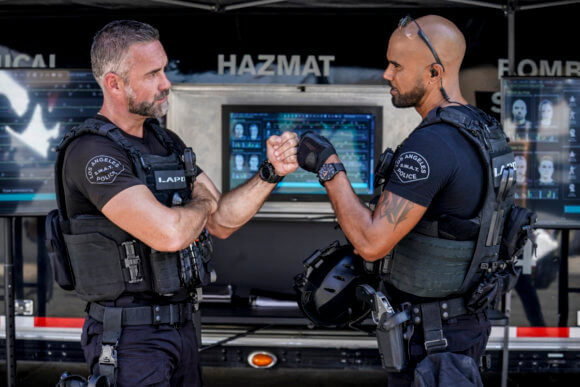
CBS’s SWAT will be moving from its usual Friday timeslot to Sundays when it returns from its winter break. Directed by Billy Gierhart from a script by Michael Gemballa, season five episode nine – “Survive” – will air on January 2, 2022 at 10pm ET/PT.

The season five cast is led by Shemar Moore as Daniel “Hondo” Harrelson. Alex Russell stars as Jim Street, Jay Harrington plays David “Deacon” Kay, Lina Esco is Christina “Chris” Alonso, Kenny Johnson is Dominique Luca, David Lim is Victor Tan, and Patrick St. Esprit stars as Commander Robert Hicks.

Guest stars include Benito Martinez, Tiago Roberts, Philip Anthony-Rodriguez, and Neiko Neal.

“Survive” Plot: When Deacon enlists Chris’ help on an off-duty private security detail, they struggle to survive when they’re attacked by a drug cartel looking to kidnap their wealthy VIP client.

Series Description, Courtesy of CBS:

Inspired by the television series and the feature film, S.W.A.T. stars Shemar Moore as a former Marine and locally born and raised S.W.A.T. sergeant, tasked to run a specialized tactical unit that is the last stop in law enforcement in Los Angeles. Torn between loyalty to where he was raised and allegiance to his brothers in blue, Daniel “Hondo” Harrelson strives to bridge the divide between his two worlds. However, Hondo is forced to question his professional identity when he is demoted from Squad Leader after going public to expose racial corruption within the LAPD.

The other members of Hondo’s elite S.W.A.T. unit include David “Deacon” Kay, an experienced S.W.A.T. officer and dedicated family man who always puts the team first; Christina “Chris” Alonso, a skilled officer and the team’s canine trainer; Dominique Luca, an expert driver who gets them in and out of high risk situations; newlywed Victor Tan, who started in the LAPD Hollywood Division and uses his confidential informants in the community to help the team; and Jim Street, the team’s cocky newest member. Responsible for the management of all Metro Division S.W.A.T. units is Commander Robert Hicks, a senior LAPD official with the Special Operations Bureau.

With Hondo no longer leading the charge, these dedicated men and women face an uncertain future as they bravely put themselves at risk to protect their community and save lives.

SWAT Season 5 Episode 9
Jay Harrington as David ‘Deacon’ Kay and Shemar Moore as Daniel ‘Hondo’ Harrelson in ‘SWAT’ season 5 episode 9 (Photo: Cliff Lipson © 2021 CBS Broadcasting, Inc)
SWAT Season 5 Episode 9
Shemar Moore as Daniel ‘Hondo’ Harrelson, David Lim as Victor Tan, and Alex Russell as Jim Street in season 5 episode 9 (Photo: Cliff Lipson © 2021 CBS Broadcasting, Inc)
SWAT Season 5 Episode 9
Jay Harrington as David ‘Deacon’ Kay in season 5 episode 9 (Photo: Cliff Lipson © 2021 CBS Broadcasting, Inc)
SWAT Season 5 Episode 9
Shemar Moore as Daniel “Hondo” Harrelson, Jay Harrington as David “Deacon” Kay, Alex Russell as Jim Street, David Lim as Victor Tan, and Lina Esco as Christina “Chris” Alonso in season 5 episode 9 (Photo: Cliff Lipson © 2021 CBS Broadcasting, Inc)
SWAT Season 5 Episode 9
Alex Russell as Jim Street, David Lim as Victor Tan, and Lina Esco as Christina ‘Chris’ Alonso in season 5 episode 9 (Photo: Cliff Lipson © 2021 CBS Broadcasting, Inc)
SWAT Season 5 Episode 9
Lina Esco as Christina ‘Chris’ Alonso and Alex Russell as Jim Street in season 5 episode 9 (Photo: Cliff Lipson © 2021 CBS Broadcasting, Inc)


‘Nightmare Alley’ – Willem Dafoe Interview on Playing a Carny in Guillermo del Toro’s Noir Thriller

Nightmare Alley Willem Dafoe and Bradley Cooper
Willem Dafoe and Bradley Cooper in ‘Nightmare Alley’ (Photo by Kerry Hayes © 2021 20th Century Studios)

Four-time Oscar nominee Willem Dafoe believes his childhood memories of carnivals and sideshows helped him immediately understand the world of Guillermo del Toro’s Nightmare Alley. Dafoe stars as carnival barker Clem Hoatley in del Toro’s adaptation of William Lindsay Gresham’s novel, a character who doesn’t fit snugly as either hero or villain but instead dwells in the grey area in between. He cares for his employees but at the same time he’s capable of treating them as less than human if doing so brings in paying customers.

During a special Zoom press conference for Critics Choice Association members, Willem Dafoe provided insight into how he approached playing Clem, working with Guillermo del Toro, and stepping onto the set of Nightmare Alley.

How did Guillermo del Toro introduce Clem to you?

Willem Dafoe: “I have very strong memories as a child going to sideshows. They still were around when I was a kid. And those carnival people, particularly the people at the sideshows, were kind of darkly romantic figures. They were a little scary, but they were also sort of charming. They seemed, at least to me as a young kid growing up in Wisconsin, they seemed worldly because they were travelers and they could spin a story. So I have a pretty strong imagination from that experience of what it would be like to be a carnival barker. And then you arrive and you start to accumulate details and exterior things that get you even more deeply into the character, and then you apply yourself to the scenes.

I think what was really principal was my memories from when I was a kid. I had a very formed idea of carnivals. And then the reality that was created by the production design beautifully of this very complete, almost truly functional midway with essentially everything working…it was a beautiful world to enter, even though it’s a little dark.”

How do you think he reconciles his brutality and his humanity, and how did that inform your performance?

Willem Dafoe: “You know, you can’t judge the character; you can just give him opportunities. He’s pragmatic and you appreciate that he does take care of his own. But he’s also probably a guy that grew up, came of age during the Depression. He’s probably maybe even been in prison. He’s a guy that pragmatically sees the world as winners and losers, prey and predators. He’s got this kind of dark, fatalistic view of the world but at the same time, he cares about the people around him. He tries to sort of circle up the wagons.

And the way also that he expresses how to turn a man into a geek which is sort of a cruel story, you also have the sense that he doesn’t enjoy this – he’s just getting on. That doesn’t justify it but to his mind, the onus is on the nature of the people and human nature and the nature of desire and the nature of addiction and the nature of fate. That’s all sort of in the mix.

So, he is a dark character but he’s not out to destroy people and he’s not unthinking. He’s compassionate toward certain people. He’s human, but he’s a very flawed character if you judge him morally. But, of course, that’s not my job as an actor. My job as an actor is to try to imagine him as a full person capable of many contradictory behaviors.”

What was it like stepping onto the set? Did you make up little stories about each of the items in the jars in the tent to help you build the character?

Willem Dafoe: “Well, the production design was beautiful because of the detail. You’d drive to the set and it was built out in the country. It was built in an area where they had lots of land to build this carnival. You’d approach it – particularly at night – and you’d see the lights coming on. And you’d enter this world and it was like it was waking up as you entered it. People would start to move and the organization of the production itself kind of becomes the organization of the carnival. And then you see people you know, the characters you know, and there are all of these mirrorings of functions and worlds. But, it feels actual.

You start your day and the life of the movie is paralleled by the life of the carnival, so it’s a world that’s easy to enter. You have your job and always you have your function, so that’s a wonderful position to start in. And you have relationships to other people’s functions because your thing is not only to make the scene but also to make the carnival work. The production design was very important.

As far as the so-called ‘pickled punks,’ that is so ingrained in my brain because I was so traumatized by seeing those kinds of sideshows when I was a kid. No, I didn’t make stories for all of them but I made stories for a few.”

Nightmare Alley Willem Dafoe Poster
Willem Dafoe as Clem in ‘Nightmare Alley’ (Poster © 2021 20th Century Studios)

Do you think Nightmare Alley has something to say about what’s going on today?

Willem Dafoe: “Of course. I mean if it’s a human story – and I think it is – yeah. You can look at it lots of ways. It’s also an indictment a little bit of a certain kind of ambition, or a certain kind of capitalism, or a certain kind of exploitation of other people for your happiness. That’s always something we’ve got to talk about.”

How was the character of Clem unlike any other character you’ve played in the past?

Willem Dafoe: “That’s a good question – I’m not sure I have a good answer. The characters are all linked by the fact that they’re me but they’re also not me. Because who I am is conditioned by many things, and when I willfully choose to do something else, one character has nothing to do with another one.

Clem…I don’t know. I’ve got this thing…selective amnesia, let’s call it…every time I do a character I try to forget about any other character I’ve done. So, it’s a very difficult question. The truth is someone outside of me could probably answer the question better than I could because through the years I’ve developed a mechanism to make me believe that each time I’m doing something, it’s the first time I’m doing it. It’s the nature of pretending, you know? And then once you’ve done a character, you tend to move on. That’s not to disrespect what you’ve done…but it’s done and there’s no way to linger on it.

Some people ask, ‘Do you look at your old performances?’ And I never do because that was then, this is now.”

Do you prefer playing characters with a bit of a villainous side versus morally good ones?

Willem Dafoe: “Morally good ones can be a real pain in the ass, let’s face it. Villains at least have some sort of delicious taboo. We’re trained all through life not to be a bad person. Well, sometimes we’re trained so much to not be a bad person that you end up being a bad person. So in imagining if you can play a villain, it addresses you to a different kind of orientation that can free you from certain kinds of fears.

I think to play villainous characters ironically turns you into an angel. (Laughing) I’m sorry, but I’ve got to make a joke about it. But really I don’t want to say flat-out villains are more fun because you’re talking about function in the story, and sometimes villains can be flat and they can be a device. That’s not what you want. You want to play human beings; you want to play something with contradiction, with dimension. Whether it’s good or bad, that’s really so subjective. That’s kind of just, in a broad way, those labels help us to tell stories.

For example, people sometimes say, ‘Oh, you play so many villains.’ If I went through my filmography, I bet you – I would fight you to say I played many more moral, good people than villains. It’s just how you label things and how you identify certain characters.”

* * * * * * *

Searchlight Pictures’ Nightmare Alley opens in theaters on December 17, 2021.

Two-time Oscar winner Guillermo del Toro (The Shape of Water) directed and co-wrote the screenplay with Kim Morgan. In addition to Willem Dafoe, the Nightmare Alley cast includes Bradley Cooper, Cate Blanchett, Rooney Mara, Toni Collette, Ron Perlman, Richard Jenkins, and David Strathairn.


Scream’s New Poster Definitely Includes the Ghostface Killer

Scream Cast Poster 2022
Poster for ‘Scream’ (Photo © 2021 Paramount Pictures)

Take a good look at the brand new cast poster for Scream, the 2022 edition. Paramount Pictures and Spyglass Media Group released the new poster along with confirmation that the killer is in fact included somewhere on the poster.

The poster’s release was accompanied by Scream veterans Neve Campbell and Courteney Cox teasing the studio’s #12ScreamsForTheHolidays campaign which kicks off today. The Scream social media accounts will release a special Scream surprise on each of the next 12 days leading up to Christmas.

The cast of the 2022 release includes Campbell, Cox, and David Arquette, as well as Melissa Barrera, Kyle Gallner, Mason Gooding, Mikey Madison, and Dylan Minnette. Jenna Ortega, Jack Quaid, Marley Shelton, Jasmin Savoy Brown, and Sonia Ammar also star as either Ghostface or one of his/her potential victims. (I’m betting Ghostface is female this time around.)

Matt Bettinelli-Olpin and Tyler Gillett directed from a screenplay by James Vanderbilt and Guy Busick. The franchise is based on characters created by Kevin Williamson, with Williamson involved in this film as an executive producer. Chad Villella, Gary Barber, Peter Oillataguerre, Ron Lynch, Cathy Konrad, and Marianne Maddalena also executive produce. William Sherak, James Vanderbilt, and Paul Neinstein are on board as producers.

Scream will open in theaters on January 14, 2022.

The Plot:

Twenty-five years after a streak of brutal murders shocked the quiet town of Woodsboro, a new killer has donned the Ghostface mask and begins targeting a group of teenagers to resurrect secrets from the town’s deadly past.


‘Moonfall’ Clip Introduces Halle Berry and Patrick Wilson as Astronauts in Peril

Adam McKay’s comedy Don’t Look Up finds the planet in danger as a world-ending comet hurls toward Earth. Roland Emmerich’s Moonfall takes a more dramatic approach but also finds the planet on the verge of destruction, this time courtesy of the Moon.

Lionsgate’s teasing what’s in store with the online release of the first five minutes. The opening scene shows astronauts Jo Fowler (Oscar winner Halle Berry) and Brian Harper’s (Emmy nominee Patrick Wilson) entertaining argument over the lyrics to Toto’s “Africa” is cut short when something strange runs into their space shuttle and sends it spinning out of control.

The cast also includes John Bradley, Michael Peña, Charlie Plummer, Kelly Yu, Eme Ikwuakor, Carolina Bartczak, and Donald Sutherland.

Director Roland Emmerich co-wrote the screenplay with Harald Kloser and Spenser Cohen. Emmerich and Kloser also serve as producers.

Moonfall Stars
Halle Berry (“Jocinda Fowler,” left) and Patrick Wilson (“Brian Harper,” right) as stranded astronauts in the sci-fi epic ‘Moonfall’ (Photo Credit: Reiner Bajo / Lionsgate)

Lionsgate released the following official synopsis for the sci-fi thriller:

“In Moonfall, a mysterious force knocks the Moon from its orbit around Earth and sends it hurtling on a collision course with life as we know it. With mere weeks before impact and the world on the brink of annihilation, NASA executive and former astronaut Jo Fowler (Berry) is convinced she has the key to saving us all – but only one astronaut from her past, Brian Harper (Wilson) and a conspiracy theorist K.C. Houseman (John Bradley, Game of Thrones) believes her.

These unlikely heroes will mount an impossible last-ditch mission into space, leaving behind everyone they love, only to find out that our Moon is not what we think it is.”

Moonfall will open in theaters on February 4, 2022.


‘Fantasy Island’ Holiday Special Preview: Photos, Plot, and Air Date

Fantasy Island Holiday Special
Kiara Barnes and Roselyn Sanchez in the all-new two-hour holiday special, “Welcome to the Snow Globe” episode of FANTASY ISLAND (Photo by Jack Zeman © 2022 FOX Media LLC)

Fox’s Fantasy Island returns for a special two-hour holiday special airing on Tuesday, December 21, 2021 at 8pm ET/PT. The network just released new photos from the special which features series regulars along with guest stars Lindsey Kraft (Grace & Frankie), Eddie Cahill (NCIS: New Orleans), and Mackenzie Astin (You).

The cast is led by Roselyn Sánchez as Elena Roarke, a descendant of the iconic Mr. Roarke. Kiara Barnes (The Bold and the Beautiful) plays Ruby Akuda and John Gabriel Rodriguez (Rosewood) is Javier.

Fox officially renewed the one-hour drama in November 2021 but hasn’t yet announced a season two premiere date.

“Welcome to the Snow Globe” Plot: A businesswoman’s (guest star Lindsey Kraft) fantasy of a perfect Christmas and meeting Mr. Right (guest star Eddie Cahill) tests Roarke in unexpected ways. Meanwhile, Mr. Jones (guest star Mackenzie Astin) faces his past, while a new Secret Santa tradition has Ruby and Javier looking to the future.

Fantasy Island Holiday Special
Lindsey Kraft and Geri-Nikole Love in the “Welcome to the Snow Globe holiday special (Photo by Jack Zeman © 2022 FOX Media LLC)
Fantasy Island Holiday Special
Roselyn Sanchez and Kiara Barnes in two-hour holiday special (Photo by Jack Zeman © 2022 FOX Media LLC)
Fantasy Island Holiday Special
Andrew Lukich and Lindsey Kraft in “Welcome to the Snow Globe” (Photo by Jack Zeman © 2022 FOX Media LLC)
Fantasy Island Holiday Special
Andrew Lukich and Roselyn Sanchez in the all-new two-hour holiday special (Photo by Jack Zeman © 2022 FOX Media LLC)
Fantasy Island Holiday Special
Lindsey Kraft and Alain Uy in the holiday special (Photo by Jack Zeman © 2022 FOX Media LLC)
Fantasy Island Holiday Special
Geri-Nikole Love and Mackenzie Astin in the all-new two-hour holiday special (Photo by Jack Zeman © 2022 FOX Media LLC)


Critics Choice Awards 2022 Film Nominees: Belfast, West Side Story Earn 11 Nominations

West Side Story Critics Choice Nominations
Scene from 20th Century Studios’ WEST SIDE STORY, directed by Steven Spielberg. (Photo courtesy of 20th Century Studios © 2021 20th Century Studios)

Belfast and West Side Story topped the list of the 27th Annual Critics Choice Awards, earning 11 nominations each. Both films earned Best Picture and Best Director nominations as well as nods in acting and screenplay categories.

The film branch of the Critics Choice Association also embraced Dune and The Power of the Dog, with both films scoring 10 nominations. The epic sci-fi action thriller and the gritty character-driven Western will be competing in categories including Best Picture, Best Director, and Best Adapted Screenplay. Licorice Pizza and Nightmare Alley followed close behind with eight, and King Richard and Don’t Look Up picked up six nominations.

“We are so proud to be honoring this amazing list of films and the incredibly talented people who made them during this extremely challenging time,” stated Critics Choice Association CEO Joey Berlin. “All eyes are going to be on the Fairmont Century Plaza red carpet and ballroom on January 9th, when the biggest stars in movies and television will be gathered to celebrate the best of the best in entertainment this past year. In the safest possible environment, it will mark the return of the kind of glitz and glamor we haven’t been able to enjoy in far too long.”

The Critics Choice Association (of which I’m a member) is made up of more than 500 critics and has been the most accurate predictor of Oscar nominations. Winners in both the television and film categories will be announced during the Critics Choice Awards gala on Sunday, March 13, 2022. The awards show will be hosted by Taye Diggs and Nicole Byer and will air live on The CW and TBS beginning at 7pm ET/PT (tape-delayed on the West Coast).

27TH ANNUAL CRITICS CHOICE AWARDS FILM NOMINATIONS

BEST PICTURE
Belfast
CODA
Don’t Look Up
Dune
King Richard
Licorice Pizza
Nightmare Alley
The Power of the Dog
tick, tick…Boom!
West Side Story

BEST ACTOR
Nicolas Cage – Pig
Benedict Cumberbatch – The Power of the Dog
Peter Dinklage – Cyrano
Andrew Garfield – tick, tick…Boom!
Will Smith – King Richard
Denzel Washington – The Tragedy of Macbeth

BEST ACTRESS
Jessica Chastain – The Eyes of Tammy Faye
Olivia Colman – The Lost Daughter
Lady Gaga – House of Gucci
Alana Haim – Licorice Pizza
Nicole Kidman – Being the Ricardos
Kristen Stewart – Spencer

BEST SUPPORTING ACTOR
Jamie Dornan – Belfast
Ciarán Hinds – Belfast
Troy Kotsur – CODA
Jared Leto – House of Gucci
J.K. Simmons – Being the Ricardos
Kodi Smit-McPhee – The Power of the Dog

BEST SUPPORTING ACTRESS
Caitríona Balfe – Belfast
Ariana DeBose – West Side Story
Ann Dowd – Mass
Kirsten Dunst – The Power of the Dog
Aunjanue Ellis – King Richard
Rita Moreno – West Side Story

BEST YOUNG ACTOR/ACTRESS
Jude Hill – Belfast
Cooper Hoffman – Licorice Pizza
Emilia Jones – CODA
Woody Norman – C’mon C’mon
Saniyya Sidney – King Richard
Rachel Zegler – West Side Story

BEST ACTING ENSEMBLE
Belfast
Don’t Look Up
The Harder They Fall
Licorice Pizza
The Power of the Dog
West Side Story

BEST DIRECTOR
Paul Thomas Anderson – Licorice Pizza
Kenneth Branagh – Belfast
Jane Campion – The Power of the Dog
Guillermo del Toro – Nightmare Alley
Steven Spielberg – West Side Story
Denis Villeneuve – Dune

BEST ORIGINAL SCREENPLAY
Paul Thomas Anderson – Licorice Pizza
Zach Baylin – King Richard
Kenneth Branagh – Belfast
Adam McKay, David Sirota – Don’t Look Up
Aaron Sorkin – Being the Ricardos

BEST ADAPTED SCREENPLAY
Jane Campion – The Power of the Dog
Maggie Gyllenhaal – The Lost Daughter
Siân Heder – CODA
Tony Kushner – West Side Story
Jon Spaihts, Denis Villeneuve, Eric Roth – Dune

BEST CINEMATOGRAPHY
Bruno Delbonnel – The Tragedy of Macbeth
Greig Fraser – Dune
Janusz Kaminski – West Side Story
Dan Laustsen – Nightmare Alley
Ari Wegner – The Power of the Dog
Haris Zambarloukos – Belfast

BEST PRODUCTION DESIGN
Jim Clay, Claire Nia Richards – Belfast
Tamara Deverell, Shane Vieau – Nightmare Alley
Adam Stockhausen, Rena DeAngelo – The French Dispatch
Adam Stockhausen, Rena DeAngelo – West Side Story
Patrice Vermette, Zsuzsanna Sipos – Dune

BEST EDITING
Sarah Broshar and Michael Kahn – West Side Story
Úna Ní Dhonghaíle – Belfast
Andy Jurgensen – Licorice Pizza
Peter Sciberras – The Power of the Dog
Joe Walker – Dune

BEST COSTUME DESIGN
Jenny Beavan – Cruella
Luis Sequeira – Nightmare Alley
Paul Tazewell – West Side Story
Jacqueline West, Robert Morgan – Dune
Janty Yates – House of Gucci

BEST HAIR AND MAKEUP
Cruella
Dune
The Eyes of Tammy Faye
House of Gucci
Nightmare Alley

BEST VISUAL EFFECTS
Dune
The Matrix Resurrections
Nightmare Alley
No Time to Die
Shang-Chi and the Legend of the Ten Rings

BEST COMEDY
Barb & Star Go to Vista Del Mar
Don’t Look Up
Free Guy
The French Dispatch
Licorice Pizza

BEST ANIMATED FEATURE
Encanto
Flee
Luca
The Mitchells vs the Machines
Raya and the Last Dragon

BEST FOREIGN LANGUAGE FILM
A Hero
Drive My Car
Flee
The Hand of God
The Worst Person in the World

BEST SONG
Be Alive – King Richard
Dos Oruguitas – Encanto
Guns Go Bang – The Harder They Fall
Just Look Up – Don’t Look Up
No Time to Die – No Time to Die

BEST SCORE
Nicholas Britell – Don’t Look Up
Jonny Greenwood – The Power of the Dog
Jonny Greenwood – Spencer
Nathan Johnson – Nightmare Alley
Hans Zimmer – Dune


Trending